Welcome to Vbond
“PVDF” ACP That Isn’t PVDF: How Buyers Get 50/50 Substitutions
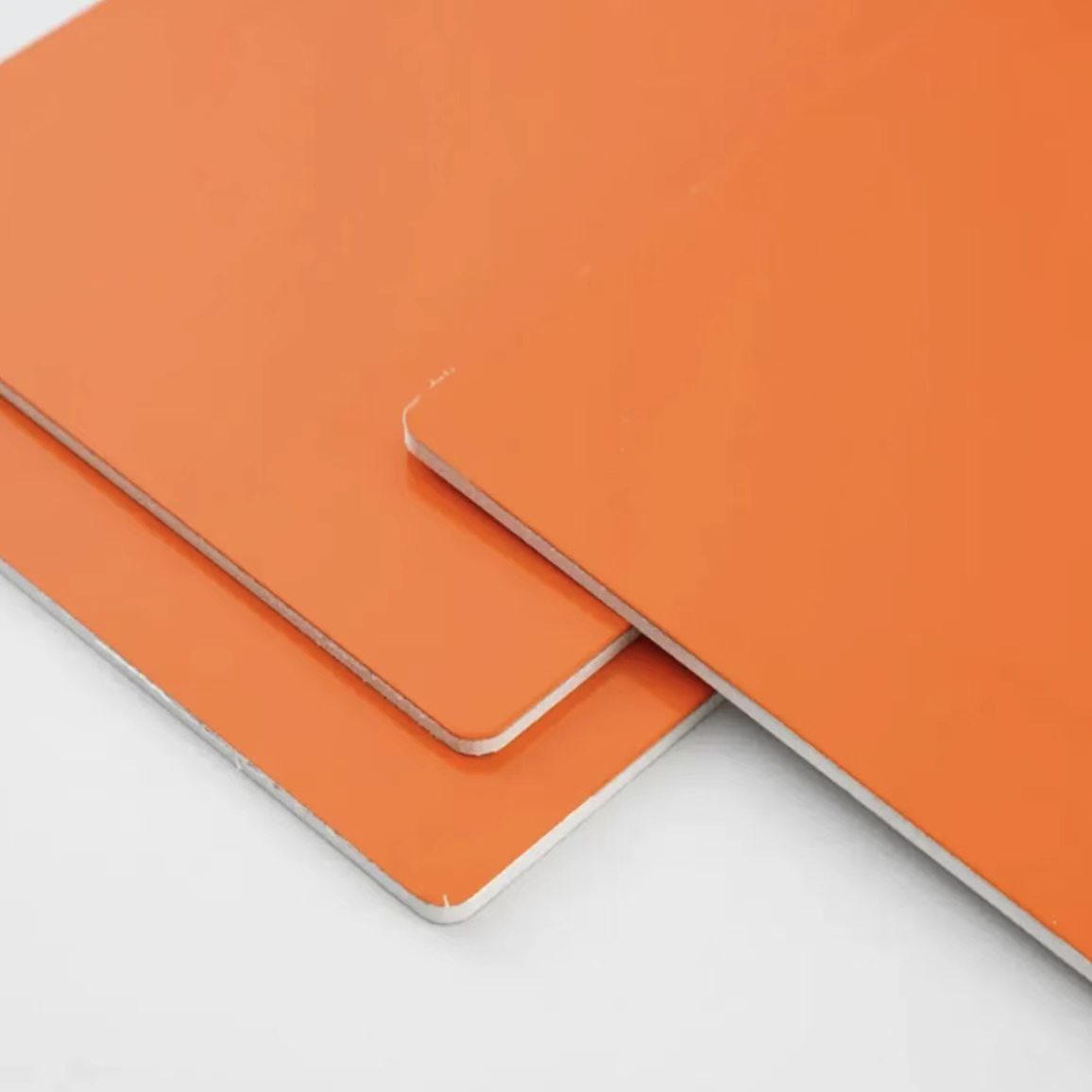
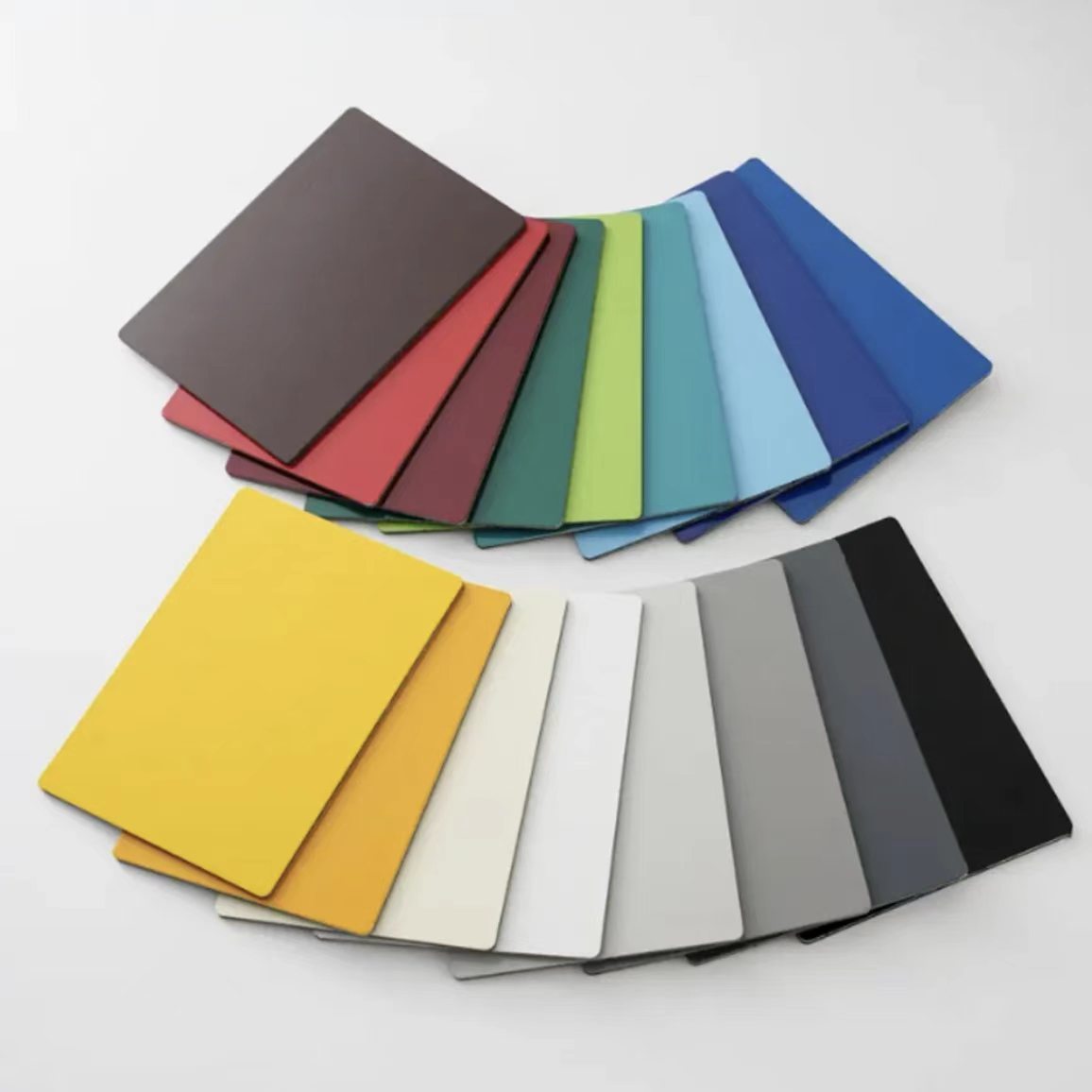
A supplier quote says "PVDF aluminum composite panel." The approved sample has the right color and gloss. The buyer places the order, pays the deposit, and waits for production.
But what happens if the factory uses a different coating system for the delivered panels?
This risk can appear in several forms. A supplier may replace a specified PVDF system with a 50/50 PVDF and polyester blend, use a lower-PVDF formulation, or supply standard PE coating while keeping the original product description.
For buyers, the problem goes beyond the coating label. A different resin system can change weathering performance, color stability, gloss retention, and the value of the finished facade.
When a project specifies an Alucobond PVDF color, buyers must control both the approved appearance and the actual coating chemistry. This guide explains how 50/50 substitutions happen, how to spot warning signs, and how to prevent unauthorized material changes.
1. What Does a "50/50 PVDF Substitution" Mean?
The term "50/50" can describe different things. Buyers should never accept it without a clear technical definition.
In coating discussions, a 50/50 formulation may refer to a blend containing equal parts of two resin types, such as PVDF and polyester, based on a stated calculation method. However, the supplier must identify exactly what the ratio measures.
It may refer to:
· The weight ratio of two resin components
· The ratio of coating products in a blend
· A supplier's internal formulation description
· A marketing term without a verified technical basis
These meanings are not interchangeable.
Why the calculation basis matters
Architectural PVDF coatings often use PVDF resin as at least 70% of the total resin binder by weight, subject to the applicable product definition and specification. This figure does not mean 70% of the wet paint, total coating solids, dry film, or complete ACP panel.
A 50/50 resin blend would not meet a specification that requires at least 70% PVDF resin by weight of the total resin binder. However, buyers must confirm the actual formulation and calculation basis before making that judgment.
Description | What It May Mean | Buyer Concern |
70% PVDF | PVDF share of total resin binder, if properly defined | Confirm the calculation basis |
50/50 PVDF blend | Equal shares of two stated resin components | May not meet a 70% PVDF requirement |
PVDF modified coating | PVDF combined with other coating resins | Requires a precise product definition |
PE coating | Polyester-based coating system | Not equivalent to architectural PVDF |
"PVDF type" coating | Unclear commercial description | Does not prove PVDF content or performance |
Key point: A coating name does not prove its resin composition. The specification must define the required coating system, and the supplier must provide evidence that the delivered product matches it.
2. Why Would a Supplier Replace PVDF with a 50/50 System?
Not every coating substitution happens for the same reason. Some suppliers may use a different formulation to reduce cost. Others may face raw material shortages, production changes, or pressure to meet a low selling price.
The problem begins when the supplier changes the coating without the buyer's written approval.
2.1 Lower Material Cost
PVDF coating systems often cost more than standard polyester systems. A supplier that replaces part or all of the specified coating with a lower-cost alternative may reduce its production cost.
The buyer may still receive panels with a similar color and surface appearance. This makes the substitution difficult to identify through a simple visual inspection.
2.2 Price Competition
A supplier may quote a low price to win an order. If the buyer compares only the final price and color sample, the supplier may have room to change the coating specification during production.
A low quotation does not prove that substitution will occur. However, a price that appears far below comparable offers deserves a closer technical review.
2.3 Unclear Purchase Specifications
A purchase order that says only "PVDF finish" leaves room for different interpretations. The supplier may claim that a modified PVDF system meets the wording even when it does not meet the buyer's intended resin-content requirement.
The buyer should define the coating manufacturer, product series, resin requirement, performance standard, and approval process before production begins.
2.4 Production Changes Without Approval
A factory may change coating suppliers, paint batches, or production lines during a long order. If the purchase contract does not control these changes, the buyer may receive panels that differ from the approved sample or original technical offer.
A proper change-control clause prevents the supplier from treating a new coating system as an ordinary production adjustment.
3. Why a 50/50 Coating May Not Deliver the Specified PVDF Performance
The resin system affects how a coating responds to outdoor exposure. A lower PVDF share may change the coating's resistance to weathering, depending on the full formulation and manufacturing process.
However, buyers should avoid one simple assumption: a 50/50 blend does not have one universal performance level. Its actual performance depends on the resin chemistry, pigments, additives, coating layers, pretreatment, application, and curing.
Possible performance differences
Performance Area | Potential Effect of a Different Coating System |
Color stability | May show greater color change under outdoor exposure |
Gloss retention | May lose gloss at a different rate |
Chalking resistance | May show earlier or greater surface chalking |
Chemical resistance | May respond differently to cleaners and pollutants |
Weathering performance | May not meet the specified test requirements |
Warranty coverage | May fall outside the original coating warranty |
These are potential risks, not automatic results for every blended coating. The correct way to judge performance is to review test evidence for the exact coating product.
A supplier should not use a report for a qualified PVDF product to support a different 50/50 formulation. The product identity and test scope must match.
4. Five Warning Signs That an ACP Order May Not Use the Specified PVDF
Buyers can reduce substitution risk by watching for gaps between the quotation, technical documents, samples, and production records.
Warning Sign 1: The Quote Says Only "PVDF"
The quotation lists PVDF coating but gives no coating manufacturer, product series, or resin-content requirement.
This wording does not identify the exact coating system. Ask the supplier to provide the full product name and technical data before approving the order.
Warning Sign 2: The Supplier Avoids Resin-Content Questions
The supplier may describe the product as "PVDF quality," "PVDF type," or "PVDF modified" without stating the resin composition.
These phrases do not prove that the coating meets a defined PVDF requirement. Request a written declaration from the coating manufacturer.
Warning Sign 3: The Test Report Shows a Different Product
A supplier may provide a test report that lists a different coating series, color, or manufacturer.
A report for one coating cannot automatically prove the performance of another. Check the product identity and test scope carefully.
Warning Sign 4: The Production Sample Looks Right, but the Documents Do Not Match
A color sample can confirm appearance, but it cannot prove resin composition. Two coating systems may look similar when new.
Do not approve a material based only on color and gloss. Require both sample approval and technical verification.
Warning Sign 5: The Supplier Resists Batch Traceability
A supplier should be able to link the coating product and production batch to the ACP order.
If the factory cannot identify which coating batch was used on which panels, later inspection and warranty claims become harder. Treat missing traceability as a serious procurement concern.
5. Visual Inspection Cannot Prove PVDF Resin Content
A common mistake is to judge the coating by its appearance. A new PE panel and a new PVDF panel may look almost identical.
The same applies to many blended coating systems. Color, gloss, and surface texture do not reveal the exact resin ratio.
A buyer may approve a specific Alucobond PVDF color based on a physical sample, but that approval only confirms the agreed appearance unless the contract also links the sample to a named coating product and verified production batch.
What visual inspection can confirm
· Color match against the approved sample
· Gloss consistency
· Surface smoothness
· Visible scratches or coating defects
· Panel appearance and finish uniformity
What visual inspection cannot confirm
· Exact PVDF resin percentage
· Resin blend ratio
· Coating manufacturer and product series
· Compliance with a specific AAMA standard
· Whether the factory used the approved coating batch
Visual inspection remains important, but it must work with document review and production traceability.
6. Documents Buyers Should Request Before Production
The best way to prevent substitution is to define the coating system before the supplier starts manufacturing.
Ask for documents that identify the coating product and connect it to the delivered ACP panels.
Document | What It Should Confirm |
Coating Technical Data Sheet (TDS) | Product name, coating type, application, and technical properties |
Coating manufacturer's declaration | Resin composition or required PVDF content, with calculation basis |
Safety Data Sheet (SDS) | Chemical hazard and handling information; not proof of resin percentage |
Coating test report | Performance of the identified coating system |
Purchase specification | Required product, resin content, and acceptance criteria |
Production batch record | Coating batch used for the ACP order |
ACP production record | Link between panel batch and coating batch |
Inspection report | Checks completed during and after production |
A document chain that supports traceability
Approved Purchase Specification
|
v
Named Coating Manufacturer and Product
|
v
Written Resin Composition Declaration
|
v
Coating Batch Identification
|
v
ACP Production Batch Record
|
v
Finished Panel Inspection
|
v
Delivery Records and Final Acceptance
Each step should connect to the next. A collection of unrelated documents does not prove that the delivered panels use the approved coating.
7. How to Verify a 50/50 Substitution Risk
When a buyer suspects a coating change, the investigation should begin with product identity and traceability. Do not jump straight to laboratory testing before checking the documents.
Step 1: Compare the Quotation with the Purchase Order
Check whether both documents name the same coating manufacturer, product series, and resin requirement.
Look for vague terms such as "PVDF finish" without a product reference. Confirm whether the contract defines a minimum PVDF share and the basis for calculating it.
Step 2: Request a Written Declaration
Ask the coating manufacturer, not only the ACP trader, to identify the coating formulation and the relevant resin-content basis.
The declaration should identify the product name and product code. It should also state whether the declared PVDF percentage refers to the total resin binder by weight.
Step 3: Match the Coating Batch to the Panel Batch
Review factory production records. Confirm that the approved coating batch was used for the actual panels in the order.
The supplier should provide a clear link between coating batch numbers, production dates, and ACP panel batches.
Step 4: Review the Test Reports
Check whether the reports cover the same coating product and system. Confirm the applicable standard, edition, test method, laboratory, and tested product identity.
A report for a different coating does not establish compliance for the supplied panels.
Step 5: Use Independent Testing When Needed
If the documents conflict or the supplier cannot provide reliable evidence, an independent laboratory may help assess the coating.
The laboratory should select a validated method suitable for the specific formulation. The test plan should define the sample, preparation, reference materials, calculation method, and measurement uncertainty.
Testing should answer a clear question. A single instrument reading rarely proves the complete resin composition.
8. Can FTIR or XRF Detect a PVDF Substitution?
Laboratory methods can support a coating investigation, but buyers need to understand what each method can and cannot show.
FTIR Analysis
Fourier Transform Infrared Spectroscopy (FTIR) identifies chemical bond patterns in a sample. It can help distinguish polymer types and support the identification of PVDF-related chemical structures.
However, FTIR results depend on the sample, coating layers, reference data, and analysis method. A basic spectrum may identify the presence of a fluoropolymer but may not establish an exact PVDF percentage.
XRF Analysis
X-ray fluorescence (XRF) detects elements in a material. With suitable equipment and calibration, some XRF systems can detect fluorine in coating samples.
Fluorine detection alone does not prove that the coating contains 70% PVDF by weight of the total resin binder. Other fluorinated materials, sample conditions, and coating components can affect the result.
Laboratory method comparison
Method | What It Can Support | Main Limitation |
FTIR | Polymer identification and comparison | Not automatically a quantitative resin test |
XRF | Element detection, including fluorine with suitable setup | Fluorine does not prove PVDF percentage |
TGA | Thermal behavior and formulation comparison | Requires a suitable interpretation model |
Validated quantitative analysis | Resin-content assessment under a defined method | Needs proper calibration and sample preparation |
The buyer should ask the laboratory to state whether the method can answer the actual contractual question. Do not accept a report that only says "fluorine detected" as proof of a specific PVDF resin percentage.
9. Contract Clauses That Prevent Unauthorized Coating Changes
A strong purchase contract should remove uncertainty before production. It should define the exact coating system and state what happens if the supplier wants to change it.
The following sample clause can serve as a starting point. Project teams should adjust it to match the coating manufacturer's declaration and the applicable technical specification.
Sample coating specification clause
"All supplied aluminum composite panels shall use the approved architectural PVDF coating system identified in the accepted technical submittal. The coating manufacturer, product name, product code, and required resin-content basis shall remain unchanged throughout production.
Where the specification requires a minimum PVDF resin content, the supplier shall provide a written declaration from the coating manufacturer stating the PVDF share by weight of the total resin binder and the calculation basis.
The supplier shall not replace, dilute, blend, or otherwise change the approved coating system without the buyer's prior written approval. Any proposed change shall include updated technical data, relevant test evidence, and a revised sample for approval.
The supplier shall maintain coating batch records and provide traceability between the coating batch and the finished ACP panel batch. Panels that do not meet the approved specification may be rejected, subject to the inspection and acceptance terms of the contract."
Why this clause works
The clause identifies the coating system instead of relying on a general label. It also controls changes and links the coating batch to the delivered panels.
Most importantly, it gives the buyer a clear basis for reviewing a proposed substitution. The supplier cannot treat a different formulation as an ordinary production adjustment.
10. What Should Buyers Do When a Substitution Is Discovered?
A buyer may discover a possible substitution before shipment, during receiving inspection, or after installation. The response should protect evidence and follow the contract's inspection and notice process.
Before shipment
· Stop final approval of the affected batch.
· Request the coating declaration and production records.
· Compare the documents with the approved purchase specification.
· Arrange independent sampling if needed.
· Record the supplier's written explanation.
· Require an agreed corrective action before release.
During receiving inspection
· Keep the affected panels separate from accepted stock.
· Record batch numbers, labels, packaging, and delivery details.
· Take clear photographs of the panel identification and condition.
· Follow the contract's sampling and rejection procedure.
· Notify the supplier within the required time.
After installation
· Preserve project records, approved samples, and delivery documents.
· Identify the installed panel batches where possible.
· Review the contract's notice and claim deadlines.
· Obtain qualified technical advice before removing or replacing panels.
· Keep all inspection and test results in the project file.
Do not rely on a verbal promise to replace the panels later. Record all findings and agreed actions in writing.
11. Example: How a Low-Priced PVDF Order Can Create a Hidden Cost
Consider a commercial facade project that requires 8,000 m² of PVDF-coated ACP.
Three suppliers submit quotations. Supplier A offers a clearly identified PVDF coating system. Supplier B offers a much lower price but lists only "PVDF finish." Supplier C offers a named coating product and provides a manufacturer declaration.
The procurement team selects Supplier B based on the initial price. During production, the buyer discovers that the factory uses a different coating formulation.
The panels may still match the approved color sample when new. However, the buyer cannot assume that the substituted coating meets the original weathering and warranty requirements.
Illustrative cost impact
Cost Item | Example Amount |
Initial material order | $240,000 |
Independent testing and inspection | $4,000 |
Project delay and coordination | $12,000 |
Possible replacement and reinstallation | $45,000 |
Potential combined exposure | $61,000 |
These figures are illustrative, not typical industry costs. Actual costs depend on panel quantity, access equipment, labor, replacement scope, and project schedule.
The example shows why the lowest quotation may not offer the lowest project cost. A small saving on coating material can create a much larger risk if the supplier changes the specified product.
12. A Practical Buyer Checklist: Prevent PVDF Substitution Before Ordering
Use this checklist during supplier qualification and purchase-order review.
Supplier and product identity
Identify the coating manufacturer.
Record the exact coating product name and code.
Confirm whether the system is architectural PVDF or another resin type.
Request a current technical data sheet.
Confirm the required resin-content definition.
Technical evidence
Obtain the coating manufacturer's written declaration.
Review the applicable test reports.
Confirm that the reports cover the named product.
Check the standard and edition stated in the contract.
Confirm that the color and coating system match the approved sample.
Production control
Require written approval for coating changes.
Record coating batch numbers.
Link coating batches to ACP production batches.
Inspect the first production panels.
Keep retained samples and production records.
Contract and delivery
Define inspection and rejection rights.
Set a procedure for suspected substitution.
Define who pays for independent testing when nonconformity is confirmed.
State the required corrective action.
Confirm delivery documents and final batch traceability.
A checklist works best when the purchase contract gives each requirement a clear acceptance rule. A supplier's general quality promise cannot replace measurable technical requirements.
Conclusion: Buy the Specified Coating, Not Just the PVDF Label
A panel described as "PVDF" may not always match the coating system the buyer expects. A 50/50 resin blend, a modified coating, or a standard polyester product may look similar when new, but the products are not automatically equal in composition or performance.
Professional buyers should define the exact coating manufacturer, product series, resin-content basis, performance requirements, and change-control process. They should also link coating batch records to the finished ACP panels.
When specifying an Alucobond PVDF color, approve the physical appearance and verify the coating identity separately. The sample shows what the panel should look like. The technical declaration and production records show whether the supplier used the approved material.
The safest procurement decision is simple: specify the coating clearly, verify the product, and reject unauthorized substitutions before they reach the facade.