Welcome to Vbond
Residual Plastic Layer Thickness: The 0.3mm Rule That Saves Your Alucobond Fold.
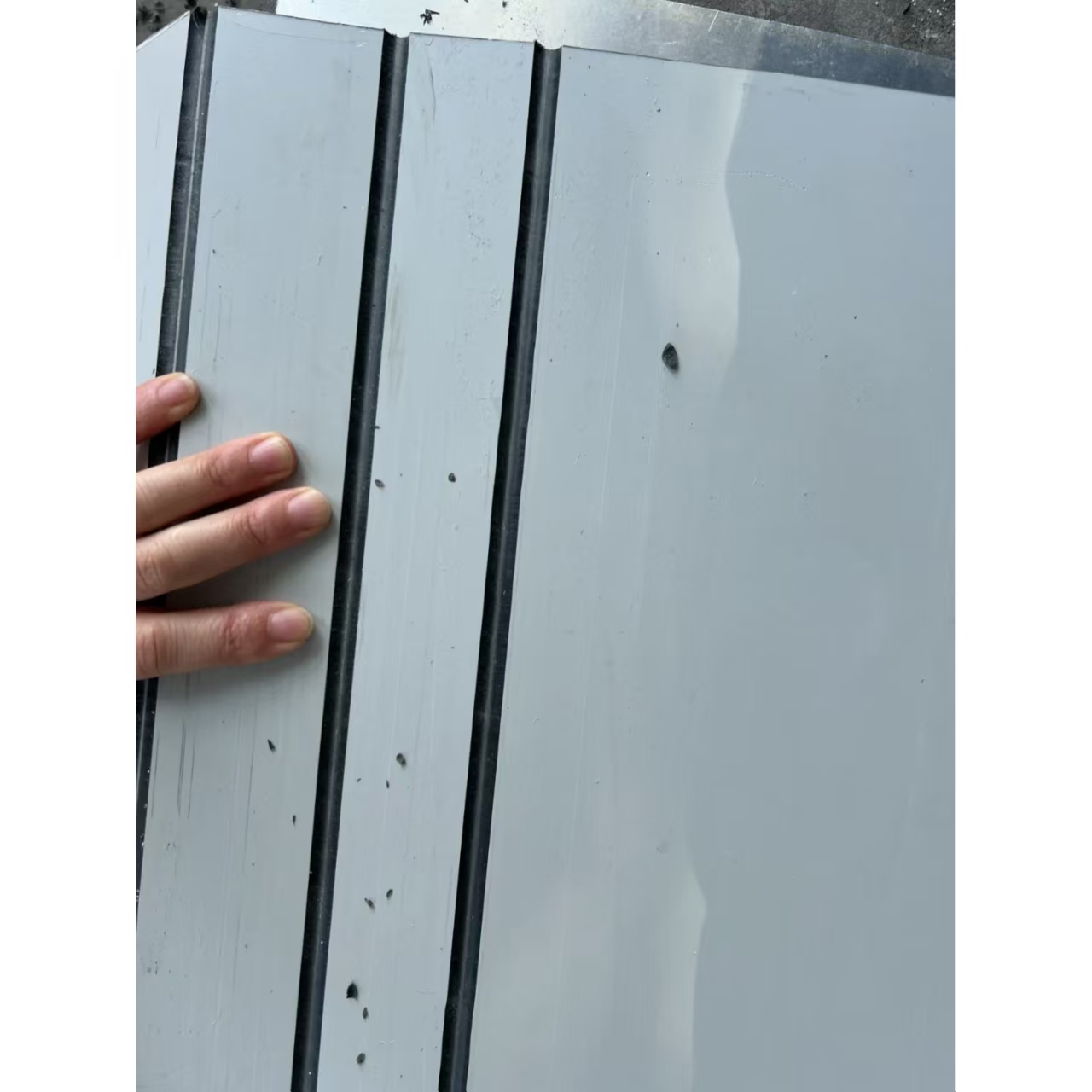
Residual Plastic Layer Thickness: The 0.3mm Rule That Saves Your Alucobond Fold.
You spec Alucobond panels for their flatness and durability. You expect clean, strong folds.
But folded edges crack. Corners split. Projects get delayed.
The problem often traces back to one number: 0.3mm.
This guide explains the 0.3mm rule. You will learn what residual plastic layer thickness means. You will understand why this number determines success or failure. And you will know exactly what to demand from your fabricators.
What Is Residual Plastic Layer Thickness?
Alucobond panels have two aluminum skins. A plastic core sits between them. The core is polyethylene or mineral-filled material.
When you fold a panel, the fabricator routes a V-shaped groove into the back side. This groove removes the rear aluminum skin. It removes most of the plastic core.
But it does not remove all of it.
Residual plastic layer thickness is the plastic material left at the bottom of the groove. It sits on top of the front aluminum skin.
This thin plastic layer protects the front skin during bending. It provides cushioning. It distributes stress.
The 0.3mm Rule Explained
The industry standard is simple.
Leave 0.3mm of plastic material on top of the front aluminum skin.
This is the minimum residual thickness required for a clean, crack-free fold.
Residual Thickness | Fold Result | Risk Level |
0.5mm or more | Clean, strong fold | Very low risk |
0.3mm to 0.5mm | Clean, acceptable fold | Low risk |
0.2mm to 0.3mm | Acceptable but marginal | Moderate risk |
Below 0.2mm | Cracks likely | High risk |
Below 0.2mm | Almost certain cracking | Very high risk |
The rule: Never go below 0.3mm. The 0.3mm layer provides the support the front skin needs during bending.
Why 0.3mm? The Science Behind the Rule
The 0.3mm rule comes from the mechanics of bending.
When you fold the panel, the front aluminum skin stretches. It elongates around the bend. Without the plastic layer beneath it, the skin stretches too far. It tears.
The 0.3mm plastic layer acts like a cushion. It supports the skin. It absorbs some of the bending stress. It prevents the aluminum from exceeding its elastic limit.
Think of it like this: The plastic layer is the safety margin. Remove it, and the aluminum bears the full load. It cannot handle the stress alone.
What Happens When You Go Below 0.3mm?
Consequence | Consequence | Why It Matters |
Aluminum skin cracks | Visible fractures along the fold | Panel is structurally compromised |
PVDF coating cracks | Coating splits at the bend | Moisture enters, corrosion starts |
Loss of flatness | Panel warps at the fold | Poor aesthetics, installation issues |
Voided warranty | Manufacturer rejects the claim | You pay for replacement |
Delamination | Core separates from skin | Complete panel failure |
The hidden danger: Cracks may not appear immediately. The panel folds cleanly in the shop. The crack appears later—during installation, under wind load, or after the first freeze-thaw cycle.
How Fabricators Control Residual Thickness
Controlling residual thickness requires precision.
1. CNC router depth control.
High-quality CNC routers maintain depth within 0.05mm. This allows consistent residual thickness across every panel.
2. Tool calibration.
The router must be calibrated daily. Z-axis accuracy determines the groove depth.
3. Sharp cutting tools.
Dull bits create friction and heat. This softens the plastic core. The bit cuts deeper than intended.
4. Sacrificial board condition.
The board beneath the panel must be flat. Voids or uneven spots cause inconsistent routing depth.
How to Verify the 0.3mm Rule
Procurement professionals can verify residual thickness before accepting panels.
Method 1: Micrometer measurement.
The fabricator should measure the material left at the groove base. The reading should be 0.3mm minimum. Use a digital micrometer for accuracy.
Method 2: Go/No-Go gauge.
Create a 0.3mm feeler gauge. Insert it into the groove bottom. If it fits without forcing, the residual thickness is at least 0.3mm.
Method 3: Visual inspection.
After folding, inspect the bend line. Cracks indicate insufficient residual thickness. Run a fingernail along the edge. You will feel hairline cracks.
The Procurement Checklist
Item | What to Check | Red Flag |
Residual thickness | 0.3mm minimum | Below 0.3mm |
Measurement method | Micrometer reading | | No measurement provided |
Router calibration | Z-axis accuracy within 0.05mm | No calibration records |
Tool condition | Sharp, dedicated ACP bits | Worn or multi-purpose bits |
Sacrificial board | Flat, level, regularly resurfaced | Visible voids or unevenness |
Bend test samples | Tested from production run | No samples available |
What to Ask Your Fabricator
Procurement professionals should ask these specific questions.
1. What is your target residual thickness?
The answer should be 0.3mm minimum. If they cannot give you a number, that is a red flag.
2. How do you measure residual thickness?
They should use a micrometer. If they rely on "feeling" or "experience," move on.
3. Can you show me the measurement records?
They should keep records for every batch. No records means no control.
4. What is your tolerance?
The tolerance should be ±0.05mm. A wider tolerance means inconsistent quality.
The Warranty Connection
This is critical. Most buyers miss this.
Paint manufacturers rate coating flexibility using the T-bend test. The test measures how tightly you can bend the metal without cracking the paint.
Here is the key: The 0.3mm residual thickness typically produces the correct bend radius. Below 0.3mm, the radius shrinks. The coating cracks. The warranty becomes void.
Your expensive PVDF coating warranty depends on that 0.3mm layer. Ignore it, and you lose protection.
What to Do If You Find Below 0.3mm
Reject the panels. Do not accept "we will touch it up."
Below 0.3mm means the damage is already done. The cracks may be invisible today. They will appear over time.
Demand replacement panels from the same production batch. Require the fabricator to provide residual thickness measurements for the replacement run.
Final Word for Buyers
The 0.3mm rule exists for a reason. It protects your panels. It protects your warranty. It protects your project.
As the buyer, you control the quality standard. Specify residual thickness in your purchase orders. Require measurements. Verify with a micrometer.
A panel with 0.3mm residual thickness folds cleanly today. A panel with less will fail—and you will pay for it twice.
Do not let hidden thickness destroy your investment.






