Welcome to Vbond
Route Depth Control for ACP: The 2/3 Rule for V-Grooving Aluminum Panels That Prevents Breakage
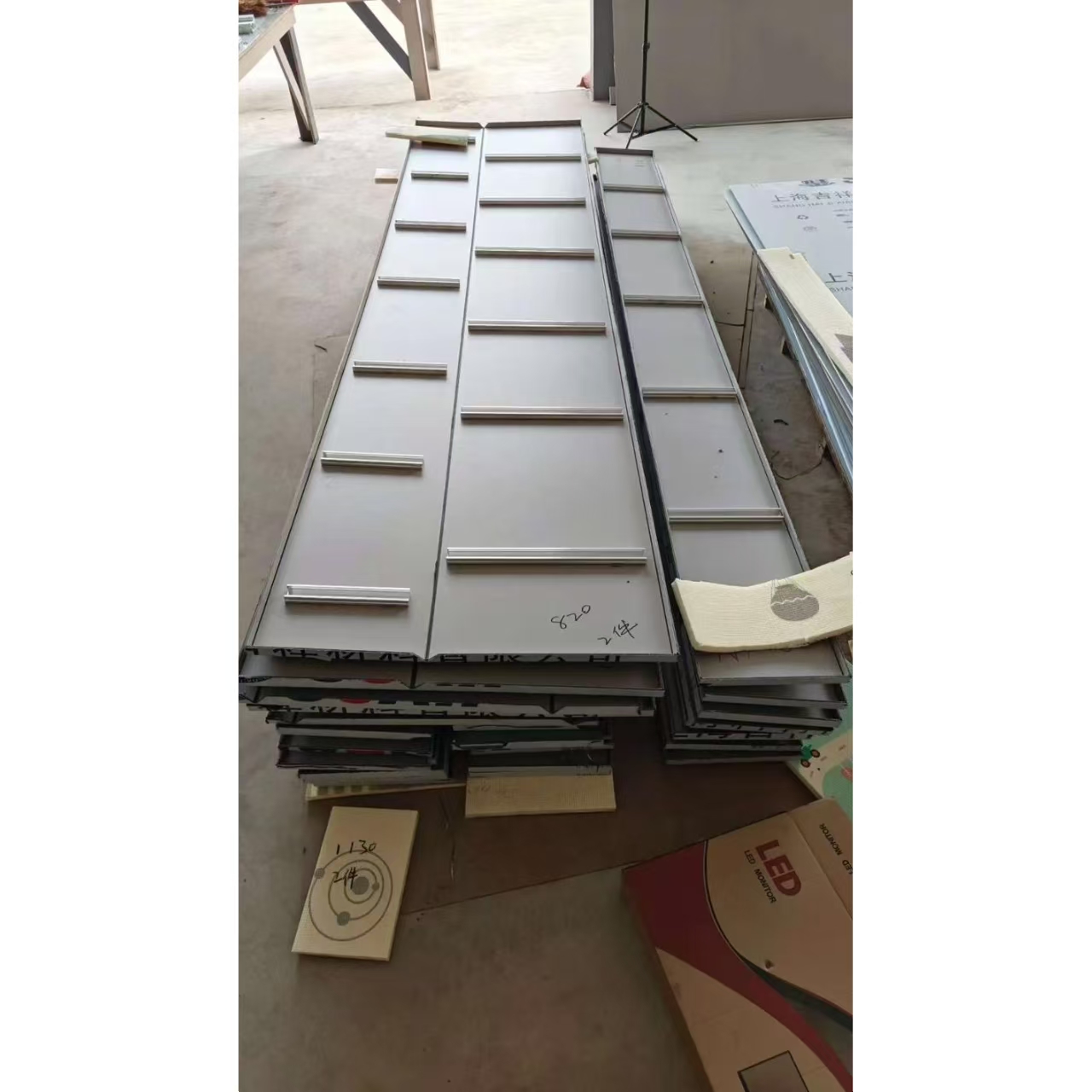
If you have ever bent an Aluminum Composite Panel (ACP) only to hear a dreaded “pop” or see a hairline crack along the fold line, you know the frustration. The material looks perfect on the flatbed, but the moment you try to create a sharp corner, the aluminum skin tears. In most cases, this is not a problem with the aluminum quality. It is a problem with your groove depth.
The difference between a clean, structural fold and a cracked, rejected panel comes down to a simple engineering principle: the 2/3 Rule. This rule dictates exactly how deep your router bit should penetrate the material to leave the precise amount of material necessary to hold the corner together without breaking.
1. Understanding the "Rout and Return" Method
To achieve a sharp 90-degree corner on an Aluminum Composite Panel, you cannot simply bend it like a sheet of steel. The core (polyethylene or mineral) is not structural enough to hold a tight angle, and bending it "cold" would cause the outer skin to stretch until it fractures.
Instead, the industry standard is the Rout-and-Return method. This involves cutting a V-shaped channel (V-Groove) on the reverse side of the panel. This groove removes the core material and the back aluminum skin, leaving only the front aluminum skin intact. The remaining thin layer of aluminum acts as a "living hinge," allowing the panel to fold perfectly without resistance.
The Critical Variable: The Remaining Skin
The strength of your corner depends entirely on the thickness of that remaining aluminum skin. Leave it too thick, and the panel will fight you, leading to "spring back" and a sloppy radius. Leave it too thin (or cut through it), and the hinge snaps.
2. The "2/3 Rule" Explained
While 3A Composites, the manufacturer of Dibond, specifies that the V-groove should leave approximately 1/64 of an inch (approx. 0.4mm) of core material to prevent spring back, top fabricators rely on a more universal metric known as the 2/3 Rule to account for different panel thicknesses and bit angles.
The 2/3 Rule states:
The depth of the V-groove should be approximately 2/3 of the total thickness of the panel.
Conversely, 1/3 of the total thickness is the target for the remaining "hinge" material.
Why "2/3" is the Magic Number
- The 1/3 Hinge: Leaving roughly one-third of the material provides enough tensile strength to hold the bend without cracking.
- Stress Relief: It removes enough of the rigid core to allow the aluminum to bend without mechanical resistance.
- Visual Sharpness: This ratio allows the outer faces of the panels to come together perfectly, eliminating the ugly "bulge" that happens when grooves are too shallow.
Warning on Depth: The most dangerous error is cutting too deep. If your router bit scores or cuts through the visible outer skin, you have created a stress riser. That panel is structurally compromised and will crack, either now or under wind load next year.
3. The Rule in Practice: Sizing the Slot
To apply the 2/3 Rule effectively, you need to match your tooling to your material.
1. Select the Correct Tool
ACP router bits are specifically designed for sandwich structures. You must use a V-Grooving bit with the correct angle (typically 90° to 105°).
- Pro Tip: Do not use a standard wood router bit; the geometry is wrong for aluminum and will cause burring.
2. The 0.2–0.3mm Standard
While the 2/3 Rule is a great starting point, high-precision architectural work demands specific measurements. For a standard 4mm ACP:
- Total thickness: 4mm
- 2/3 Groove Depth: ~2.7mm – 3.0mm
- Remaining Material: You should leave a consistent layer of 0.2mm to 0.3mm of the plastic core AND the front aluminum skin.
How to verify this: Use a Vernier caliper or a depth gauge on a scrap piece. If you see shiny aluminum at the bottom of the groove, you have cut too deep. You should still see a thin layer of the dark plastic core.
4. Execution: Achieving the Perfect Fold
Once the groove is cut to the precise depth (2/3 of the way through), the actual bending is easy, but specific rules apply to avoid breakage:
Do Not Bend Repeatedly
Aluminum work-hardens. If you bend the edge back and forth to "loosen" it, you will snap the grain structure.
- The Rule: Apply steady, even force. Fold it once. Do not bend it back and forth .
Use a Straight Edge or Brake
For manual folding, ensure the panel is clamped firmly against a straight edge. For production runs, a press brake is ideal.
- Note: Use a lower tonnage setting than you would for solid steel to avoid crushing the core .
The "Pop" Test
If you hear a crackling or popping sound as you fold, your groove depth was too shallow (leaving more than 1/3 of the material). Stop immediately and adjust your router depth.
5. Summary: The Golden Rules of V-Grooving
To ensure your ACP panels fold cleanly without breakage, follow this checklist:
1. The 2/3 Rule: Set the router depth so that you cut roughly 2/3 through the total thickness.
2. The 0.3mm Standard: For 4mm panels, aim to leave a 0.2mm – 0.3mm layer of material intact to act as the hinge.
3. Tool Selection: Always use a sharp, carbide V-groove bit specifically rated for ACP/Aluminum.
4. Single Bend: Fold the panel once with even pressure; do not bend it back and forth.
When you master route depth control, you turn floppy sheets into rigid, structural cassettes. You eliminate waste from cracked corners and ensure that your building's facade looks sharp and stays sharp.






