Welcome to Vbond
Shipping Damage vs. Manufacturing Defect: Who Pays for Honeycombed ACP?
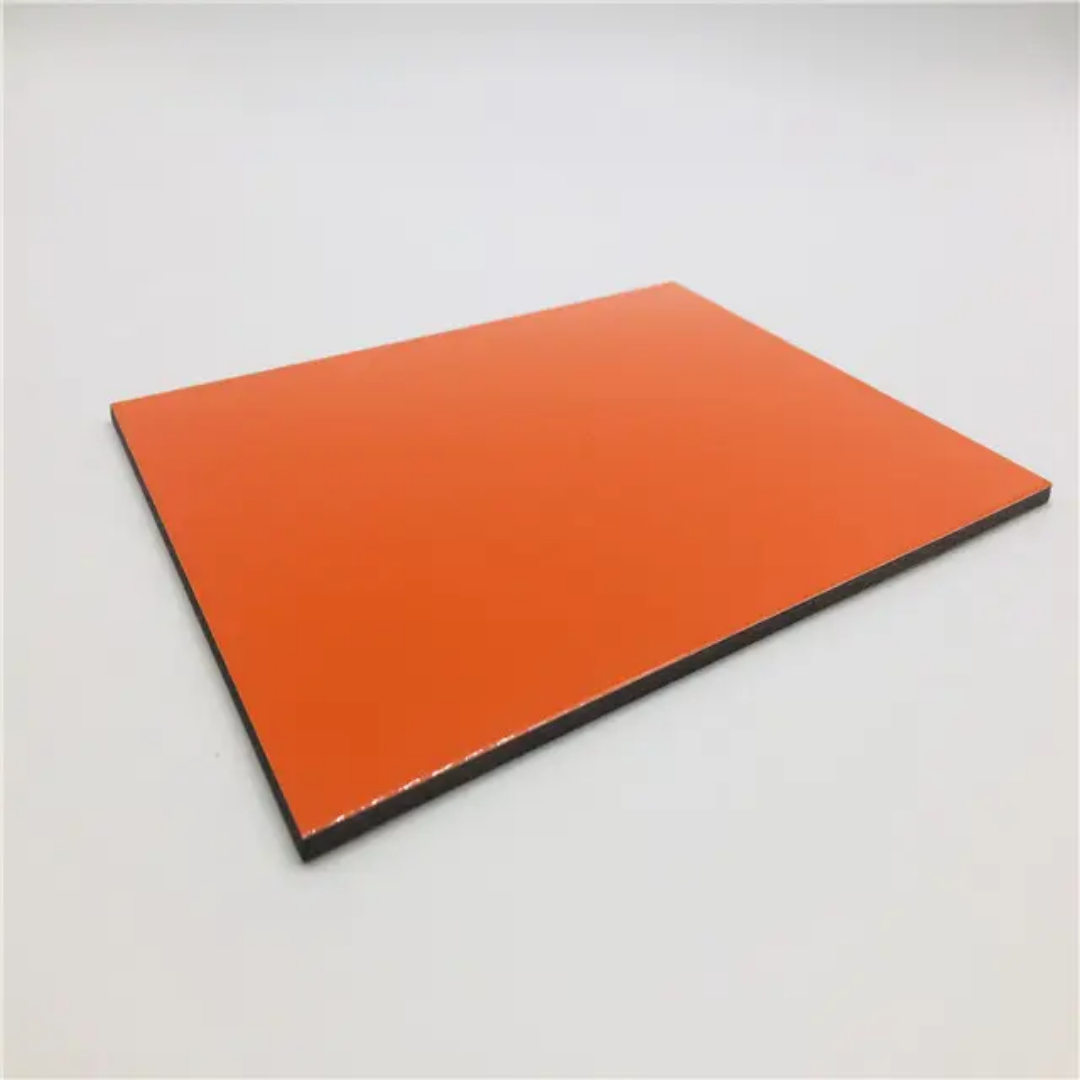
You open a freshly delivered container of aluminum composite panels. The pallets look intact. The wrapping is secure. But as you begin unloading, you see it: a wavy, honeycomb-like pattern beneath the surface of several panels.
The supplier says: "Shipping damage. File a claim with the freight company."
The freight company says: "No external damage to the container or pallets. Not our responsibility."
Your customer says: *"I don't care who pays. Just replace the panels."
You are stuck in the middle. And someone is going to pay for the honeycombed panels. The question is: who?
This article provides a practical framework for distinguishing shipping damage from manufacturing defects in aluminum composite panels. You will learn exactly what evidence to collect, which tests to perform, and how to assign liability before the finger-pointing begins.
What Is Honeycombing in ACP?
First, a clear definition. "Honeycombing" in aluminum composite panels refers to a surface defect where:
- The aluminum skin loses adhesion to the core material
- The unbonded areas create a hexagonal or irregular pattern visible under raking light
- The pattern resembles a honeycomb beneath the surface
Honeycombing is not a dent or a scratch. It is a bond failure between the skin and the core.
The critical question: did the bond fail because of poor manufacturing, or because of impact during shipping?
The Fundamental Distinction
Characteristic | Manufacturing Defect | Shipping Damage |
Root cause | Poor adhesive, inadequate curing, contaminated coil | Impact, crushing, vibration during transit |
Location pattern | Random or uniform across the shipment | Localized to specific pallets or areas |
Relationship to packaging | No correlation with packaging damage | Correlates with crushed corners, torn wrapping, or shifted pallets |
Progression over time | May appear or worsen over weeks/months | Present immediately upon unpacking |
Microscopic evidence | Adhesive voids or contamination | Crushed core, stretched skin, impact marks |
Shipping Damage: How It Happens
Even with proper packaging, ACP panels can be damaged during ocean freight and overland transportation.
Common Shipping Damage Mechanisms
Mechanism | Description | Visible Signs |
Forklift impact | Forklift tines puncture or strike a pallet during loading/unloading | Crushed corner, torn wrapping, broken pallet |
Pallet crushing | Heavy pallets stacked on top of lighter pallets | Compression marks, bowed panels |
Strap damage | Over-tightened shipping straps | Indentation lines across panel faces |
Container shift | Load shifts during rough seas or sudden braking | Panels sliding against container walls, edge damage |
Vibration fatigue | Continuous vibration causes micro-fretting between panels | Patterned abrasion, fretting marks |
Evidence of Shipping Damage
External Signs (Visible Before Unpacking):
- Torn or punctured stretch wrap
- Crushed or splintered pallet corners
- Broken or missing strapping
- Water stains (indicating container leakage)
- Obvious impact marks on the container walls
Internal Signs (Visible After Unpacking):
- Concentrated damage on one corner or edge of a pallet
- Pattern of damage that matches adjacent panels (e.g., all panels in the bottom layer are affected)
- Scuff marks, abrasion, or scratching consistent with sliding
- Crushed core visible at the panel edge
Manufacturing Defect: How It Happens
Manufacturing defects originate at the factory, not during transit. They affect panels regardless of how carefully they are shipped.
Common Manufacturing Defect Mechanisms
Mechanism | Description | Visible Signs |
Inadequate adhesive | Insufficient glue applied during lamination | Uniform bond weakness across many panels |
Contaminated coil | Oil, dust, or oxidation on aluminum before bonding | Random blistering with no impact pattern |
Insufficient curing | Oven temperature too low or line speed too fast | Consistent bond weakness throughout shipment |
Poor core quality | Recycled or contaminated polyethylene | Brittle core, edge crumbling, unpredictable bonding |
Uneven laminating pressure | Nip rollers are out of calibration | Patterned bond variation (e.g., stronger on one edge) |
Evidence of Manufacturing Defect
Pattern-Based Evidence:
- Honeycombing appears randomly across the shipment (not concentrated on one pallet)
- Multiple pallets from the same production batch show identical problems
- The defect pattern is uniform across the entire panel
- Panels stored at the factory (if available) show the same issue
Test-Based Evidence:
- Panel fails the 5-minute water boil test (heat/moisture accelerates the latent defect)
- Cross-section shows adhesive voids or contamination under magnification
- Peel test shows inadequate bond strength (less than 2.0 N/mm)
- Core material crumbles or shows recycled content
The 6-Step Investigation Protocol
When honeycombing is discovered, follow this protocol before assigning blame.
Step 1: Document the Container Condition (Before Unloading)
Photograph and record:
- Container exterior (any dents, punctures, or damage)
- Container door seals (intact or broken?)
- Container interior (water stains, rust, debris)
- Pallet arrangement (shifted, tipped, or intact?)
Why this matters: If the container shows no external damage and the seals are intact, shipping damage is less likely. If the container has a large dent aligned with the damaged pallet, shipping damage is probable.
Step 2: Document Pallet and Packaging Condition
Photograph and record for each pallet:
- Stretch wrap (torn, punctured, or intact?)
- Corner protectors (crushed, missing, or intact?)
- Strapping (broken, loose, or tight?)
- Pallet structure (cracks, splinters, crushed corners?)
Red flags for shipping damage:
- Crushed corner protector with corresponding panel damage
- Broken strapping on one pallet, but not others
- Pallet leg crushed on one corner only
Step 3: Map the Damage Pattern
Create a simple diagram of the container showing:
- Which pallets have damaged panels
- Which position on each pallet (top, middle, bottom, left, right)
- Which face of each panel (front, back, edge)
Interpretation:
Damage Pattern | Likely Cause |
Random across all pallets and positions | Manufacturing defect |
Concentrated on the bottom layer of one pallet | Forklift impact or crushing |
Concentrated on the top layer of one pallet | Over-stacking or a falling object |
Uniform across the entire shipment | Manufacturing defect |
Pattern matches adjacent panels (mirror image) | Vibration fretting (shipping) |
Step 4: Perform the Palm Tap Test
With the panel lying flat, strike the surface with an open palm at multiple locations.
Sound | Interpretation |
Sharp, high-pitched "tap." | Good bond (no honeycombing) |
Dull, flat "thud." | Localized debonding (possible impact damage) |
Hollow "drum" sound | Widespread debonding (possible manufacturing defect) |
Note: The palm tap test alone cannot distinguish the cause. It only confirms the presence of debonding.
Step 5: Perform the 5-Minute Water Boil Test
Cut a 100mm x 100mm sample from a damaged panel. Submerge in boiling water for 5 minutes. Inspect immediately.
Result | Interpretation |
No new blisters, existing damage unchanged | Damage is mechanical (shipping impact likely) |
New blisters appear, and existing damage worsens | Latent bond weakness (manufacturing defect likely) |
Why this works: Manufacturing defects involve poor adhesive bonding. Heat and moisture accelerate the failure. If the panel was poorly manufactured, boiling will create new blisters or enlarge existing ones. If the damage was purely mechanical (crushed core from impact), boiling will not create new blisters elsewhere on the panel.
Step 6: Cross-Section Examination
Cut through a damaged area and examine the edge under 10x magnification.
What You See | Interpretation |
Crushed, deformed core with intact adhesive | Impact damage (shipping) |
Clean gap between skin and core with no adhesive | Adhesive void (manufacturing) |
Skin separated, but adhesive residue visible | Poor adhesion (manufacturing) |
Skin torn or stretched with core attached | Tensile overstress (shipping impact) |
Who Pays: Decision Matrix
After completing the investigation, use this matrix to assign liability.
Evidence Profile | Conclusion | Who Pays |
Container damaged, pallet crushed, damage localized, boil test shows no new blisters | Shipping damage | Freight carrier (if insured) or buyer (if uninsured) |
Container intact, packaging intact, damage random across shipment, boil test creates new blisters | Manufacturing defect | Supplier |
Container intact, but one pallet shows a crushed corner with matching panel damage | Shipping damage (forklift) | Freight carrier or buyer |
No clear evidence either way | Inconclusive | Negotiated split (typically 50/50) |
Preventing Disputes: What to Do Before Shipping
For Buyers: Pre-Shipment Quality Baseline
Before panels leave the factory, require:
1. Factory inspection report signed by both parties (or a third party like SGS or Bureau Veritas)
2. Photographs of each pallet before wrapping and loading
3. Boil test certificate showing random samples passed
4. Mill certificates confirming H14 temper and virgin LDPE core
Why this matters: If you have documentation showing the panels were defect-free at the factory, any honeycombing discovered at delivery is likely shipping damage.
For Buyers: Receiving Inspection
Upon delivery, before signing the freight bill:
1. Inspect the container for external damage
2. Note any damage on the delivery receipt ("container dented on rear left corner")
3. Photograph damaged packaging before unwrapping
4. Request a carrier inspection if damage is significant
Critical rule: Never sign a clean delivery receipt if you suspect damage. Write "SUBJECT TO INSPECTION" or note specific damage on the receipt.
For Suppliers: Shipping Documentation
To protect against false shipping damage claims:
1. Photograph every pallet after wrapping, before loading
2. Use corner protectors and edge guards on all pallets
3. Apply shock indicators (impact labels) to high-value shipments
4. Include a boil test certificate with each shipment
Real-World Case Study: Who Paid?
The Shipment: 2,000 ACP panels from Vietnam to Australia. Container delivery.
The Discovery: Upon unpacking, 150 panels showed honeycombing. The buyer claimed a manufacturing defect. The supplier claimed shipping damage.
The Investigation:
- Container exterior: No dents or damage
- Container seals: Intact
- Pallet packaging: One pallet had a crushed corner; others were intact
- Damage pattern: 140 of 150 damaged panels came from the single pallet with the crushed corner
- Boil test: Damaged panels showed no new blisters after boiling
- Cross-section: Crushed core visible, adhesive intact
The Conclusion: Shipping damage (forklift impact during loading or unloading). The freight carrier had signed a clean delivery receipt, so the carrier denied liability.
Who Paid: The buyer paid for replacement panels ($22,500) because they signed the clean receipt without noting the crushed pallet.
The Lesson: A 30-second inspection at delivery would have saved $22,500.
Insurance Considerations
For Buyers
- Marine cargo insurance typically covers shipping damage, not manufacturing defects
- File claims within the time limit (often 7–14 days from delivery)
- Preserve damaged packaging and panels for carrier inspection
- Obtain a survey report from a licensed marine surveyor for large claims
For Suppliers
- Product liability insurance covers manufacturing defect claims
- Most policies have a deductible ($5,000–$25,000)
- Document your quality control process to defend against false claims
Conclusion: Evidence Wins Disputes
Shipping damage and manufacturing defects can look identical to the naked eye. The difference is not in how the honeycombing appears—it is in the pattern, the context, and the test results.
The party that collects the best evidence wins the dispute. Photographs of packaging. Container inspection notes. Boil test results. Cross-section images. Pre-shipment inspection reports.
Do not wait for a dispute to start collecting evidence. Build your documentation protocol before the container arrives. And remember: a clean delivery receipt signed without inspection is a waiver of your right to claim shipping damage.