Welcome to Vbond
Solving the "Oil Canning" Effect in Aluminum Composite Panel: Tension Distribution for Flat Panels
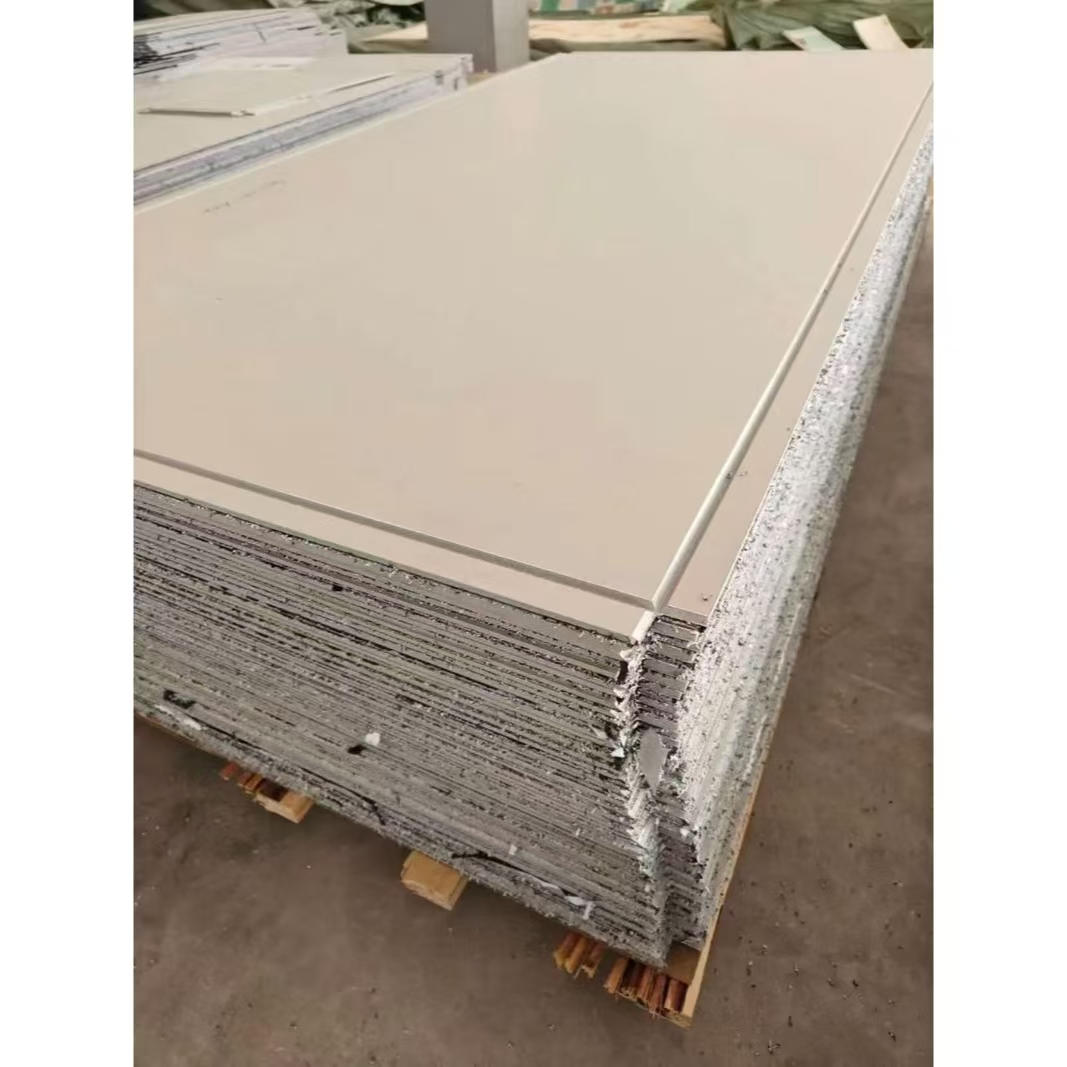
The "oil canning" effect—visible waviness or rippling across the flat surface of an aluminum composite panel—is the single most frustrating aesthetic failure in modern facade construction. It transforms a sleek, mirror-like building envelope into a distorted, budget-looking disappointment. Your client sees waves. Your reputation sees ripples.
But here is the technical truth that separates expert specifiers from disappointed building owners: Oil canning is not a mystery. It is a mechanical problem of unbalanced tension.
While often dismissed as "inherent" to metal panels, oil canning can be systematically prevented by understanding how tension is distributed across a composite panel's structure during manufacturing, fabrication, and installation. This guide provides the engineering framework for achieving truly flat, ripple-free ACP facades.
1. The "Oil Canning" Mechanism: Why Flat Panels Fail
Oil canning, also known as elastic buckling or stress wrinkling, refers to the visible waviness or rippling that can occur on the surface of ACP sheets. This surface defect is more pronounced in large, flat areas of the facade and can be caused by various factors, such as thermal expansion, material properties, and installation techniques.
The Root Cause: Unbalanced Stress
Metal has a "memory." During the manufacturing process—from coil production to slitting to panel fabrication—stresses are induced into the material. The metal naturally wants to revert to its original, unstressed shape. When these internal stresses are not perfectly balanced, the panel buckles outward into visible waves.
Three separate stresses can be induced on the metal during production that could lead to the development of oil canning:
Stress Type | Description | Visual Result |
Full center | The coil is longer in the middle section | Ripples or buckles along the center of the panel |
Wavy edge | The edge of the coil is longer along the strip | Waviness concentrated at panel edges |
Camber | The coil deviates from a straight line when laid flat | Banana-shaped curvature across the panel |
Unlike single-skin metal, which will always exhibit some degree of oil canning, properly manufactured ACP is designed to resist this effect. ACM panels are flat when manufactured and stay flat even after installation because the skins are bonded to the core under tension, which produces a balanced panel.
When oil canning occurs, it indicates that this balanced tension has been compromised—either by manufacturing defects, fabrication errors, or installation stress.
2. The Manufacturing Foundation: Pre-Stressed Bonding
The first line of defense against oil canning is the manufacturing process itself. The key engineering principle is pre-stressed tension distribution.
How Balanced Tension Works
In a high-quality ACP, the aluminum skins are bonded to the core under precisely controlled tension. This creates a "balanced panel" where the internal forces cancel each other out. The result is a flat, stable sheet that resists buckling under normal conditions.
Critical Manufacturing Variables:
Variable | Impact on Oil Canning |
Core stiffness | A stiffer core provides greater resistance to elastic buckling |
Bonding tension | Uneven tension during lamination creates residual stress |
Skin thickness | Thicker skins (0.3mm+) offer more resistance than thin skins (0.21mm) |
Core material | Mineral-filled (A2) and polypropylene cores provide superior flatness compared to standard PE |
The 50% Rigidity Advantage
Independent Finite Element Analysis (FEA) testing has demonstrated that advanced bonded aluminum panels can be 50% more rigid than solid aluminum of equivalent thickness. In buckling load tests, engineered composite panels demonstrated resistance more than four times greater than solid 3mm aluminum sheets.
This data confirms that oil canning is not inevitable—it is a design variable that can be engineered out through proper material selection.
3. The Fabrication Variable: Grooving and Cutting Stress
Oil canning can be induced or exacerbated during the fabrication process. Every cut, groove, and fold introduces stress into the panel. If these stresses are not managed, they will manifest as waviness.
V-Grooving Depth Control
When V-grooving for folded edges, the remaining material thickness directly affects stress distribution. A groove that is too deep weakens the panel structure; a groove that is too shallow creates tension that pulls the panel out of flat.
Standard Guideline: For a 4mm thick ACP panel, typically a 3.2mm deep groove is routed, leaving approximately 0.8mm of material to maintain the outer surface integrity.
Cut Edge Stress
Aggressive cutting with dull blades creates burrs and micro-stresses along the panel edge. These stresses propagate inward and can trigger oil canning, particularly in wide, flat panels.
Best Practice: Use sharp, carbide-tipped TCG blades. Deburr all cut edges to relieve edge stress before installation.
4. The Installation Variable: Tension Distribution on the Substrate
This is the most common—and most preventable—cause of oil canning. Even a perfectly manufactured panel will buckle if installed on an uneven substrate or fastened without allowance for thermal movement.
Substrate Flatness is Non-Negotiable
If the structure underneath isn't flat or level, it may distort the metal panel once it's fastened into place, resulting in visible waves.
Even small values of out of square can lead to problems, as most facade cladding spans lengths of up to 4 metres—the longer the span, the greater the impact of any out of square on oil canning.
Specification: The supporting structure must be flat within ±2mm over a 2-meter span.
The Thermal Expansion Imperative
Aluminum expands and contracts with temperature changes. ACP has a linear expansion rate of 2.40 mm per meter of panel length for every 100°C temperature change.
If panels are fastened too tightly or without allowance for thermal movement, this natural expansion can create internal stress that leads to oil canning over time.
Critical Fastener Rules:
Rule | Requirement |
One fixed point per panel | Anchor at the center or one corner only |
Slotted holes for all other fasteners | Allows movement in both directions |
No over-driving | Overtightening deforms the panel surface |
No angled fasteners | Driving at an angle creates stress points |
Drill holes with an expansion margin | Accommodate thermal movement |
Panel Width and Aspect Ratio
Wider, flatter panels are more susceptible to oil canning because they lack the structural rigidity provided by ribs or striations. For very wide panels (exceeding 1.2m), specify intermediate support or consider concealed fastener systems that allow more float.
5. System Selection: Field-Fabricated vs. Shop-Fabricated
The choice of installation system directly affects tension distribution.
Field-Fabricated Systems: These are assembled by the installer on-site. They offer greater flexibility for adjustments during construction but require meticulous attention to fastener placement and joint sealing. Common systems include one-piece molding, two-piece molding, clip-and-caulk, and face-fastened.
Shop-Fabricated Systems (Rainscreen): These panels are routed, bent, and fabricated off-site. The rout-and-return method creates a cassette that is then clipped to the substructure. This system inherently reduces oil canning because the folded edges add rigidity, and the concealed clip system allows unrestricted thermal movement.
Recommendation: For large, flat facades where oil canning is a primary concern, specify a shop-fabricated rainscreen system with concealed clips.
6. The "Oil Canning" Prevention Checklist
To ensure your ACP facade remains flat, ripple-free, and architecturally true, enforce these specifications:
Phase | Requirement |
Material Selection | Specify panels with documented balanced tension manufacturing; A2 mineral or polypropylene core preferred |
Substrate Verification | Flat within ±2mm over a 2m span |
Fastening System | One fixed point per panel; all other fasteners through slotted holes |
Expansion Gaps | Minimum 5–10mm allowance between panels |
Sub-frame Spacing | Uniform spacing, typically 600mm center-to-center |
Torque Control | No over-driving; use torque-controlled tools |
Edge Finishing | Deburr all cut edges before installation |
Conclusion
Oil canning is not a mysterious "inherent characteristic" that you must accept. It is a predictable mechanical response to unbalanced tension. By controlling tension at three critical stages—manufacturing (balanced bonding), fabrication (stress-free cutting), and installation (thermal movement allowance)—you can achieve truly flat, ripple-free ACP facades.
The solution is not to blame the material. It is to engineer the tension distribution.






