Welcome to Vbond
Sound Insulation and ACP: How Much Quieter Will Your Building Be?
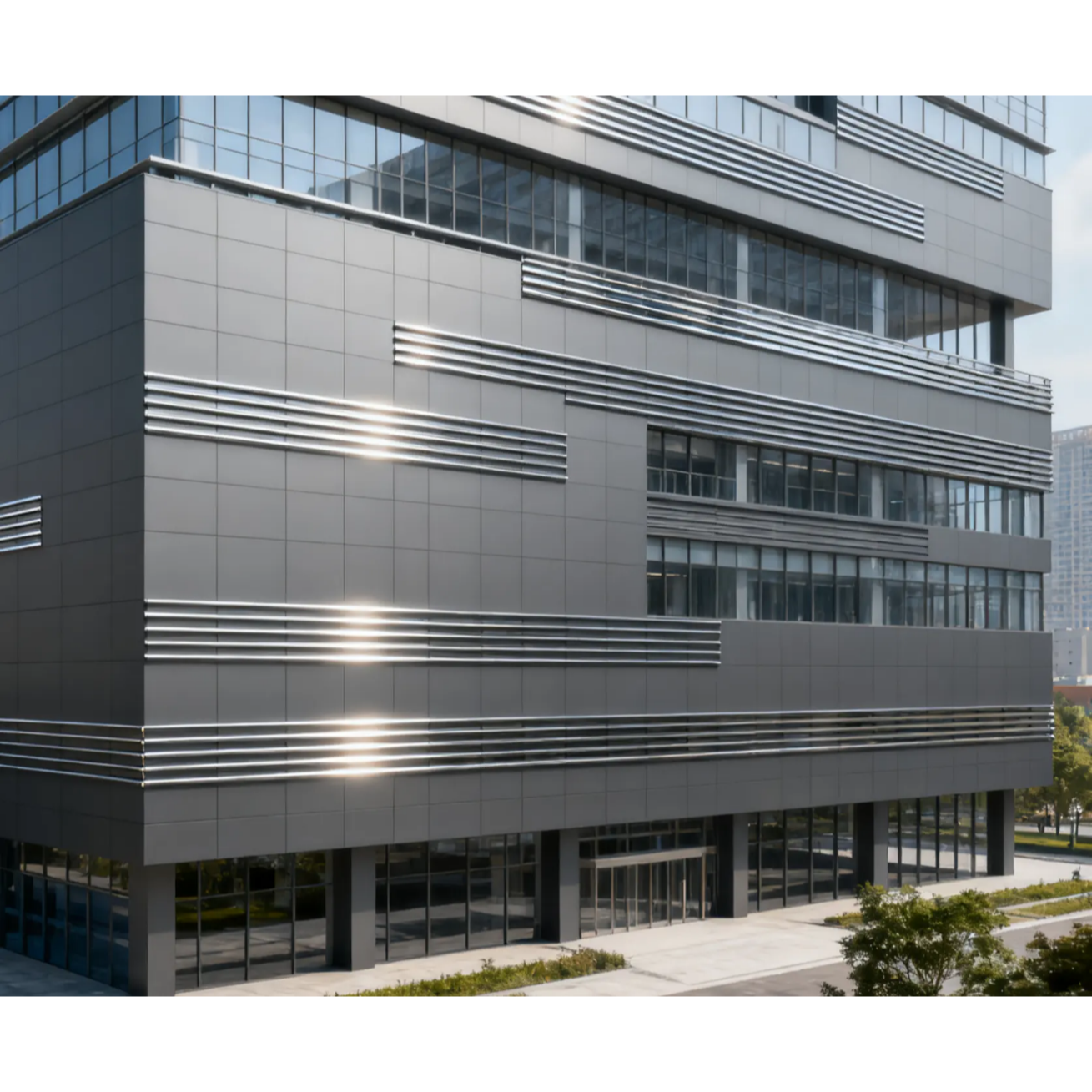
In the urban landscape dominated by traffic, construction, and ambient noise, creating a peaceful interior environment is a key priority for architects and developers. Aluminum Composite Panels (ACP) are widely used for their aesthetic and functional properties, but their role in acoustic performance is often misunderstood. This article provides a professional, data-driven analysis of ACP's sound insulation capabilities, clarifying how they contribute to a quieter building and what realistic expectations should be.
1. Understanding Sound Insulation: The Core Principles
Sound insulation, or acoustic attenuation, is measured by a panel's ability to block airborne sound transmission (like traffic or voices). The key metric is the Sound Transmission Class (STC), a single-number rating where a higher score indicates better performance. A 10-point increase means perceived loudness is roughly halved.
Effective sound insulation depends on three core principles:
Mass Law: Generally, heavier and denser materials block sound better.
Decoupling: Separating wall layers disrupts sound vibration paths.
Damping: Internal materials that absorb and dissipate sound energy.
2. The Acoustic Profile of a Basic ACP System
A standard 4mm ACP panel (with a polyethylene core) by itself has a relatively low mass and offers limited standalone sound insulation—typically in the range of STC 20-25. This means it can attenuate normal speech to a muffled, barely audible level, but it is not sufficient for blocking significant traffic or mechanical noise.
Therefore, it is critical to understand that an ACP facade is a complete building envelope system. Its acoustic performance is not defined by the panel alone but by the integration of the panel, the air gap, the insulation, and the primary wall structure.
3. Designing a High-Performance Acoustic ACP Facade
To significantly improve sound insulation, the ACP cladding must be designed as part of a rainscreen or curtain wall system. Here’s how each component contributes:
ACP Panel as the Outer Leaf: Acts as the first barrier, reflecting and dissipating some sound energy.
Ventilated Air Cavity: The gap behind the panel provides acoustic decoupling, breaking the direct path for sound vibrations.
The Critical Element: Acoustic Insulation Batts: Installing dense, non-combustible mineral wool insulation in the cavity is the most effective upgrade. It absorbs sound energy, dampens vibrations, and adds mass.
Airtight Primary Wall: The inner structural wall (concrete, CMU, or studwork with sheathing) must be sealed and massive. Any gaps or "flanking paths" will compromise performance.
A well-designed, drained, and back-ventilated facade with a dense mineral wool layer can achieve a composite system rating of STC 45-55 or higher, effectively reducing loud street noise to a faint background hum.
4. Comparative Analysis: Real-World Noise Reduction
What do these STC ratings mean in practice for your building?
STC 25 (Basic Panel Only): Loud speech can be understood through the wall.
STC 35 (Basic System): Loud speech is audible but not intelligible; traffic noise is clearly heard.
STC 45 (Enhanced System): Loud speech is reduced to a murmur; most traffic noise is blocked.
STC 50+ (High-Performance System): Very effective sound blocking. Loud exterior noises are barely audible, creating a quiet interior environment suitable for offices, residences, and healthcare facilities.
5. Important Limitations and Considerations
Core Material Matters: While mineral-filled ACP cores offer superior fire safety, their acoustic dampening effect is marginal compared to the insulation in the cavity. The core type is not a primary acoustic driver.
It's a System, Not a Product: Specifying a "high STC ACP" is a misconception. You must specify an acoustically rated facade system.
Sealing is Paramount: The performance of any system relies on perfect airtight detailing around windows, joints, and penetrations. A small leak can drastically reduce the effective STC.
Professional Assessment: For projects with stringent acoustic requirements (e.g., near airports, concert halls, or hospitals), engage an acoustic consultant early in the design phase.
Conclusion: A Strategic Tool in the Acoustic Toolkit
ACP cladding, by itself, is not a high-performance acoustic product. However, as the outer layer of a properly engineered, multi-component facade system, it plays a vital role in achieving excellent sound insulation.
The answer to "How much quieter?" is: Significantly quieter, if you design for it. The transformative improvement comes from integrating decoupled layers, dense cavity insulation, and airtight construction. By moving beyond viewing ACP as merely a skin and instead specifying it as part of a holistic acoustic envelope, you can create buildings that offer both stunning aesthetics and the profound benefit of peace.






