Welcome to Vbond
Sourcing High-Quality Aluminum Composite Panels: A Direct Importer's Guide o Bulk Pricing &Supplier
Sourcing High-Quality Aluminum Composite Panels: A Direct Importer's Guide to Bulk Pricing & Global Suppliers
The global construction industry's appetite for aluminum composite panels (ACP) continues to grow, driven by urbanization, architectural innovation, and the demand for lightweight, durable facade solutions. For direct importers—whether you're a facade contractor, building materials distributor, or procurement specialist—mastering the art of sourcing ACPs directly from global manufacturers is the single most effective way to protect your margins while ensuring project quality.
This comprehensive guide walks you through every critical step of the direct import journey. From understanding the core specifications that define "high-quality" to negotiating bulk pricing with dominant global suppliers, we provide the actionable intelligence you need to source with confidence and profitability.
Understanding the Direct Import Advantage
Why go through the complexities of direct importing when domestic distributors offer convenience? The answer lies in the numbers and control.
- Margin Protection: By eliminating multiple layers of distribution, direct importers can capture margin improvements of 30-50% compared to buying from local stockists.
- Supply Chain Control: You gain direct visibility into production schedules, quality control processes, and shipping timelines, allowing for proactive project management.
-Customization Access: Direct relationships enable bespoke manufacturing—custom colors, specific dimensions, and unique finishes—without intermediaries complicating the specification process.
- Volume Pricing: When you buy at scale directly from the source, you qualify for genuine tier-one pricing, fundamentally changing your cost structure for large projects.
However, this advantage comes with responsibility. You must become an expert in supplier evaluation, material science, and international logistics.
The Anatomy of a High-Quality ACP: What You Must Verify
Before negotiating prices, you must know precisely what you're buying. High-quality ACPs are defined by the integrity of their components and the precision of their assembly. As a direct importer, verifying these elements is your first and most critical task.
Core Composition: The Heart of the Panel
The core determines the panel's fire performance, weight, and rigidity.
- Fire-Retardant (FR) Mineral Core: For exterior facades and buildings with strict safety codes, an A2 or B1 classified core is mandatory. These cores contain a high percentage of mineral fillers that inhibit combustion. Always request third-party test reports from accredited labs like SGS, TÜV, or Intertek to validate claims.
- Low-Density Polyethylene (LDPE) Core: Suitable for interior applications and signage, this core offers excellent flatness and formability but lacks fire resistance. Ensure the polyethylene used is virgin material, not recycled content, which can lead to inconsistent quality and blistering.
Aluminum Skins: The Protective Armor
The outer layers of aluminum protect the core and provide the aesthetic surface.
- Alloy Specification: Reputable manufacturers use industrial-grade aluminum alloys such as AA3003 or AA5005, known for their excellent formability and corrosion resistance. Inquire about the specific alloy and request mill certificates.
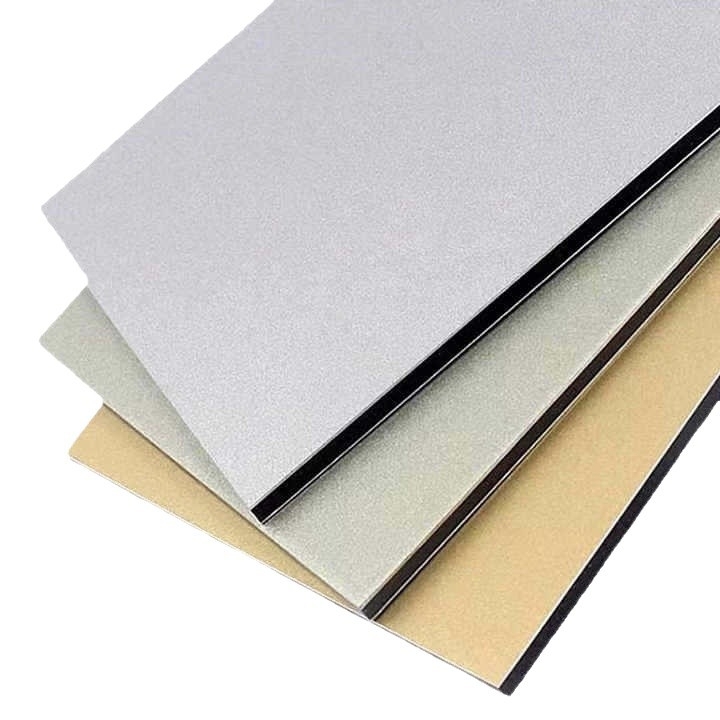
- Skin Thickness: For exterior applications, a minimum thickness of 0.30mm to 0.50mm per skin (for a 4mm total panel) is standard. Premium applications may demand thicker skins for enhanced impact resistance. Cheap panels often use 0.15mm or 0.21mm skins, which are prone to denting and "oil canning" (visible surface waviness).
- Coating Integrity: The coating is your first line of defense against weather and UV degradation.
- PVDF (Polyvinylidene Fluoride): The industry gold standard for exterior use. A 70% PVDF resin coating provides exceptional color retention and chalk resistance, typically backed by 10 to 20-year warranties.
- Polyester (PE) Coating: Economical and suitable for interior applications or temporary installations. It offers less UV resistance and will fade faster than PVDF.
- Testing for Quality: Ask for MEK (Methyl Ethyl Ketone) rub test results. A high-quality, fully cured coating should withstand over 100 double rubs without showing the underlying primer.
Peel Strength: The Bond That Matters
A panel is only as good as the bond between its skins and core. Peel strength measures the force required to separate the aluminum from the core.
- Industry Benchmark: For quality panels, a peel strength of >7 N/mm or 50N/mm is considered standard. Some high-spec suppliers achieve even higher values.
- Why It Matters: Inadequate peel strength leads to delamination—the catastrophic failure where the aluminum skin separates from the core, often caused by heat, moisture ingress, or poor manufacturing. This is a project-killing defect that leads to complete facade replacement.
Navigating the Global Supplier Landscape
While ACP manufacturing exists worldwide, certain regions and countries have established themselves as dominant players. Understanding this landscape helps you target your sourcing efforts effectively.
China: The World's ACP Manufacturing Hub
China accounts for the vast majority of global ACP production, and for good reason. The industry is concentrated in established industrial clusters, primarily in Shandong, Guangdong (particularly Foshan), and the Yangtze River Delta region (including Shanghai, Jiangsu, and Zhejiang provinces).
Why China Dominates:
- Vertically Integrated Supply Chains: These hubs benefit from integrated supply chains that link raw aluminum processing, polymer core extrusion, and advanced coating technologies. This vertical integration reduces material costs by up to 25% compared to fragmented regional suppliers elsewhere.
- Colossal Production Capacity: Top-tier manufacturers operate continuous lamination lines with monthly outputs frequently exceeding 300,000 to 500,000 square meters, a capacity essential for fulfilling large-scale contracts without crippling delays.
- Export-Ready Logistics: Factories are strategically located near major international ports like Shanghai, Guangzhou, Shenzhen, and Qingdao, streamlining the logistics of container shipment and reducing inland transportation costs.
- Cost Efficiency: The combination of local raw material supply and stable labor costs helps reduce unit prices by about 15% to 30% for bulk orders, giving international contractors more room in their project budgets.
Premium Global Alternatives
While China dominates volume, certain premium brands offer specialized value:
- European Excellence: Brands like ALUCOBOND (3A Composites GmbH) represent the pinnacle of ACP quality, with precise specifications including 0.5mm aluminum skins (EN AW-5005A alloy), mineral cores (A2 or B class), and 50-year useful life design. These command premium pricing but offer unmatched performance and sustainability credentials.
- Asian Specialists: Companies like ALUCOMAT position themselves as total solution providers with rigorous certifications (ASTM E84, BS 476, DIN 4102) and premium coating systems like Arkema Kynar 500 PVDF.
Supplier Evaluation Framework: Beyond Price and MOQ
Selecting the right ACP manufacturer requires a structured approach that balances technical capability, operational reliability, and transactional safety.
1. Technical Competence and Material Specifications
Aluminum Alloy | Mill certificates confirming alloy grade | AA3003, AA5005, or EN AW-5005A |
Skin Thickness | Actual measured thickness (not just claimed) | ≥0.30mm (exterior), ≥0.50mm (premium) |
Coating Type | PVDF resin percentage, warranty terms | 70% PVDF, 10-20 year warranty |
Fire Rating | Third-party test reports from accredited labs | A2 or B1 (EN 13501-1), Class A (ASTM E84) |
Peel Strength | Test results from batch samples | >7 N/mm or >50N/mm |
2. Operational Reliability Metrics
Publicly available performance indicators provide insight into real-world dependability :
- On-Time Delivery Rate: Aim for ≥95%. Delays disrupt construction timelines and increase site management costs. Suppliers like Shandong Ecobuild, Jiangsu Greatpoly, and Taizhou Vbang report 100% on-time delivery.
- Response Time: Suppliers responding within ≤2 hours demonstrate strong customer service infrastructure—critical for resolving technical queries or order adjustments. Some top performers achieve sub-1-hour responses.
- Reorder Rate: Rates above 18-20% suggest consistent product quality and client satisfaction. Taizhou Vbang's 50% reorder rate signals exceptional post-sale trust.
3. Production Capacity and Customization Flexibility
Assess whether the factory supports your project-specific needs:
- Thickness Options: Standard 2-6mm, with capabilities for up to 30mm for honeycomb variants.
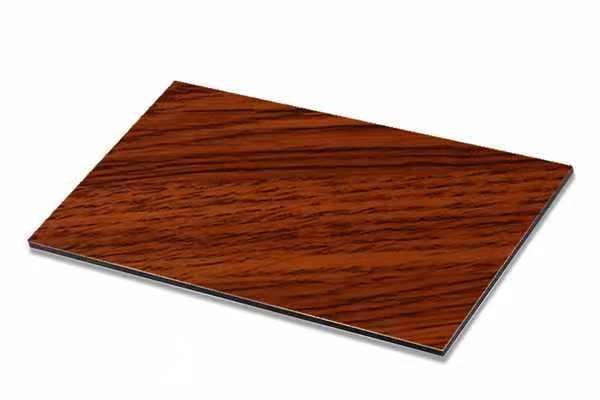
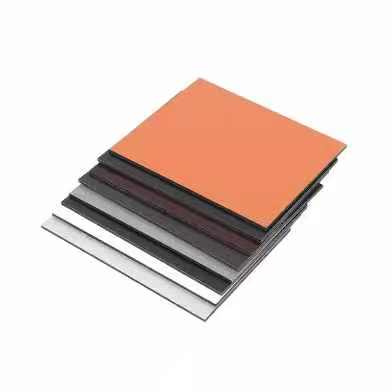
- Surface Finishes: Wood grain, metallic, brushed, mirror, matte, glossy, or custom digital prints.
- Value-Added Services: Pre-cutting to blueprint dimensions, groove routing for folding, corner forming, CNC cutting, and logo embossing.
- OEM/Private Labeling: Custom packaging, logo printing on protective film, and labeled edge seals.
Price Comparison and Order Structure Analysis
Pricing varies significantly based on material grade, core type, customization level, and order volume. The following comparative analysis draws from verified supplier data :
Supplier | Product Focus | Price Range (USD/m² | Minimum Order | Key Strengths |
Shandong Ecobuild New Material Co., Ltd. | PVDF & Fireproof ACP | $1.90–6.90 | 100 m² | 100% on-time delivery, ≤1h response, low MOQ |
Shanghai Alumetal Decorative Material Co., Ltd. | PVDF/PE ACP, broad range | $3.20–25.00 | 50–300 m² | 96% on-time, 18% reorder rate, budget-to-premium tiers |
Foshan Henglicai Building Materials Co., Ltd. | Custom exterior cladding | $2.20–18.79 | 150–1,000 m² | 77% on-time, flexible customization, cuttable/bendable solutions |
TAIZHOU VBANG COMPOSITE PANEL CO.,LTD | PVDF-coated, fire-rated, premium finishes | $2.10–30.00 | 1,000–1,000,000 m² | 50% reorder rate, massive scalability, 100% on-time delivery |
Jiangxi Wanding New Material Co., Ltd. | Wood-grain interior, grooved ACP | $6.90–22.12 | 100–300 m² | Niche finishes, ultra-low MOQ, 100% on-time |
Zhejiang Jusen Building Materials Technology Co., Ltd | Fireproof, anti-static, eco-friendly | $4.30–5.80 | 500 m² | 93% on-time, specialized in engraving and drilling |
This comparison reveals distinct procurement strategies:
- Budget-conscious buyers may favor Shandong Ecobuild or Foshan Henglicai for competitive pricing and moderate MOQs.
- High-end architectural projects requiring specialized textures can leverage Jiangxi Wanding's wooden finishes at higher unit costs.
- Large infrastructure developments benefit from TAIZHOU VBANG COMPOSITE PANEL CO., LTD's massive scalability and consistent quality control.
The Direct Import Process: 6 Core Steps
Step 1: Define Your Project Requirements
Start with clear, detailed specifications before reaching out to any supplier :
- Panel dimensions (thickness, width, length)
- Core specification (PE, FR, or non-combustible mineral core)
- Coating type (PVDF, polyester, anodized, powder-coated)
- Color code (RAL, Pantone, or actual sample swatch)
- Fire resistance standards required
- Installation systems compatibility
- Required certifications (ISO, EN, ASTM)
Step 2: Select and Evaluate Suppliers
Shortlist suppliers based on technical capability, operational metrics, and export experience :
- Verify ISO 9001 certification and factory size
- Check online transaction history and reorder rates
- Prioritize direct manufacturers over trading companies
- Request factory audit documentation or schedule virtual tours
Step 3: Request Samples and Verify Certifications
Always request physical samples before placing bulk orders :
- Assess surface texture, rigidity, bonding quality, and coating adhesion
- For critical applications, conduct independent third-party lab testing for fire rating and peel strength
- Verify fire safety certifications (EN13501-1, ASTM E84) from accredited labs
- Confirm coating warranty documents (typically 10-20 years for PVDF)
Step 4: Negotiate Contract Terms
Include clear clauses in purchase agreements covering :
- Materials, sizes, coatings, and color specifications
- Price, payment structure (typically 30% deposit, balance after inspection)
- Delivery timeline with penalties for late delivery (e.g., 0.5% per day)
- Packaging standards (edge guards, moisture-resistant wrapping, labeled pallets)
- Trade terms (FOB, CIF, DDP)
- Warranty terms for delamination or coating failure
- IP protection if providing proprietary designs or branding assets
Step 5: Manage Logistics and Quality Control
Implement a multi-stage verification process :
- Pre-shipment inspection: Mandate third-party inspection (SGS, Bureau Veritas) to verify dimensional accuracy, coating thickness, flatness, and packaging quality
- Secure payment methods: Use Alibaba Trade Assurance, letters of credit (LC), or escrow until inspection clearance
- Logistics coordination:** Choose sea freight for bulk orders (20-45 days), air freight for urgent samples
Step 6: Acceptance and Installation Support
- Check quantity and surface quality upon arrival
- Use the provided installation drawings and videos
- For large projects, request on-site technical guidance
Risk Mitigation Strategies for Direct Importers
Product Quality Risks
Risk: Coating cracks, size errors, weak fire performance, and delamination.
Mitigation:
- Verify factory strength and third-party test reports
- Test samples early in the process
- Request full inspection records and long warranties
- Include clauses for free returns on unqualified goods
Supplier Reliability Risks
Risk: Suppliers reselling goods, delayed delivery, and poor communication.
Mitigation:
- Verify factory documents and export records
- Request on-site or video factory audits
- Check on-time delivery rates (aim for ≥95%)
- Sign clear delivery and service terms with penalties
Hidden Cost Risks
Risk: Extra fees like duties, port charges, insurance, and exchange rates raise the final price.
Mitigation:
- Calculate total landed cost early
- Confirm what's included in the quoted price
- Request transparent cost breakdowns
- Factor in customs duties, local port handling, and insurance
Logistics Damage Risks
Risk: Scratches or deformation during shipping.
Mitigation:
- Request reinforced export packaging (edge protectors, moisture barrier, sturdy pallets)
- Purchase shipping insurance
- Confirm compensation policies for damaged goods
Compliance Risks
Risk: Panels failing to meet local fire and environmental regulations.
Mitigation:
- Confirm required standards and documentation upfront
- Work with suppliers experienced in your target market
- Request region-specific certifications
Practical Sourcing Scenarios
Scenario 1: Large Commercial Facade Project (15,000 m²)
A developer renovating a shopping complex requires PVDF-coated, fire-rated ACP panels in a custom bronze hue. Priority is consistency, compliance, and timely delivery.
Solution: Partner with TAIZHOU VBANG COMPOSITE PANEL CO., LTD, offering full PVDF customization, fireproof core options, and proven track records in large-volume exports with 100% on-time delivery.
Scenario 2: Industrial Warehouse Cladding (Budget-Conscious)
A logistics park requires cost-effective, weather-resistant cladding with flexible timelines.
Solution: Consider Shandong Golden Sunshine for economical PE-based panels at scale ($1.50/sqm starting price), building lead time buffers into construction schedules.
Scenario 3: Boutique Retail Interior with Specialty Finishes
An interior designer seeks wood-textured ACP panels for luxury retail interiors.
Solution: Jiangxi Wanding New Material Co., Ltd. offers low-volume orders starting at 100 m² and specializes in realistic wooden finishes.
Scenario 4: Testing Phase for New Product Line
A distributor wants to evaluate multiple finishes before launching a new catalog.
Solution: Work with suppliers offering low MOQs like Hubei ADTO**50 m² minimum) for low-risk testing.
Sustainability Considerations
As sustainability becomes central to construction decisions, consider suppliers offering :
- Recyclable materials: Aluminum is 100% infinitely recyclable with excellent recycling properties
- Reduced VOC emissions during coating processes
- Energy-efficient production methods
- Eco-friendly core alternatives (mineral-based, reduced primary energy consumption)
- Environmental certifications like ISO14001 or REACH
Premium brands like ALUCOBOND provide detailed life cycle assessment data, demonstrating a commitment to sustainable construction quality.
Frequently Asked Questions
What are typical minimum order quantities (MOQs)?
MOQs vary significantly by supplier. Some offer as low as 50-100 m² for pilot orders (Taizhou Vbond), while others require 500-1,000 m² for standard pricing. Sample orders (typically 200x300mm) are usually available with nominal fees.
How long does production and shipping take?
Standard manufacturing lead time is 15-30 days after deposit confirmation. Sea freight from China to most international ports adds 20-45 days. Air freight for urgent samples (under 500 kg) takes 7-10 days but costs 3-5x more.
How do I verify fire test reports?
Request original PDFs issued by accredited labs such as Intertek, SGS, or TÜV. Cross-check report numbers via the lab's online portal. Avoid accepting only scanned copies without traceability.
Can I get custom panel sizes?
Yes. Leading suppliers use CNC cutting systems to produce non-standard dimensions. Provide DXF or CAD files specifying exact measurements, hole placements, and bend angles for accurate fabrication.
What are the hidden costs in ACP imports?
Potential extras include palletization fees, ISPM 15-compliant wood packaging, customs clearance charges, port demurrage, and insurance. Always confirm landed cost estimates before finalizing contracts.
Conclusion: Sourcing with Confidence
Importing aluminum composite panels directly from global suppliers—particularly from China's manufacturing hubs—offers compelling advantages in cost, customization, and supply chain control. However, success requires more than comparing price tags.
By implementing a rigorous supplier evaluation framework that prioritizes verified technical data, operational metrics, and transparent communication, you can secure high-performance materials that meet both functional requirements and long-term project goals.
The suppliers that thrive are those that move beyond being mere vendors to become integrated solutions providers—offering not just panels, but technical design support, robust quality assurance, supply chain transparency, and a commitment to long-term performance.