Welcome to Vbond
Specifying ACP for Extreme Temperature Swings (-40°C to +40°C)
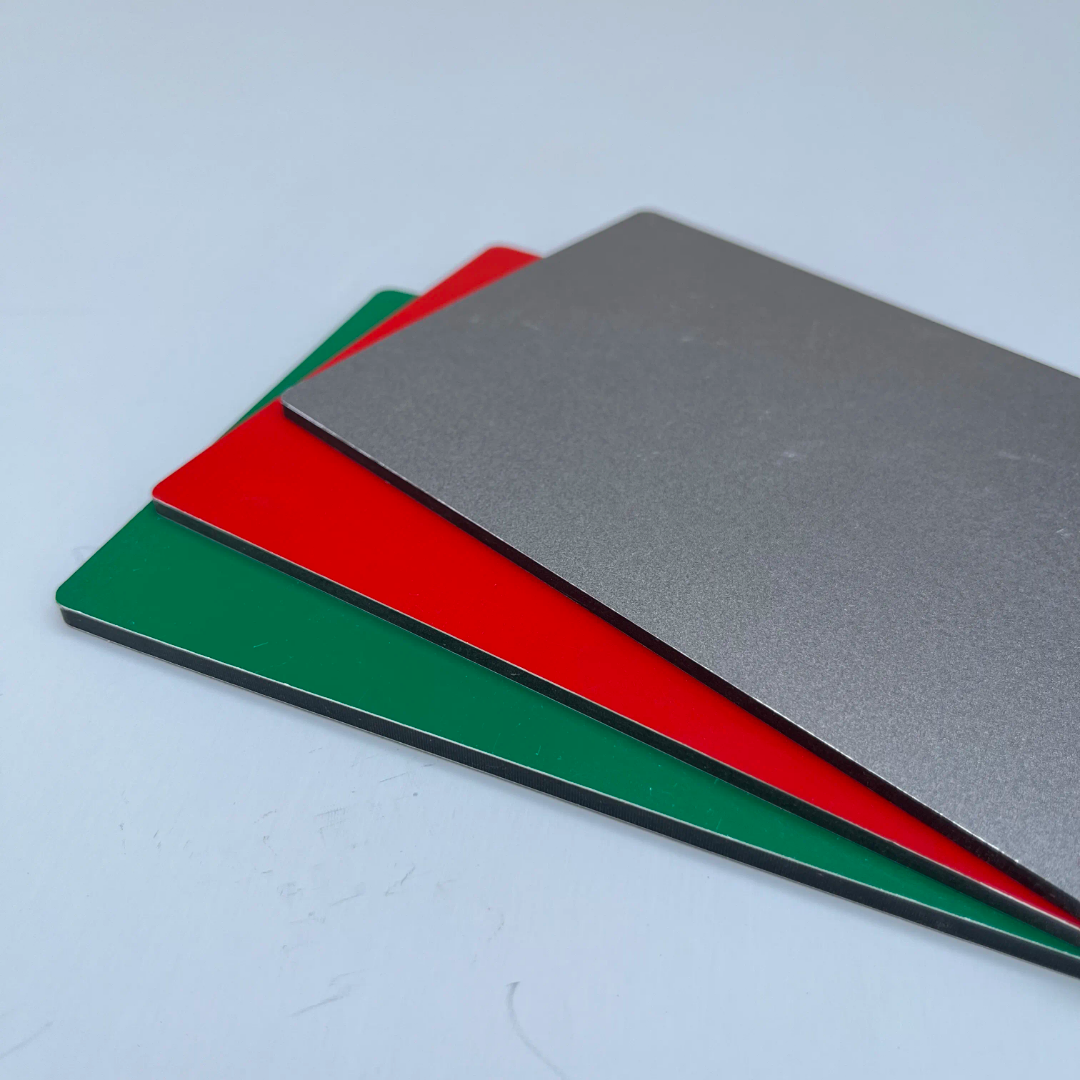
Architecture in continental climates, high-altitude regions, and certain industrial environments faces a unique challenge: the building envelope must survive and perform through temperature swings that would destroy lesser materials. From the frozen winters of Siberia or northern Canada, where mercury plunges to -40°C, to the scorching summers of desert regions where surfaces can exceed +40°C, the differential is not merely uncomfortable—it is structurally demanding.
Aluminium Composite Panels (ACP) are increasingly specified for these extreme environments, but success requires more than selecting any off-the-shelf product. The material must be engineered, detailed, and installed with the specific physics of thermal movement, material embrittlement, and differential expansion firmly in mind.
This article provides a technical specification guide for architects, engineers, and facade consultants working on projects where ACP must endure temperature swings of 80°C or more.
Understanding the Physics: What Happens to ACP in Extreme Temperatures?
Before specifying materials, one must understand the forces at play.
Thermal Expansion: The Primary Challenge
All materials expand when heated and contract when cooled. For ACP, this movement is significant and must be accommodated.
Industry data indicates that ACP panels have an average thermal expansion coefficient of approximately 2.4mm per meter length for every 100°C temperature change. Other sources cite a similar figure of 2.3 mm per meter per 100°C.
For a project experiencing a swing from -40°C to +40°C (an 80°C differential), the math is straightforward:
- A 3-meter-long panel will expand/contract by approximately 5.5mm to 5.8mm over the seasonal cycle
- A 6-meter-long panel will move from 11mm to 11.5mm
- A 10-meter continuous run will experience nearly 19mm of dimensional change
This movement is not hypothetical—it is a physical reality. If not accommodated, it results in buckling, warping, panel stress, and sealant failure.
Material Properties at Temperature Extremes
At extreme low temperatures (-40°C), materials can become brittle. The aluminum skins and core materials must maintain flexibility and impact resistance. At high temperatures (+40°C surface temperatures can exceed +60°C in direct sun), the panel must resist softening, creep, and coating degradation.
Differential Movement Between Components
The ACP panel, the aluminum substructure, and the building's primary structure all expand and contract at different rates. The fixing system must accommodate these differential movements without transferring stress to the panels.
Material Selection: Specifying the Right ACP
Not all ACP panels are created equal for extreme climate applications.
Core Selection
For extreme temperature environments, the core material plays a critical role in dimensional stability:
- Fire-retardant (FR) cores generally offer better thermal stability than standard polyethylene cores
- Mineral-filled cores (A2 non-combustible) provide the highest level of dimensional stability and are recommended for the most demanding applications
- Lower-density cores may exhibit greater thermal movement; specify cores with proven performance data
Coating Durability
The exterior coating must withstand both UV exposure at high temperatures and potential embrittlement at low temperatures:
- PVDF (Kynar 500/Hylar 5000) coatings are essential for color stability and resistance to chalking across the temperature spectrum
- Lumiflon™ based fluoropolymer coatings represent the highest tier of performance, as specified for premium applications
- Coating flexibility at low temperatures is critical—specify coatings tested for cold-temperature impact resistance
Panel Thickness
For extreme climate applications, consider:
- 4mm panels as the minimum standard
- 5mm or 6mm panels for larger panel sizes or where extra rigidity is beneficial
- Consistent thickness across all panels to ensure uniform behavior
Backside Finishes
Often overlooked, the backside coating matters:
- Wash coating (thin polyester) provides basic protection
- Service coating offers enhanced durability for the concealed surface
- For extreme climates, specify full backside protection to prevent differential moisture absorption or corrosion
Critical Design Strategies for Thermal Movement
With appropriate materials selected, the design must accommodate the physics.
1. Sliding Fixing Systems
Conventional rigid fixings will fail under extreme thermal movement. The solution is sliding connections.
Recommended approach:
- Adjustable sliding clips that allow lateral movement within predefined slots
- Elongated screw holes that permit panel shift without binding
- Spiral rivets that maintain connection while allowing subtle movement
These systems secure panels firmly while permitting expansion and contraction without stress transfer.
2. Control Joint Placement
No continuous run of ACP should be left without expansion relief.
Industry standard recommendations:
- Place control joints at regular intervals—typically every 6–9 meters horizontally and vertically
- Joint spacing should be adjusted based on:
- Expected temperature range (the 80°C swing requires more frequent joints)
- Panel orientation (horizontal runs expand more critically)
- Panel color (darker colors absorb more heat)
- Control joints should align with building modules where possible for aesthetic continuity
3. Reveal Details as Relief Zones
Rather than hiding expansion joints, consider expressing them as design elements:
- Reveal lines act as relief zones while maintaining visual uniformity
- Shadow gaps of 10-20mm provide both aesthetic interest and movement accommodation
- Open joints between panels (8-12mm) with backing rods allow free movement while controlling appearanc
4. Flexible Sealants and Gaskets
Where joints must be sealed against the weather, flexibility is paramount:
- Compressible gaskets within joints maintain weather tightness while adapting to movement
- Neutral-cure silicones with movement capability of ±50% accommodate thermal cycling
- Backer rods ensure proper sealant geometry and prevent three-sided adhesion
- Sealant selection must account for the full temperature range at the specific location
Substructure Engineering for Extreme Climates
The substructure is the backbone of any ACP system and becomes even more critical in extreme temperature environments.
Material Selection
- Aluminum substructures are preferred for compatibility—they expand and contract at rates similar to the panels themselves
- Galvanized steel may be used, but requires isolation from aluminum panels to prevent galvanic corrosion
- Stainless steel (316 grade) is recommended for coastal extreme climates or where additional corrosion resistance is needed
Design Considerations
- Thermal bridging must be addressed—continuous insulation strategies prevent condensation and energy loss
- Ventilation behind panels helps moderate temperature extremes and reduces thermal stress
- Stress-free mounting of the substructure to the building ensures that building movements are not transferred to the cladding
Fixing Points
- Anchors must be rated for the full temperature range—some plastic anchors become brittle at -40°C
- Fastener spacing should be designed to allow panel movement while maintaining secure attachment
- Isolation between dissimilar metals prevents galvanic corrosion over decades of thermal cycling
Fabrication Precision for Extreme Conditions
The quality of fabrication directly affects performance under thermal stress.
CNC Precision
- CNC cutting ensures consistent panel dimensions—variations compound thermal movement issues
- Accurate routing for returns and folds maintains structural integrity at corners
- Pre-drilled holes with proper clearance (oversized to allow movement) prevent binding at fixings
Edge Sealing
In extreme climates, moisture ingress followed by freeze-thaw cycles is particularly destructive:
- All cut edges must be sealed to prevent moisture penetration
- Edge sealants must remain flexible at -40°C
- Double-sealing at vulnerable locations (corners, penetrations) provides redundancy
Quality Control
- Dimensional verification of every panel ensures consistent joint widths
- Flatness testing identifies panels that might amplify thermal stress
- Batch consistency ensures uniform thermal behavior across the facade
Installation Best Practices for Extreme Temperature Swings
Installation conditions themselves affect long-term performance.
Temperature at Installation
- Avoid installation at temperature extremes—panels installed at -30°C will be fully contracted and may have no room to expand further when summer arrives
- Ideal installation temperature is mid-range (0°C to 20°C), where panels are near their neutral position
- If installation must occur at extremes, calculate the expected movement and set initial gaps accordingly
Setting Gaps Correctly
The joint width at installation must account for the full temperature range:
Formula for minimum joint width:
Joint Width = (Panel Length × Thermal Expansion Coefficient × ΔT) + Safety Factor
For a 4m panel with 80°C swing:
- Movement = 4m × 2.4mm/m/100°C × 80°C = 7.68mm
- Recommended joint width = 8-10mm minimum at mid-range temperature
Thermal Break Installation
- Insulated fixings prevent cold bridging through the substructure
- Thermal washers under fastener heads reduce heat loss
- Continuous insulation behind the facade system maintains interior comfort
Sequential Installation
- Allow panels to acclimate to site conditions before installation
- Install from reference points outward, maintaining consistent gaps
- Verify gaps at each stage—thermal movement cannot be corrected after installation
Case Studies: Extreme Climate Applications
Subarctic Commercial Building (Northern Canada)
A three-story office building in Yellowknife faces winter lows of -40°C and summer highs of +30°C. Specifiers selected 4mm ACP with mineral-filled core and PVDF coating. Control joints at 5m intervals accommodate the 70°C swing. Installation occurred in spring at 5°C, with 8mm joints calculated to close to 3mm at summer peak and open to 13mm at winter minimum. After five years, no panel stress or sealant failure has occurred.
High-Desert Research Facility (Mongolia)
A research station experiences 35°C winters and +35°C summers with intense UV exposure. Aluminum substructure with 316 stainless fixings supports 6mm ACP panels with mineral core. Perforated panels on the south elevations reduce heat load. Sliding clips allow free movement, and all sealants are specified for -50°C to +90°C range. Post-occupancy monitoring shows joint performance within design parameters.
Common Specification Mistakes and How to Avoid Them
Mistake | Consequence | Prevention |
Assuming all ACP behaves identically | Unexpected movement, material failure | Request thermal expansion data from the manufacturer for the specific product |
Inadequate joint spacing | Buckling, panel stress, sealant failure | Calculate based on actual temperature range, not generic assumptions |
Rigid fixings | Stress concentration, panel cracking | Specify sliding clips or elongated holes |
Ignoring differential movement | Connection failure, water ingress | Model movement of all components; provide isolation where needed |
Wrong sealant selection | Sealant cracking at low temperature, adhesive failure at high temperature | Specify sealants rated for the full temperature range |
Poor edge sealing | Freeze-thaw damage, delamination | Require edge sealing as part of fabrication |
Installation at the wrong temperature | Insufficient movement allowance | Calculate and specify required gaps based on installation conditions |
Testing and Verification
For critical extreme-climate projects, consider requiring specific testing:
Request from Manufacturers
- ASTM D696 linear thermal expansion coefficient data
- ASTM D648 heat deflection temperature data
- Low-temperature impact testing results
- Freeze-thaw cycling test data (if available)
On-Site Verification
- Mock-up panel installation at extreme temperatures if possible
- Joint measurement verification during and after installation
- Thermal imaging to identify unexpected thermal bridging
Maintenance in Extreme Climates
Even the best-specified systems require attention in extreme environments.
- Annual inspection of sealants, fixings, and panel condition
- Immediate repair of any sealant failure—water ingress followed by freezing is catastrophic
- Cleaning with appropriate methods—avoid thermal shock (hot water on frozen panels)
- Documentation of any changes or repairs for future reference
Conclusion: Engineering for the Extremes
Specifying ACP for environments ranging from -40°C to +40°C is entirely feasible, but it demands rigorous attention to the physics of thermal movement, material selection, and installation precision.
Success depends on:
- Understanding the actual thermal expansion characteristics of the specific panels
- Designing sliding fixing systems that accommodate movement without stress
- Placing control joints at intervals appropriate to the temperature range
- Selecting compatible substructures and sealants rated for the full temperature spectrum
- Installing with gaps calculated for the conditions at the time of installation
The key insight is this: thermal movement is not a problem to be solved—it is a physical reality to be accommodated. Design for movement, and the facade moves safely. Ignore movement, and the facade will move anyway—destructively.






