Welcome to Vbond
Storage Mistakes That Cause Permanent Warping and Bubbles in Aluminum Panels Before Installation
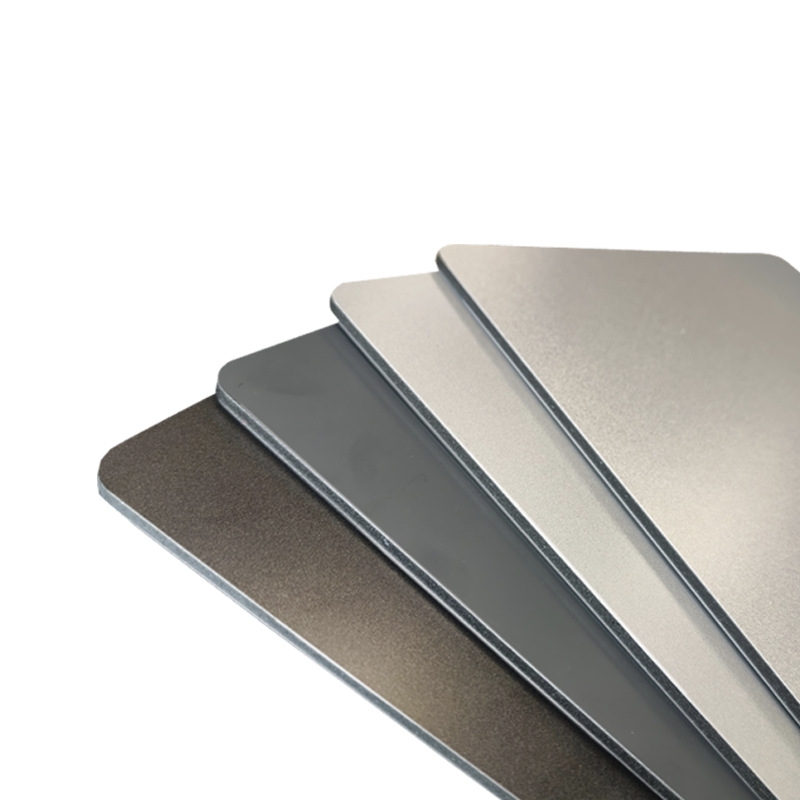
You have invested in premium aluminum composite panels. The coating specification is correct. The fire rating meets code. But when the protective film comes off at the job site, you see it: ripples across the surface, bubbles near the edges, or a gentle bow that makes alignment impossible.
The manufacturer's warranty denies your claim. The cause is not a production defect. The damage happened on your watch—during storage.
The truth is that aluminum composite panels are more vulnerable before installation than after. Once properly fastened to a rigid substructure, the system distributes loads and restricts movement. But in storage, unprotected panels face moisture, temperature extremes, and gravitational forces that cause irreversible damage.
This guide identifies the specific storage mistakes that create permanent warping and bubbles—and provides the specifications to prevent them.
1. Moisture: The Invisible Destroyer
Water is the most dangerous enemy of ACP in storage because its damage is often invisible until the panel is installed. Once the panel is sealed against the building, trapped moisture expands, contracts, and corrodes from within.
Mistake 1: Direct Ground Contact
Storing panels directly on a concrete floor is a guaranteed path to moisture damage. Concrete wicks moisture from the ground. On humid days or in unconditioned warehouses, condensation forms between the concrete and the panel. Over time, this trapped moisture attacks the aluminum skin and the core bond.
The Fix: The floor area must be covered with a wooden skid or polythene sheet before panels are placed. Wooden pallets create an air gap that allows moisture to evaporate rather than become trapped against the aluminum. For long-term storage, raise panels at least 10-15cm above the floor.
Mistake 2: No Moisture Barrier
In humid environments or during seasonal transitions, ambient moisture alone can cause damage. Panels should be covered with polythene sheeting to eliminate the effects of harsh environmental conditions and contamination by water and moisture.
Critical Warning: Do not seal polythene tightly against panels in direct sunlight. Condensation can form under the plastic, creating a greenhouse effect that traps moisture against the aluminum.
Mistake #3: Storing Without Dehumidification
The ideal storage environment requires temperature control between 5°C and 35°C and relative humidity below 60-70%. When humidity exceeds 70%, the risk of surface oxidation increases significantly. A hygrometer is not optional—it is essential equipment for any ACP storage area.
In high-humidity climates, dehumidifiers are necessary. However, do not direct dehumidifier airflow directly at panels, as the temperature differential can cause localized condensation and surface irregularities.
Mistake 4: Ignoring Leaks and Condensation
Panels must be stored in locations without water leakage, rain penetration, or condensation. Even a small roof leak over weeks of storage can ruin an entire pallet. Inspect storage areas before panels arrive, not after damage appears.
2. Thermal Stress: The Expansion-Contraction Cycle
Aluminum expands and contracts with temperature changes. In a fastened assembly, this movement is accommodated by slotted holes and expansion gaps. In storage, unrestricted panels exposed to temperature swings can develop permanent warping.
Mistake 5: Direct Sunlight Exposure
Panels stored in direct sunlight heat unevenly. The exposed surface expands while the shaded underside remains cooler, creating differential stress. Over days or weeks, this repeated thermal cycling induces permanent bowing.
The Fix: Store panels away from direct sunlight. If shade cannot be provided, cover panels with a protective, light-colored layer that reflects rather than absorbs heat.
Mistake 6: Extreme Temperature Fluctuations
The ideal storage temperature range is 5°C to 35°C. When temperatures fall below freezing or exceed 35°C for extended periods, the core material expands and contracts at rates that can exceed the adhesive's elastic limit. The result is micro-delamination at the bond line—invisible damage that manifests as surface bubbles months after installation.
For mineral-filled A2 cores, which have lower thermal expansion coefficients, this risk is reduced. For standard PE-core panels, temperature control is critical.
3. Physical Deformation: Gravity and Pressure Damage
Unlike solid metal, ACP relies on its composite structure for flatness. Uneven support or excessive stacking pressure permanently deforms this structure.
Mistake #7: Vertical Storage Without Support
Standing panels vertically without proper support causes bowing in the middle. Gravity pulls the unsupported center downward. Over time, the panel takes a permanent set—a curve that no installation method can correct.
The Fix: Store panels flat on level surfaces. If vertical storage is unavoidable, provide continuous support across the entire panel face, not just at edges.
Mistake #8: Excessive Stacking Height
Stacking too many pallets or panels creates pressure that transfers through the stack to the bottom layers. Even with protective film, the weight causes impressions on the sheets and skidding of pallets.
Stacking Limits:
Source | Maximum Stack Height |
Manufacturer standard | 5–6 crates per stack |
Palletized panels | 1.5 meters maximum |
Within each pallet, panels must be separated by soft spacers (foam or wooden squares) to prevent direct skin-to-skin contact and distribute pressure evenly.
Mistake #9: Heavy Objects on Top
Placing heavy objects on stored panels creates point loads that dent the aluminum skin and compress the core. Unlike solid metal, ACP does not spring back from localized compression—the dent is permanent.
4. Inventory Management: Batch Integrity and Shelf Life
Storage mistakes are not only physical. Poor inventory management can create color mismatch and degraded materials.
Mistake #10: Mixing Different Production Batches
Each coating batch is unique. Even panels with the same RAL color code from different production runs may have subtle color differences visible to the naked eye under certain lighting conditions.
The Fix: Do not mix same-color panels from different shipments or batches in warehouse inventory. For any project, all panels on a single building surface must come from the same production batch. For large projects, order all required panels within a single order to ensure batch consistency.
Mistake 11: Exceeding Shelf Life
Manufacturers recommend not storing panels for more than six months. Beyond this period:
- Protective film adhesive may bond permanently to the coating
- Core material may absorb ambient moisture
- UV exposure may cause subtle fading even under cover
The Fix: Implement FIFO (first-in-first-out) inventory rotation. If storage beyond six months is unavoidable, consult the manufacturer for specific extended-storage protocols.
5. Protective Film: Friend or Enemy?
The polyethylene protective film is designed to shield panels during fabrication and installation—not during extended storage.
Mistake 12: Leaving Film On Too Long
When protective film remains on panels for extended periods—especially under direct sunlight or high heat—the adhesive can bake onto the PVDF coating. The result is a residue that requires solvent cleaning and may permanently mar the surface finish.
The Fix: Remove protective film promptly after installation, as recommended by manufacturers. For stored panels, inspect the film condition regularly. If the film shows signs of yellowing, cracking, or adhesive bleed, remove it immediately and protect the panel surface with an alternative covering.
6. Storage Area Specifications: The Procurement Checklist
To ensure stored ACPs arrive at installation in pristine condition, include these specifications in your procurement and subcontractor documents:
Storage Requirement | Specification |
Floor surface | Wooden skids or pallets; no direct concrete contact |
Moisture barrier | Polythene sheeting covering stacked panels |
Stacking height | Maximum 5-6 crates or 1.5 meters |
Temperature | 5°C to 35°C |
Relative humidity | Below 60-70% |
Sunlight exposure | None; shaded storage required |
Vertical storage | Only with continuous support, flat storage is preferred |
Shelf life | Maximum 6 months; FIFO rotation |
Batch segregation | Do not mix batches in the same project inventory |
Inspection | Weekly visual check for film degradation, moisture, or damage |
7. Detecting Storage Damage Before Installation
Before cutting or installing stored panels, conduct a pre-installation inspection:
Test | What to Look For |
Visual inspection | Surface discoloration, water stains, and film yellowing |
Flatness check | Lay the panel on a level surface; measure the bow with a straight edge |
Tap test | Tap surface; dull sound indicates core delamination |
Edge inspection | Look for swelling, separation, or discoloration at cut edges |
If any panel fails these checks, do not install it. Damage caused by improper storage is not covered by the manufacturer's warranty.
8. Conclusion
The most expensive ACP panel is not the one with the premium PVDF coating. It is the panel that arrives at the job site already damaged—warped from improper stacking, blistered from moisture ingress, or discolored from UV exposure. By the time these defects are visible, the damage is permanent, and the warranty is void.
Storage is not a passive activity. It is the first phase of quality control. The difference between a successful facade and a failed one often depends not on the panel specifications but on the conditions those panels endured before installation.
A dry, level, shaded, climate-controlled storage area is not a luxury. It is a requirement. When you enforce these specifications, you ensure that the panels you sourced arrive at the building envelope in the same condition they left the factory: flat, smooth, and ready to perform for decades.