Welcome to Vbond
The 0.3-0.5mm Backup Rule: Why Leaving Aluminum Skin Matters for Alucobond
You order Alucobond panels. You inspect them on arrival. They look flawless.
Then your fabricator routes the V-grooves and starts folding. Cracks appear along the bend line. Panels get scrapped. The project falls behind.
The problem is not the material. The problem is the groove depth.
This guide explains the 0.3- 0.5 mm backup rule. You will learn why this small number determines success or failure. You will understand the science behind it. And you will know exactly what to demand from your fabricator.
What Is the Backup Rule?
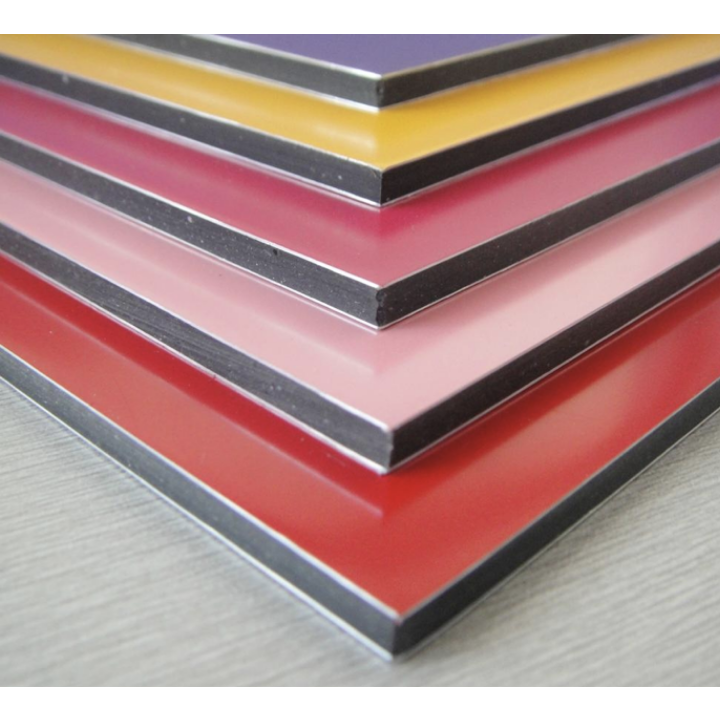
Alucobond is a sandwich panel. Two aluminum skins bond to a polyethylene or mineral-filled core. To fold a panel, the fabricator routes a V-shaped groove into the back side. This groove removes the rear aluminum skin and most of the core.
But it does not remove all of it.
The backup rule is simple: leave 0.3mm to 0.5mm of core material on top of the front aluminum skin.
This thin layer acts as a cushion. It supports the front skin during bending. It distributes stress evenly. Remove it, and the aluminum bears the full load. It cannot handle the stress alone.
Caption: Cross-section of an Alucobond panel showing the residual core layer left at the bottom of the V-groove.
Alt text: Diagram of an Alucobond panel cross-section with a V-groove showing the 0.3- 0.5 mm residual core layer remaining above the front aluminum skin.
The Numbers: What Each Thickness Means
Residual Thickness | Fold Result | Risk Level |
0.5mm or more | Clean, strong fold | Very low risk |
0.3mm to 0.5mm | Clean, acceptable fold | Low risk |
0.2mm to 0.3mm | Acceptable but marginal | Moderate risk |
Below 0.2mm | Cracks likely | High risk |
Caption: Residual thickness determines fold quality. Never go below 0.3mm. Source: Industry fabrication standards.
Alt text: Table showing residual thickness ranges from 0.5mm and above down to below 0.2mm with corresponding fold results and risk levels.
The rule: Never go below 0.3mm.
Below 0.3mm is the danger zone. The front skin lacks support. It tears during bending.
Why 0.3mm? The Science Behind the Number
This number is not arbitrary. It comes from the T-bend test (ASTM D4145). Paint manufacturers use this test to rate coating flexibility.
Leaving 0.3mm of core material typically produces a 2 mm radius. Mitsubishi Plastics Composites America recommends a minimum radius of 2mm to prevent paint film cracking. The 0.3mm residual thickness achieves that 2mm radius.
Route deeper and leave less than 0.3mm, and the bend radius shrinks. The panel bends too tightly. The coating cracks.
Think of it like a paper hinge. Fold it once with most of the paper intact—it holds. Score it too deep and fold it—it tears. The same principle applies to Alucobond.
What Happens When You Ignore the Rule
Consequence | What It Looks Like | Why It Matters |
Aluminum skin cracks | Visible fractures along the fold line | Panel is structurally compromised |
Paint film cracking | Coating splits at the bend | Moisture enters, corrosion starts |
Loss of flatness | Panel warps at the fold | Poor aesthetics, installation issues |
Voided warranty | Manufacturer rejects the claim | You pay for replacement |
Delamination | Core separates from skin | Complete panel failure |
Caption: Five consequences of ignoring the 0.3mm residual thickness standard. Source: Industry fabrication experience.
Alt text: Table listing five consequences of ignoring the 0.3mm rule with descriptions and why each matters.
The hidden danger: Cracks may not appear immediately. The panel folds cleanly in the shop. The crack appears later—during installation, under wind load, or after the first freeze-thaw cycle.
The Warranty Trap
This is the part most buyers miss.
Paint warranties depend on proper bending technique. If the bend radius does not meet the Two T requirement—typically caused by over-routing—the paint warranty is voided.
That means your expensive PVDF coating warranty is worthless. You paid for 20-year color retention. You get nothing. The fabricator saves a few minutes by routing deeper. You lose thousands in warranty coverage.
How Fabricators Control Residual Thickness
Controlling residual thickness requires precision.
1. CNC router depth control. High-quality CNC routers maintain depth within 0.05mm. This allows consistent residual thickness across every panel.
2. Tool calibration. The router must be calibrated daily. Z-axis accuracy determines the groove depth.
3. Sharp cutting tools. Dull bits create friction and heat. This softens the plastic core. The bit cuts deeper than intended.
4. Grooving depth tolerance. CNC machines should hold depth tolerance within ±0.15mm.
Caption: CNC router setup for precise V-groove depth control on Alucobond panels.
Alt text: CNC router cutting a V-groove into the back of an aluminum composite panel with precision depth control.
What to Ask Your Aluminum Composite Panel Supplier
When you work with an aluminum composite panel supplier, ask these questions:
1. What is your recommended residual thickness? The answer should be 0.3mm minimum for standard 4mm panels.
2. Do you provide fabrication guidelines? A reliable manufacturer of aluminum composite panels will provide technical documentation.
3. Can you recommend tooling specifications? A knowledgeable distributor of Alucobond panels will guide you on router bits and grooving equipment.
4. What is your policy on fabrication quality? An authorized Alucobond dealer will stand behind proper fabrication techniques.
5. Do you offer pre-grooved panels? Some OEM manufacturer ACM panels offer factory-grooved panels that eliminate on-site calibration errors.
Choose a wholesale supplier of ACM panels that understands these requirements. Work with suppliers who can provide factory-direct aluminum composite panels with consistent quality. Look for wholesale price aluminum composite panels from suppliers who back their low prices with technical support.
The Bottom Line
The 0.3-0.5mm backup rule is not optional. It is the difference between a clean fold and a cracked panel.
Leave too little material, and the aluminum skin lacks support. It tears. The warranty is void. The panel fails.
Leave the right amount, and the panel bends cleanly. It lasts for decades. The warranty stays intact.
The rule is simple: measure residual thickness on every batch. Reject anything below 0.3mm.
Do this, and your panels will fold cleanly. Every time.