Welcome to Vbond
The Aluminum Composite Panel Coatings Compared: PVDF vs. FEVE vs. Polyester – Which Lasts Longest?
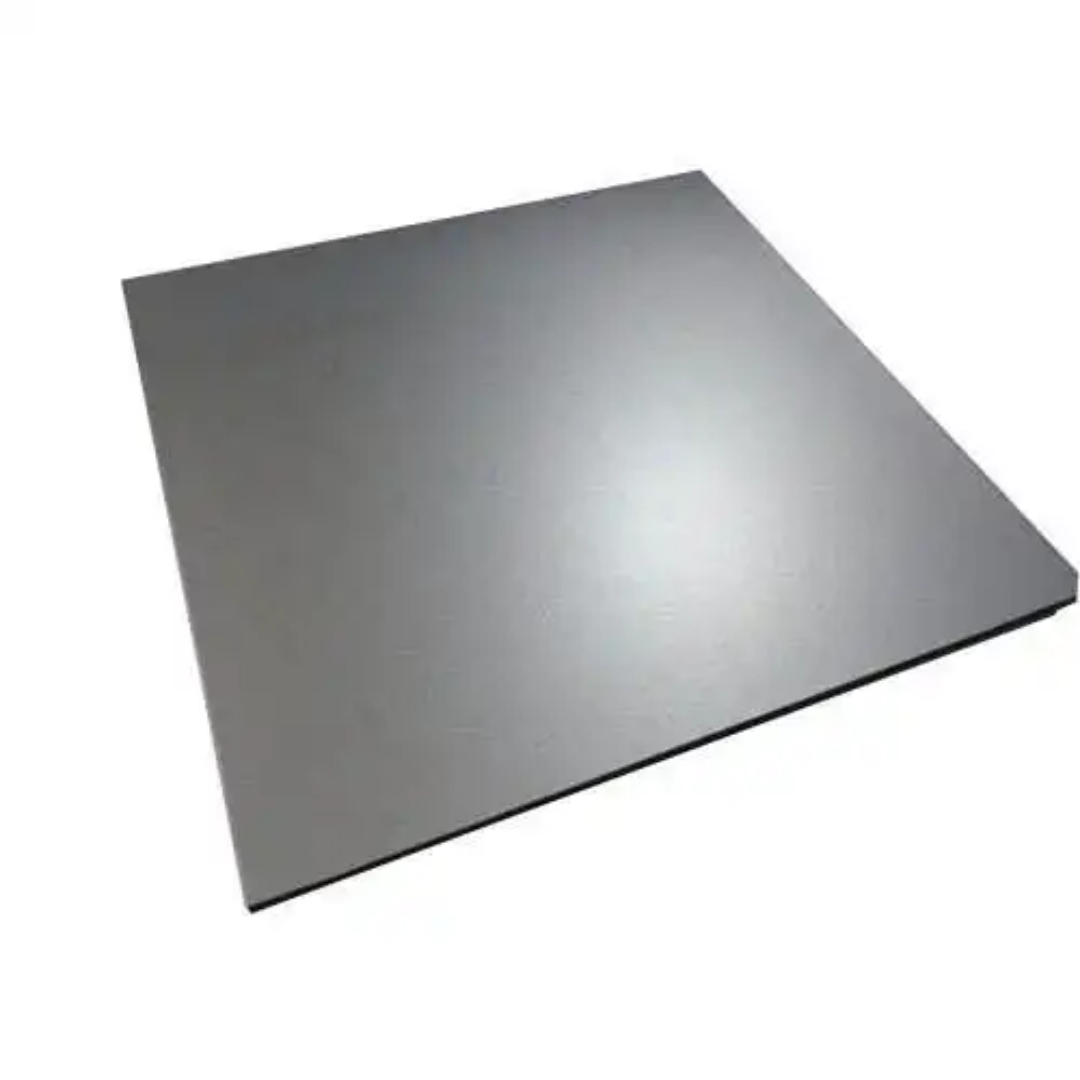
When specifying Aluminum Composite Panels (ACPs), the coating is not just color—it is armor.
While the core determines fire safety and flatness, the topcoat determines lifespan. Architects and building owners frequently ask: Should I pay a premium for fluorocarbon? Is FEVE just expensive PVDF? Does polyester ever make sense outdoors?
This guide provides a side-by-side forensic comparison of PVDF, FEVE, and Polyester coatings. We analyze molecular structure, real-world weathering data, AAMA compliance tiers, and total cost of ownership.
1. The Three Contenders: Basic Identity Card
Coating Type | Resin Base | Chemistry Family | Typical Lifespan (Outdoor) | AAMA Tier |
Polyester (PE) | Polyester resin | Thermoplastic | 5–8 years | 2603 |
PVDF (70%) | Polyvinylidene Fluoride | Fluoropolymer (Thermoplastic) | 5–20+ years | 2605 |
FEVE | Fluoroethylene Vinyl Ether | Fluoropolymer (Thermoset) | 15–20+ years | 2605 |
Key Insight: Both PVDF and FEVE are "fluoropolymers," but they are chemically different families with distinct application behaviors.
2. PVDF (70% Fluorocarbon): The Industry Workhorse
Strengths
- Proven Track Record: Used since the 1970s; AkzoNobel’s TRINAR line is a market benchmark.
- Molecular Stability: The carbon-fluorine (C-F) bond is one of the strongest in organic chemistry. UV photons cannot break it.
- Chemical Resistance: Exceptional resistance to acid rain, salt spray, and industrial pollutants.
- AAMA 2605 Compliance: Meets the highest specification for color retention, chalk resistance, and erosion.
Limitations
- Muted Colors: The 30% resin component (typically acrylic) has a milky appearance. Bright reds, oranges, and deep blues are difficult to achieve.
- Gloss Range: Limited to 10–40 GU (gloss units). Cannot produce high-gloss finishes.
- Thermoplastic Nature: Requires high heat and pressure to fuse; color mixing tolerances require advanced dosing (e.g., AkzoNobel ADU).
Verdict:
Best for: Monumental buildings, coastal airports, headquarters—where longevity trumps "pop."
Not ideal for: Brand-signature bright colors (retail, auto dealerships).
3. FEVE (Fluoropolymer): The "Designer" Fluorocarbon
Strengths
- 100% Fluoropolymer Resin: Unlike PVDF, FEVE uses a clear resin system. No milky component = True color fidelity.
- High Gloss Capability: Achieves gloss levels up to 70+ GU. The only fluorocarbon that delivers a "wet look".
- Superior Hardness: FEVE is a thermoset—it crosslinks during curing. This yields better mar resistance and surface hardness than PVDF.
- AAMA 2605 Certified: Matches PVDF for weathering longevity.
- Graffiti Resistance: Highly resistant to solvents used in graffiti removal.
Limitations
- Cost: Typically 20–30% more expensive than PVDF systems.
- Availability: Fewer coil coaters are equipped for FEVE application compared to PVDF.
- Metallic Finishes: Require three-coat systems (or specialized two-coat mica) to achieve sparkle effects, increasing cost.
Verdict:
Best for: Auto showrooms, gas stations, retail flagship stores—where brand colors must be exact and glossy.
Not ideal for: Budget-sensitive projects where standard metallics are acceptable.
4. Polyester: The Indoor Champion (And Outdoor Risk)
Strengths
- Cost: 30–50% cheaper than PVDF.
- Color Palette: Unlimited colors; excellent for matching interior design schemes.
- Gloss Range: Available from low matte to ultra-high gloss (90+ GU).
- AAMA 2603 Compliance: Passes basic adhesion, impact, and humidity tests.
Limitations
- UV Degradation: Polyester bonds absorb UV light. This causes polymer chain scission—leading to chalking, fading, and micro-cracking.
- Short Lifespan: 5–8 years outdoors. Color fade is visible within 3–5 years in high-sun regions.
- Cannot meet AAMA 2605: Chemically incapable of passing 10-year South Florida weathering equivalence.
Verdict:
Best for: Interior partitions, exhibition booths, temporary signage, and ceilings.
Do NOT use for: Permanent exterior facades on buildings over 3 stories or in high-UV climates.
5. Head-to-Head: Molecular "Why."
Property | Polyester | PVDF (70%) | FEVE |
Bond Energy (C-F) | N/A | ~485 kJ/mol | ~485 kJ/mol |
UV Absorption | High | Near Zero | Near Zero |
Glass Transition (Tg) | Low | Moderate | High |
Crosslinking | None | None | Yes (Thermoset) |
Pigment Wetting | Excellent | Poor (requires acrylic assist) | Excellent |
Why FEVE can be glossy: Because it is a soluble fluoropolymer that forms a homogeneous film. PVDF is dispersed, not dissolved—it coalesces, leaving microscopic resin-rich domains that scatter light.
6. AAMA Standards: The "Good, Better, Best" Truth Serum
Michael Bowie, ALPOLIC Technical Support Specialist, describes the three AAMA specifications as the industry's truth serum :
Specification | "Good" | "Better" | "Best" |
Designation | AAMA 2603 | AAMA 2604 | AAMA 2605 |
Typical Coating | Polyester | High-Performance Polyester / Light Fluoropolymer | PVDF / FEVE |
Florida Test (Years Equiv.) | 1 Year | 3 Years | 10 Years |
Color Change Max (ΔE) | 5.0 | 3.0 | 2.0 |
Chalk Resistance | 8 | 9 | 10 |
Erosion (Film Loss) | Not Required | Not Required | 20% Max |
Rule: If a supplier claims "fluorocarbon" but only provides AAMA 2604 certification, they are not offering full-spectrum 2605 protection. Read the fine print.
6. Cost vs. Lifespan ROI Calculator
Coating | Initial Cost Index | Lifespan (Exterior) | Repaint Cycles (30 Yrs) | 30-Year TCO |
Polyester | 0.5x | 6 years | 5 cycles | Very High |
PVDF | 1.0x (Baseline) | 20 years | 0.5 cycles | Low |
FEVE | 1.3x | 20+ years | 0 cycles | Lowest |
Note: Polyester requires frequent repainting or replacement. In high-bay areas, scaffold costs often exceed panel costs. Cheaper upfront = expensive long-term.
8. Final Verdict: Which Lasts Longest?
Pure Longevity:
PVDF and FEVE are tied. Both deliver 20+ years** with AAMA 2605 compliance.
Aesthetic Longevity:
FEVE wins. Gloss retention and color vibrancy remain superior at year 15.
Value Longevity:
PVDF wins. 95% of the performance at 75–80% of the cost.
Polyester:
Do not use outdoors on permanent structures. This is not opinion—it is polymer chemistry.
Summary: Decision Flow
1. Is the project exterior and permanent?
→ Eliminate Polyester immediately.
2. Is brand color accuracy or high gloss required?
→ Specify FEVE (AAMA 2605).
3. Is the budget constrained, but the exterior required?
→ Specify 70% PVDF (AAMA 2605). Never compromise on the AAMA tier.
4. Is it interior only?
→ Polyester is safe, economical, and aesthetically flexible.
Featured Snippet Optimization:
Q: What is the longest-lasting coating for ACP?
A: Both 70% PVDF and FEVE fluoropolymer coatings, when certified to AAMA 2605, provide 20+ year outdoor lifespans. FEVE offers superior gloss and color brilliance; PVDF offers proven reliability at lower cost.






