Welcome to Vbond
The Best Packaging Practices for Protecting Aluminum Composite Panels in Transit

For procurement professionals, the journey of aluminum composite panels (ACPs) from factory to jobsite is fraught with risk. Between the manufacturer’s loading dock and the final installation, panels face vibrations, moisture, temperature extremes, rough handling, and the constant threat of impact damage. A single scratched, bent, or water-stained panel can delay a project, trigger costly replacements, and strain supplier relationships.
The difference between a shipment that arrives in pristine condition and one that arrives damaged often comes down to one factor: **packaging**. Proper packaging is not an expense—it is an investment in product integrity, project timelines, and long-term supplier partnerships.
This article outlines the best practices for packaging ACPs for transit, from protective films to palletization, helping procurement professionals specify, inspect, and verify packaging that ensures panels arrive ready for installation.
1. Why Packaging Matters for ACPs
Aluminum composite panels are vulnerable to several types of transit damage:
Damage Type | Cause | Consequence |
Surface scratches | Abrasion against strapping, adjacent panels, or rough handling | Cosmetic defects; may require panel replacement for visible facades |
Edge damage | Impact during loading/unloading; inadequate edge protection | Delamination; compromised structural integrity |
Bending/warping | Improper stacking; insufficient support | Panel flatness issues; installation difficulties |
Moisture staining | Condensation inside packaging; rain exposure during transit | Water spots; potential coating degradation |
Protective film residue | Film left too long; low-quality film adhesive breakdown | Adhesive transfer requiring solvent cleaning |
For high-gloss, metallic, or custom-printed finishes, the tolerance for damage is even lower. A single scratched panel in a batch of 500 can disrupt a carefully sequenced installation schedule.
2. The Five Essential Elements of ACP Packaging
A. Protective Film (PE Film)
The polyethylene (PE) protective film is the first line of defense. Applied at the factory directly to the coated surface, it shields panels from scratches, dust, and minor abrasion during fabrication, transport, and installation.
Best Practices:
- Thickness: Use film thickness of 60–80 microns for standard panels; 100+ microns for high-gloss or metallic finishes
- Adhesive: Low-tack, removable adhesive that does not transfer residue even after extended application
- UV resistance: For panels stored outdoors before installation, specify UV-resistant film rated for 6–12 months of exposure
- Application: Film should extend slightly beyond panel edges to protect corners; no bubbles or wrinkles that create pressure points
Red Flags:
- Film that peels off easily during handling (indicates poor adhesion)
- Yellowing or cracking (UV degradation)
- Adhesive residue left after removal (low-quality film)
B. Edge Protectors and Corner Guards
Panel edges are the most vulnerable areas during transit. Edge protectors—typically made of corrugated cardboard, plastic, or foam—absorb impact and prevent strapping from cutting into panel surfaces.
Best Practices:
- Material: High-density polyethylene (HDPE) or reinforced cardboard edge guards
- Coverage: All four edges of each panel or, for palletized loads, full perimeter protection around the stack
- Corner protection: Reinforced corner caps, especially for larger-format panels
- Strapping interface: Edge protectors should sit between steel strapping and panel edges to prevent cutting
C. Palletization
Pallets provide the structural foundation for safe transport. Poor pallet design is a leading cause of panel warping, edge damage, and shifting during transit.
Best Practices:
- Pallet type: Heat-treated wooden pallets meeting ISPM-15 export standards (required for international shipments)
- Size: Pallet dimensions should match panel size; overhang increases risk of edge damage
- Load capacity: Pallet rated for the total weight of panels plus packaging (typical ACP pallet weight: 800–1,500 kg)
- Base support: Solid decking or closely spaced slats to prevent panel sagging; no gaps that allow panel edges to drop
- Stacking height: Maximum 1.2–1.5 meters for 3–4 mm panels to prevent bottom-layer deformation
D. Moisture Protection
Moisture is a silent threat. Condensation inside containers, rain during loading, or high-humidity storage can cause water spots, coating haze, or—in extreme cases—core degradation.
Best Practices:
- Inner wrapping: Each pallet wrapped in anti-moisture paper or VCI (vapor corrosion inhibitor) film
- Outer wrapping: Stretch wrap or shrink wrap over the entire pallet to seal against moisture
- Desiccants: Silica gel packs placed between layers or within the wrap to absorb condensation
- Container ventilation: For ocean freight, specify containers with proper ventilation to prevent condensation cycling
Critical Note: Do not use plastic wrap directly against the coated surface without a protective paper barrier. Condensation trapped between plastic and panel can cause watermark staining.
E. Strapping and Securement
Strapping keeps panels in place during the violent movements of transit—container lurches, forklift jolts, and stacking shifts.
Best Practices:
- Material: Polyester or polypropylene strapping (steel strapping can cut through edge protectors and damage panels)
- Tension: Tight enough to prevent shifting, but not so tight that it deforms panels or crushes edges
- Placement: Minimum two straps per pallet (three for large pallets); straps positioned over edge protectors, not directly on panel surfaces
- Reinforcement: Corner boards under all strapping points to distribute pressure
3. Packaging by Transport Mode
Ocean Freight (FCL / LCL)
Ocean shipments face the longest transit times, temperature extremes, and potential container condensation.
Requirement | Specification |
Container type | Clean, dry, odor-free; ventilated for high-humidity routes |
Palletization | All pallets must be shrink-wrapped and blocked within container to prevent shifting |
Loading pattern | Palletized loads only; no loose panels |
Documentation | Loading diagram showing pallet placement and strapping points |
Air Freight
Air shipments are shorter duration but subject to more frequent handling and vibration.
Requirement | Specification |
Packaging | Lighter-duty pallets may be acceptable; reinforced corners critical |
Labeling | Fragile, "This Side Up," and handling instructions prominently displayed |
Weight limits | Comply with airline-specific pallet weight restrictions |
Road transport involves vibration, frequent loading/unloading, and variable weather exposure.
Requirement | Specification |
Protection | Full shrink-wrap; tarped trailers for open-bed transport |
Securement | Straps with edge protectors; panels must not rub against trailer walls |
Temperature | Avoid prolonged exposure to extreme heat (can soften PE core) |
4. Common Packaging Mistakes and How to Avoid Them
Mistake | Consequence | Prevention |
No edge protectors | Strapping cuts into panels; edges damaged | Strapping cuts into panels; edges damaged |
Pallet overhang | Edge damage during forklift handling | Pallet size must exceed panel dimensions or provide full perimeter protection |
Low-quality protective film | Adhesive residue after removal | Specify film with removable adhesive and UV resistance |
Insufficient moisture barrier | Water spots, coating haze | Inner anti-moisture paper + outer stretch wrap + desiccants |
Over-stacking | Bottom panels warp or delaminate | Limit stack height to manufacturer recommendation |
Mixed product on pallet | Different thicknesses or finishes damage each other | Palletize only identical panels |
No loading diagram | Improper container loading leads to shifting | Require diagram before shipment |
5. Special Considerations by Panel Type
High-Gloss and Metallic Finishes
High-gloss panels demand the highest level of protection:
- Thicker protective film (100+ microns)
- Interleaving paper between panels to prevent surface-to-surface contact
- Dedicated pallets with foam padding on all contact surfaces
- No stacking of more than 30 panels per pallet
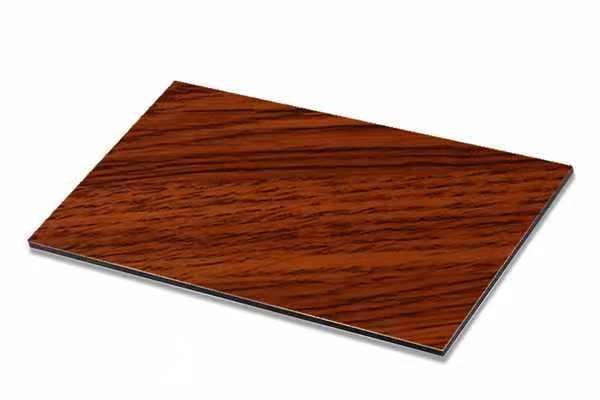
Custom Printed and Wood Grain Finishes
Printed finishes require protection against abrasion that could damage the image layer:
- Interleaving between each panel (not just top and bottom)
- Soft edge protectors (foam rather than cardboard)
- Clear handling instructions to prevent dragging across surfaces
A2 Mineral-Core Panels
Mineral-core panels are heavier than standard PE-core panels, requiring:
- Reinforced pallets with higher load ratings
- Lower stack heights (20–30 panels per pallet maximum)
- Additional strapping to handle increased weight
6. Inspection Checklist for Procurement Professionals
Before accepting shipment, verify packaging against these criteria:
At Factory (Pre-Shipment)
- Protective film applied uniformly, no bubbles or wrinkles
- Film extends to panel edges
- Edge protectors on all four sides of each pallet
- Corner guards on all exposed corners
- Anti-moisture paper between layers
- Pallet size appropriate for panel dimensions
- Pallet in good condition (no broken boards, protruding nails)
- Strapping tight but not crushing edges
- Strapping positioned over edge protectors
- Loading diagram prepared and shared
At Destination (Receiving)
- Outer wrapping intact, no tears or water stains
- Pallet not leaning or showing signs of shifting
- No visible water damage to packaging
- Strapping intact and tight
- Upon unpacking, protective film intact and panels free of scratches
- No adhesive residue on panel surfaces
7. The Role of Suppliers in Packaging Quality
Not all manufacturers apply the same packaging standards. When evaluating suppliers, procurement professionals should:
- Request packaging specifications in writing before order confirmation
- Visit facilities or request photos of packaging processes
- Require sample packaging for new suppliers
- Specify packaging requirements in purchase orders (not just general terms)
- Audit packaging during factory inspections
Leading ACP manufacturers treat packaging as an integral part of quality control. They maintain:
- Dedicated packaging lines with standardized procedures
- Quality checks at each stage (film application, palletizing, strapping)
- Container loading teams trained in blocking and bracing
8. Cost Implications of Packaging Quality
Packaging Level | Upfront Cost | Risk Profile | Total Cost of Ownership |
Minimum | Lowest | High damage rates; delays; replacement costs | Highest |
Standard | Moderate | Acceptable for standard finishes, inland transport | Moderate |
Premium | Highest | Minimal damage; project schedule certainty | Lowest |
A single damaged container of high-gloss panels can cost:
- Replacement panels: $5,000–$15,000
- Expedited freight: $2,000–$5,000
- Installation delay: Variable, often $1,000–$10,000 per day
- Reputation impact: Priceless
Investing in premium packaging is not a cost—it is insurance.
9. Sustainability in ACP Packaging
Environmental considerations are increasingly influencing packaging choices:
Material | Traditional | Sustainable Alternative |
Pallet wood | Untreated or chemical-treated | ISPM-15 heat-treated; reusable pallet programs |
Protective film | Single-use PE | Recyclable PE; reduced thickness where possible |
Stretch wrap | Virgin plastic | Recycled-content wrap; reusable strapping |
Edge protectors | Cardboard | Recycled cardboard; reusable plastic edge guards |
Some manufacturers offer returnable packaging programs, where pallets and edge protectors are collected and reused. This reduces waste and can lower long-term packaging costs for repeat buyers.
10. Conclusion
The journey of aluminum composite panels from factory to facade is long and unforgiving. Packaging is the silent guardian that determines whether panels arrive ready for installation or become a source of delay, cost, and frustration.
For procurement professionals, specifying and verifying proper packaging is not a detail to delegate—it is a core responsibility. Protective film quality, edge protection, pallet integrity, moisture barriers, and secure strapping are not optional enhancements; they are essential requirements for any shipment where product integrity matters.
By adopting the best practices outlined here—and holding suppliers accountable to them—you ensure that the panels you source arrive in the condition they left the factory: pristine, undamaged, and ready to realize your architectural vision.