Welcome to Vbond
The Challenge of Maintaining Color Consistency Across Aluminum Composite Panel Batches
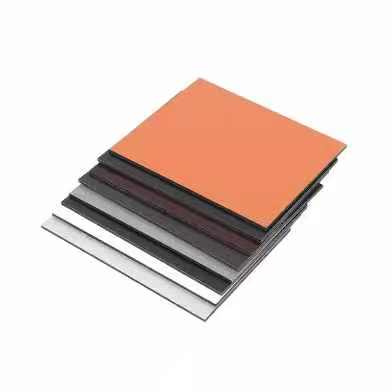
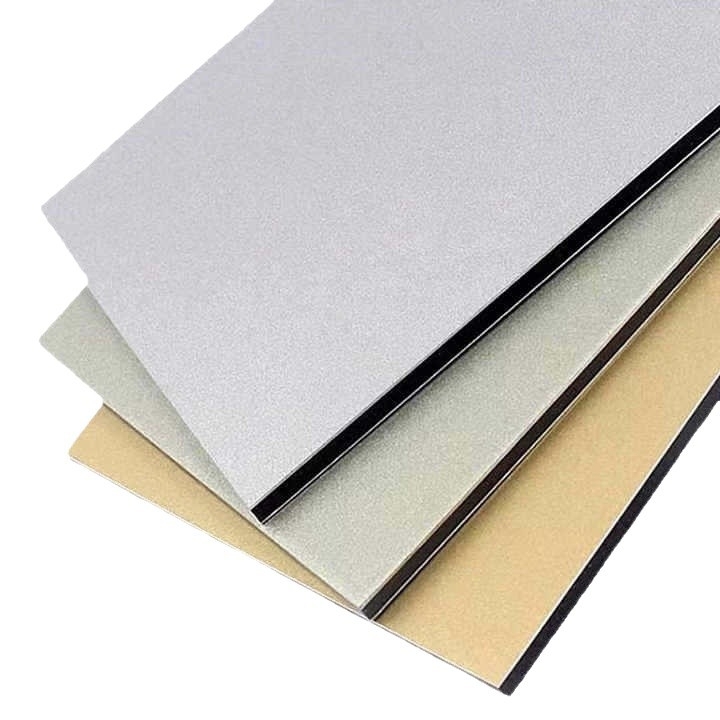
For architects and building owners, the vision of a completed facade is one of seamless beauty—a uniform expanse of color that expresses the design intent with clarity and precision. For procurement professionals and manufacturers, delivering that vision requires overcoming one of the most persistent challenges in the industry: maintaining color consistency across aluminum composite panel (ACP) batches.
Color inconsistency—where panels from different production runs or even different positions within the same run exhibit visible differences—can transform a stunning architectural statement into a patchwork of mismatched hues. The consequences range from aesthetic disappointment to full-scale panel replacement, with high costs and schedule impacts.
This article explores why color consistency is so difficult to achieve, the factors that contribute to variation, and how procurement professionals can specify and manage projects to minimize risk.
Why Color Consistency Matters
Color consistency is not merely an aesthetic concern. It has direct implications for:
- Architectural Integrity: A facade with visible color variation undermines the design concept and diminishes the perceived quality of the building.
- Brand Identity: For corporate headquarters, retail locations, or institutional projects, color inconsistency can damage brand recognition and corporate image.
- Property Value: Buildings with visibly inconsistent facades are perceived as lower quality, affecting market value and tenant attraction.
- Legal and Contractual Risk: Color variation beyond specified tolerances can lead to rejection of materials, construction delays, and disputes between contractors, suppliers, and owners.
The Root Causes of Color Inconsistency
Color inconsistency in ACPs is rarely the result of a single failure. It emerges from a complex interplay of factors across the manufacturing process:
1. Coating Formulation Variations
The coating applied to ACPs—typically high-performance PVDF (polyvinylidene fluoride) or polyester—is a carefully balanced mixture of pigments, resins, solvents, and additives. Even minor variations in formulation can produce visible color differences:
- Pigment Lot Variation: Pigments are manufactured in batches. Even from the same supplier, pigment lots can exhibit slight variations in hue, tinting strength, or particle size that affect the final color.
- Pigment Dispersion: How thoroughly pigments are dispersed into the resin system affects color development. Inadequate dispersion can lead to weak color or spotting.
- Resin and Additive Consistency: Variations in the resin system or additives (such as UV stabilizers or matting agents) can alter color appearance and gloss.
2. Application Process Variability
The application of coating to aluminum coils is a precision process. Variations at any stage can affect color:
- Coating Thickness: PVDF coatings are typically applied at thicknesses of 20–30 microns. Variations in film thickness can affect both color intensity and gloss.
- Line Speed and Curing: The speed at which the coated coil passes through the curing oven, and the oven temperature profile, affect how the coating develops. Undercuring or overcuring can shift color.
- Coil Substrate Variation: The aluminum substrate itself—its surface finish, cleanliness, and pretreatment—can affect how the coating adheres and appears.
3. Metallic and Effect Pigments
Metallic finishes present unique consistency challenges. Metallic pigments (aluminum flakes, mica) are not uniform in their behavior:
- Pigment Orientation: During application, metallic flakes align with the direction of the coating flow. Changes in application parameters can alter this orientation, affecting both color and sparkle intensity.
- Pigment Settling: Metallic pigments can settle in the coating reservoir if not continuously agitated, leading to variations in pigment concentration across a production run.
4. Gloss and Texture Variations
Color perception is heavily influenced by surface gloss and texture. Two panels with identical color formulations can appear visibly different if gloss levels vary by even a few gloss units (GU). Matte finishes are particularly sensitive to gloss variations because they scatter light differently.
5. Environmental and Storage Conditions
Even after manufacturing, color can be affected by:
- UV Exposure: Panels stored outdoors or exposed to sunlight before installation may experience initial fading, creating differences between panels installed at different times.
- Humidity and Contamination: Improper storage can lead to surface contamination or moisture exposure that affects appearance.
How Color Consistency Is Measured
The industry relies on objective measurement tools to quantify color consistency:
Spectrophotometry
A spectrophotometer measures color numerically using the CIE Lab color space (also known as CIELAB), where:
- L represents lightness (0 = black, 100 = white)
- a represents red-green balance (positive = red, negative = green)
- b represents yellow-blue balance (positive = yellow, negative = blue)
Delta E (ΔE)
ΔE is a single numeric value representing the total color difference between two samples. The formula combines differences in L, a, and b values. Industry standards for architectural coatings typically specify:
ΔE Value | Visual Perception |
< 0.5 | Not perceptible to the human eye |
0.5 – 1.0 | Perceptible only under controlled lighting conditions |
1.0 – 2.0 | Perceptible upon close inspection |
> 2.0 | Clearly visible color difference |
Production Strategies to Minimize Inconsistency
Manufacturers employ several strategies to maintain color consistency:
1. Single-Batch Production
For large projects, the safest approach is to produce all required panels from a single coating batch and a single production run. This eliminates batch-to-batch variation entirely. However, this requires:
- Accurate quantity forecasting
- Sufficient coil inventory
- Production capacity to run the entire project without interruption
2. Large Batch Sizes
When a single run is not feasible, manufacturers may produce the coating in a single large batch sufficient for the entire project, even if the coil coating occurs in multiple runs. This ensures formulation consistency across runs.
3. Spectrophotometric Control
Modern coil coating lines incorporate in-line spectrophotometers that continuously measure color during production. If color begins to drift outside tolerance, the line can be adjusted in real time before significant quantities of non-conforming material are produced.
4. Spare Panel Provision
Manufacturers and specifiers often include spare panels (typically 5–10% of the total quantity) produced from the same batch. These spares are stored for future repairs, replacements, or additions, ensuring that any future work can match the original color.
What Procurement Professionals Can Do
While manufacturers bear primary responsibility for color consistency, procurement professionals play a critical role in specifying, verifying, and managing expectations:
1. Specify Color Tolerances Explicitly
Include clear color tolerance requirements in procurement documents. Avoid vague language like “color to match” without defining acceptable variation. A typical specification might read:
> “All panels supplied for a single project shall exhibit color uniformity with ΔE < 1.0 between any two panels as measured per ASTM D2244 using a spectrophotometer with D65 illuminant and 10° observer.”
2. Require Single-Batch Production
For projects where color consistency is critical—such as large, uninterrupted facades or buildings with strong brand colors—specify that all panels must come from a single production batch. Confirm with the manufacturer that they have the capacity to meet this requirement.
3. Request Spectrophotometric Reports
Before shipment, request batch reports showing spectrophotometric measurements for the supplied panels. These reports provide objective evidence that panels meet the specified tolerances.
4. Conduct a Full-Scale Mock-Up
A full-scale mock-up is the most reliable way to verify color consistency before full production. The mock-up should include multiple panels from the intended production batch, installed in the intended orientation, and evaluated under the lighting conditions expected on site.
5. Procure Spare Panels
Include spare panels in the initial procurement. This ensures that any future repairs, tenant improvements, or expansions can match the original color without the risk of batch-to-batch variation.
6. Verify Third-Party Testing
For critical projects, consider engaging an independent testing laboratory to verify color consistency against the approved standard. Third-party verification provides an additional layer of assurance and legal defensibility.
Special Considerations for Metallic and Matte Finishes
Metallic Finishes
Metallic finishes are inherently more challenging for color consistency due to:
- Directional Reflectivity: Metallic panels can appear to change color based on viewing angle. Consistent orientation during installation is essential.
- Batch Sensitivity: Even small changes in pigment orientation can create visible differences between batches.
For metallic finishes:
- Require a full-scale mock-up as non-negotiable
- Specify that panels from the same coating batch and production run be used on the same elevation
- Consider procuring additional spare panels beyond standard practice
Matte Finishes
Matte finishes present different challenges:
- Gloss Sensitivity: Small variations in gloss (2–5 GU) can create visible differences even when color measurements are within tolerance.
- Cleaning Sensitivity: Improper cleaning can create an uneven sheen that appears as color variation.
For matte finishes:
- Specify both color tolerance (ΔE) and gloss tolerance (e.g., ±3 GU)
- Establish a documented cleaning and maintenance protocol
The Cost of Inconsistency
When color inconsistency occurs, the costs extend far beyond material replacement:
Cost Category | Impact |
Material Replacement | New panels must be manufactured, often requiring new batch development |
Removal and Reinstallation | Labor, scaffolding, and disposal costs typically exceed material costs by 5–10 times |
Schedule Delays | Construction timelines are extended, affecting financing, leasing, and occupancy |
Reputational Damage | Contractors and specifiers may face claims of negligence or poor quality control |
Legal Disputes | Disputes over responsibility for color variation can lead to litigation and settlement costs |
Conclusion
Maintaining color consistency across aluminum composite panel batches is one of the most demanding challenges in architectural cladding manufacturing. It requires precision in formulation, rigorous process control, objective measurement, and careful project management.
For procurement professionals, understanding this challenge is the first step to mitigating it. By specifying clear tolerances, requiring single-batch production where feasible, demanding spectrophotometric documentation, and including spare panels in procurement, you can significantly reduce the risk of visible color variation.
Color consistency is not achieved by chance. It is the result of disciplined processes, transparent communication, and a shared commitment between manufacturer, specifier, and contractor to deliver a facade that meets the highest standards of quality and aesthetics.