Welcome to Vbond
The Chemistry of Blisters in Aluminum Panels: Residual Solvents in Paint vs. Core Extrusion
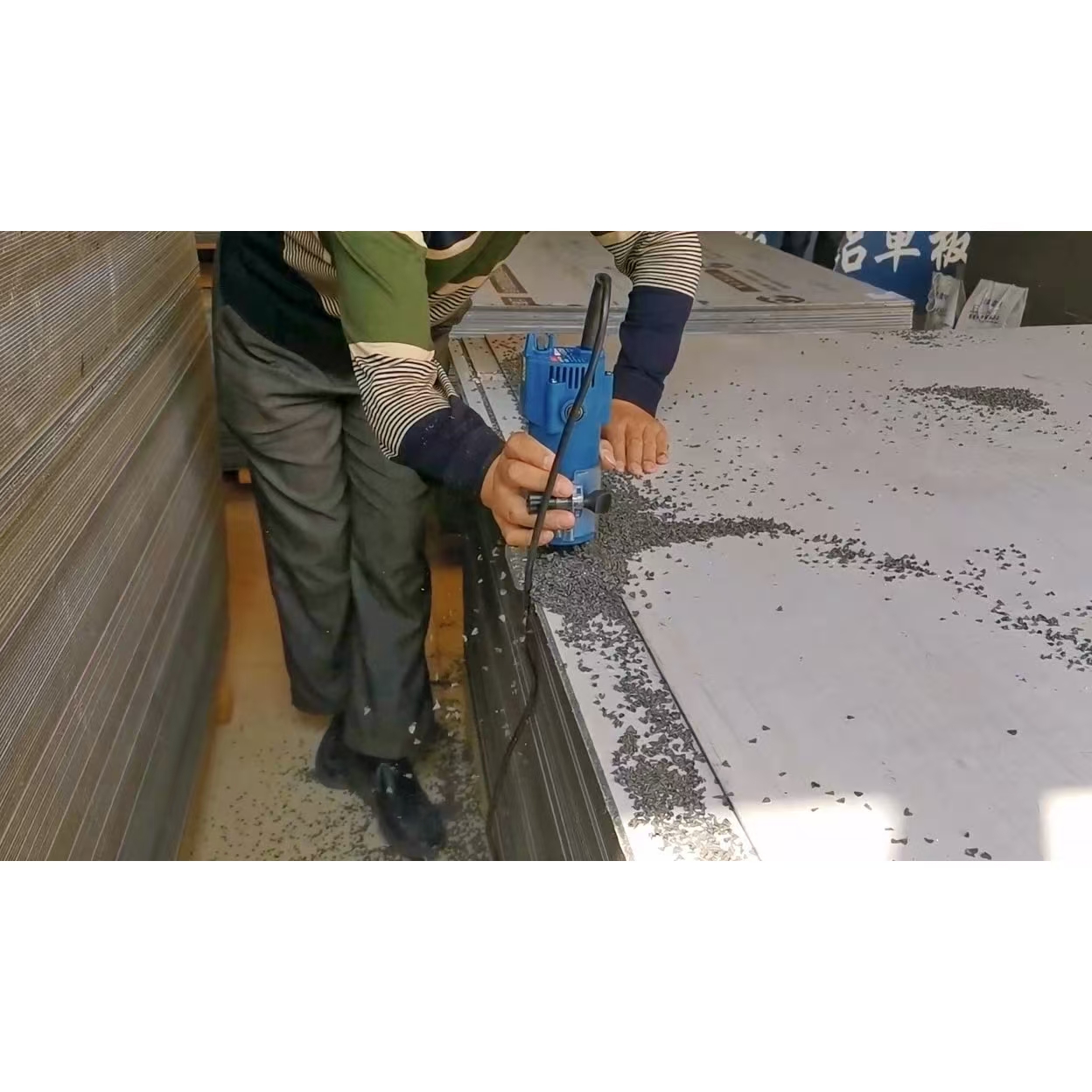
When a brand-new aluminum composite panel facade develops unsightly blisters within months of installation, the immediate reaction is often to blame "bad material." But as a procurement professional, you need a more precise diagnosis. Blisters are not a single phenomenon with a single cause. They are the visible result of two fundamentally different chemical failures: residual solvent entrapment from the painting process versus unmelted particles and moisture contamination from core extrusion.
Understanding the chemistry behind each blister type is essential for assigning liability, negotiating warranties, and specifying panels that will remain flat and defect-free. This guide provides the forensic framework to distinguish between coating-related blisters and core-related blisters—and to reject the right batches for the right reasons.
1. Blister Chemistry 101: The Two Distinct Mechanisms
A blister on an aluminum composite panel represents a localized loss of adhesion between the aluminum skin and the core material (or between coating layers). The fundamental cause is always the same: gas expansion creating pressure that forces layers apart. However, the source of that gas differs dramatically between blister types.
Blister Type | Gas Source | Location | Visual Signature |
Paint solvent blisters | Trapped solvents vaporize during curing | Between coating layers or coating/core interface | Small, uniform, often scattered across the surface |
Core extrusion blisters | Moisture flash-vaporization; decomposition of unmelted particles | At specific points where particles protrude | Larger, irregular, often at predictable intervals |
The distinction matters because the liable party differs. Paint solvent blisters are a manufacturer's coating line problem. Core extrusion blisters are the manufacturer's raw material and the extrusion process problem. Both are manufacturing defects—but they require different corrective actions and different warranty claims.
2. Residual Solvent Blisters: The Painting Process Failure
The Chemistry of Solvent Entrapment
Aluminum composite panel coatings—whether PVDF or polyester—are applied as liquid formulations containing solvents that keep the paint fluid during application. After the coating is sprayed or rolled onto the aluminum coil, the panel passes through a curing oven where the solvents are supposed to evaporate, leaving behind a solid, durable film.
When the curing process is inadequate—temperature too low, line speed too fast, or oven residence time too short—solvents become trapped beneath the cured top layer. These residual solvents remain in a liquid or semi-liquid state, trapped between the aluminum substrate and the coating or between coating layers.
The Vaporization Mechanism
When the finished panel is exposed to sunlight or elevated temperatures on-site, the trapped solvents vaporize. The phase change from liquid to gas creates a dramatic volume increase—typically hundreds of times the original liquid volume. This expanding gas has nowhere to escape, so it pushes against the coating layer, creating a blister.
Visual and Tactile Signature of Solvent Blisters
Characteristic | Solvent Blister |
Size | Small, typically 1–5mm in diameter |
Distribution | Uniform across the panel surface; may be dense in some areas |
Appearance when cut | Clean separation between coating and substrate; no core debris |
Response to heat | May enlarge or new blisters may appear with further heating |
Microscopic examination | Smooth cavity walls; no particulate matter |
Prevention Through Process Control
Proper curing requires precise control of three interdependent variables:
Variable | Target Specification | Failure Consequence |
Failure Consequence | Manufacturer-specified range (typically 200–250°C for PVDF) | Too low: solvents remain; Too high: coating degradation |
Line speed | Matched to oven length for adequate residence time | Too fast: incomplete curing |
Airflow | Uniform across panel width | Inconsistent curing across the panel |
Procurement professionals should request curing oven temperature logs and solvent retention test results from manufacturers. Panels from batches with documented curing irregularities should be rejected before shipment.
3. Core Extrusion Blisters: The Raw Material Failure
The Unmelted Particle Problem
The polyethylene core of a standard ACP is produced by extruding plastic pellets through a heated screw barrel. Under ideal conditions, the plastic melts completely into a homogeneous fluid that spreads evenly between the aluminum skins.
However, when raw materials are contaminated or extrusion parameters are incorrect, unmelted particles remain in the core. These particles may be:
- Different plastic types with higher melting points than polyethylene (e.g., PVC, PET)
- Contaminants introduced through recycled or impure raw materials
- Cross-linked gels that cannot melt at standard extrusion temperatures
These unmelted particles are suspended in the otherwise fluid core. When the core is pressed between the aluminum skins, these rigid particles protrude through the core surface, creating microscopic raised points.
The Bond Failure Mechanism
When an unmelted particle protrudes from the core surface, it prevents the aluminum skin from making full contact with the core material. During the roller press lamination process, the air around these protruding particles cannot be completely squeezed out. The result is a microscopic air pocket trapped between the core and the aluminum skin—a void where no adhesion occurs.
Under thermal cycling or mechanical stress, these air pockets expand, coalesce, and eventually become visible as blisters on the panel surface. When you peel back the aluminum skin from a blistered area, you will find clear evidence of poor bonding around the blister perimeter—the telltale sign that air was never fully expelled during lamination.
Visual and Tactile Signature of Core Blisters
Characteristic | Core Blister |
Size | Larger, often 5–20mm or more |
Distribution | Irregular, often concentrated in bands or specific areas |
Appearance when cut | Rough cavity; may contain unmelted particle residue |
Microscopic examination | Rough cavity; may contain unmelted particle residue |
The Filtration Solution
Quality manufacturers prevent unmelted particles by using multiple layers of stainless steel wire mesh to filter the molten plastic before it exits the extrusion die. For thin core plates, some manufacturers use perforated plates with hole diameters significantly smaller than the target plate thickness—a configuration that effectively blocks unmelted particles without causing excessive back-pressure that could rupture the filter.
Procurement implication: When auditing suppliers, ask about their filtration system specifications. Manufacturers who cannot describe their screen pack configuration or change frequency likely lack the process control necessary to prevent core blisters.
4. The Moisture Connection: Hidden Water as a Blister Catalyst
Both blister mechanisms are exacerbated by the presence of moisture—either in the core material or in the coating process environment.
Moisture in Core Fillers
For fire-retardant ACPs that use mineral fillers such as brucite powder (magnesium hydroxide), moisture content is a critical variable. Brucite powder is naturally hygroscopic, meaning it readily absorbs moisture from the air during storage and handling. When this moisture is not removed before the core enters the extrusion process, it vaporizes instantly under the high temperatures of the composite press, creating steam bubbles that become trapped between the core and aluminum skins.
Control standard: For mineral-filled cores, the moisture content of brucite powder must be maintained below 0.3% before entering the production line. Drying protocols should include controlled-temperature drying (100–150°C) and moisture-proof packaging to prevent reabsorption.
Moisture in Coating Lines
High humidity in the coating application environment can also introduce moisture into the paint film before curing. When trapped moisture vaporizes during curing or subsequent heat exposure, it creates blisters identical in appearance to solvent blisters. Manufacturers should maintain climate-controlled coating booths with humidity monitoring to prevent this failure mode.
5. Forensic Diagnosis: How to Identify the Blister Type
When blisters appear on a delivered panel, use this diagnostic protocol to determine the root cause:
Step 1: Visual Inspection at Scale
- Small, uniform blisters scattered across the panel → Likely solvent entrapment
- Large, irregular blisters in bands or clusters → Likely core unmelted particles
- Blisters concentrated at panel edges → Possible moisture ingress during storage or installation (not a manufacturing defect)
Step 2: The Peel Test
Carefully peel back the aluminum skin from a blistered area using a utility knife:
- Clean separation between coating and aluminum → Solvent blister (coating issue)
- Rough separation with core debris or particle residue → Core blister (extrusion issue)
- Separation between aluminum and core, but cavity walls are smooth → Bond failure from contamination
Step 3: Laboratory Confirmation
For high-value disputes or warranty claims, request laboratory analysis:
Test Method | What It Detects | Applicable Blister Type |
FTIR spectroscopy | Residual solvent chemical signature | Solvent blisters |
Microscopic particle analysis | Unmelted polymer identification | Core blisters |
Karl Fischer moisture test | Elevated moisture content in the core | Moisture-induced core blisters |
TGA (thermogravimetric analysis) | Volatile content in core material | Both types |
6. Procurement Specifications to Prevent Both Blister Types
To ensure you receive panels free from both solvent and core blisters, incorporate these specifications into your purchase orders:
Specification Category | Requirement |
Coating line process | Curing oven temperature logs; solvent retention test results per ASTM D5402 |
Core raw materials | Virgin polyethylene (not recycled); MFI consistency documentation |
Filler moisture control | For FR/A2 cores, moisture content ≤0.3%; drying protocol documentation |
Filtration system | Multi-layer stainless steel screen packs; regular change schedule documented |
Testing requirements | Accelerated aging test (heat + humidity cycling) on sample panels before shipment |
Warranty coverage | Explicit coverage for blistering from both coating and core defects |
7. Conclusion
Blisters on aluminum composite panels are not a single defect with a single cause. They are the visible evidence of two distinct chemical failures: residual solvents trapped during painting and unmelted particles or moisture during core extrusion.
For procurement professionals, the distinction is not academic—it determines liability, warranty coverage, and the corrective actions required. Solvent blisters indicate coating line curing problems. Core blisters indicate raw material contamination or extrusion process failures. Both are manufacturing defects. Both should trigger batch rejection.
But the most important lesson is this: prevention is cheaper than diagnosis. By specifying process controls—oven temperature monitoring, raw material purity testing, filtration systems, and moisture content verification—you can reject blisters before they ever form.






