Welcome to Vbond
The Danger of "Grade B" Aluminum Skins in Supposedly Premium Aluminum Composite Panels
The Danger of "Grade B" Aluminum Skins in Supposedly Premium Aluminum Composite Panels
You specified premium aluminum composite panels. You paid a premium price. The supplier's documentation says "premium quality." But what if the aluminum skins on your panels are actually "Grade B" material—lower-grade alloy, thinner than specified, or both?
"Grade B" is a term that appears in the aluminum composite panel industry, often associated with lower-quality products. The danger is not always obvious: Grade B panels may look acceptable upon delivery, but their performance—especially in exterior applications—is fundamentally compromised.
This guide explains what Grade B means for aluminum skins, how lower-grade alloys and thinner skins affect panel performance, and how procurement professionals can protect their projects from this hidden downgrade.
What Does "Grade B" Mean for Aluminum Skins?
In aluminum composite panel manufacturing, "Grade B" is not a standardized metallurgical classification. Rather, it is an industry term that signals:
Characteristic | Premium Grade | "Grade B" Indicator |
Alloy Series | 5005 (premium) or 3003 (standard) | Lower-grade 1100 series or unknown alloy |
Skin Thickness | 0.50mm front and back | 0.30mm, 0.21mm, or thinner |
Temper | H14, H16, H18 for strength | Soft or unspecified temper |
Surface Quality | Consistent, defect-free | Visible variations or impurities |
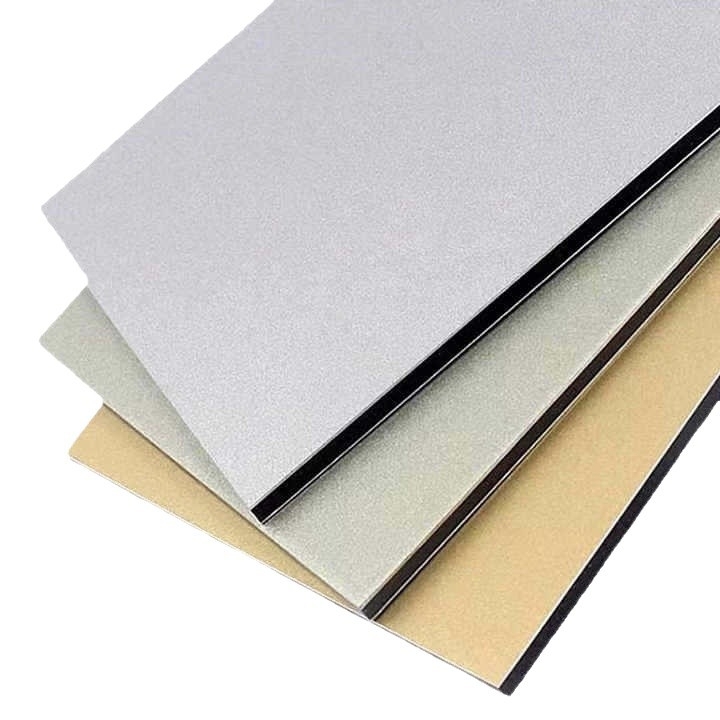
Premium manufacturers specify their aluminum skin alloys. ALUCOBOND®, for example, prominently states 0.5mm aluminum skins on both sides for its flagship products. Entry-level or "Grade B" products often have thinner skins or unspecified alloys.
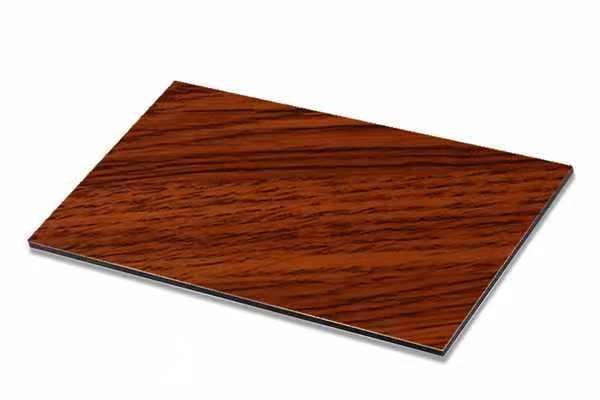
Grade B also appears in product listings as a formal grade designation, such as "Virgo Sleek Wood Collection Aluminium Composite Panel, Grade: B". In these contexts, Grade B panels are positioned as lower-tier products compared to higher-grade offerings.
Aluminum Alloy Series: The Foundation of Performance
Different aluminum alloy series offer dramatically different performance characteristics. Understanding these differences is essential for procurement professionals.
1100 Series: The Entry-Level Option
1100 aluminum is commercially pure (99.0% minimum aluminum). It offers excellent formability and corrosion resistance, but has low strength and poor anodizing characteristics.
Property | Property |
Corrosion resistance | A (excellent) – it's one strength |
Workability (cold) | A (excellent) – very formable |
Machinability | D (poor) – gummy and difficult to machine |
Weldability | A (excellent) |
The problem with 1100 for exterior ACPs: While 1100 has good general corrosion resistance, it lacks the strength of the higher series. It can be used for interior ACPs where structural demands are low, but a supplier substituting an unknown alloy for the specified 5005 may be delivering 1100—a significant downgrade.
The "Grade B" risk: Premium ACPs requiring 5005 may be substituted with cheaper 1100 "Grade B" material. While 1100 appears similar visually, its substantially lower strength compromises panel rigidity.
3003 Series: The Standard Mid-Range Option
3003 is aluminum with manganese as the primary alloying element (approximately 1.2% Mn). It offers approximately 20% higher strength than 1100 while maintaining excellent workability.
Property | 3003 Rating |
Corrosion resistance | A (excellent) |
Workability (cold) | A (excellent) |
Machinability | D (poor) |
Weldability | A (excellent) |
3003 is widely used for standard ACP applications where premium 5005 is not required. Many manufacturers specify 3003 for their standard exterior panels.
5005 Series: The Premium Choice
5005 is aluminum with magnesium as the primary alloying element (approximately 0.8% Mg). It offers the best combination of strength, corrosion resistance, and anodizing quality among common ACP alloys.
Property | 5005 Rating |
Corrosion resistance | A (excellent) |
Workability (cold) | A (excellent) |
Machinability | B (good – better than 3003 or 1100) |
Weldability | A (excellent) |
5005 is the standard for premium architectural panels. ALUCOBOND® uses 0.5mm aluminum skins, with their premium product lines utilizing higher-grade alloys to achieve superior flatness and rigidity. 5005 is also the preferred choice for anodized finishes—if you specify anodized panels, 5005 is essentially required.
Why Skin Thickness Is as Important as Alloy
Even if the alloy is correct, insufficient skin thickness fundamentally compromises panel performance.
Premium manufacturers define exact skin thickness. For example, the ALUCOBOND SZ20 product specifically notes "Aluminium Composites material with 0.5mm aluminium skins on both sides". Lower-grade products may use:
Skin Thickness | Typical Application | Durability Risk |
0.50mm | Premium exterior, high-rise | Low risk when the alloy is correct |
0.40mm | Standard exterior, mid-rise | Moderate risk with correct alloy |
0.30mm | Economy exterior or interior | High risk for wind load, impact |
0.21mm | Minimum for some standards | Very high risk; not for exterior |
Premium ACPs intended for exterior facades use 0.50mm skins. Products listed with 0.21mm or 0.30mm as "standard" should be carefully evaluated for your application.
The Hidden Dangers of Grade B Substitution
1. Reduced Wind Load Resistance
Thinner skins (0.30mm vs. 0.50mm) have approximately 40% less aluminum cross-section. Under wind load, the panel flexes more, increasing the risk of:
- Permanent panel deformation (bowing or oil canning)
- Fastener pull-through at attachment points
- Joint failure between panels
For high-rise buildings or hurricane-prone regions, this is a critical safety concern.
2. Lower Impact Resistance
A Grade B panel with 0.30mm skins will dent or puncture far more easily than a premium panel with 0.50mm skins. Ground-floor applications, parking garages, and areas subject to potential impact require maximum skin thickness.
3. Corrosion Vulnerability in Coastal Environments
For coastal applications, the aluminum alloy choice is critical. The 5005 series offers excellent corrosion resistance, and 1100 is also highly rated for corrosion in many reference guides. However, for anodized finishes, the alloy choice is critical: 5005 series is ideal for anodizing because it produces a clear, consistent finish due to its magnesium content.
The interaction of alloy and thickness matters: a thinner skin has less sacrificial material before corrosion perforation occurs, potentially leading to faster failure.
4. Poor Anodizing Results
If you specify anodized aluminum composite panels, the alloy choice is not flexible. 5005 is the standard for anodized finishes because it produces consistent, clear results. 1100 or unknown alloys will produce inconsistent, cloudy, or streaky anodized finishes—and may be rejected outright by anodizing shops.
5. Inconsistent Fabrication Results
Premium 5005 H-series tempers are designed for consistent bending, routing, and folding. Lower-grade alloys or incorrect tempers may:
- Crack during tight-radius bending
- Tear at routed V-grooves
- Show inconsistent springback after forming
How to Verify You Are Not Getting Grade B Substitution
Step 1: Specify Alloy and Thickness in Your Purchase Order
Don't just say "aluminum skins." Write:
"Aluminum skins shall be AA5005-Hxx series alloy (or AA3003-Hxx minimum) with a minimum thickness of 0.50mm front and back. Mill certificates from the aluminum coil supplier shall be provided for each batch."
Step 2: Request Mill Certificates
Mill certificates (certificates of analysis from the aluminum mill) document the exact alloy, temper, and thickness of the coil used to manufacture your panels. This is traceable documentation directly from the raw material supplier.
Step 3: Perform Incoming Inspection
Inspection | Tool | What to Verify |
Skin thickness | Digital caliper or ultrasonic gauge | Minimum 0.50mm (or as specified) |
Panel weight | Scale | Compare to the expected weight for the specified thickness |
Surface condition | Visual inspection | No visible defects or irregularities |
Step 4: Laboratory Analysis (For Disputes)
If you suspect alloy substitution, send a sample to a metallurgical laboratory for optical emission spectrometry (OES) or X-ray fluorescence (XRF) analysis. This definitely identifies the alloy series.
Red Flags That Indicate Grade B Risk
Red Flag | Why It Matters |
The supplier cannot specify the aluminum alloy in writing | May not know—or may be hiding—the actual alloy |
"Aluminum skin" without thickness specification (e.g., just "4mm panel") | Thinner skins may be standard for that supplier |
Price significantly below premium brands | Lower cost often comes from lower-grade aluminum |
Mill certificates not available or generic | No traceability; certificates may be falsified |
"Grade B" appears in the product description or quotation | The supplier is explicitly offering a lower-tier product |
Conclusion
"Grade B" aluminum skins represent a hidden but significant downgrade from premium specifications. Whether the substitution involves lower-grade alloy (1100 instead of 5005), thinner skins (0.30mm instead of 0.50mm), or both, the result is the same: a panel that is weaker, less durable, and more vulnerable to wind, impact, and corrosion.
For procurement professionals, the defense against Grade B substitution is clear: specify alloy and thickness explicitly, require mill certificates for traceability, perform incoming inspection, and reject any shipment that fails to meet specifications.
The upfront cost of verification—a few minutes of measurement per panel—is negligible compared to the cost of replacing a facade that fails prematurely because the aluminum was "Grade B" instead of premium.
Bottom line: Your facade deserves Grade A specification and Grade A verification. Do not accept less.