Welcome to Vbond
The Difference Between 0.12mm and 0.50mm Skin Thickness in Aluminum Composite Panels
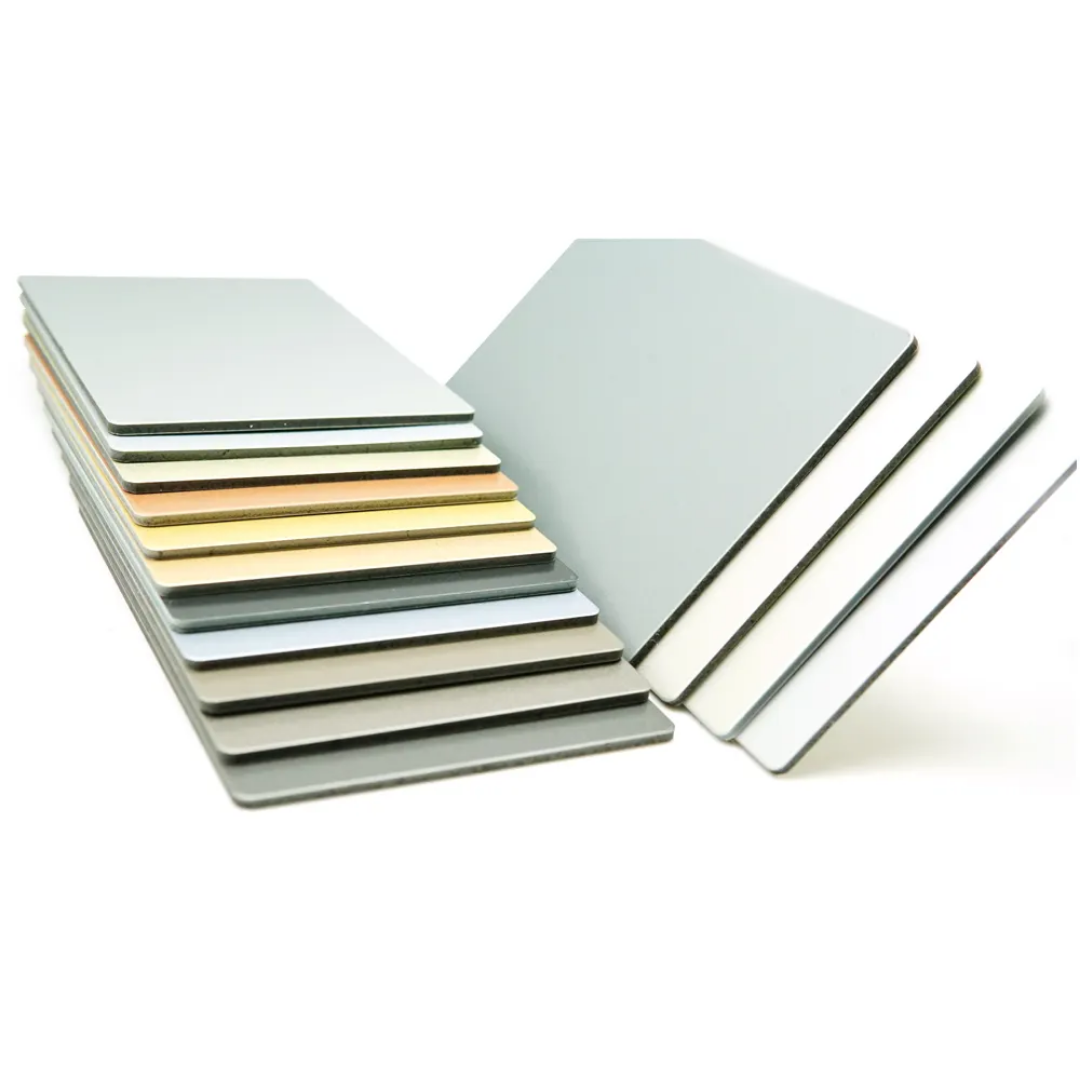
When sourcing Aluminum Composite Panels (ACP), most buyers instinctively ask about overall thickness—4mm, 5mm, or 6mm. While overall thickness matters, there is a more critical specification that separates commodity-grade panels from architectural-grade solutions: skin thickness.
The aluminum skins that sandwich the core typically range from 0.12mm** to 0.50mm (and beyond). At first glance, this difference may seem negligible—just a few fractions of a millimeter. However, for professional buyers, specifiers, and facade engineers, this number determines the panel’s structural integrity, impact resistance, fabrication capabilities, and long-term performance.
Understanding the distinction between thin-gauge and thick-gauge skins is essential to matching the right product to the right application—and avoiding costly failures down the line.
What Is Skin Thickness?
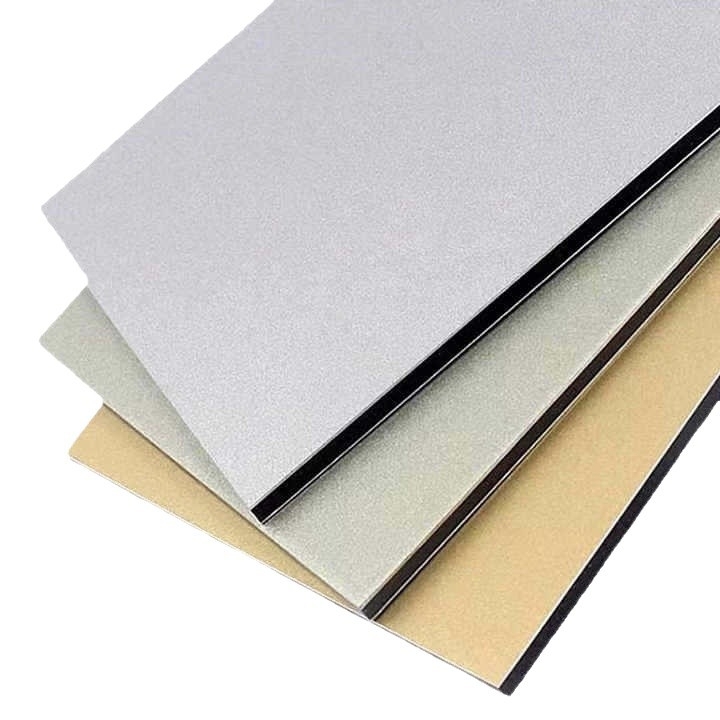
Skin thickness refers to the thickness of the aluminum layer on both the front (exposed) and back (hidden) sides of the composite panel. A typical ACP consists of two aluminum skins bonded to a core material (polyethylene or mineral-filled). The total panel thickness (e.g., 4mm) is the sum of the two skins plus the core.
Common Specifications:
- 0.12mm (120 microns): Entry-level, economy grade
- 0.21mm (210 microns): Standard commercial grade
- 0.30mm (300 microns): Enhanced commercial grade
- 0.40–0.50mm (400–500 microns): Premium architectural grade
For this guide, we will focus on the two extremes: 0.12mm (often found in budget panels) and 0.50mm (the hallmark of premium architectural cladding).
0.12mm Skin Thickness: The Economy Option
Panels with 0.12mm aluminum skins are typically marketed as economy or standard-grade ACP. They are lightweight, flexible, and inexpensive to produce.
Characteristics:
- Weight: Significantly lighter per square meter
- Cost: Lower material cost
- Flexibility: Easier to bend and shape with basic tools
- Coating: Often paired with polyester or basic PVDF coatings
Advantages:
- Budget-friendly: Suitable for projects with tight cost constraints
- Lightweight: Reduces structural loading and shipping costs
- Ease of fabrication: Can be processed with standard woodworking tools
Limitations:
- Low impact resistance: Susceptible to denting from hail, debris, or incidental contact
- Poor flatness: Prone to “oil-canning” (visible waviness) on large facades
- Limited lifespan: Thinner skins offer less corrosion allowance; coating failure leads to substrate exposure more quickly
- Restricted applications: Not recommended for high-traffic areas or high-rise buildings
Best Applications:
- Interior wall cladding
- Signage and fascia
- Temporary structures
- Low-budget commercial projects
0.50mm Skin Thickness: The Architectural Standard
Panels with 0.50mm aluminum skins represent the premium architectural grade. They are engineered for durability, flatness, and long-term weatherability.
Characteristics:
- Weight: Heavier, providing a solid, substantial feel
- Cost: Higher initial investment, but lower lifecycle cost
- Rigidity: Exceptional flatness and resistance to oil-canning
- Coating: Typically paired with premium PVDF (AAMA 2605) coatings
Advantages:
- Superior impact resistance: Withstands mechanical stress, hail, and site impacts
- Exceptional flatness: Maintains a mirror-like surface even on large spans
- Extended lifespan: Thicker skins provide greater corrosion allowance; typical service life exceeds 20–30 years
- Better fabrication: Supports complex bends, rout-and-return profiles, and crisp edges without cracking
- Fire safety compatibility: Often paired with A2 mineral cores for high-rise applications
Limitations:
- Higher upfront cost: Requires larger capital investment
- Heavier weight: May require stronger substructures and additional handling considerations
Best Applications:
- High-rise building facades
- Architectural curtain walls
- High-traffic commercial exteriors
- Projects requiring long-term warranties
- Cold-formed shapes and complex geometries
Key Comparison: 0.12mm vs. 0.50mm
Parameter | 0.12mm Skin | 0.50mm Skin |
Total Panel Weight | ~4.5–5.0 kg/m² | ~7.5–8.5 kg/m² |
Impact Resistance | Low; dents easily | High; withstands significant force |
Flatness / Oil-Canning | High risk on large spans | Minimal risk; excellent flatness |
Fabrication Capability | Basic bends only | Complex routing, folding, cold-forming |
Corrosion Allowance | Minimal; pitting leads to rapid failure | Generous; long-term durability |
Fire Rating Compatibility | Typically paired with PE core only | Can be paired with A2 mineral core |
Coating Quality | Often polyester or entry-level PVDF | Premium PVDF (AAMA 2605) |
Typical Warranty | 5–10 years | 15–25 years |
Cost per m² | Low | 2–3x higher |
Why Skin Thickness Matters for Specific Applications
1. High-Rise Facades
For buildings exceeding 10 stories, 0.50mm skins are non-negotiable. Thinner skins combined with polyethylene cores present both fire safety concerns (if not a mineral core) and aesthetic risks. Wind loads, thermal expansion, and visual flatness demands require the rigidity of thick-gauge aluminum.
2. Cold-Formed Shapes
If the project requires rout-and-return fabrication, curved panels, or complex geometric shapes, thicker skins (0.40mm–0.50mm) provide the necessary tensile strength to maintain sharp edges without cracking the coating.
3. Coastal or Harsh Environments
In marine environments or industrial zones with high pollution, the corrosion allowance of a 0.50mm skin offers decades of protection. A 0.12mm skin, once the coating is compromised, offers little material left to resist oxidation.
4. Long-Term Investment
For developers holding properties long-term, lifecycle cost favors thicker skins. While the upfront premium is higher, the reduced maintenance, replacement frequency, and aesthetic consistency over 20+ years deliver superior ROI.
How to Verify Skin Thickness as a Buyer
When evaluating suppliers, do not rely solely on the product datasheet. Implement these verification steps:
1. Request Mill Certificates: Insist on documentation confirming aluminum alloy grade (AA3003 preferred) and skin thickness in microns.
2. Use a Micrometer: Physically measure the edge of the sample panel. Measure both skins—some manufacturers use thicker front skins and thinner back skins.
3. Cut and Inspect: Examine a cross-section under good lighting. The aluminum layer should be visually distinguishable from the core with consistent thickness.
4. Weigh the Panel: A 4mm panel with 0.50mm skins will weigh approximately 7.5–8.0 kg/m². If the panel feels suspiciously light, the skins are likely thinner than stated.
Conclusion: Match the Skin to the Application
Choosing between 0.12mm and 0.50mm skin thickness is not a matter of “better or worse”—it is a matter of application fit. Economy-grade panels with thin skins have their place in interior signage and low-rise temporary structures. However, for architectural facades, high-rise buildings, and projects demanding longevity, 0.50mm skins are the professional standard.
For procurement professionals, the decision ultimately comes down to risk tolerance. A thinner skin may save money at purchase, but it introduces risks of oil-canning, denting, and premature replacement. A thicker skin represents an investment in structural integrity, aesthetic consistency, and long-term asset value.
Specify by application. Verify by measurement. Invest in performance.