Welcome to Vbond
The Impact of Currency Exchange Rates on Aluminum Composite Panel Imports
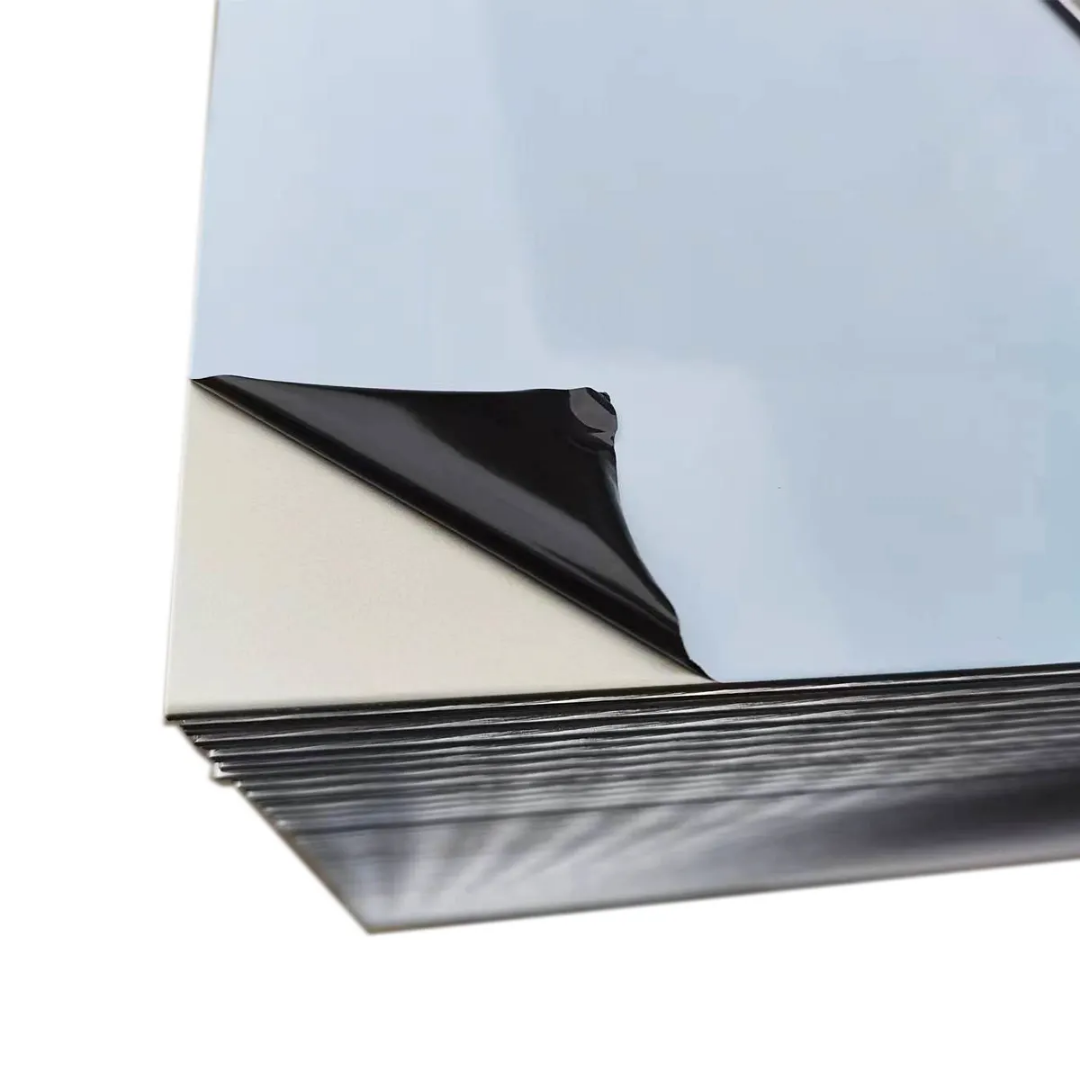
For procurement professionals sourcing aluminum composite panels (ACPs) from international markets, the quoted price per square meter in the supplier's local currency is rarely the final cost. Between the moment an order is placed and the moment payment is settled, currency exchange rates can shift by several percentage points—enough to transform a carefully negotiated discount into an unexpected budget overrun, or conversely, to generate unplanned savings.
In ACP imports, where typical order values range from tens of thousands to hundreds of thousands of dollars, even a modest 3–5% exchange rate movement can translate into thousands of dollars of variance. Unlike raw material costs, which are often visible and actively managed, currency risk is frequently overlooked until an invoice arrives with an unwelcome surprise.
This article explains how exchange rates affect ACP import costs, analyzes current market conditions, and provides practical strategies for managing currency risk in procurement.
1. The Direct Link: How Exchange Rates Affect ACP Costs
Most international ACP transactions are priced and invoiced in US dollars (USD). The supplier—typically based in China, Vietnam, or South Korea—quotes a USD price per square meter, and the buyer pays in USD. However, the buyer's internal budget and eventual project revenues are denominated in their local currency (e.g., EUR, GBP, AUD, or local currency). This mismatch creates exposure.
The Mechanism:
- When the buyer's local currency weakens against the USD, the cost of ACPs rises.
- When the buyer's local currency strengthens against the USD, the cost of ACPs falls.
Example:
A buyer in the Eurozone orders $100,000 worth of ACPs when EUR/USD = 1.10 (€90,909 equivalent). By the time payment is due 60 days later, EUR/USD has moved to 1.05 (€95,238 equivalent). The same shipment now costs €4,329 more—a 4.8% budget overrun.
Conversely, if EUR/USD strengthens to 1.15, the cost drops to €86,957, generating unplanned savings.
For buyers whose local currency is not directly traded against the USD (e.g., Malaysian Ringgit, Thai Baht, Nigerian Naira), the exposure is often even more pronounced, as those currencies may be pegged to or heavily influenced by USD movements through their own central bank policies.
2. The ACP Cost Structure: Where Exchange Rate Exposure Lives
Understanding the composition of ACP pricing helps explain why exchange rates matter so much. A typical ACP price consists of:
Cost Component | Percentage of Total | Currency Exposure |
Aluminum coil (raw material) | 60–70% | Aluminum is globally traded in USD |
Polymer core material | 0–15% | Petroleum-based; USD-linked |
Coating (PVDF/polyester) | 5–10% | USD-denominated raw materials |
Labor and manufacturing | 8–12% | Local currency (exposure limited) |
Factory overhead and profit | 5–8% | Partially USD-linked |
Since aluminum accounts for approximately 60–70% of total raw materials procurement, its price directly affects ACP sheet pricing. Importantly, both aluminum and the petroleum-based core materials are globally traded commodities priced in USD. Even when a Chinese supplier quotes a USD price, their own input costs are also USD-sensitive, meaning exchange rate movements propagate through the entire supply chain.
A 2025 analysis noted that import prices often react meaningfully to currency shifts, and imported input costs can move close to one-for-one in the short run when foreign prices are sticky. For ACP buyers, this means exchange rate movements are not easily absorbed by suppliers—they pass through directly.
3. Current Exchange Rate Environment: 2025–2026 Update
US Dollar (USD) – The Baseline Currency
The USD has experienced significant volatility. The dollar index posted its steepest annual drop since 2003, falling over 10% in 2025. This weakness has been driven by U.S. economic growth concerns, expectations of Federal Reserve rate cuts, and a deteriorating fiscal outlook.
This USD weakness has generally benefited non-USD buyers, as it reduces the local currency cost of USD-denominated ACPs.
Chinese Renminbi (CNY) – The Supplier Currency
The CNY appreciated approximately 4% against the USD in 2025, and most forecasts point to continued gradual appreciation. NIFD projects USD/CNY in the 6.7–7.1 range for 2026, while Commerzbank expects USD/CNY at 6.90 by mid-2026 and 6.70 by late 2027. Goldman Sachs forecasts 6.95 in Q1 2026, 6.90 in Q2, and 6.85 in Q4.
For buyers, a strengthening CNY relative to USD may translate into higher USD quotes from Chinese suppliers over time, as their local currency costs increase.
Euro (EUR) – Major Buyer Currency
The euro has been a notable outperformer. EUR/USD rose 13% in 2025, closing the year near 1.16–1.17. BBVA Research projects EUR/USD to reach 1.20 by the end of 2026, while ABN AMRO expects a more aggressive rise to 1.25.
For Eurozone buyers, a stronger euro has been a tailwind, lowering the effective cost of USD-priced ACPs.
Other Buyer Currencies
Buyers in other markets face varied conditions:
- British Pound (GBP): Generally strengthened alongside the euro
- Australian Dollar (AUD): Benefited from commodity price strength
- Japanese Yen (JPY): Remained weak against USD, increasing import costs for Japanese buyers
- Emerging market currencies: Highly variable, with some experiencing significant pressure
4. Real-World Impact on ACP Procurement: Scenario Analysis
The following scenarios illustrate the potential financial impact of exchange rate movements on a $200,000 ACP order (approximately 10,000–12,000 m² of standard panels).
Scenario 1: Local Currency Weakens
Factor | Value |
USD/LC at order | 1.1000 |
Order value in local currency | $200,000 ÷ 1.10 = LC 181,818 |
USD/LC at payment (3 months later) | 1.0500 (4.55% weaker) |
Payment in local currency | $200,000 ÷ 1.05 = LC 190,476 |
Extra cost due to FX movement | LC 8,658 (4.76% increase) |
This scenario erases a negotiated 5% discount and adds unexpected cost.
Scenario 2: Local Currency Strengthens
Factor | Value |
USD/LC at order | 1.1000 |
Order value in local currency | LC 181,818 |
USD/LC at payment | 1.1500 (4.55% stronger) |
Payment in local currency | $200,000 ÷ 1.15 = LC 173,913 |
Savings due to FX movement | LC 7,905 (4.35% decrease) |
While savings are welcome, they can complicate cost accounting and project budgeting when currency swings create unpredictable outcomes.
Scenario 3: Multiple Currency Exposure
A buyer with revenues in GBP, costs in USD for ACPs and EUR for other materials, and a project timeline spanning 9 months faces compounded exposure. A 5% movement in three different currency pairs could swing the total project cost by 10% or more.
5. Beyond the Direct Currency Pair: Indirect Exposure
Exchange rate fluctuations affect ACP pricing through additional channels beyond the direct USD-to-local-currency conversion.
Raw Material Pass-Through
Aluminum prices, which constitute 60–70% of ACP costs, are set in USD on the London Metal Exchange (LME). When the USD strengthens against other currencies, USD-denominated aluminum becomes more expensive for non-USD buyers, even before the ACP supplier adds their margin.
Conversely, when the USD weakens, dollar-denominated commodities become cheaper in local currency terms—but local suppliers may delay passing through these reductions if they hedged their own input costs at higher rates.
Supplier Pricing Behavior
Chinese ACP manufacturers face their own currency exposure. Their costs (aluminum, resin, labor) are partially in CNY and partially USD-linked. When the CNY strengthens against the USD, its USD-denominated revenues buy fewer CNY, compressing margins. Suppliers may respond by raising USD list prices.
Observation: Many Chinese ACP suppliers periodically adjust their USD price lists based on the CNY/USD rate. Buyers who monitor these adjustments can time orders advantageously.
Competitor Currency Dynamics
A buyer sourcing from China may find that a 5% CNY appreciation makes Chinese panels 5% more expensive in USD terms. However, if the buyer's local currency has appreciated against the USD by 8% simultaneously, the net effect may still be favorable. Understanding the full currency matrix—not just one pair—is essential.
6. Managing Currency Risk: A Procurement Toolkit
A. Hedging with Forward Contracts
A forward contract allows you to lock in an exchange rate today for a transaction that will settle at a future date—typically 30, 60, or 90 days out.
How it works:
- Determine your expected payment date and USD amount
- Your bank or FX provider quotes a forward rate
- You lock that rate, eliminating uncertainty
- At settlement, you exchange at the locked rate regardless of market movements
Advantages:
- Complete certainty of local currency cost
- Protection against adverse movements
- Relatively simple to implement
Disadvantages:
- You forego potential savings if rates move in your favor
- Requires accurate forecasting of payment timing
- Typically requires a bank relationship and credit approval
B. Multi-Currency Accounts
Hold foreign currency (e.g., USD) in a dedicated account and pay suppliers directly when invoices fall due. This eliminates the need to convert at each payment, reducing transaction costs and timing risk.
Best for: Frequent importers with predictable USD payment flows.
C. Natural Hedging
If your business also generates revenue in USD (e.g., exports, USD-denominated contracts), you can match USD inflows with USD outflows, reducing or eliminating the need to convert currencies.
Example: A construction firm that wins a USD-denominated contract can use those USD receipts to pay ACP suppliers directly, creating a natural hedge.
D. Pricing with Buffer
Build a currency contingency buffer into your project budget—typically 5–10% of the ACP material cost. While this does not prevent exposure, it provides a reserve to absorb adverse movements without jeopardizing project economics.
E. Shorten the Exposure Window
The longer the gap between order and payment, the greater the currency risk exposure. Negotiate payment terms that minimize this gap:
- T/T in advance: Eliminates exposure (but transfers risk to buyer)
- 30% deposit + 70% against shipping documents: Exposure limited to the 70% balance over a shorter window (typically 15–30 days)
- Sight L/C: Payment upon presentation of documents; shorter exposure than deferred payment terms
F. The "Risk Neutral" Approach
The concept of exchange rate risk neutrality is increasingly recognized as best practice in international commodity procurement. The core principle is treating currency fluctuation as a normal operating variable to be systematically managed, rather than speculating on directional moves.
For ACP procurement, this means:
- Establishing a budget exchange rate for each project based on realistic forecasts
- Hedging committed exposures rather than leaving them open
- Avoiding the temptation to "wait for a better rate" when the market moves favorably (this is speculation, not risk management)
As one treasury professional noted, the goal is "protecting your business from unpredictable currency"—not betting on direction.
7. Integrating Currency Management into Procurement Contracts
For procurement professionals, currency risk should be explicitly addressed in supplier contracts and purchase orders:
A. Currency Clause Example
All prices quoted are in USD. The Buyer's local currency cost shall be determined based on the [Bank Name] spot rate on the date of payment. The Buyer reserves the right to enter into forward contracts to hedge this exposure. In the event of a cumulative exchange rate movement exceeding 10% between the order date and the payment date, either party may request a price adjustment negotiation.
B. Payment Currency Alignment
If your organization has natural USD inflows, specify payment in USD and use those inflows directly. If not, consider negotiating with suppliers to invoice in your local currency (though many will add a premium for currency risk).
C. Price Adjustment Mechanisms
For long-duration contracts (e.g., 12-month supply agreements), include a formula-based price adjustment clause tied to published exchange rate indices. This ensures that neither party bears disproportionate currency risk over the contract term.
8. Monitoring and Forecasting: Tools for Procurement
Effective currency risk management requires visibility. Procurement teams should:
- Track major currency pairs weekly (USD/CNY, USD/EUR, USD/GBP, and your local currency pair)
- Subscribe to bank research updates for forward-looking forecasts
- Use free online tools (e.g., XE.com, OANDA) for spot rate tracking
- Coordinate with treasury or finance departments** to ensure alignment on hedging strategies
- Build exchange rate assumptions into RFQ templates so suppliers know the basis for price comparisons
9. The Future Outlook: What to Watch
Several factors will continue to influence exchange rates relevant to ACP importers:
- Federal Reserve policy: Further rate cuts would likely weaken the USD further
- Chinese economic stimulus: Could support CNY strength
- Geopolitical events: Elections, trade disputes, and conflicts introduce volatility
- Commodity prices: Aluminum prices affect both ACP costs and the currency of producing nations
Key levels to watch for USD/CNY in 2026: Many analysts see potential movement toward 6.85–6.90, with a range of 6.70–7.25 cited as plausible. For EUR/USD, forecasts center on 1.18–1.20 by year-end.
10. Conclusion
Currency exchange rates are not a secondary concern in aluminum composite panel procurement—they are a primary cost driver that can swing project economics by 5–10% or more. In an environment of heightened currency volatility and structural shifts in major exchange rates, ignoring FX risk is no longer an option for professional buyers.
The most effective approach combines awareness, planning, and disciplined execution:
- Understand your exposure: Map which currencies affect your landed costs
- Monitor market conditions: Track forecasts for USD/CNY, USD/EUR, and your local pair
- Use hedging tools: Forward contracts, multi-currency accounts, and natural hedges
- Build buffers into budgets: Account for potential adverse movements
- Incorporate currency clauses into contracts: Explicitly allocate risk
By treating currency risk as an integral part of procurement strategy—rather than an afterthought—you can protect project margins, avoid budget surprises, and make sourcing decisions based on total landed cost, not just the supplier's quoted price.