Welcome to Vbond
The “Invisible” Installation: Achieving Flush, Seamless ACP Surfaces
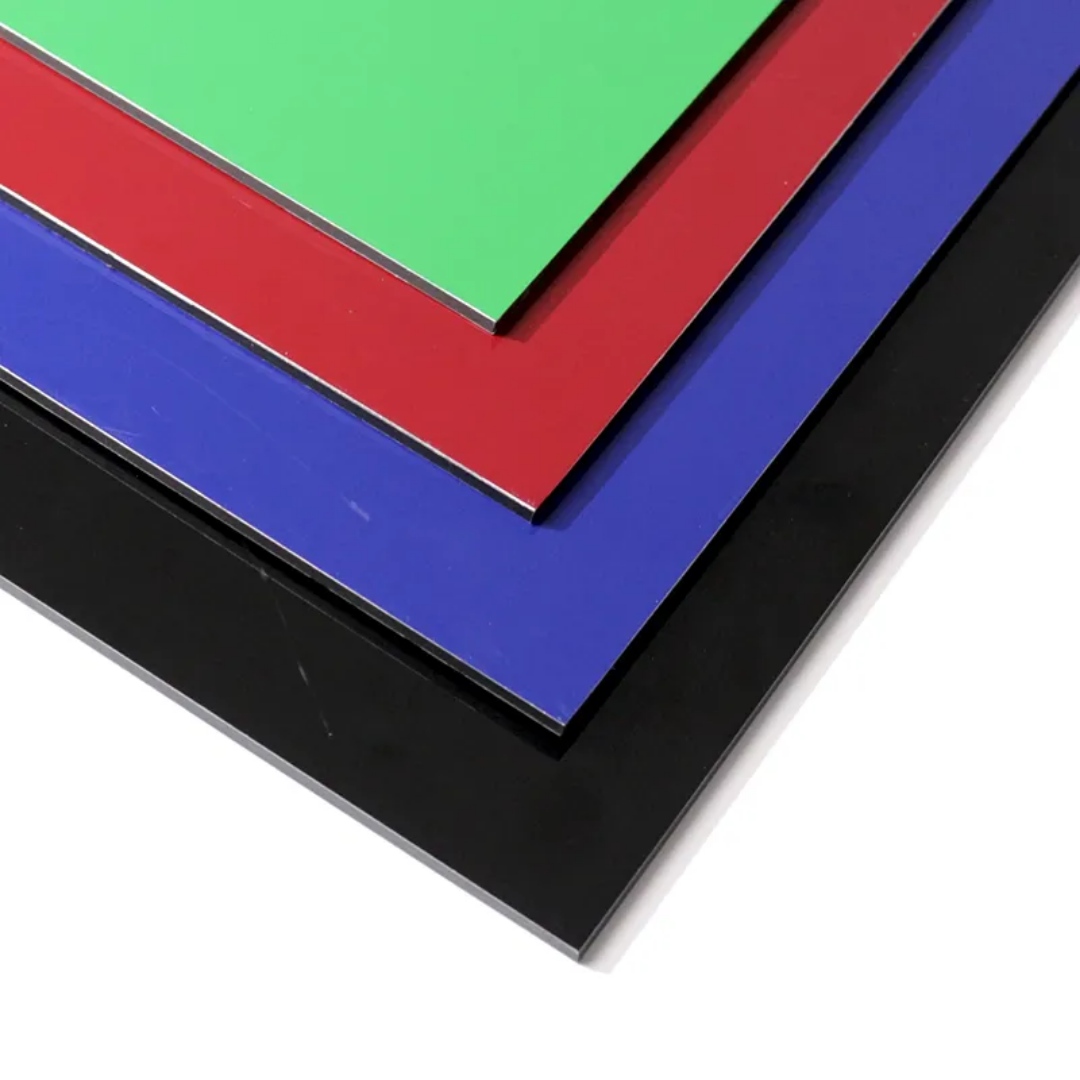
In the pursuit of architectural purity and modern elegance, the ultimate goal for many facade and interior projects is a monolithic, uninterrupted plane. Achieving a perfectly flush and seamless ACP surface—where the supporting structure and joints seemingly disappear—represents the pinnacle of precision in architectural cladding. This article delves into the advanced techniques, specialized systems, and meticulous detailing required to realize the "invisible" installation of Aluminum Composite Panels (ACP), transforming them into continuous, sleek architectural skins.
The Allure of the Seamless: Why It Matters
A flawless, monolithic facade conveys sophistication, technological prowess, and high-quality craftsmanship. It eliminates visual noise, allowing the material's color, finish, and form to speak without interruption. This is critical for:
Minimalist and High-Tech Architecture: Where clean lines and uninterrupted surfaces are fundamental to the design language.
Corporate and Luxury Branding: Projects a refined, precise, and premium image.
Large-Scale Murals and Graphics: Essential for maintaining the integrity of digital prints or custom finishes across vast areas.
Creating Illusions: A seamless surface can make a building appear as a single, sculpted object rather than an assembly of parts.
Beyond Standard Systems: The Engineering of Invisibility
Standard ACP installations with visible reveals (joints) are functional and effective. Achieving invisibility, however, requires moving beyond standard practices to specialized solutions. The core challenge is accommodating thermal movement and structural tolerances while hiding all evidence of the panel fixation system.
1. Open-Joint vs. Closed-Joint: A Paradigm Shift
The journey to seamless aesthetics often begins with a closed-joint rainscreen system. Unlike open-joint systems that celebrate the shadow gap, closed-joint systems aim to minimize or eliminate the visible joint line.
2. Key Systems and Techniques for Seamless Surfaces
A. Flush Glue/Adhesive Bonding Systems:
This is the most effective method for achieving a truly monolithic look. Panels are bonded directly to a continuous, flat substrate (like a plywood or aluminum backer panel) using high-performance structural silicone adhesives.
How it Works: The ACP panels are precisely cut and fitted edge-to-edge. A small, controlled gap (1-2mm) is maintained, which is then filled with a color-matched, flexible sealant. When done correctly, the joint is visually imperceptible.
Critical Considerations: Requires an exceptionally true and stable substrate. Must account for thermal expansion of both the ACP and the substrate through detailed expansion joint planning. Demands the highest level of installer skill and quality control.
B. Secret-Fix (Invisible Fix) Mechanical Systems:
These specialized concealed ACP fixing systems use clips or brackets that engage into the panel's rear edge or into a groove routed into the panel's back.
How it Works: Adjacent panels interlock or are drawn tightly together via the hidden clips, minimizing the front face joint width. The result is an extremely narrow, consistent joint that can be filled with a matching sealant for a seamless appearance.
Advantage: Allows for some panel movement and is easier to install on less-than-perfect substrates compared to full adhesive bonding.
C. The Art of the Color-Matched Sealant:
For both bonded and narrow-joint mechanical systems, the final sealant is crucial. It must be:
Precisely Color-Matched: Custom-tinted to the exact ACP panel color.
High-Performance: Possess excellent UV stability, flexibility, and adhesion to the ACP's coating.
Expertly Applied: Tooled to a perfectly smooth, flat finish that is continuous with the panel face.
Critical Pre-Installation Factors for Success
Achieving an invisible finish is determined long before installation begins.
1. Panel Fabrication Tolerance: Panels must be manufactured with laser-cut precision to ensure absolutely square edges and identical dimensions. Any variance will compound across the facade.
2. Substrate Perfection: The supporting wall or framework must be installed to a "true plane" tolerance, often within ±3mm over 10 meters. Any deviation will telegraph through the thin, rigid ACP skin.
3. Thermal Movement Calculation: ACP expands and contracts with temperature changes. Joint widths and adhesive specifications must be engineered to accommodate this movement without causing stress, oil-canning, or sealant failure.
4. System Selection and Detailing: Engage with ACP manufacturers and system suppliers early. Use proprietary seamless facade systems designed for this purpose, complete with engineered details for corners, penetrations, and expansion joints.
The Role of Professional Execution
This level of installation is not for general contractors. It requires:
Specialist Installers: Teams with proven experience in high-tolerance, seamless cladding projects.
Comprehensive Mock-Ups: A full-scale onsite mock-up is non-negotiable to test the system, aesthetics, and workmanship before full production.
Stringent QC During Installation: Continuous checking with laser levels and straightedges to maintain perfect alignment.
Conclusion: The Pinnacle of Craftsmanship
The "invisible" ACP installation represents the highest standard in architectural cladding—a seamless marriage of advanced material science, engineered systems, and meticulous craftsmanship. While it demands greater upfront investment in design, detailing, and execution, the result is a transformative architectural statement: a building that appears as a flawless, cohesive volume. It elevates ACP from a versatile cladding material to a medium for creating profound architectural simplicity and elegance, proving that true sophistication often lies in what you don't see.






