Welcome to Vbond
The Manufacturing Process of Aluminum Composite Panels: A Technical Step-by-Step Overview
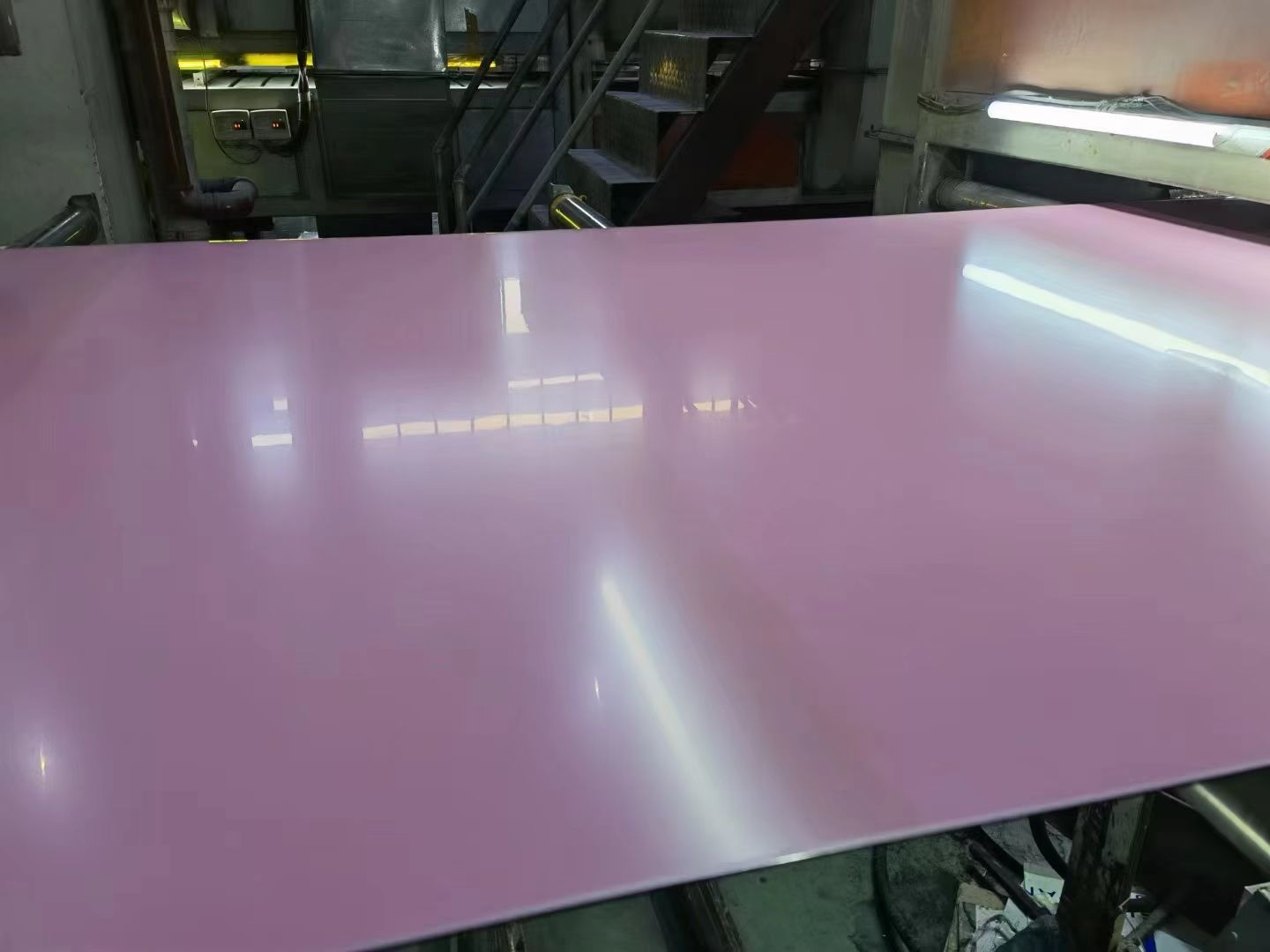
Introduction: Precision Engineering in Modern Cladding Production
Aluminum Composite Panels (ACP) represent a sophisticated fusion of materials science and industrial engineering. Their widespread use in architecture, signage, and construction is directly attributable to a meticulously controlled manufacturing process that transforms raw materials into high-performance building components. This technical examination details the precise, multi-stage production methodology behind ACP, explaining how quality, consistency, and performance are engineered at every phase.
Stage 1: Raw Material Selection and Preparation
Aluminum Coil Preparation
The process begins with high-quality aluminum coils, typically from the 1000, 3000, or 5000 series alloys, chosen for their optimal balance of formability, strength, and corrosion resistance.
Surface Degreasing & Cleaning: Coils undergo alkaline or acidic cleaning to remove oils, oxides, and contaminants.
Chemical Pre-treatment: A chromate or chromium-free conversion coating (like zirconium-based) is applied. This enhances paint adhesion and provides a foundational corrosion-resistant layer, critical for panel longevity.
Stage 2: Precision Coating Application
This stage defines the panel’s aesthetic and durable outer skin.
1. Primer Coating
A thin, uniform epoxy or polyurethane primer is applied via computer-controlled roller coating. This layer ensures superior bonding between the aluminum substrate and the subsequent finish coats.
2. Finish Coating Application
The key protective and decorative layer is applied. Industry standards offer two main technologies:
PVDF (Polyvinylidene Fluoride) Coating: The premium choice for exterior applications. Contains ≥70% PVDF resin in a fluoropolymer system. Applied in multiple layers, it provides exceptional color retention, chalk resistance, and weatherability.
- PE (Polyester) Coating: A cost-effective option suitable for many interior applications, offering good color and gloss stability.
Curing: The coated coils pass through a multi-zone convection oven. Temperature and speed are precisely controlled to achieve perfect cross-linking of the polymer chains, ensuring optimal film hardness, flexibility, and adhesion.
Stage 3: Core Material Production and Panel Lamination
This is the heart of the ACP manufacturing process, where the composite structure is created.
Core Material Preparation
Polyethylene (PE) Core: The most common core. Virgin or modified PE resin is extruded into a uniform sheet of specified thickness and density.
Fire-Retardant (FR) Mineral Core: For A2 and B1 class panels, a mixture of mineral fillers (like aluminum hydroxide) and polymers is processed to create a non-combustible core sheet.
The Continuous Lamination Line
This automated, high-precision process bonds the components under controlled heat and pressure.
1. Uncoiling & Feeding: The top and bottom pre-coated aluminum sheets are fed from massive coils.
2. Core Introduction: The core material sheet is precisely introduced between the two aluminum skins.
3. Pre-heating: All three layers are gently pre-heated to optimize adhesive activation.
4. Adhesive Application: A thermally activated polyurethane-based or special polymer adhesive is applied at the interface of the aluminum and core.
5. Hot-Roll Lamination: The "sandwich" passes through a series of heated, pressurized rollers (calenders). This ensures:
- Complete, void-free bonding across the entire panel width and length.
- Exceptional flatness and dimensional stability.
- Uniform thickness to tight tolerances (e.g., 3mm, 4mm).
6. Cooling & Setting: The bonded panel is gradually cooled under tension to lock in the flat profile and complete the adhesive cure.
Stage 4: Post-Production Processing and Quality Control
Cutting and Trimming
The continuous laminated panel is cut to standard sheet sizes (e.g., 1220x2440mm, 1500x3050mm) or custom dimensions using computer-guided flying saws or shear lines. Edges are trimmed cleanly.
Comprehensive Quality Assurance
Every production batch undergoes rigorous testing:
- Physical Tests: Peel strength (adhesion), flatness, bendability, and impact resistance.
- Chemical/Performance Tests: Weatherability (QUV accelerated aging), color consistency (spectrophotometry), surface hardness, and fire rating verification for FR cores.
- Dimensional Checks: Thickness, width, length, and squareness.
Protective Packaging
Sheets are separated with protective film or interleaving paper, bundled, and crated on sturdy pallets to prevent damage during shipping and handling.
Conclusion: The Result of Controlled Engineering
The modern ACP manufacturing process is a testament to advanced industrial automation and material science. From the chemical pretreatment of aluminum to the precise thermal dynamics of the lamination line, each step is designed to produce a composite material that is more than the sum of its parts. This controlled, repeatable process is what delivers the consistent performance, reliability, and aesthetic quality that architects, fabricators, and builders depend on for projects worldwide.
Understanding this process empowers specifiers to ask informed questions, assess manufacturer capabilities, and select the right ACP product based on the proven engineering behind its production.






