Welcome to Vbond
The Physics of Wind Loads: Engineering ACP for Hurricane-Prone Regions
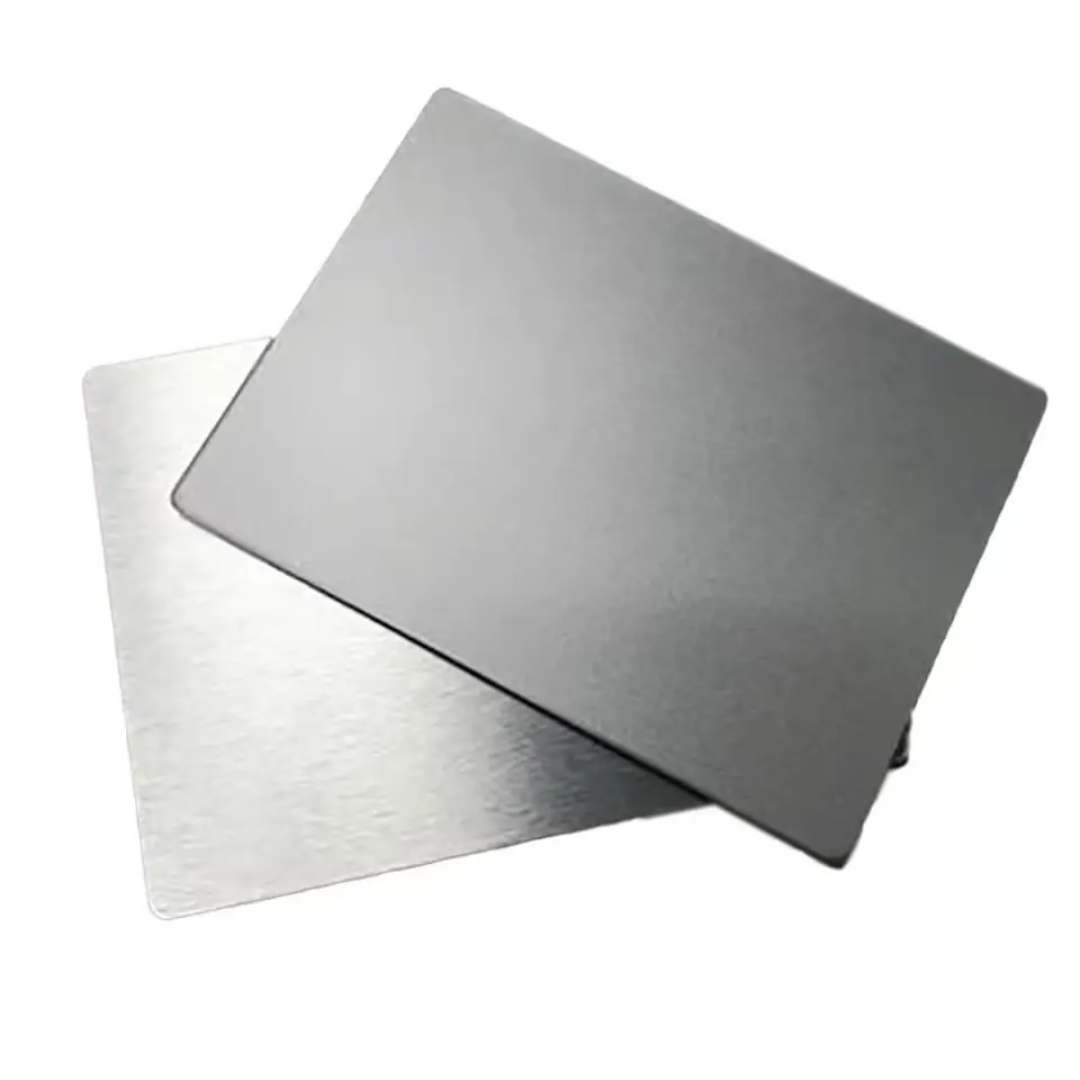
As hurricane seasons intensify and coastal urbanization expands, architects and engineers face a formidable challenge: designing building envelopes that can survive extreme wind events. For specifiers considering Aluminum Composite Panels (ACP), understanding the physics of wind loads is not just an academic exercise—it is the difference between a standing structure and a catastrophic failure. This article explores the aerodynamic principles governing wind loads and the engineering innovations that allow ACP cladding systems to perform in hurricane-prone regions.
Understanding the Nature of Wind Loads
Before engineering a solution, one must understand the problem. Wind loads on structures are dynamic and complex, arising from the interaction between airflow and the building surface.
The Fundamentals of Wind Pressure
Wind load is essentially the pressure exerted by moving air. When wind encounters a building, it creates a complex pattern of positive and negative pressures. The windward face experiences positive pressure (pushing inward), while the side walls, leeward wall, and roof often experience negative pressure or suction (pulling outward). This suction effect is frequently the culprit in cladding failures during hurricanes.
According to fundamental fluid dynamics, the wind pressure (q) is calculated using the classic formula:
Q=1/2 pv2
where ρ represents air density, and V represents wind velocity. This quadratic relationship is critical: if wind speed doubles, the pressure quadruples. For a Category 5 hurricane with sustained winds exceeding 157 mph (70 m/s), the theoretical pressure can exceed 3,000 pascals—enough to tear away improperly secured cladding.
Static vs. Dynamic Loads
Buildings experience two types of wind effects. Static loads refer to the mean pressure caused by steady-state winds. However, dynamic loads—caused by gusting, vortex shedding, and flutter—often prove more destructive. When wind gusts buffet a building at frequencies matching the structure's natural frequency, resonance can amplify movements and stresses dramatically.
How ACP Interacts with Wind Forces
Aluminum Composite Panels offer distinct advantages in high-wind scenarios due to their engineered structure. A typical ACP consists of two thin aluminum skins bonded to a polyethylene or mineral-filled core. This sandwich construction provides an exceptional strength-to-weight ratio.
Pressure Equalization and Rainscreen Principles
Modern ACP rainscreen systems utilize pressure-equalized design. The cavity behind the cladding is compartmentalized and vented, allowing air pressure behind the panel to equalize with external pressure. This pressure equalization dramatically reduces the net load on the cladding because the panel is no longer "pushed" or "pulled" by a pressure differential. Research on multi-layer wall systems confirms that proper venting and compartmentalization are essential for managing wind loads on exterior cladding.
Flexibility and Energy Dissipation
Contrary to intuition, rigidity is not always the answer. The aluminum face sheets in ACP provide controlled flexibility, allowing the panel to absorb and dissipate wind energy through elastic deformation. Studies on aluminum foam sandwich panels demonstrate that increasing a wall system's flexibility can enhance energy absorption capability and provide improved resistance to impact loads. This principle extends to composite panels: the aluminum skins deform slightly under load, absorbing energy that might otherwise transfer to the building structure.
Engineering ACP for Hurricane Resistance
Engineering ACP for hurricane zones requires a multi-faceted approach addressing both wind pressure and windborne debris—the two greatest threats during extreme events.
1. Wind Load Testing Standards
Credible ACP manufacturers subject their products to rigorous testing protocols. In North America, ASTM E330 is the standard test method for structural performance of exterior windows, curtain walls, and doors under wind pressure. Panels must withstand positive and negative design pressures without permanent deformation or failure. European standards like EN 12179 provide equivalent validation.
For hurricane-prone regions, the most stringent requirements come from the Florida Building Code (FBC), which references ASTM E1996 and ASTM E1886 for impact testing. These protocols simulate real-world hurricane conditions using a "large missile"—typically a 9-pound (4 kg) 2x4 timber traveling at 50 feet per second (15 m/s)—fired directly at the panel. To pass, the panel must prevent penetration and maintain pressure resistance after impact.
2. Advanced Core Technologies
Standard ACP with polyethylene cores performs adequately in low-to-moderate wind zones. However, hurricane-rated assemblies demand more. The introduction of materials like Kevlar into the composite layup represents a quantum leap in impact resistance. DuPont and Alcoa's collaboration produced Reynobond with Kevlar, which inserts a thin layer of Kevlar fabric between the aluminum skins and core. Kevlar, five times stronger than steel on an equal-weight basis, acts as a protective net, stopping debris that would otherwise puncture the building envelope.
Similarly, aluminum foam cores have emerged as a high-performance alternative. Finite-element simulations demonstrate that aluminum foam structural panels absorb impact energy through progressive crushing of the foam cellular structure. Key design factors include core density, core thickness, and face sheet thickness—all of which engineers can optimize for specific wind-borne debris threats.
3. Connection Design and Subframing
The panel itself is only one component. The anchorage system—brackets, rails, and fasteners—must transfer wind loads to the primary structure. Engineers calculate fixing layouts based on wind tunnel data or code-prescribed pressures, ensuring that every square foot of cladding has adequate support. In high-wind zones, fastener spacing decreases, and bracket gauges increase to resist uplift and pull-out forces.
Modeling Wind Loads: From Theory to Application
Contemporary wind engineering relies heavily on physical and computational modeling.
Wind Tunnel Testing
For landmark buildings, wind tunnel testing remains the gold standard. Scale models placed in boundary layer wind tunnels simulate the turbulent wind environment specific to the building site . Pressure taps distributed across the model surface measure fluctuating pressures, providing data to calculate peak cladding loads. These tests reveal localized effects—corner vortices, separation zones—that generic code provisions may miss.
Finite Element Analysis
Advanced computational tools now complement physical testing. Researchers use software like LS-DYNA to model ACP panels under single and repeated debris impacts. These high-fidelity simulations capture damage progression, impact force, and energy absorption, allowing virtual optimization before physical prototyping. For the engineer specifying ACP, this means products can be engineered with validated performance data rather than guesswork.
Case Example: The Hurricane-Ready Envelope
Consider a 20-story coastal condominium tower in Miami-Dade County—the jurisdiction with America's strictest hurricane codes. The design team selects a pressure-equalized ACP rainscreen system with the following specifications:
- Panel Construction: 4mm ACP with mineral-filled fire-retardant core and 0.5mm aluminum skins
- Impact Modification: Integrated Kevlar scrim layer between core and outer skin
- Attachment: Heavy-gauge aluminum subframe with brackets at 24-inch centers, engineered for ±120 psf design pressure
- Testing Certification: Passed ASTM E1886 missile impact test with 9-pound timber at 50 ft/s
- Quality Assurance: Third-party inspected installation with sealants and gaskets meeting ASTM C920 standards
The result is an envelope capable of withstanding Category 5 winds while maintaining architectural aesthetics.
Practical Considerations for Specifiers
When engineering ACP for hurricane zones, professionals should prioritize four factors:
1. Certification, Not Claims: Demand third-party test reports. Miami-Dade Notice of Acceptance (NOA) or Florida Building Code product approval provides legal validation.
2. System Approach: Panels alone do not constitute a wind-resistant assembly. The complete system—panels, attachments, sealants, and substrate—must be evaluated together.
3. Redundancy: Design for the worst-case scenario. Even if primary cladding is compromised, secondary weather barriers should prevent water ingress.
4. Lifecycle Maintenance: Hurricane resistance requires long-term durability. ACP's corrosion-resistant aluminum skins and stable core materials ensure performance decades after installation.
Conclusion
The physics of wind loads demands respect. As hurricanes intensify in a changing climate, the engineering community must respond with innovation and rigor. Aluminum Composite Panels, when properly engineered, tested, and installed, offer a proven solution for building envelopes in hurricane-prone regions. By understanding the aerodynamic principles at play—pressure equalization, energy dissipation, and dynamic response—and specifying systems validated against the most stringent standards, architects can deliver buildings that stand resilient against nature's fury.
The key takeaway is clear: in hurricane zones, ACP is not merely an aesthetic choice; it is a critical component of a life-safety system, engineered to protect occupants and property when the wind begins to roar.






