Welcome to Vbond
The Problem of Undeclared Core Substitutions in Aluminum Composite Panel Orders
The Problem of Undeclared Core Substitutions in Aluminum Composite Panel Orders
You specified A2 mineral core. You paid for an A2 mineral core. The certificate says A2 mineral core. But what is actually inside the panels delivered to your job site?
Undeclared core substitution—the replacement of a specified, higher-performance core material with a cheaper, often combustible alternative—is one of the most serious and persistent problems in aluminum composite panel (ACP) procurement. It is not a hypothetical risk. It has caused massive building fires, billion-dollar legal battles, and the wholesale replacement of facades on hundreds of buildings worldwide.
This guide explains why core substitution happens, how to detect it, and what procurement professionals can do to protect their projects from this hidden danger.
What Is Core Substitution?
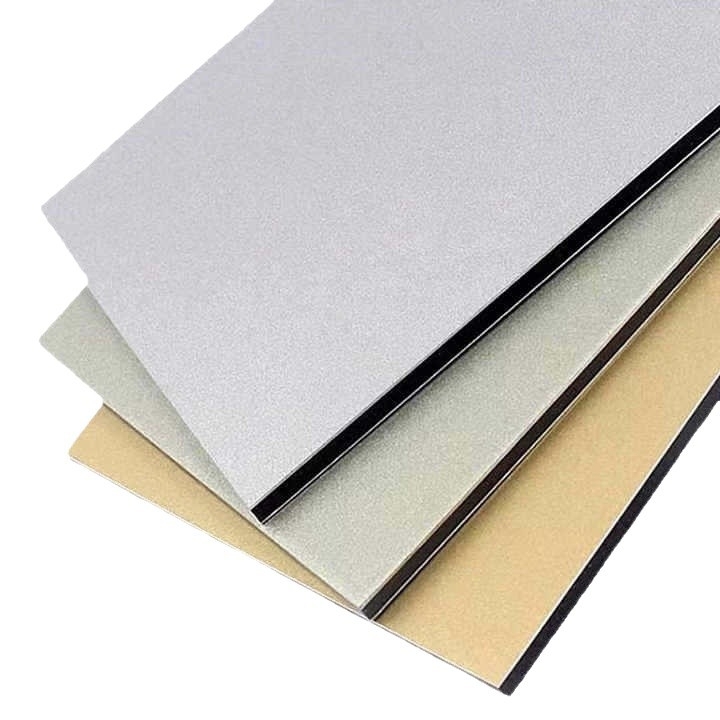
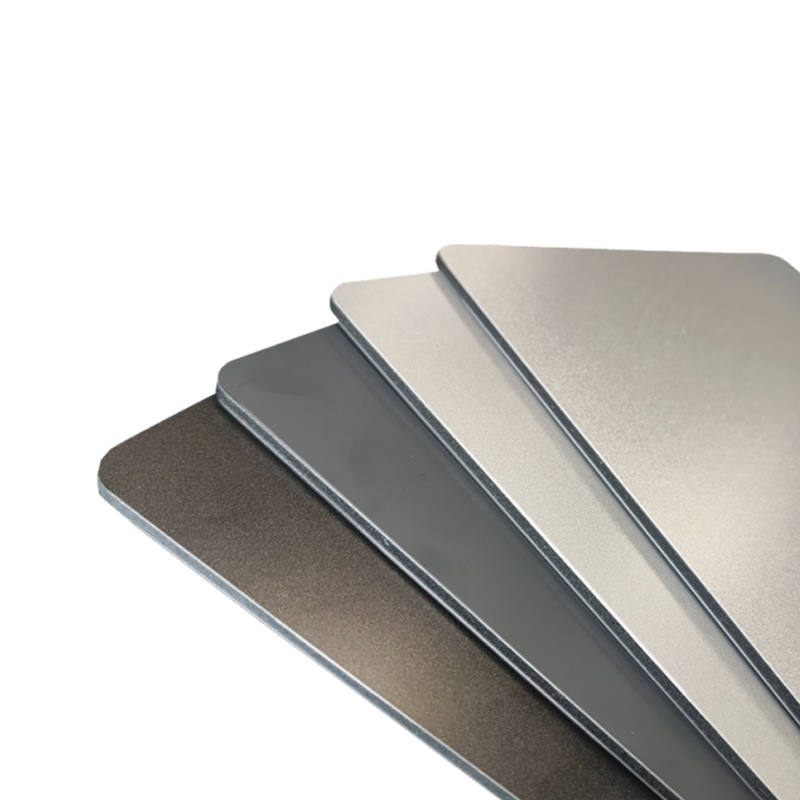
An aluminum composite panel consists of two thin aluminum skins bonded to a central core material. The core determines the panel's fire performance, structural behavior, and cost.
Core Type | Composition | Fire Performance | Relative Cost |
Polyethylene (PE) | 100% combustible polymer | Ignites readily; melts; produces flaming droplets | Lowest |
Fire-Retardant (FR) | PE + mineral filler (typically >30% ATH) | PE + mineral filler (typically >30% ATH) | Medium |
A2 Mineral Core | >90% non-combustible mineral filler | Does not ignite; no significant contribution to fire | Highest |
Undeclared core substitution occurs when a supplier delivers panels with a different core material than what was specified in the purchase contract. The most common—and most dangerous—substitution is delivering PE core panels when FR or A2 mineral core was specified.
Why Core Substitution Happens
The Financial Incentive
The price difference between core types is substantial. A2 mineral core panels can cost 2–3 times more than PE core panels of the same thickness and finish. For a large facade project, substituting PE for A2 can increase a supplier's profit margin by hundreds of thousands of dollars.
The "Value Engineering" Trap
In many construction projects, the contractor or builder faces cost pressure after winning a tender. As one industry expert explained:
"Substitution occurs when a builder, or somebody involved in the purchasing process, is looking to save money. Basically, what's happened is there's been a tender go out for the building, a company's won the tender, and the first thing that happens is they look to find savings."
Supply Chain Gaps
The demand for non-combustible A2 panels has increased dramatically following major facade fires worldwide. When A2 core material is in short supply, some suppliers ship FR or PE core as a "comparable alternative" without obtaining buyer consent.
Deliberate Fraud
In the most serious cases, suppliers knowingly ship non-compliant panels with falsified documentation. Certificates may be forged, test reports may be copied from genuine products, and packaging may be misleading. Australia's Senate inquiry into non-conforming building products specifically identified "deliberate misleading or fraudulent documentation or certification" as a key concern.
The Consequences of Undeclared Core Substitution
Fire Safety Failures
The most catastrophic consequence is fire. PE core panels are highly combustible. They ignite readily, melt, produce flaming droplets that spread fire downward, and contribute significantly to fire growth. In contrast, A2 mineral cores do not ignite and do not contribute to the fire load.
Real-world precedent: The 2014 Lacrosse fire in Melbourne started with a single cigarette on a balcony. The fire spread rapidly up the exterior of the 21-storey building due to combustible aluminum composite panels installed on the facade. The resulting legal battle resulted in damages of over $5.7 million, and liability was apportioned across the builder, architect, fire engineer, and building surveyor.
The Grenfell Tower fire (2017) in London, which claimed 72 lives, involved aluminum composite panels with a polyethylene core. The tragedy triggered a global re-examination of facade fire safety regulations.
Legal Liability
The legal consequences of core substitution can extend far beyond the supplier. In the Lacrosse case, the builder was held liable for breaching implied warranties of suitability of materials, fitness for purpose, and compliance with the law. The architect was found liable for approving a substitute panel without verifying that it met specifications.
Key findings from the Lacrosse decision:
- The builder's liability was "absolute" for the fitness for purpose warranty
- The architect was liable for failing to ensure the substituted panel was compliant
- The fire engineer was liable for failing to recognize that the proposed panels did not comply with the Building Code
- The building surveyor was liable for issuing a permit based on incomplete documentation
Even where a manufacturer is not held liable due to third-party misuse, the parties who specified, approved, or installed substituted panels face significant exposure.
Facade Replacement Costs
When core substitution is discovered—often years after installation—the remedy is wholesale facade replacement. The cost is staggering:
- Removal of non-compliant panels
- Disposal of hazardous materials
- Procurement of compliant replacement panels
- Reinstallation labor
- Scaffolding and access equipment
- Project management and overhead
Total costs typically reach 3–5 times the original panel cost, and can exceed $10 million for large buildings.
The Regulatory Framework: What Compliance Actually Means
Understanding the regulatory landscape is essential for procurement professionals, as core substitution often exploits gaps between "deemed to satisfy" provisions and "alternative solution" pathways.
The Deemed-to-Satisfy (DtS) Approach
Most building codes, including Australia's National Construction Code (NCC), include a "Deemed-to-Satisfy" compliance pathway. Under this approach, compliance is achieved by following prescriptive requirements. For external walls on buildings above a certain height, the DtS provisions typically require non-combustible materials as determined by standard fire tests (such as AS 1530.1 in Australia).
The risk with DtS: When A2 mineral core panels are substituted with PE or FR core, the delivered panels automatically fail DtS compliance. The substitution itself is the violation, regardless of whether an alternative solution might theoretically exist.
The Alternative Solution Pathway
Building codes also permit "Performance Solutions" (or Alternative Solutions), where compliance is demonstrated through engineering analysis rather than prescriptive rules. A building can legally use combustible cladding if a fire engineer demonstrates that the overall building design (sprinklers, compartmentation, evacuation routes) provides equivalent safety.
The critical distinction for procurement: The existence of an Alternative Solution pathway does NOT make core substitution acceptable. The Alternative Solution must be:
1. Formally documented before construction
2. Approved by the relevant authority
3. Specifically tailored to the building's design
A supplier cannot simply assume an Alternative Solution exists for your building. Nor can a builder retroactively claim an Alternative Solution after non-compliant panels are discovered.
The Legal Precedent on Alternative Solutions
In a 2022 NSW Supreme Court case (Strata Plan 92450 v JKN Para 1 Pty Ltd), a building owner sought damages for combustible cladding. The court noted that an Alternative Solution requires evidence—specifically, combustibility testing. The owners failed because they did not conduct a cone calorimeter test to establish the actual fire risk.
The lesson: Core substitution is not "legal" simply because an engineer might theoretically design an Alternative Solution. The solution must exist, be documented, and be approved. Substituted panels without such a solution are non-compliant.
How to Detect Undeclared Core Substitution
1. The Burn Test (Field Screening)
The simplest and most effective field test for core identification uses a small flame.
Procedure:
1. Cut a small sample (approximately 10mm x 50mm) from a sacrificial panel or cut-off.
2. Using a lighter or small propane torch, apply flame to the exposed core edge for 5–10 seconds.
3. Remove the flame and observe.
Result | Core Type | Interpretation |
Ignites quickly; melts; drips burning plastic; continues burning after flame removed | PE (Polyethylene) | REJECT – Not compliant with A2 or FR specification |
Ignites with difficulty; may self-extinguish within seconds; foams or chars | FR (Fire-Retardant) | Acceptable only if FR was specified |
Does not ignite; minimal discoloration; no sustained flame | A2 Mineral | Acceptable for A2 specification |
Important: The burn test is a screening tool, not a definitive laboratory analysis. However, it is highly sensitive to combustible material—any sustained flame indicates the presence of significant polymer content.
2. Density Check
The density of the core material correlates directly with mineral filler content. Pure polyethylene has a specific gravity of 0.91–0.94 g/cm³ (it floats in water). A core containing 70% ATH (alumina trihydrate, a common fire retardant) has a density of approximately 1.64 g/cm³ (it sinks).
Procedure:
1. Cut a precisely sized sample (e.g., 50mm x 50mm x full thickness).
2. Weigh the sample.
3. Calculate density = mass/volume.
4. Compare to the expected density for the specified core type.
Threshold: If the specified core is an A2 mineral and the measured density is below approximately 1.5 g/cm³, substitution is likely.
3. Visual Edge Inspection
Even without testing, the cut edge of a panel can provide clues.
Visual Indicator | Likely Core Type | Reliability |
Black core | Carbon black-filled PE (most common) | Moderate |
White to dark grey core | Possible FR or A2 | Moderate (color alone is not definitive) |
The three-layer structure is clearly visible | All ACPs | Diagnostic only; does not identify core type |
Warning: Core color is not a reliable sole indicator. White cores can be FR, A2, or even PE with titanium dioxide pigment. Laboratory analysis is required for definitive identification.
4. Laboratory Analysis (Definitive)
For critical projects or when field tests raise suspicion, engage an accredited laboratory to perform definitive testing.
Test Method | What It Measures | Standard |
FTIR spectroscopy | Identifies polymer type (PE, FR additives, etc.) | ASTM E573 |
Gravimetric ashing | Measures % inorganic (non-combustible) content | ASTM D5630 |
TGA (Thermogravimetric Analysis) | Measures decomposition temperatures and filler content | Industry standard |
XRD (X-ray Diffraction) | Identifies specific mineral fillers (ATH, MDH) | Industry standard |
Combustibility testing | Directly measures fire performance | AS 1530.1 (Australia), ASTM E136 (US) |
Recommended approach for procurement disputes: FTIR + gravimetric ashing + XRF (X-ray fluorescence) offers the highest sensitivity and specificity for core characterisation.
The Commonwealth Scientific and Industrial Research Organisation (CSIRO) recommends a rapid identification method that grades ACP core materials based on polyethylene content: 100–70% PE (high risk); 29–8% PE (moderate risk); <7% PE (low risk). This aligns with insurance industry risk protocols.
How to Prevent Core Substitution: A Procurement Framework
Before Ordering: Contractual Protection
Do not rely on trust. Write enforceable specifications.
Required contract clauses:
1. Explicit core specification:
"Core material shall be A2 non-combustible mineral core consisting of >90% inorganic mineral filler by weight. Polyethylene core and standard fire-retardant (FR) core are not acceptable substitutes."
2. Right to test:
"Buyer reserves the right to perform destructive and non-destructive testing on randomly selected panels at any time. Supplier shall bear the cost of testing if panels are found non-compliant."
3. Rejection and remedy:
"If any panel is found to have a core material different from the specified core, Buyer may reject the entire shipment. Supplier shall bear all costs of return freight, replacement panels, and project delay damages."
4. Traceability requirement:
"Each panel shall bear a batch number traceable to production records and raw material certificates. Supplier shall provide batch-specific mill certificates and core composition reports."
During Production: Verification
1. Request pre-production samples (minimum 5–10 panels) for destructive testing.
2. Conduct third-party in-process inspection, including random core sampling.
3. Require batch-specific test reports, not generic certificates.
Pre-Shipment: Independent Testing
Engage a third-party inspector to:
- Randomly select panels from across the production run.
- Perform burn tests on sacrificial samples.
- Collect samples for laboratory analysis (FTIR + ashing).
- Verify that all panels meet the specified core composition.
Upon Delivery: Incoming Inspection
Do not sign the delivery receipt until you have:
1. Randomly selected panels from multiple bundles.
2. Performed burn tests on at least one sacrificial panel per shipping container or 500m².
3. Verified that the core composition matches specifications.
4. Documented all findings with photographs and video.
If any panel fails core verification, reject the entire shipment.
What to Do If Core Substitution Is Discovered
If you discover that delivered panels have an undeclared core (e.g., PE delivered instead of A2):
1. Stop all installation immediately. Do not install a single panel.
2. Isolate the shipment. Separate suspect panels from other materials.
3. Document everything. Photograph burn test results, packaging, and batch numbers. Video the testing process.
4. Retain samples. Secure at least 10 full panels and multiple core samples.
5. Engage an accredited laboratory for definitive testing (FTIR + ashing + TGA).
6. Notify the supplier in writing with documented evidence.
7. Notify your legal counsel immediately. Core substitution may constitute fraud.
8. Consider regulatory notification. In many jurisdictions, non-compliant cladding must be reported to building authorities.
Do not accept partial remedies. Core substitution is not a minor deviation—it is a fundamental specification failure that compromises fire safety. Full replacement at the supplier's expense is the only acceptable remedy.
Red Flags That Indicate High Substitution Risk
Red Flag | Why It Matters |
Price significantly below market for A2 panels | The price difference likely comes from the PE or FR core |
The supplier cannot provide batch-specific core composition reports | No traceability; certificates may be generic or falsified |
Supplier refuses pre-production samples | Maybe hiding core composition until after shipment |
"Value engineering" is proposed after contract signing | Classic substitution entry point |
Supplier offers FR or PE as "equivalent to A2" for your application | Misrepresentation; these are not equivalent for fire safety |
Vague specifications in your purchase order | The supplier may exploit ambiguity to supply a lower-cost core |
The Manufacturer's Defense: What It Means for Buyers
In the recent Alucobond class action (March 2026), the Federal Court of Australia found that the manufacturer was not liable for damages because the products could be used safely in accordance with the Building Code, and any non-compliance was due to misuse by qualified professionals.
Critical implications for procurement:
1. The court attributed knowledge to the "reasonably qualified professional," not the end-user owner. This means that architects, engineers, and builders—not manufacturers—bear responsibility for specifying and verifying correct products.
2. Manufacturers are entitled to assume a law-abiding market. The court stated that "consequences of non-compliance must fall on those who do not comply with the law rather than the manufacturer".
3. This decision does NOT absolve suppliers who deliberately substitute cores. The finding was based on the product's inherent capability for safe use. Deliberate substitution of PE when A2 was ordered would be a different matter.
The lesson for buyers: You cannot rely on manufacturer liability to protect you from core substitution. Your contract with the supplier must include testing rights, rejection clauses, and traceability requirements. Your own verification process is your primary defense.
Conclusion: Trust, But Verify—Then Verify Again
Undeclared core substitution is not a rare anomaly. It is a persistent problem driven by significant financial incentives and, in some cases, deliberate fraud. The consequences—fire safety failures, legal liability, and facade replacement costs—are catastrophic.
For procurement professionals, the message is stark: never trust a certificate alone. Verify core composition through field testing and, for critical projects, independent laboratory analysis. Write contracts that give you the right to test, reject, and demand replacement.
The cost of verification—a few hundred dollars for lab testing or a few hours of burn testing on site—is trivial compared to the cost of replacing a building's entire facade or defending a lawsuit after a fire.
When it comes to core material, there is no substitute for verification.