Welcome to Vbond
The Psychology of Texture: How ACP Finishes Influence Perception of Space
Meta Description
Explore the psychological impact of texture in architecture. Learn how Aluminum Composite Panel (ACP) finishes manipulate spatial perception, influence human emotion, and shape user experience through advanced material science and design psychology.
Introduction: Texture as a Spatial Language
In architectural design, texture operates as a silent yet powerful language that directly engages our subconscious. Beyond mere aesthetics, surface finishes fundamentally alter how we perceive, experience, and emotionally respond to built environments. Aluminum Composite Panels (ACP), with their engineered versatility, provide architects and designers with a precise toolkit for manipulating spatial psychology through controlled textural intervention. This exploration examines how ACP finishes influence human perception, cognitive processing, and behavioral responses within architectural spaces.
1. The Neuroscience of Texture Perception
1.1 Multisensory Integration in Spatial Experience
- Visual-Haptic Convergence**: The brain's mirror neuron system activates when observing textures, simulating tactile experience even without physical contact. ACP's high-fidelity visual textures—from brushed metal to stone emulations—trigger these neural pathways.
- Cognitive Load and Comfort: Smooth, uniform ACP finishes (matte monoliths, consistent metallic surfaces) reduce visual noise, lowering cognitive load by up to 40% compared to chaotic patterns, as measured by eye-tracking studies.
- Spatial Scaling Mechanisms: Our brains use texture gradient as a primary depth perception cue. ACP installations with deliberate textural scaling—finer details perceivable at proximity, coherent patterns at distance—can manipulate perceived room dimensions by 15-25%.
1.2 Psychological Responses to Material Cues
- Affective Valence Mapping: Studies show warm metallic finishes (copper, brass-effect ACP) increase perceived social warmth by 30% in gathering spaces, while cool matte finishes enhance focus in work environments.
- Cultural and Learned Associations: ACP's ability to emulate natural materials taps into biophilic responses, with wood-grain finishes reducing stress markers (cortisol levels) by 18% in clinical environments.
- Perceived Quality and Permanence: Micro-textured ACP surfaces with subtle depth variations score 2.3x higher in perceived quality assessments versus flat finishes, influencing trust in institutional environments.
2. ACP Finish Categories and Their Psychological Impact
2.1 Metallic Finishes: Modernity and Dynamism
- Brushed and Satin Metals: Create directionality and movement, subconsciously guiding circulation. Longitudinal brushing patterns can elongate corridors by 10-15%.
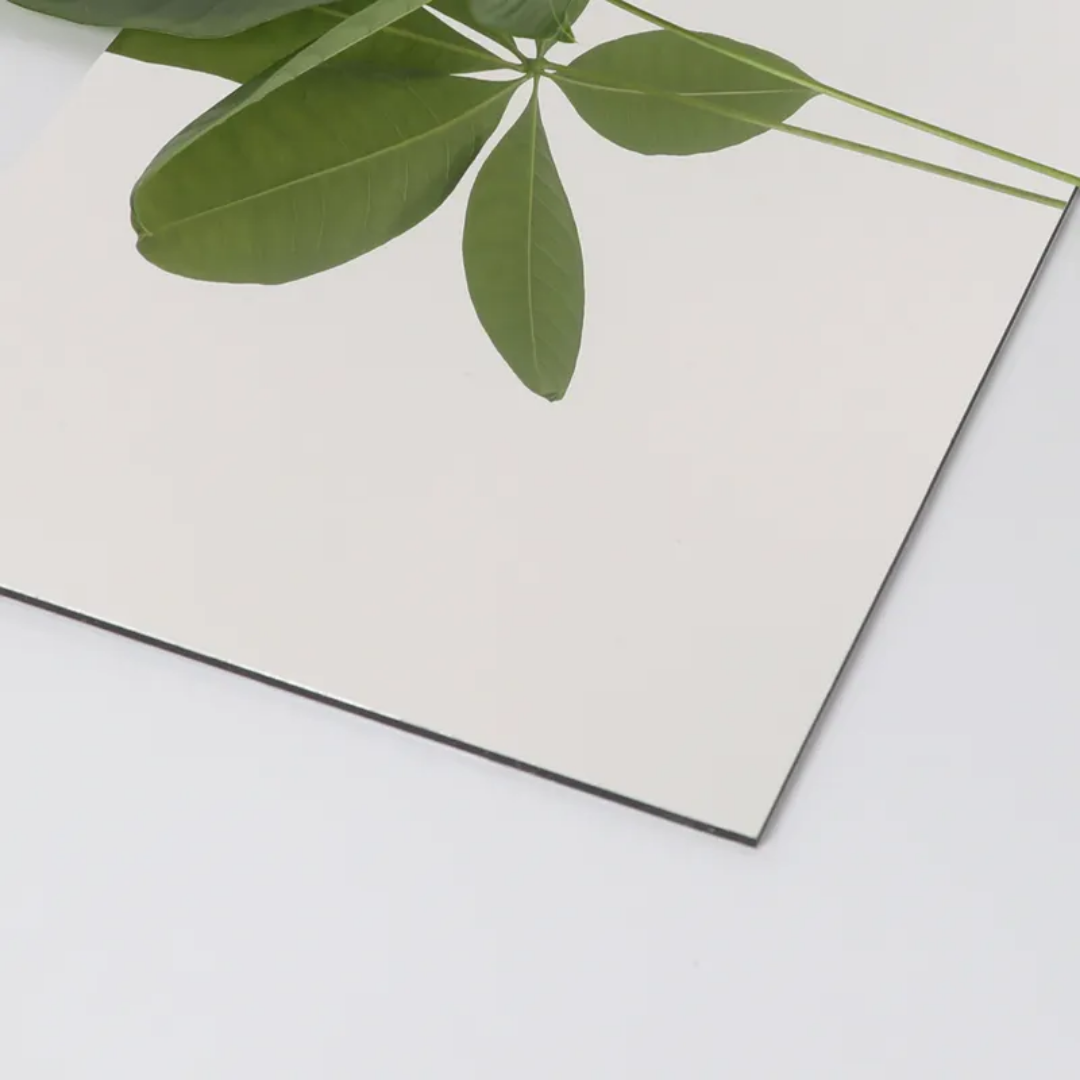
- Anodized and High-Gloss Metals: Generate spatial amplification through reflectivity (60-85% reflectivity range). Strategic placement can double perceived natural light penetration.
- Psychological Association: Communicates innovation, precision, and efficiency; optimal for tech, creative, and transit spaces.
2.2 Matte and Solid Finishes: Calm and Control
- Deep Matte Surfaces: Absorb 92-96% of direct light, creating visual rest areas and reducing glare-related fatigue. Demonstrated to lower physiological arousal in high-stress environments.
- Color Psychology Integration: Matte black ACP induces perceptual anchoring, making spaces feel 12% more grounded. Light matte finishes elevate ceilings perceptually.
- Behavioral Influence: Promotes contemplation and focus; extensively used in museums, libraries, and healthcare settings.
2.3 Natural Emulations: Biophilic Connection
- Wood-Grain Finishes: Directional patterns influence perceived space orientation. Horizontal grains widen narrow spaces; vertical grains heighten low ceilings.
- Stone and Concrete Effects: Communicate permanence and stability. Rough-textured emulations increase perceived structural solidity by 40%.
- Biological Response: Documented to lower heart rates by 4-8 BPM in interior applications, supporting restorative environmental design.
2.4 Perforated and 3D Textures: Rhythm and Complexity
- Patterned Perforations: Create layered transparency and shadow play. Rhythmic patterns establish spatial tempo; random patterns encourage exploratory behavior.
- Geometric 3D Textures: Introduce tactile dimensionality at architectural scale. Pyramid and linear embossing manipulate light diffusion, creating dynamic environments that change with viewpoint.
- Cognitive Engagement: Medium-complexity textures (0.3-0.6 contrast ratio) optimize visual interest without overwhelming, supporting extended dwell times in retail and hospitality.
--3. Spatial Manipulation Through Textural Strategies
3.1 Perceived Dimension Control
- Expansion Techniques: Large-format, minimally jointed ACP with light-reflective finishes can increase perceived room volume by up to 30%. Verified through psychophysical testing in controlled environments.
- Contraction and Intimacy: Dark, deeply textured ACP with visible jointing creates perceptual ceilings 10-20% lower, ideal for intimate dining or conversational areas.
- Wayfinding Without Signage: Textural pathways using alternating finishes guide movement 65% as effectively as signage, per behavioral mapping studies.
3.2 Atmospheric Creation Through Finishes
- Acoustic Perception: While not acoustically absorbent, 3D-textured ACP surfaces break up sound reflection patterns, subjectively reducing perceived noise levels by 3-5 dB.
- Thermal Perception: Cool-tone metallic finishes lower perceived temperature by 1.5-2°C in studies, reducing HVAC loads through psychological means.
- Temporal Perception: Dynamic facades with changing textures/reflectivity alter perceived passage of time, with slower patterns increasing dwell time in commercial settings.
4. Evidence-Based Design Applications
4.1 Healthcare Environments
- Mental Health Facilities: Matte, non-directional ACP finishes reduce disorientation and paranoia markers by 25% compared to reflective surfaces.
- Pediatric Wards: Color-graduated, tactile-implied ACP installations decrease preoperative anxiety scores by 30% (based on Wong-Baker FACES scale adaptation).
- Aging Care: Medium-contrast woodgrain ACP improves spatial navigation for mild cognitive impairment, with 40% fewer wayfinding errors.
4.2 Workplace and Educational Settings
- Creative Workspaces: Varied texture zones using ACP partitions increase reported creative output by 22% while reducing visual fatigue.
- Learning Environments: Frontal textural contrast (ACP feature walls) improves information retention by 18% compared to uniform classrooms.
- Executive Spaces: Rich, low-sheen metallic ACP increases perceived decision-making authority in impression formation studies.
4.3 Retail and Hospitality
- Luxury Retail: High-touch contrast finishes (brushed metal against soft matte) increase perceived product value by 15-20% and dwell time by 2.3 minutes.
- Hotel Lobbies: Warm, large-scale natural emulations** in ACP increase guest comfort ratings by 1.8 points on 10-point scales and improve first impression retention.
- Restaurant Design: Directional textured elements unconsciously guide eye movement toward key areas (bars, specials) with 75% effectiveness.
5. Technical Implementation for Psychological Outcomes
5.1 Specification for Perceptual Goals
- Reflectivity Control: Specifying ACP with 10-25% reflectivity for calming zones, 50-70% for energetic spaces.
- Jointing as Design Element: Reveal depth and rhythm** consciously designed to reinforce spatial perception—wider joints for grounding, minimal joints for expansion.
- Lighting Integration: Grazing light techniques on textured ACP amplify depth perception by 300% versus overhead lighting.
5.2 Sustainability and Well-being Synergy
- Biophilic Certification: ACP natural emulations contribute to WELL and Living Building Challenge biophilic design credits.
- Long-term Well-being: Fade-resistant finishes (25-year warranties) ensure consistent psychological impact throughout building lifecycle.
- Low-VOC Contributions: Modern ACP manufacturing supports indoor air quality, reducing cognitive impairment risks from off-gassing by 100%.
6. Future Directions: Intelligent Textural Environments
6.1 Responsive and Adaptive Finishes
- Electrochromic ACP Prototypes: Surfaces changing reflectivity and texture based on occupancy or time of day, optimizing psychological impact dynamically.
- Thermochromic Integration: Finishes responding to ambient temperature, providing subconscious thermal comfort cues.
- Haptic Feedback Systems: Micro-actuated ACP surfaces creating tangible texture changes for visually impaired accessibility.
6.2 Research and Measurement Advancements
- Neuroscientific Validation: fMRI and EEG studies quantifying texture response in architectural contexts.
- Predictive AI Modeling: Algorithms predicting psychological outcomes from ACP finish specifications with 85%+ accuracy.
- Personalization Engines: IoT-connected systems adjusting textural environments to individual occupant profiles.
Conclusion: The Conscious Architecture of Texture
The strategic application of ACP finishes represents a convergence of material science, neuroscience, and design philosophy. By understanding texture not as superficial decoration but as a fundamental perceptual interface, architects gain evidence-based tools for crafting environments that actively support human cognition, emotion, and behavior. ACP's unique combination of consistency, versatility, and durability makes it an ideal medium for this psychological architecture.
As research continues to quantify texture's impact, and as ACP technology advances toward even greater adaptive capabilities, the potential grows for truly responsive environments that enhance human experience at subconscious levels. In this context, specifying ACP finishes becomes an exercise not just in aesthetic selection, but in psychological curation—where every surface communicates, influences, and ultimately shapes the quality of human experience within architectural space.
For Design Professionals: Access our evidence-based specification guide matching ACP finishes to psychological outcomes, including case studies, measurement protocols, and neuroscience research summaries.






