Welcome to Vbond
The Role of Independent Third-Party Inspection in Aluminum Composite Panel Disputes
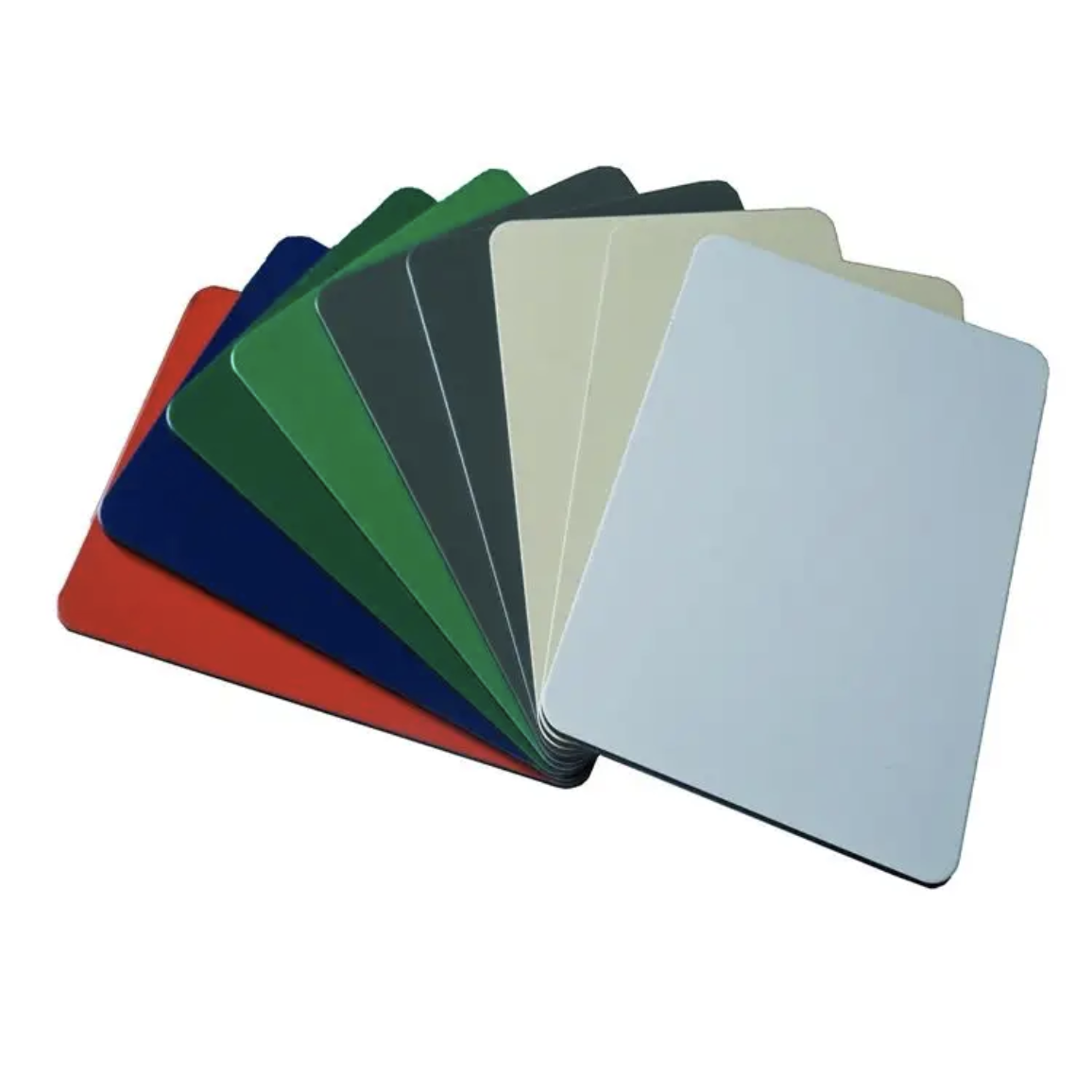
The Role of Independent Third-Party Inspection in Aluminum Composite Panel Disputes
You have paid the deposit. The container has arrived. The panels are on your dock. But something is wrong. The core crumbles. The coating thickness is below specification. The fire rating certificate does not match the batch numbers on the panels. The supplier insists the panels are compliant.
You now have a dispute. And without independent, verifiable evidence, you have no leverage.
This is where independent third-party inspection becomes not just a quality control tool, but a legal necessity. In aluminum composite panel (ACP) disputes—whether over core substitution, coating failure, or fire rating non-compliance—third-party inspection provides the objective evidence that separates factual claims from finger-pointing.
A reputable aluminum composite panel manufacturer, like an Alucobond factory or ALUCOBOND manufacturer, welcomes third-party inspection because their quality systems produce consistent, verifiable results. Suppliers who resist inspection are often hiding the very defects that will become the subject of a dispute.
This guide explains the critical role of third-party inspection in ACP disputes, how to preserve evidence, and how to use inspection results to resolve claims—whether through negotiation, arbitration, or litigation.
1. The Legal Foundation: Inspection Rights Under Commercial Law
Commercial law recognizes the critical importance of third-party inspection in disputes involving goods. UCC § 2-515, the statutory provision governing the preservation of evidence of goods in dispute, explicitly provides that:
"Either party on reasonable notification to the other and for the purpose of ascertaining the facts and preserving evidence, has the right to inspect, test, and sample the goods, including such of them as may be in the possession or control of the other."
This provision establishes two fundamental rights in any commercial dispute involving goods:
Right | Description | Application to ACP Disputes |
Right to inspect | Either party may inspect, test, and sample goods in the other's possession | If the supplier claims panels are compliant, the buyer has the right to inspect at the supplier's facility |
Right to binding third-party inspection | Parties may agree that third-party findings shall be binding in subsequent litigation | Contract can specify that SGS/Intertek/TÜV findings are conclusive |
The UCC further provides that parties "may agree to a third party inspection or survey to determine the conformity or condition of the goods and may agree that the findings shall be binding upon them in any subsequent litigation or adjustment" . This means your purchase contract can—and should—designate an accredited inspection agency whose findings will be legally binding.
The "Preserve Evidence" Obligation
Critically, once a dispute is reasonably anticipated, both parties have an obligation to preserve evidence. This includes:
- Retaining samples of disputed panels
- Maintaining packaging and batch labeling
- Preserving shipping and customs documentation
- Documenting storage conditions
Failure to preserve evidence can result in adverse evidentiary inferences or sanctions in subsequent litigation.
2. What Third-Party Inspection Reveals in an ACP Dispute
When a dispute arises over ACP quality, third-party inspection provides objective, measurable data that resolves ambiguity.
Core Composition Disputes
Typical dispute: Buyer claims PE core was delivered; supplier claims FR or A2 mineral core was delivered.
What inspection reveals:
Test Method | What It Measures | Dispute Resolution Value |
Burn test | Does core ignite and sustain flame? | Immediate visual evidence: A2 does not ignite; FR self-extinguishes; PE ignites and melts | |
Density measurement | Core density (g/cm³) | PE: 0.91-0.94 (floats); FR: 1.2-1.6; A2: >1.6 (sinks rapidly) |
FTIR spectroscopy | Polymer composition identification | Definitive identification of polyethylene vs. mineral filler |
Gravimetric ashing (ASTM D5630) | Percentage of inorganic (non-combustible) content | A2 requires ≥90% inorganic content |
A supplier who claims "fire-retardant core" cannot dispute laboratory results showing PE composition.
Coating Performance Disputes
Typical dispute: Buyer claims coating is failing prematurely; supplier claims normal weathering or improper maintenance.
What inspection reveals:
Test Method | Standard | Dispute Resolution Value |
Coating thickness measurement | Eddy current gauge | Verifies if minimum thickness (25μm for two-coat; 40μm for three-coat) was met |
MEK rub test | ASTM D5402 | Under-cured coating fails 50-100 double rubs, proving a manufacturing defect |
Cross-hatch adhesion test | ASTM D3359 | Compared to the specification, a significant loss indicates degradation |
Gloss measurement | ASTM D523, 60° | Compared to the specification, a significant loss indicates degradation |
Color measurement | ASTM D2244 (ΔE) | Measures fade against the approved sample; >3.0 indicates unacceptable change |
A supplier cannot blame "environmental factors" when testing shows the coating was under-cured or below the minimum thickness from the start.
Fire Rating Disputes
Typical dispute: Supplier provides a certificate claiming A2-s1,d0, or Class A; buyer suspects the certificate does not apply to the delivered panels.
What inspection reveals:
Verification Method | Dispute Resolution Value |
Batch number verification | Compares batch numbers on certificates to batch numbers on protective film |
Laboratory database search | Verifies if the certificate number exists in Intertek, UL, or CNAS databases |
Third-party retesting | An independent laboratory conducts EN 13501-1 or ASTM E84 testing on samples |
The Intertek Directory of Building Products, for example, provides searchable verification of legitimate ACP certifications. A supplier cannot defend a certificate that does not appear in these directories.
Dimensional and Flatness Disputes
Typical dispute: Buyer claims panels are warped, bowed, or dimensionally inconsistent; supplier claims normal tolerance.
What inspection reveals:
Measurement | Standard | Acceptance Criteria |
Thickness | Calipers | | 4mm ±0.12mm |
Flatness (bow) | Straightedge + feeler gauge | ≤0.2% of panel length |
Diagonal difference | Tape measure | ≤2mm |
Industry standards like GB/T 17748-2016 provide objective pass/fail criteria. Panels outside these tolerances are non-conforming regardless of supplier claims.
3. The NABL Accreditation Standard: What It Means for Laboratory Credibility
When selecting a laboratory for dispute testing, accreditation matters. The National Accreditation Board for Testing and Calibration Laboratories (NABL) operates under ISO/IEC 17025, the international standard for testing and calibration laboratory competence.
What NABL Accreditation Ensures
Requirement | What It Means for Dispute Resolution |
Surprise audits | Laboratory cannot "prepare" for inspections; ongoing compliance verified |
Equipment calibration | Measurement devices are traceable to national standards |
Staff qualification verification | Technicians have documented competence |
Inter-lab comparison testing | Results are consistent with other accredited laboratories |
Three-year record retention | Historical test data available for review |
As Mr. Divyam Shah of Euro Panel Products stated: "With the global recognition of the NABL accreditation via ILAC and APLAC, we are now uniquely equipped to meet global users' requirements comprehensively through innovation and quality standards".
Why Laboratory Accreditation Matters in Disputes
When a supplier disputes inspection findings, the accreditation status of the testing laboratory becomes critical. A report from a NABL-accredited (or UKAS, CNAS, A2LA-accredited) laboratory carries presumptive weight because:
1. The laboratory's competence has been independently verified
2. Testing methods follow standardized protocols
3. Equipment calibration is traceable to national standards
4. The laboratory has no commercial interest in the outcome
Euro Panel's NABL accreditation for in-house colour coil testing covers "16 parameters of colour coil performance" and includes "periodic surprise audits, calibration and equipment checks, documentation and three-year record-keeping, as well as verification of staff qualifications". This level of oversight is what distinguishes credible testing from self-serving claims.
A supplier cannot easily dismiss findings from an accredited laboratory. The burden shifts to them to prove the testing was erroneous—a difficult task when the laboratory follows documented, audited procedures.
Global Recognition Through Mutual Recognition Arrangements
NABL accreditation carries global weight through ILAC (International Laboratory Accreditation Cooperation) and APLAC (Asia Pacific Laboratory Accreditation Cooperation) mutual recognition arrangements. This means test results from NABL-accredited laboratories are accepted in overseas markets, "reducing costs for both exporters and importers, as it reduces or eliminates the need for products to be re-tested in another country."
For international ACP disputes, this mutual recognition is invaluable. A test report from a NABL-accredited laboratory in India is admissible and credible in courts and arbitration proceedings in the UK, Australia, Singapore, and other ILAC signatory countries.
4. The Expert Witness: When Inspection Requires Interpretation
Some disputes require more than test results—they require expert interpretation. An aluminum expert witness provides specialized expertise in:
Area of Expertise | Application to ACP Disputes |
Aluminum alloys and metallurgy | Evaluating whether the delivered alloy matches AA5005/AA3105 specifications |
Corrosion and material degradation | Determining whether coating failure resulted from a manufacturing defect vs. environmental exposure |
Failure analysis | Identifying the root cause of delamination, cracking, or structural failure |
Compliance with industry standards | Assessing whether panels meet ASTM, EN, or GB/T requirements |
Litigation support* | Providing expert reports and courtroom testimony |
As ForensisGroup notes, these experts "examine fracture surfaces, corrosion patterns, and test data to pinpoint material or manufacturing flaws" and "evaluate whether the use of aluminum was appropriate for the application and performed to specification".
When a supplier claims "normal variation" or "improper installation," an expert witness provides the technical authority to refute these defenses.
5. The Preservation Protocol: What to Do When a Dispute Is Imminent
When you suspect delivered panels are non-compliant, follow this preservation protocol:
Step 1: Stop Installation Immediately
Do not install any suspect panels. Installation may waive your right to reject or limit your remedies.
Step 2: Isolate and Preserve
- Set aside representative samples from multiple bundles (minimum 10 panels)
- Preserve original packaging, including protective film with batch numbers
- Document storage conditions (temperature, humidity, stacking method)
- Photograph everything with scale and date stamps
Step 3: Notify the Supplier in Writing
Provide formal notice within the timeframe specified in your contract (typically 5-10 days of delivery). Include:
- Description of observed defects
- Intention to conduct third-party inspection
- Request for supplier representative to witness testing (if desired)
Step 4: Engage an Accredited Inspection Agency
Select an agency with:
- ISO/IEC 17025 accreditation (NABL, UKAS, CNAS, A2LA)
- Experience with ACP testing (core composition, coating, dimensions)
- No prior relationship with either party
Recommended agencies: SGS, Intertek, TÜV, Bureau Veritas.
Step 5: Conduct Testing with Chain of Custody
- Document sample selection (which pallets, which positions)
- Maintain chain of custody from site to laboratory
- Use standardized test methods (ASTM, EN, ISO)
- Request detailed reports with raw data, not just pass/fail
Step 6: Engage Expert Witness if Needed
For complex disputes (metallurgical analysis, failure causation), retain an aluminum expert witness to:
- Review inspection findings
- Conduct additional testing
- Prepare expert report
- Provide testimony in arbitration or litigation
6. Using Inspection Results in Dispute Resolution
Negotiation
A third-party inspection report provides objective leverage. Suppliers who refused to accept verbal complaints often reconsider when presented with documented evidence from an accredited laboratory.
Negotiation strategy:
- Present findings without accusation: "The attached SGS report shows core density of 0.93 g/cm³, consistent with PE, not the specified A2."
- Propose specific remedy: replacement panels, refund, or price adjustment.
- Set a deadline for response before escalating.
Arbitration
Most international ACP contracts specify arbitration (SIAC, LCIA, CIETAC). Inspection reports are central evidence.
Key considerations:
- Ensure the laboratory was accredited and followed standardized methods
- Maintain chain of custody documentation
- Have expert witness available to explain technical findings
Litigation
In court proceedings, third-party inspection reports are admissible as evidence of facts found. The UCC specifically contemplates binding third-party inspection agreements.
When litigation is necessary:
- Supplier has no assets or is unresponsive
- Contract lacks an arbitration clause
- Damages exceed arbitration limits
The Alucobond class action (2026) demonstrated that courts rely heavily on technical evidence—including testing results—to determine product compliance and allocate liability.
7. Contract Provisions That Strengthen Inspection Rights
To ensure third-party inspection is available and effective in a dispute, include these provisions in your purchase contract:
Right to Inspect Clause
"Buyer has the right, upon reasonable notice to Supplier, to inspect, test, and sample any goods subject to this Agreement, including goods in Supplier's possession or control. Supplier shall provide access to its facilities and records for this purpose."
Binding Third-Party Inspection Clause
"The parties agree that any dispute concerning the conformity or condition of the goods shall be submitted to [SGS/Intertek/TÜV] for inspection and testing. The findings of such inspection shall be binding on both parties in any subsequent litigation or adjustment."
Accredited Laboratory Requirement
"All testing conducted for purposes of dispute resolution shall be performed by a laboratory accredited under ISO/IEC 17025 by NABL, UKAS, CNAS, or equivalent. The laboratory shall have no commercial relationship with either party."
Evidence Preservation Clause
"Upon Buyer's reasonable belief that goods are non-conforming, both parties shall preserve all relevant evidence, including samples, packaging, batch records, and shipping documentation. Failure to preserve evidence shall result in adverse evidentiary inferences."
8. Conclusion
In aluminum composite panel disputes, evidence is power. Verbal assurances, generic certificates, and supplier "explanations" carry no weight against objective, verifiable data from an accredited third-party inspection.
For procurement professionals, the message is clear:
1. Inspect before dispute – Pre-shipment inspection prevents disputes before they arise
2. Preserve evidence immediately – When problems are suspected, stop installation and secure samples
3. Use accredited laboratories – NABL, UKAS, CNAS accreditation ensures credibility
4. Engage experts when needed – Complex failures require expert interpretation
5. Contract for inspection rights – UCC § 2-515 provides the legal framework; your contract activates it
A reputable aluminum composite panel manufacturer, like an Alucobond factory or ALUCOBOND manufacturer, will have its own accredited testing and welcome third-party verification. Suppliers who resist inspection or cannot produce traceable certificates are preparing for disputes—not preventing them.
The best dispute is the one resolved by evidence before it reaches a courtroom. Third-party inspection provides that evidence.