Welcome to Vbond
The Science Behind PVDF vs. PE Coatings on Aluminum Composite Panels
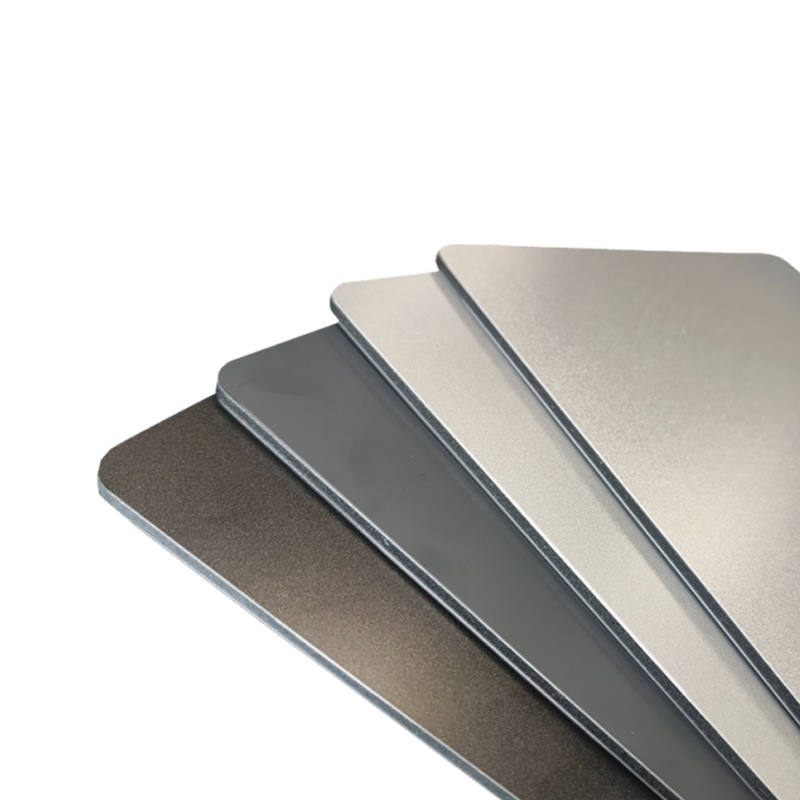
For architects, façade engineers, and procurement professionals, selecting the right aluminum composite panel (ACP) goes far beyond choosing a color from a swatch. The coating system applied to the panel is the single most critical factor determining the material’s long-term performance, aesthetic longevity, and overall lifecycle cost.
Two coating technologies dominate the ACP market: Polyvinylidene Fluoride (PVDF) and Polyester (PE) . While they may appear similar at first glance, the scientific differences between them—from molecular structure to curing chemistry—create a vast performance gap.
This guide breaks down the science behind these coatings, giving professional buyers the technical insights needed to make informed, risk-averse sourcing decisions.
The Fundamentals: What Are These Coatings?
PVDF (Polyvinylidene Fluoride) Coatings
PVDF is a fluoropolymer resin system known for its exceptional durability. In the architectural coatings industry, the gold standard is 70% PVDF resin (such as Kynar 500® or Hylar 5000®) combined with 30% acrylic resin. This specific formulation creates a molecular structure that is extraordinarily resistant to UV radiation, chemical attack, and environmental pollutants.
PE (Polyester) Coatings
Polyester coatings are organic polymer-based systems. Standard PE coatings consist of polyester resins cross-linked with melamine or other curing agents. They are formulated for flexibility and gloss but lack the fluorine‑carbon bonds that give PVDF its legendary weatherability.
The Molecular Science: Why PVDF Outperforms PE
To understand durability, we must look at bond strength.
- PVDF’s Fluorine‑Carbon (F‑C) Bond: The carbon‑fluorine bond is one of the strongest in organic chemistry. The fluorine atoms shield the carbon backbone from ultraviolet (UV) light and prevent the breakdown of the polymer chain. This results in a coating that resists chalking (surface degradation) and fading for 20 to 30 years.
-PE’s Carbon‑Carbon (C‑C) Bond: Polyester relies on weaker carbon‑carbon and carbon‑oxygen bonds. Under prolonged UV exposure, these bonds break down through photo-oxidation. The result is gradual fading, loss of gloss, and surface chalking—often visible within 3 to 7 years in harsh climates.
Curing Process: Thermal Cross-Linking Differences
Both coatings are applied via continuous coil coating lines, but their curing chemistry differs.
- PVDF Curing: PVDF coatings require high-temperature baking (typically 240–260°C or 464–500°F) to achieve proper fusion. The process forms a dense, non-porous film that is chemically inert once cured. This high-temperature cure also ensures superior adhesion to the aluminum substrate, reducing the risk of delamination.
- PE Curing: Polyester coatings cure at lower temperatures (around 180–210°C or 356–410°F). While this is more energy-efficient and allows for faster line speeds, the resulting film is less dense and more susceptible to moisture ingress and chemical attack over time.
Key Performance Metrics: A Side-by-Side Comparison
Professional buyers should evaluate coatings based on quantifiable performance characteristics.
Property | PVDF (70% Kynar 500®) | Standard Polyester (PE) |
UV Resistance | Excellent. Retains >80% of original color after 20+ years of accelerated weathering (ASTM D2244). | Moderate. Significant fading and gloss loss often observed within 5–7 years. |
Chemical Resistance | Highly resistant to acids, alkalis, and industrial pollutants. Withstands harsh cleaning agents. | Susceptible to attack from acids and alkaline cleaners. Can stain or etch. |
Color Consistency (ΔE) | Highly resistant to acids, alkalis, and industrial pollutants. Withstands harsh cleaning agents. | Susceptible to attack from acids and alkaline cleaners. Can stain or etch. |
Gloss Retention | Maintains gloss within ±3 GU over decades. | Gloss loss of 30–50% common within 5–7 years. |
Flexibility | Excellent. Passes T‑bend tests (0T to 1T) without cracking. | Good initially, but can become brittle with age. |
Film Hardness | Moderate (softer film) – this actually aids formability and impact resistance. | Higher initial hardness, but can lead to cracking during severe forming. |
Warranty | 20–30 years (film integrity and color fade). | Typically 5–10 years, often excluding fade guarantees. |
Application Environments: Matching Coating to Project
The choice between PVDF and PE is not merely a matter of budget; it is a decision based on environmental exposure and project criticality.
When to Specify PVDF
- High‑rise buildings: Where scaffolding for re‑coating is impractical and expensive.
- Coastal regions: PVDF resists salt spray corrosion and maintains integrity in saline atmospheres.
- Industrial zones: Excellent resistance to acid rain, chemical fumes, and airborne pollutants.
- Premium architectural projects:** Where the owner expects a flawless appearance for decades.
When PE May Be Acceptable
- Interior applications: Ceilings, partitions, and interior wall cladding not exposed to direct UV.
- Short‑term structures: Temporary buildings or structures with a design life under 10 years.
- Low‑budget projects: Where initial material cost is the sole driver and long‑term performance is secondary.
The Cost‑Benefit Analysis for Procurement
Professional buyers understand that initial purchase price is only one component of total cost of ownership.
- PE Panels: Lower upfront cost (typically 15–25% cheaper than PVDF). However, replacement cycles are shorter. If a building requires re‑cladding or repainting after 7 years, the cumulative cost often exceeds that of a PVDF system specified initially.
- PVDF Panels: Higher initial investment. However, the extended service life (often exceeding the building’s structural warranty) eliminates the need for recoating. Additionally, PVDF’s superior color stability protects the building’s asset value and architectural integrity.
Quality Indicators for Buyers
When evaluating suppliers, demand these quality indicators:
1. Resin Certification: Verify that PVDF coatings contain a minimum of 70% Kynar 500® or Hylar 5000® resin. Generic “fluorocarbon” claims without third‑party certification are not equivalent.
2. Coil Coater Accreditation: Ensure the panel manufacturer uses a licensed coil coater. Top coaters maintain ISO 9001 and Qualicoat or AAMA 2605 certification for PVDF systems (or AAMA 2603 for PE).
3. Testing Documentation: Request mill certificates showing:
- Accelerated Weathering Test (ASTM G155, 4,000+ hours for PVDF)
- Chemical Resistance (ASTM D1308)
- Impact Resistance (ASTM D2794)
- Gloss and Color Retention Data
Conclusion
The science behind PVDF and PE coatings reveals a clear distinction: PVDF is engineered for longevity, environmental resilience, and aesthetic permanence, while PE is designed for economy and short‑term applications. For professional buyers managing risk and long‑term asset value, PVDF coatings—particularly those formulated with 70% Kynar 500® or Hylar 5000® resin—represent the industry standard for exterior architectural aluminum composite panels.