Welcome to Vbond
The Truth About "Raw Core" vs. "Cured Core" — Does It Really Matter for Alucobond Bending?
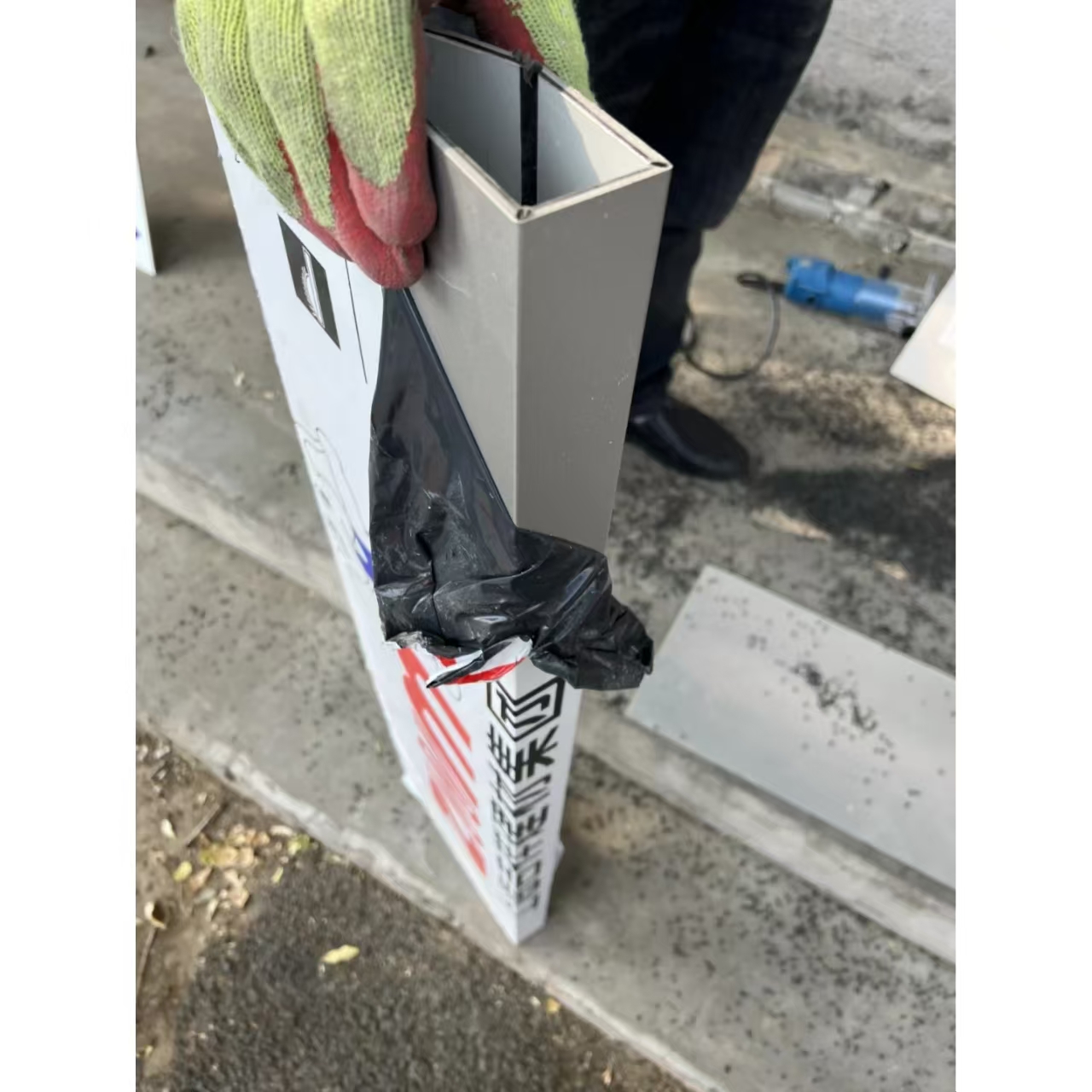
The Truth About "Raw Core" vs. "Cured Core" — Does It Really Matter for Alucobond Bending?
You hear fabricators talk about "raw core" and "cured core." Some say one bends better. Others say the opposite.
Who is right?
This guide cuts through the confusion. You will learn what these terms actually mean. You will understand how core condition affects bending. And you will know what really matters for your project.
What Is the Core?
Alucobond is a sandwich panel. Two aluminum skins bond to a core material.
The core provides stiffness and impact resistance. It supports the aluminum skins during bending. It determines how the panel behaves under stress.
The core matters. Without it, the aluminum skins would buckle and tear.
What Does "Raw Core" Mean?
"Raw core" refers to polyethylene (PE) core material before full cross-linking or curing.
Polyethylene is a thermoplastic polymer. In its raw state, the molecular chains remain relatively free. They slide past each other easily.
The result: The core is softer. It deforms more easily. It absorbs stress differently during bending.
What Does "Cured Core" Mean?
"Cured core" means the polyethylene has undergone cross-linking.
Cross-linking creates chemical bonds between polymer chains. These bonds lock the chains together. The material becomes more rigid.
Manufacturers achieve cross-linking through heat, pressure, or chemical agents. The process typically occurs at temperatures around 125°C to 175°C.
The result: The core is harder. It resists deformation. It provides more structural support.
Raw Core vs. Cured Core: Key Differences
Property | Raw Core (Uncured PE) | Cured Core (Cross-linked PE) |
Molecular structure | Free chains | Cross-linked network |
Hardness | Softer | Harder |
Flexibility | More flexible | Less flexible |
Deformation under load | Higher | Lower |
Heat resistance | Lower | Higher |
Bending behavior | Absorbs stress differently | Transmits stress to skins |
How Core Condition Affects Bending
Raw core (uncured) — the risk:
The softer core deforms during bending. It compresses more easily. This changes how stress transfers to the aluminum skins.
The skins may stretch unevenly. The core may "flow" under pressure. This can create wrinkles or buckling inside the fold.
Cured core (cross-linked) — the advantage:
The harder core resists deformation. It maintains its shape under bending stress. It supports the aluminum skins consistently.
This allows the skins to stretch evenly. The fold remains clean and uniform.
The 0.3mm Rule and Core Condition
We discussed the 0.3mm rule in a previous article. The residual plastic layer at the bottom of the groove must stay at least 0.3mm thick.
Here is the connection: The core's condition affects how that 0.3mm layer behaves.
With a raw core, the residual layer may compress more during bending. The effective thickness decreases. The aluminum skin loses support.
With a cured core, the residual layer maintains its thickness. It provides consistent cushioning. The skin bends without tearing.
Does Core Condition Matter for Your Project?
The short answer: Yes, but it is not the only factor.
Factor | More Important Than Core Condition |
Residual thickness | Yes |
Bend radius | Yes |
Routing depth consistency | Yes |
Temperature during bending | Yes |
Number of bends | Yes |
Core condition | Important, but secondary |
The reality: A well-executed bend on a raw core panel beats a poorly executed bend on a cured core panel.
What Most Buyers Miss
Here is the truth most suppliers do not tell you.
Almost all reputable ACP manufacturers use cured (cross-linked) cores.
The continuous manufacturing process for Alucobond involves high-temperature bonding. The polyethylene core undergoes cross-linking during production.
The distinction matters mostly for:
1. Low-cost, unbranded panels. Some manufacturers use lower-grade PE that is not fully cross-linked.
2. Very thin panels. Thin panels may not go through the same curing process.
3. Older stock. Panels stored for extended periods may have degraded core properties.
What to Ask Your Supplier
Procurement professionals should ask these specific questions.
1. What type of core does your panel use?
The answer should be polyethylene (PE) or mineral-filled polymer. For fire-rated applications, look for mineral-filled cores.
2. Is the core cross-linked?
A reputable supplier will confirm yes. If they hesitate, that is a red flag.
3. What is the core density?
LDPE cores range from 0.91 to 0.94 g/cm³. Higher density indicates better cross-linking.
4. Can you provide technical data?
Reputable manufacturers publish core specifications.
The Procurement Checklist
Item | What to Check | Red Flag |
Core material | Polyethylene or mineral-filled | Unknown or unspecified |
Cross-linking | Confirmed by supplier | Supplier cannot confirm |
Core density | 0.91-0.94 g/cm³ (LDPE) | Below 0.91 g/cm³ |
Technical data sheet | Available and detailed | No documentation |
Manufacturer reputation | Established brand | Unknown or generic |
Panel thickness | 3mm or 4mm standard | Non-standard thickness |
What Really Matters for Bending
Core condition matters. But other factors matter more.
Focus on these five priorities:
1. Residual thickness. Maintain 0.3mm minimum. This is the single most critical factor.
2. Bend radius. For 4mm panels, keep radius at 60mm or larger.
3. Routing consistency. Use calibrated CNC equipment. Verify depth on every batch.
4. Temperature. Bend panels above 65°F (18°C). Cold panels crack.
5. Single bending. Bend each panel once. No re-bending.
Get these five right and core condition becomes a secondary concern.
The Bottom Line
"Raw core" vs. "cured core" is a real distinction. But it matters less than most people think.
Here is the truth:
- Reputable manufacturers use cross-linked cores.
- Core condition affects bending behavior.
- But core condition is not the primary cause of cracking.
- Poor residual thickness, tight radius, and cold temperature cause more failures.
What to do:
- Buy from reputable manufacturers.
- Verify core specifications in the technical data.
- Focus your quality control on the five critical factors above.
- Do not overcomplicate the decision.
Final Word for Buyers
Core condition matters. But it is not the magic bullet.
The difference between a clean fold and a cracked edge comes down to process control. Residual thickness. Bend radius. Routing consistency. Temperature. Single bending.
A well-executed bend on a standard core panel outperforms a poor bend on a premium core panel every time.
As the buyer, focus on what you can control. Specify residual thickness. Verify bend radius. Audit your fabricator's equipment and training.
A panel that folds cleanly today will perform for decades. A panel that cracks will fail—and you will pay for it twice.






