Welcome to Vbond
The Ultimate Buyer’s Guide to Aluminum Composite Panels (ACP)
Introduction: What Are Aluminum Composite Panels?
Aluminum Composite Panels (ACP) are a revolutionary building material that has shaped modern architecture. Characterized by their sandwich structure—two thin aluminum sheets bonded to a non-aluminum core—ACPs offer a unique combination of lightweight properties, design versatility, and cost-effectiveness. This comprehensive guide provides architects, builders, contractors, and property owners with the essential knowledge to select, specify, and install ACPs correctly, ensuring performance, safety, and aesthetic success for any project.
Chapter 1: Understanding ACP Core Types – The Most Critical Choice
The core material is the heart of an ACP and dictates its fundamental performance, especially regarding fire safety. Selecting the correct core is non-negotiable.
1. Polyethylene (PE) Core
Composition: Standard, low-density polyethylene plastic.
Key Properties: Low cost, good flexibility, lightweight.
Fire Performance: Combustible. It will melt and burn, contributing to fire spread and smoke. Not suitable for most exterior cladding or ventilated façade applications on occupied buildings due to stringent global building codes post-Grenfell.
Best For: Short-term signage, interior decorative applications, and exhibitions where fire codes permit.
2. Fire-Retardant (FR) Mineral-Filled Core
Composition: Polyethylene blended with mineral fillers (like aluminum hydroxide).
Key Properties: Self-extinguishing, significantly improved fire resistance.
Fire Performance: Achieves better reaction-to-fire ratings (e.g., Euroclass B-s1, d0). A common minimum standard for many commercial exterior applications.
Best For: Low-to-mid-rise commercial buildings, where local codes allow. Always verify with a certified test report.
3. Non-Combustible Mineral Core (A2)
Composition: Over 90% mineral materials (e.g., mineral wool).
Key Properties: Non-combustible, does not contribute to fire spread.
Fire Performance: Achieves the highest ratings (Euroclass A2-s1, d0). This is the industry benchmark for safety on high-rise and high-risk buildings.
Best For: All ventilated façade systems, high-rise residential and commercial towers, public transport hubs, and hospitals—where life safety is paramount.
Buyer's Advice: Always prioritize core safety. Request and verify the manufacturer's third-party fire test certification (e.g., BS 8414, NFPA 285 for full systems) specific to your project's jurisdiction and building height.
Chapter 2: Aluminum Skin & Coatings – Ensuring Durability and Aesthetics
Aluminum Skin
Thickness: Typically ranges from 0.2mm to 0.5mm per sheet. A total skin thickness of 0.5mm (0.25mm+0.25mm) is standard for signage, while 0.7mm-1.0mm total is recommended for robust exterior cladding.
Alloy: The most common are AA3003 or AA5005 alloys, offering a good balance of formability and strength.
Finish: The raw aluminum is pre-treated with a chrome or zirconium conversion coating for optimal paint adhesion.
Coatings
The coating protects the panel from color fade and environmental damage.
Polyester (PE): Standard, cost-effective coating with good color availability. Limited durability (5-7 years) before potential chalking or fading; best for interior use.
Polyvinylidene Fluoride (PVDF): The industry standard for exteriors. PVDF coatings (e.g., 70% Kynar 500® or Hylar 5000® resin) offer exceptional resistance to UV rays, pollution, and chemicals. Guarantees color and gloss retention for 20-25 years.
Anodized: An electrochemical process that creates a hard, integral oxide layer. Offers a classic metallic look, excellent durability, and is fully recyclable. Color options are limited to metallic hues.
Buyer's Advice: For any exterior application, insist on a PVDF-coated panel from a reputable manufacturer. Check the coating warranty.
Chapter 3: Key Specifications and Performance Factors
Specification | What to Look For | Why It Matters |
Total Thickness | 3mm, 4mm, and 6mm are common. | Affects rigidity, flatness, and wind load resistance. 4mm is standard for cladding. | |
Panel Dimensions | Standard sheets: 1220mm or 1250mm wide, up to 4880mm long. | Impacts layout efficiency, waste, and installation joints. |
Flatness & Tolerance | Check for "oil-can" effect (waviness). | Crucial for a smooth, high-quality facade appearance. |
Peel Strength | ASTM D1781 standard; >7 N/mm is excellent. | Measures the bond between aluminum and the core. Higher is better for integrity. |
Coefficient of Thermal Expansion | ~24 x 10⁻⁶ /°C (similar to aluminum). | Low expansion ensures dimensional stability, preventing unsightly buckling. |
Chapter 4: Aesthetic Selection: Colors, Finishes, and Forms
ACP's greatest strength is its design flexibility.
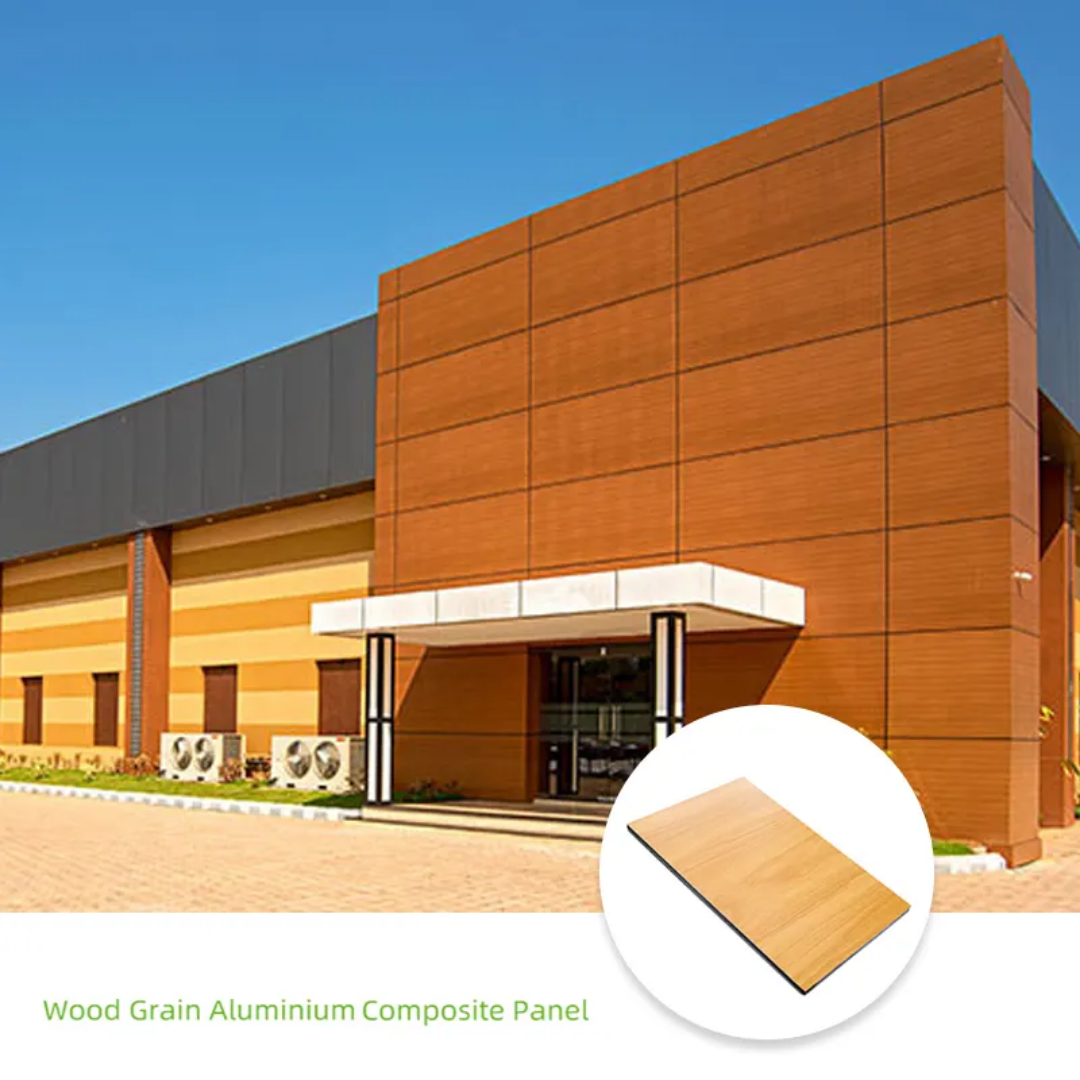
Colors & Finishes: Available in virtually any RAL or custom color. Finishes include metallic, gloss, matt, stone, brushed metal, and photorealistic prints (wood, granite, etc.).
Forms: Panels can be single-curved (bent/rolled) on-site with a radius dependent on thickness. More complex shapes require factory-forming.
Buyer's Advice: Order physical large-format samples to evaluate color under different lighting conditions before committing.
Chapter 5: Installation and Maintenance Essentials
Installation: Must follow the manufacturer's and system supplier's guidelines. Uses a rainscreen or ventilated façade system with purpose-designed aluminum rails and cassette profiles. Proper joint design and edge sealing are critical to prevent water ingress.
Maintenance: Requires only periodic cleaning with mild soap and water. Avoid abrasive cleaners. Inspect the system periodically for any damage.
Chapter 6: Cost Analysis and Budgeting
Cost is influenced by:
1. Core Material: A2 non-combustible core > FR core > PE core.
2. Coating Type: PVDF > Polyester.
3. Thickness & Size: Thicker, custom-sized panels cost more.
4. Finish: Standard solids are cheapest; metallics, prints, and specials cost more.
5. Volume: Large project discounts are common.
Consider Total Cost of Ownership (TCO): The higher initial cost of a premium, safe ACP system is offset by longevity (20-30+ years), minimal maintenance, and reduced liability risk.
The Ultimate Buyer's Checklist
Before purchasing ACP, confirm:
- Fire Rating: The core type meets or exceeds local building code for the application (A2-s1,d0 is gold standard).
- Certification: Valid, third-party fire test reports and quality certificates (ISO 9001).
- Coating: Exterior grade PVDF from a known resin supplier.
- Warranty: Comprehensive warranty covering coating, delamination, and fade resistance (e.g., 20 years).
- Supplier Reputation: Manufacturer with a proven track record in projects of similar scale.
- Full System Compatibility: Panels are compatible with the chosen mounting/subframe system.
Conclusion
Selecting the right Aluminum Composite Panel is a technical decision with significant implications for safety, aesthetics, and project value. By understanding core types, prioritizing fire-rated materials for exteriors, specifying durable PVDF coatings, and working with reputable suppliers, you can harness the benefits of ACP to create stunning, sustainable, and safe buildings. Always base your final specification on verified test data and professional advice.






