Welcome to Vbond
The Ultimate Guide to Preventing Honeycomb Effect on Large-Scale ACP Facade Installations
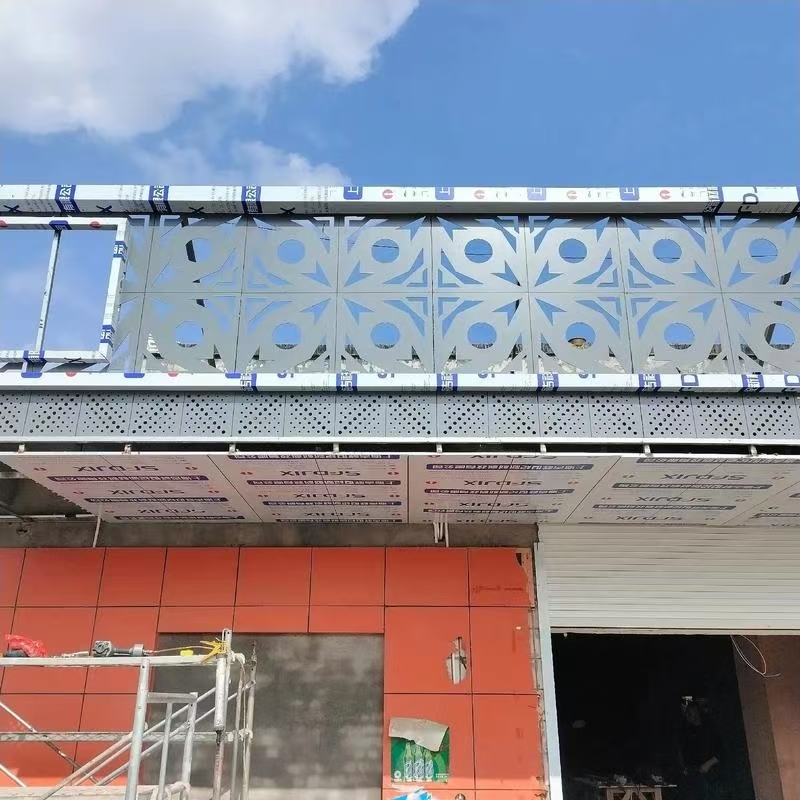
The "honeycomb effect"—more accurately known in the industry as oil canning or panel waviness—is the bane of large-scale aluminum composite panel (ACP) facades. When you step back and see a once-sleek building front marred by ripples, waves, or a puckered texture resembling a honeycomb, it isn't just an eyesore; it is a sign of material failure and installation negligence.
This guide provides procurement professionals and site managers with the technical knowledge to prevent oil canning through strategic material selection, rigorous fabrication controls, and precise installation techniques.
1. What is the "Honeycomb Effect" (Oil Canning)?
Oil Canning, also known as elastic buckling or stress wrinkling, refers to the visible waviness or rippling that can occur on the surface of ACP sheets. Unlike a dent caused by impact, oil canning creates long, soft waves that move across the panel surface.
Why does this happen?
- Thermal Expansion: Aluminum expands significantly with heat. ACPs can expand approximately 2.4 mm per meter with a 100°C temperature shift. When panels are fastened too tightly, this expansion has nowhere to go, so the metal buckles.
- Residual Stress: During the roll-forming process, metal develops internal tension. When cut or exposed to heat, these stresses release unevenly, causing warping.
- Substrate Irregularities: ACPs are thin. They will faithfully mirror any imperfection in the wall behind them.
2. Prevention Strategy #1: Engineered Material Selection
You cannot stop physics, but you can engineer against it. The first line of defense is the specification of the panel itself.
A. The 4mm Minimum Rule
Thinner panels (3mm) are highly susceptible to the honeycomb effect. For any large-scale facade, specify a minimum thickness of 4mm. Thicker panels have a higher moment of inertia, meaning they naturally resist bending.
B. Core Rigidity
The core of the panel dictates its flatness stability. Standard polyethylene (PE) cores are flexible. For high-risk, large, flat expanses, opt for mineral-filled (A2) cores or aluminum honeycomb cores. These provide a stiffer structural matrix that resists elastic buckling.
C. Stiffening Ribs and Negative Camber
For exceptionally large spans, specify that the panels be fabricated with stiffening ribs or embossed beads bonded to the back. Additionally, some manufacturers can fabricate panels with a slight negative camber (a subtle bow), so when the sun heats the panel, and it expands, it flattens out rather than buckling outward.
3. Prevention Strategy #2: Thermal Movement Management
The primary cause of post-installation waviness is trapped thermal stress. You must design the system to allow the metal to "breathe."
A. The Sliding Connection Rule
Do not pin the panel down at every screw point. Use a floating clip system. The panel should be fixed at one central point, while all other fasteners sit in slotted holes that allow the panel to slide laterally as it expands and contracts.
B. Expansion Gaps
You must leave room for movement.
- Reveal Widths: Keep horizontal and vertical reveals (gaps) to no greater than 8 mm to maintain aesthetics, but ensure they are consistent.
- Spacing: For large runs exceeding 6 meters, incorporate a physical expansion joint. Do not rely solely on caulk to absorb movement.
4. Prevention Strategy #3: Precision Installation & Substrate Prep
Even the best panel will fail if installed poorly. The "honeycomb effect" is a direct result of the ACP being forced to conform to an uneven surface.
A. Substrate Flatness
Before a single clip is installed, verify the substrate. Using a 2-meter straight edge, the supporting structure must be flat within ±2 mm over 2 meters. Any deviation here will telegraph through the panel.
You must distribute the load evenly to prevent point stresses.
- Spacing: Anchor clips should be installed at regular intervals—typically every 400 mm—to distribute wind loads and thermal stresses evenly.
- Alignment: Ensure all clips are perfectly aligned in the same plane. If one clip sits proud, it will create a pressure point and a visible bump on the facade.
C. Handling and Storage
"Oil canning is not just an installation issue; it is a handling issue." Never store panels vertically without support, as this induces a permanent curve. Store them flat, and avoid direct sunlight exposure before installation, as pre-heating the panel can cause it to expand before it is even secured.
5. Prevention Strategy #4: Ventilation and Moisture Control
Sometimes, the honeycomb effect is caused by negative pressure or trapped moisture (delamination).
- Rainscreen Principle: Ensure the system includes a ventilated cavity behind the panels. This prevents a "suction" effect during high winds that can pull the panel outward into a wave.
- Temperature Regulation: A ventilated cavity also helps dissipate heat behind dark-colored panels, reducing the magnitude of thermal expansion.
Summary Checklist for Procurement Professionals
When reviewing a large-scale ACP bid, use this checklist to ensure the contractor is mitigating the risk of oil canning:
Checklist Item | Specification Requirement |
Panel Thickness | Minimum 4mm (6mm recommended for extreme spans) |
Core Type | Mineral-filled (A2) or honeycomb for high rigidity |
Fabrication | Require stiffening ribs for panels exceeding 1.5m in width |
Fastening System | Slotted holes or floating clips (strictly no fixed fasteners at both ends) |
Substrate Tolerance | Flatness must be ≤ ±2mm per 2 linear meters |
Expansion Gap | 5-10mm allowance between panels per manufacturer spec |
Ventilation | Cavity depth of 20-40mm to allow airflow |
By enforcing these standards, you protect your investment from the dreaded "honeycomb" look, ensuring a facade that remains flat, rigid, and architecturally true for decades.






