Welcome to Vbond
The World's Most Famous Buildings Clad in ACP
Introduction: The Unsung Hero of Modern Architecture
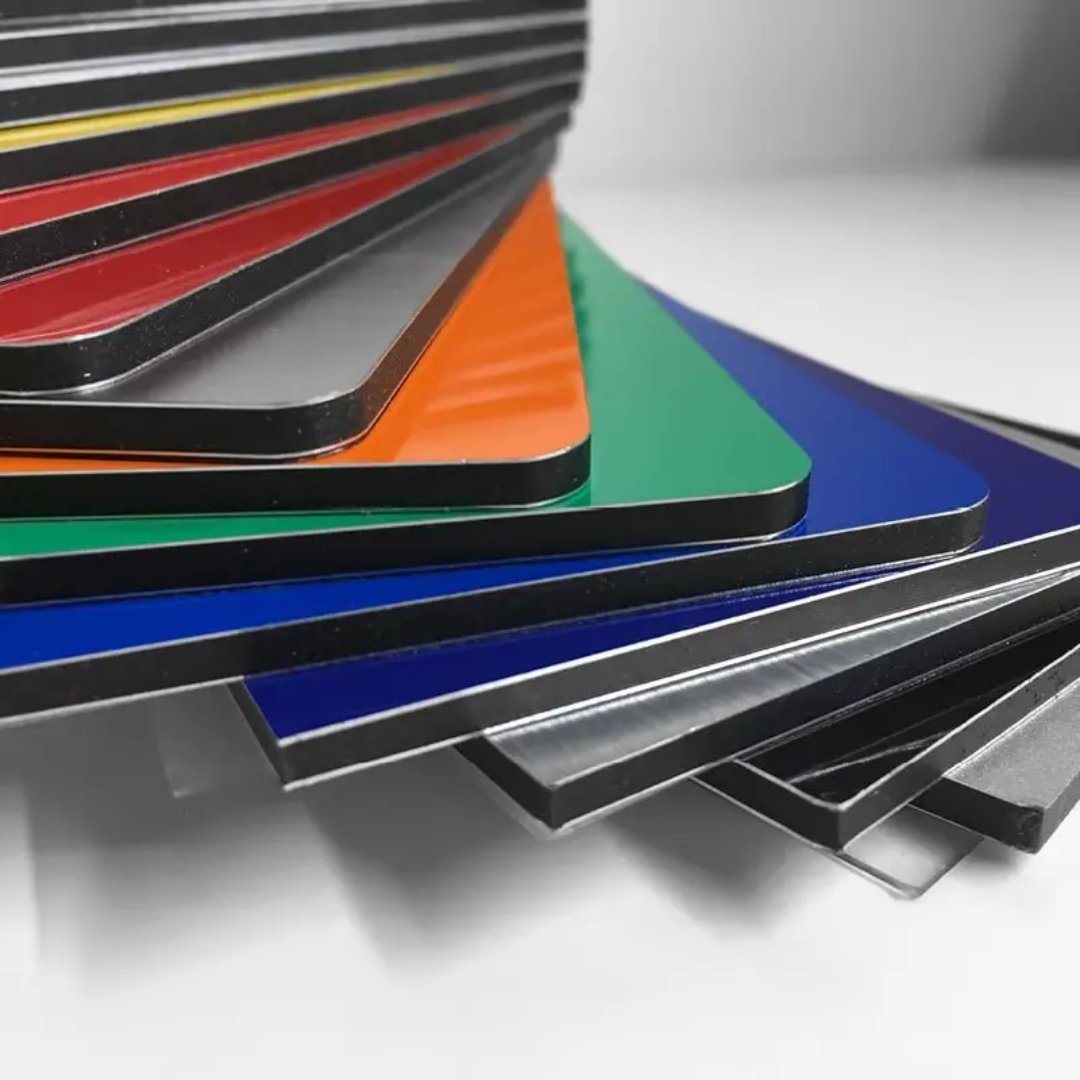
When you picture the world's most iconic buildings, your mind likely conjures images of shimmering glass towers, sculptural concrete forms, or historic stone facades. But behind many of today's most striking architectural landmarks lies an unsung hero: Aluminium Composite Panels (ACP).
Since its commercial introduction in 1969, ACP has quietly revolutionized building envelopes worldwide. From the sinuous curves of Zaha Hadid's masterpieces to the bold statements of Dubai's skyline, this versatile material has enabled architects to realize visions that would be impossible with traditional cladding. Yet most people walking past these buildings have no idea they're looking at ACP.
This global tour reveals the surprising extent to which ACP has shaped our built environment—and why the material behind these facades matters more than ever.
The Architectural Revolution: Why ACP Became a Star
Before exploring specific buildings, it's worth understanding why ACP became the material of choice for so many landmark projects. Architects prize it for several compelling qualities:
- Formability: ACP can be curved, folded, and shaped into complex geometries that would be prohibitively expensive or impossible with solid metal or stone.
- Lightweight strength: The sandwich construction provides exceptional stiffness at a fraction of the weight of alternatives.
- Flatness: Unlike solid sheet metal, ACP resists oil canning, maintaining pristine surfaces even over large areas.
- Finish variety: From high-gloss solids to realistic wood and stone textures, the range of available finishes enables virtually any aesthetic.
- Weather resistance: Quality ACP with PVDF coatings withstands decades of exposure without fading or chalking.
These properties have attracted the attention of the world's most celebrated architectural firms—including Zaha Hadid Architects, SOM, UNStudio, and Gensler—resulting in a portfolio of buildings that demonstrate ACP's extraordinary potential.
Moscow, Russia: Zaha Hadid's Dominion Office Building
When the late, great Zaha Hadid—the first woman to receive the Pritzker Architecture Prize—designed the Dominion Office Building in Moscow, she chose ACP as her primary facade material.
Completed in 2015, this striking structure appears deceptively simple from a distance. But closer inspection reveals Hadid's signature approach: a series of concrete floor slabs that appear to float, each offset from the one below. The resulting voids are filled with continuous glazing, while the solid spandrel areas are clad in silver ALUCOBOND aluminium composite panels.
The material choice was critical to realizing Hadid's vision. The panels' pristine flatness emphasizes the building's horizontal lines, while their lightweight nature allowed for the cantilevered forms that characterize the design. Photographers Hufton + Crow captured the building's ethereal quality, showing how the ACP cladding catches Moscow's changing light throughout the day.
Inside, the drama continues with a sculptural staircase that winds through the atrium—proof that ACP's influence extends beyond exterior applications.
Hangzhou, China: UNStudio's Raffles City
The Hangzhou Raffles City complex, designed by Dutch firm UNStudio and completed in 2017, demonstrates ACP's ability to realize extreme geometric complexity.
Twin 250-meter towers rise from a shared podium, their forms twisting and curving in a choreographed dance that architect Ben van Berkel describes as inspired by the tidal surges of the nearby Qiantang River. The facade is a tour de force of ACP application: over 3,300 custom-shaped three-dimensional decorative strips, all fabricated from aluminum composite material, spiral up the towers.
Each strip serves dual purposes: providing solar shading while accentuating the buildings' twisted geometry. The fabrication challenge was immense—each curved component required precise engineering to maintain the design intent. Yet the lightweight nature of ACP made the solution feasible where heavier materials would have required prohibitively expensive substructures.
The podium building adds another layer of ACP innovation, clad in over 70,000 scale-like panels that catch light differently from every angle. The result is a building that seems alive, its surface shifting as viewers move around it.
Dubai, UAE: M Square Tower
Dubai's skyline is practically a museum of ACP applications, but the M Square Tower stands out for its sophisticated integration of the material.
Completed in 2020, this 25-story mixed-use tower in Dubai's business district showcases ACP's versatility across multiple facade systems. Al Abbar Group, the facade contractor, employed ACP cladding in several innovative ways :
- Replica stone finishes: The ground floor canopy and drop-off ceiling use ACP finished to replicate natural stone, achieving a premium aesthetic without the weight penalty of actual masonry.
- Sublimation coatings: External panels received a specialized sublimation coating that creates a rustic, patinated appearance—blending contemporary design with traditional character.
- Aerofoil louvers: Six-hundred-millimeter-wide aerofoil elements made from cold-bent aluminium sheet provide shading and ventilation while adding architectural depth.
Critically, all ACP applications at M Square comply with NFPA 285 fire safety standards, reflecting the heightened attention to facade performance in the post-Grenfell era.
Riyadh, Saudi Arabia: JAX Studio's Corten Steel Illusion
Sometimes, ACP's most impressive feat is deception. At JAX Studio in Riyadh—a creative hub housing artists, designers, and museums—visitors encounter a facade that appears to be rusted Corten steel.
In reality, it's Viva ACP's Metal Abstract Series in finish 8016 Corten Steel 2, a custom-developed coating that mimics the industrial aesthetic of weathering steel without the associated weight, cost, or ongoing corrosion.
The project, nearing completion as part of Saudi Arabia's Film City development, required 4,495 panels covering 5,000 square meters. The design team originally specified a standard RAL 8024 brown, but after reviewing sample panels of the Corten finish, they revised the specification entirely.
This decision highlights a key advantage of ACP: the ability to mock up small samples and evaluate real-world appearance before committing to full production. The successful mock-up of just four to five panels sealed the deal.
Beyond aesthetics, the panels meet rigorous Saudi Standards, Metrology and Quality Organization (SASO) requirements, and comply with international building codes—essential for a large public gathering space.
Dubai, UAE: Sulafa Tower's Record-Setting Reclad
Sometimes a building becomes famous not for its original design but for its transformation. Dubai's Sulafa Tower, a 79-floor, 288-meter skyscraper in Dubai Marina, underwent exactly such a metamorphosis in 2020.
The project was staggering in scale: 65,000 square meters of Alucopanel A2 fire-rated ACP cladding—enough to cover nearly ten football fields. The new facade combines APL S26 Apricot White and APL S4208 RAL 1014 Ivory finishes, refreshing the tower's appearance while dramatically improving its safety profile.
This recladding represents a growing trend in high-rise building management. As fire safety regulations tighten worldwide—particularly following the Grenfell Tower tragedy—building owners are proactively replacing older, combustible cladding with non-combustible alternatives. Sulafa Tower now stands as a benchmark for how such upgrades can enhance both safety and aesthetics.
Kuwait: Grand Sea Towers' Safety Landmark
Across the Gulf in Kuwait, the Grand Sea Towers project demonstrates how ACP manufacturers are responding to heightened safety expectations.
This striking residential development in Daiya is wrapped in over 60,000 square meters of Alucopanel® A2 fire-safe panels. What makes this project noteworthy is its regulatory significance: the panels are approved by the Kuwait Fire Department, meeting and exceeding strict local fire safety standards.
Consultants selected the panels after rigorous evaluations of their performance and durability, specifically noting their ability to withstand extreme Gulf weather—intense heat, high humidity, and powerful UV exposure. The project proves that safety and sustainability need not compromise aesthetic ambition.
Mumbai, India: ID Origins Headquarters' Calligraphic Skin
In Mumbai's dense urban fabric, Studio Symbiosis has created a vertical landmark that demonstrates ACP's potential for artistic expression.
The ID Origins Headquarters project involved transforming an existing 1980s low-rise commercial structure by adding twelve floors of residential space above. To unify the old and new volumes, the architects wrapped the entire building in corrugated ACP panels arranged in sweeping calligraphic strokes.
The undulating panels weave across the facade like brush strokes, blending the disparate volumes into a cohesive whole. Beyond its aesthetic impact, the perforated aluminum skin performs environmental functions: reducing solar glare at lower levels while gradually thinning along residential floors to maximize outward views for residents.
Because of the building's regular plan outline and the lightweight nature of ACP, this complex geometric facade could be constructed efficiently, reducing overall construction time by six months compared to conventional approaches.
Chicago, USA: SOM's C.H. Robinson Headquarters
Even in a city renowned for architectural innovation, SOM's design for the C.H. Robinson Worldwide Headquarters in Chicago stands out.
Located on the site of a former tannery adjacent to the Chicago River, the building responds to its waterfront context with a facade that literally ripples like water. Large "fins" clad in ALUCOBOND aluminum composite material undulate across the building's surface, their forms echoing the river's flow.
These fins serve a serious environmental purpose: precisely calibrated to reduce internal glare while maintaining outward views, they allow the building to achieve high performance with a lower window-to-wall ratio than conventional designs. When sunlight strikes the silver ACM surface, the material appears to glow, brightening the entire neighborhood context.
Nanjing, China: CallisonRTKL's Revitalized
In Nanjing, global architecture firm CallisonRTKL demonstrated ACP's transformative power in urban regeneration.
The (Hongyang Plaza) renovation project faced a common challenge: an aging, disparate collection of buildings lacking visual coherence. The design team's solution drew inspiration from the site's proximity to the Yangtze River, introducing flowing curves intended to evoke water .
After evaluating multiple material options against criteria including cost, constructability, finish retention, and day/night appearance, the team selected ALUCOBOND's (color-shifting) series. The facade's carefully arrayed prismatic panels catch light throughout the day, creating the "sparkling" effect the designers sought. Integrated lighting within projecting panels extends this magic into nighttime hours.
Zhuhai, China: Gensler's Center Light Funnel
Sometimes, ACP's most dramatic applications are interior rather than exterior. At the Center (Hengqin Poly Center) in Zhuhai, designed by Gensler, the material creates one of architecture's most poetic interior moments.
The building's lobby features what Gensler describes as a "light funnel"—a sculptural form that cascades from ceiling to reception desk in one continuous, fluid gesture. Clad in anodized-effect ACP, this element captures and distributes natural light streaming from above, creating an ethereal ambiance.
Realizing this vision required extraordinary precision. Every panel in the compound curve surface is uniquely shaped, and each required meticulous fabrication to maintain perfect continuity. The ceiling surrounding the funnel features graduated perforations—every panel individually CNC-cut with holes that radiate outward—creating the "breathing" effect the designers sought. Even the lighting apertures demanded custom panel engineering to achieve perfect integration.
The Critical Lesson: Not All ACP Is Equal
This global tour reveals ACP's extraordinary potential, but it also carries an important caution. The same material properties that enable architectural magic can, when improperly specified, contribute to disaster.
The 2017 Grenfell Tower fire in London, which claimed 72 lives, involved ACP cladding with a combustible polyethylene core. The panels acted as "fuel" for the blaze, with the cavity between cladding and building functioning as a chimney that spread fire rapidly upward. This tragedy fundamentally changed how the world views ACP.
In response, regulators worldwide have tightened requirements. The UAE now mandates that mid-rise and high-rise buildings use only Euroclass A2 non-combustible materials. Kuwait's Fire Department now approves cladding systems before installation. New Zealand and Australia have conducted comprehensive building audits.
The landmark buildings profiled here all used appropriate materials for their context—fire-rated panels where required, PE-core panels only in appropriate low-risk applications. Their success demonstrates that ACP remains a valid, valuable building material when properly specified.
Auckland's Wake-Up Call: The Importance of Inventory
Even progressive cities face challenges in managing existing ACP installations. In 2018, the Auckland Council released a list of 116 buildings found to contain ACP cladding, including 25 with combustible polyethylene cores.
The list included surprising names: Waitakere Stadium, Auckland Hospital buildings, Spark's four-building campus, the PwC waterfront building, TVNZ headquarters, and numerous apartment blocks. Crucially, the council emphasized that these buildings were "not necessarily dangerous" due to other fire safety measures—sprinklers, alarms, means of escape—that compensate for cladding performance.
This nuanced approach reflects current best practice: evaluate cladding in context, consider all safety systems, and remediate where necessary without panic. The Auckland buildings stand today as a reminder that material selection is just one factor in overall building safety.
Conclusion: The Material That Shaped Modern Cities
From Zaha Hadid's Moscow masterpiece to UNStudio's Hangzhou towers, from Dubai's soaring skyscrapers to Mumbai's calligraphic facades, aluminium composite panels have quietly shaped the way our cities look.
The material's extraordinary versatility has liberated architects from traditional constraints, enabling curves, colors, and textures previously confined to imagination. Its lightweight strength has made possible facade geometries that would crush conventional structures. Its durability ensures that today's landmarks will grace skylines for decades.
Yet the Grenfell tragedy and subsequent regulatory responses have reminded us that material selection carries profound responsibility. The famous buildings profiled here succeeded because their designers understood ACP's properties—both its capabilities and its limitations—and specified accordingly.
For architects, developers, and building owners today, the lesson is clear: ACP remains a remarkable tool for architectural expression, but like any powerful tool, it demands respect, knowledge, and careful application. When these conditions are met, the results can be truly extraordinary—buildings that surprise, delight, and stand as testaments to human creativity.






