Welcome to Vbond
Thermal Expansion Nightmares in Aluminum Panels: Why Your ACP Is Warping and Blistering in Summer
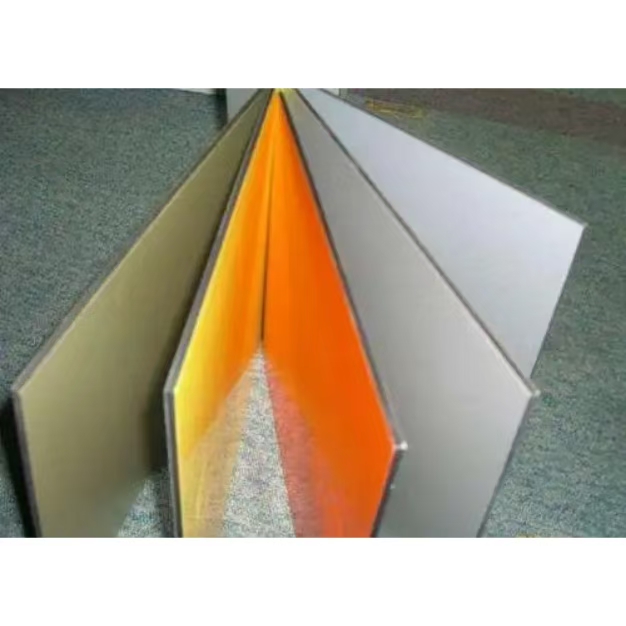
You spent millions on a sleek aluminum composite panel facade. The renderings promised a flawless, mirror-like surface. But on the first hot summer afternoon, you see it: waves, ripples, and ugly blisters distorting your building's appearance. Your contractor shrugs. The manufacturer points fingers.
Here is the physics lesson your supplier hopes you never learn: Aluminum expands aggressively in heat. When that expansion is restricted, your facade doesn't just look bad—it self-destructs. And cheap polyethylene (PE) core panels are the primary culprit.
This guide explains why summer heat destroys improperly specified ACP facades and provides the engineering specifications you need to prevent thermal failure.
1. The Physics of Failure: How Heat Destroys ACPs
Aluminum has a high coefficient of thermal expansion. For ACPs, the industry-standard linear thermal expansion rate is 2.4 mm per meter of panel length for every 100°C temperature change.
The PE Core Problem
While the aluminum skins expand at the standard rate, the polyethylene core behaves differently. The linear expansion coefficient of the core material is 1.5×10⁻⁴/°C. When the temperature rises from 25°C to 50°C, a 3-meter-long panel can expand by 11.25 mm.
Here is what happens inside your wall on a summer day:
Temperature Change | Panel Length | Total Expansion |
25°C → 50°C (ΔT=25°C) | 3,000 mm | 11.25 mm |
25°C → 70°C (ΔT=45°C) | 4,000 mm | 21.6 mm |
20°C → 80°C (ΔT=60°C) | 6,000 mm | 34.5 mm |
When this expansion is restricted—by tight fasteners, no expansion joints, or rigid framing—the panel buckles. The result is oil canning (visible waviness) or complete bulging and delamination.
The Aluminum-PE Mismatch
The aluminum surface layer and the plastic core material expand at different rates. This difference in expansion rates easily leads to interlayer stress concentration, causing bulging or delamination at the bond line.
2. The Three Thermal Failure Modes
Failure Mode 1: Oil Canning (Visible Waviness)
When a panel is pinned down at too many points, thermal expansion has nowhere to go. The panel buckles between the fixed points, creating soft, rippling waves across the surface. This is the most common thermal failure—and the one contractors most often blame on "material quality."
Root Cause: Restrictive fastening system with no allowance for sliding movement.
Failure Mode 2: Blistering and Delamination
When the PE core expands at a different rate than the aluminum skins, the adhesive bond is stressed beyond its limit. The bond fails, creating raised blisters where the aluminum separates from the core.
Root Cause: Inadequate bonding pressure during manufacturing or incompatible core material selection.
Failure Mode 3: Panel Bulging (Drumming)
In severe cases, the entire panel bulges outward, creating a "drumming" sound when tapped. This indicates that the panel has permanently deformed and lost its structural integrity.
Root Cause: No expansion joints combined with high summer temperatures; improper base material selection.
3. The Grenfell Warning: PE Core Burns While It Buckles
The thermal expansion nightmare is compounded by fire risk. Polyethylene has a calorific value similar to petrol. When a fire starts, PE-core ACPs act as fuel accelerants, melting and dripping burning plastic that spreads flames downward.
The 2017 Grenfell Tower fire killed 72 people. The combustible PE core in the cladding was a primary contributor to the rapid fire spread.
4. Summer Installation: When Heat Creates Hidden Defects
High-temperature installation creates problems that only appear months later. When panels are installed on a 35°C summer day, they are already expanded. When winter arrives and the panels contract, the fasteners may loosen or the panels may crack.
Critical High-Temperature Installation Rules
Parameter | Specification |
Storage temperature | ≤35°C; open-air storage >24 hours prohibited |
Thermal equalization | Move panels to the installation area 72 hours before construction; temperature difference ≤5°C/hour |
Maximum surface temperature | Prohibit contact operations when the metal surface temperature >50°C |
Construction suspension | When panel-to-substrate temperature difference >8°C |
The Compensation Formula
For high-temperature installation, engineers must calculate thermal compensation:
ΔL = α × L₀ × (T₁ − T₀)
Where:
- α = 1.5 × 10⁻⁴/°C (core expansion coefficient)
- L₀ = panel length
- T₁ = installation temperature
- T₀ = reference temperature (typically 20°C)
For a 3-meter panel installed at 35°C:
ΔL = 1.5 × 10⁻⁴ × 3000 × (35 − 20) = 6.75 mm
This compensation must be built into the joint design before installation begins.
5. The Procurement Fix: Thermal-Responsive Specifications
Stop thermal failure before it starts by enforcing these specifications:
Specification 1: Mandate A2 Mineral Core for High-Rise
Delete PE core from your specifications entirely. Require A2 mineral-filled core for all high-rise and high-exposure applications. Mineral cores have significantly lower thermal expansion coefficients and maintain bond integrity at extreme temperatures.
Specification #2: Require Slotted Fastener Holes
The panel must be able to move. Specify:
- One fixed point per panel (center or one corner)
- All other fasteners through slotted holes oriented to allow expansion in both directions
- No self-tapping screws without slotted clearance
Specification 3: Design Expansion Joints
For panel runs exceeding 6 meters, physical expansion joints are required. Open joint systems are recommended: horizontal joint width 4-6mm, vertical joint width 3-5mm, joint depth ≥8mm.
Specification #4: Use Three-Dimensional Adjustable Hangers
Specify a hanger system allowing displacement compensation of ±5mm, with fixed point spacing ≤400mm.
Specification #5: Torque Control
316 stainless steel self-tapping screws must be torqued at 1.5–2.0 N·m. Overload will cause the plate to collapse and deform. Use a step-by-step method: pre-tighten to 70% strength first, then fully tighten after 24 hours.
Specification #6: Substrate Thermal Compensation
For steel structure bases, pre-compensate for thermal deformation: reserve a 15mm expansion joint for every 10m length and fix with adjustable connectors.
6. The 2025 Dubai Case: What Happens When You Ignore Thermal Expansion
A Dubai commercial complex project skipped expansion joints and forced installation during noon high temperatures. The result: 1,600 square meters of ACP panels collectively bulged. The rework cost reached 2.3 million yuan (approximately $315,000 USD), and the construction period was delayed by 45 days.
The direct cause was simple: No expansion joints + high-temperature installation = catastrophic failure.
7. The Prevention Checklist
Before your next ACP order, verify:
Item | Specification |
Core material | A2 mineral-filled for high-rise; reject PE for exterior |
Fastening system | Slotted holes; one fixed point per panel |
Expansion joints | Every 6m maximum; 4-6mm joint width |
Hanger system | Three-dimensional adjustable; ±5mm compensation |
Hanger system | Three-dimensional adjustable; ±5mm compensation |
Installation temperature | Below 35°C; thermal equalization before fixing |
Substrate expansion | 15mm joint per 10m on steel structures |
Conclusion
Your ACP facade is not warping and blistering because of "bad material" or "normal weathering." It is failing because thermal expansion was not engineered into the system.
Aluminum expands at 2.4mm per meter per 100°C. The PE core expands even more. When you restrict that movement with tight fasteners and rigid joints, the panel has only one option: buckle.
The solution is not to blame the supplier. It is to specify sliding connections, expansion joints, and A2 mineral cores that resist thermal stress. When you design for movement, your facade stays flat. When you ignore physics, you get the nightmare.






