Welcome to Vbond
Understanding the Anatomy of a Premium Grade Aluminum Composite Panel
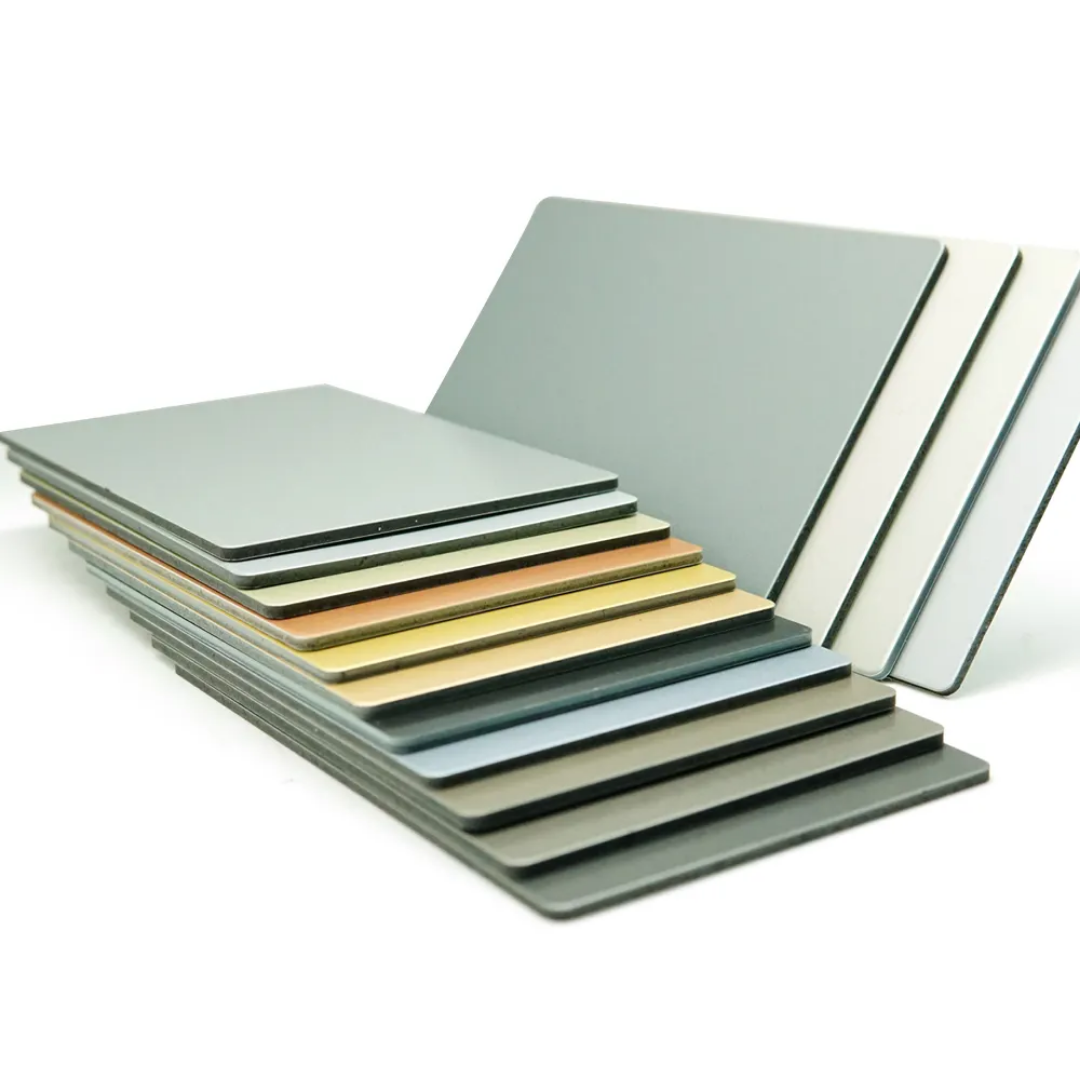
To the untrained eye, one sheet of Aluminum Composite Panel (ACP) looks much like another. Yet, between a commodity-grade panel and a premium-grade architectural cladding solution lies a world of difference—hidden in the layers, bonds, and metallurgy invisible to the casual observer.
For professional buyers, facility managers, and specifiers, selecting a panel based solely on thickness or price is a gamble. True performance—fire safety, flatness, weatherability, and lifespan—is determined by what lies beneath the surface. To specify with confidence, you must first understand the anatomy of a premium-grade ACP.
Let’s dissect the panel layer by layer, from the exposed finish to the hidden core.
1. The Protective Coating: The First Line of Defense
The outermost layer is not merely paint; it is a sophisticated engineered coating system. This is what the world sees, but more importantly, it is what withstands UV radiation, acid rain, and atmospheric pollutants.
Premium Grade Standard:
High-end architectural panels utilize PVDF (Polyvinylidene Fluoride) resin-based coatings, typically formulated with 70% Kynar® or Hylar®. Unlike standard Polyester coatings, PVDF does not chalk, fade, or erode over time.
What to Look For:
- AAMA 2605:The gold standard. This certification guarantees superior color retention, chalk resistance, and film integrity for up to 20 years.
- Three-Coat System: Premium panels often apply a primer, a topcoat, and a clear coat to enhance durability against scratching and chemical exposure.
Buyer’s Insight: Ask for the coating warranty, not just the panel warranty. If the coating fails, the aesthetics fail.
2. The Aluminum Skin: Purity and Temper
The aluminum sheets that sandwich the core are not all created equal. The alloy grade and the temper (hardness) dictate how well the panel resists dents and handles fabrication.
Premium Grade Standard:
Top-tier manufacturers use AA3000 series aluminum (specifically AA3003 or AA3105) for the skins. This alloy offers superior corrosion resistance compared to the cheaper AA1000 series, which is prone to oxidation and surface imperfections.
The Critical Factor: Temper
The aluminum must strike a balance. H16 or H18 temper provides the rigidity needed to prevent oil-canning (waviness), yet it must maintain enough ductility to allow for 0T bends (folding flat against itself) without cracking the metal or the paint.
Buyer’s Insight: Verify the aluminum thickness in microns (e.g., 0.5mm or 0.3mm). A premium panel uses thicker skins, providing higher impact resistance and a more rigid facade.
3. The Adhesive Layer: The Invisible Bond
Often overlooked, the adhesive is the structural glue that prevents delamination—the separation of the aluminum skin from the core. Delamination is the leading cause of facade failure in low-quality panels.
Premium Grade Standard:
Premium panels utilize a high-durability polyethylene or advanced structural adhesive film that is thermally bonded under controlled conditions. This ensures a consistent bond line without voids or bubbles.
What to Look For:
- Peel Strength: Premium panels exhibit a peel strength of 4.0 to 6.0 N/mm. If you can manually peel the skin from the core with hand pressure, the bond is substandard.
- Consistency: The adhesive layer should be uniform. Inconsistent bonding leads to blistering under thermal stress.
Buyer’s Insight: Ask for ASTM D3359 or EN 13523 test results. These standards quantify the adhesive quality and predict long-term cohesion.
4. The Core: The Heart of Safety and Stability
The core material determines two critical aspects of the panel: fire performance and flatness. This is the layer where premium grades diverge most dramatically from economy options.
The Two Main Types:
- LDPE (Low-Density Polyethylene) Core: Common in standard grades. It offers excellent flexibility and flatness but is combustible. It is restricted or banned for high-rise applications in most developed markets.
- Mineral Core (FR or A2): The hallmark of a premium, fire-safe panel. This core is composed of non-combustible minerals (Magnesium Hydroxide or Aluminum Trihydrate).
Premium Grade Standard:
For high-rise or safety-critical applications, an A2-s1, d0-rated core (per EN 13501-1) is mandatory. Beyond safety, a high-density mineral core provides superior thermal stability, meaning the panel does not expand and contract excessively with temperature changes, reducing the risk of oil-canning.
Buyer’s Insight: Perform a simple flame test on the core. A premium mineral core will self-extinguish instantly when the flame is removed. A PE core will sustain combustion.
5. The Backer Skin: More Than Just a Cover
While the front skin gets all the attention, the back (reverse) skin plays a crucial role in structural integrity and corrosion prevention.
Premium Grade Standard:
The back skin should match the front skin in alloy grade (AA3003) and thickness. Additionally, premium panels feature a polyester or epoxy-based backer coating.
Why It Matters:
Uncoated back skins are susceptible to galvanic corrosion when in contact with dissimilar metals (like steel substructures) or moisture trapped in the cavity. A protective backer coating ensures the structural integrity of the panel remains intact for decades, preventing pinhole corrosion that can eat through the metal from the inside out.
6. The Overall Laminate: Tolerances and Flatness
The final measure of a premium panel is how well these layers come together to form a perfectly flat, stress-free sheet.
Premium Grade Standard:
Manufacturing precision is measured by ASTM B209 standards. Premium manufacturers utilize continuous coil coating lines (not batch processing) to ensure that the tension, heat, and lamination pressure are perfectly calibrated across the entire sheet.
What to Look For:
- Flatness: The panel should lie dead flat without “oil-canning” (visible waviness).
- Dimensional Tolerance: Thickness variation should be less than +/- 0.1mm across the sheet.
- Lamination: There should be no visible “bubbling” or “shadowing” where the core pattern telegraphs through the aluminum skin.
Conclusion: Specifying for Long-Term Value
Understanding the anatomy of a premium-grade Aluminum Composite Panel transforms procurement from a cost-based exercise to a value-based investment. You are not merely buying a sheet of metal; you are buying a system of engineered layers designed to resist fire, weather, corrosion, and mechanical stress.
When evaluating suppliers, insist on transparency regarding the alloy grade (3000 series), the coating standard (AAMA 2605), the core classification (A2 fire rating), and the adhesive peel strength. These anatomical details separate a landmark building that appreciates over time from a liability that deteriorates before the scaffolding is even dismantled.
Specify smarter. Look beneath the surface.