Welcome to Vbond
Understanding the Chemical Composition of an A2 Aluminum Composite Panel Core
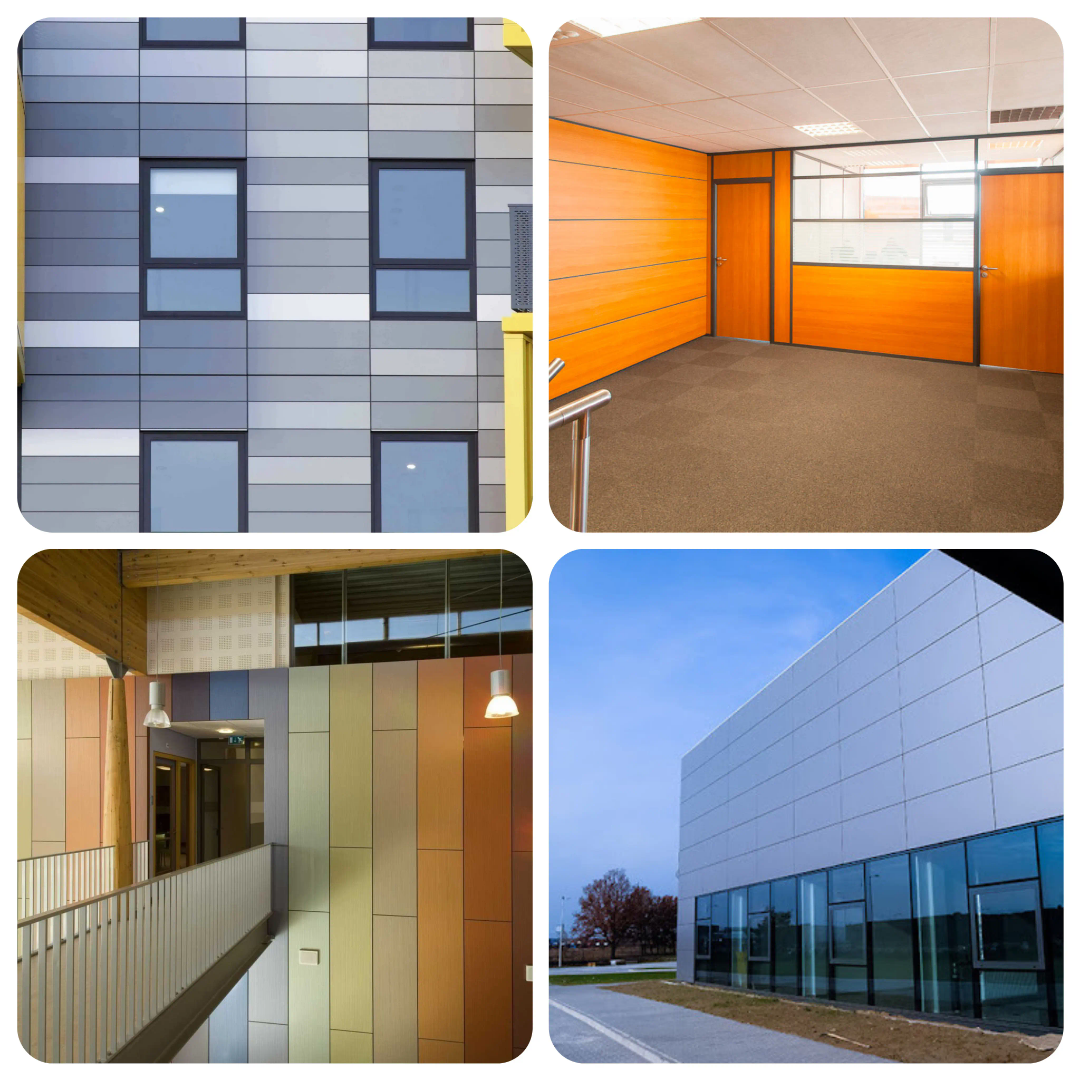
In the world of architectural cladding, fire safety has become a non-negotiable priority. Following high-profile building fires globally, the demand for fire-resistant aluminum composite panels (ACPs) has surged. Among the various fire performance classifications, A2-grade ACPs have emerged as the industry standard for buildings requiring enhanced fire protection—particularly for high-rise structures, public buildings, and projects with stringent building code requirements.
But what actually makes an ACP “A2”? The answer lies not in the aluminum skins, but in the core. The chemical composition of the core material determines how the panel behaves when exposed to fire, and understanding this composition is essential for professional buyers seeking to specify and procure panels that deliver genuine fire safety.
This guide provides a detailed, technically grounded exploration of the chemical composition of A2 aluminum composite panel cores, explaining the science behind fire performance, the role of key ingredients, and how buyers can verify that they are receiving authentic A2-rated products.
What Does “A2” Mean?
Before examining the chemistry, it is essential to understand the classification. A2 is a European fire performance classification defined by EN 13501-1 (the European standard for fire classification of construction products). The A2 rating indicates:
- Limited contribution to fire (the product does not significantly contribute to fire development).
- No flaming droplets or particles that would ignite a cotton wool pad placed below.
- Limited smoke production and heat release.
A2 sits just below the highest classification (A1, which is fully non-combustible). Unlike A1 materials (such as solid steel or stone), A2 materials contain a limited amount of organic components but are formulated to prevent significant fire spread.
For ACPs, achieving A2 classification requires replacing the standard polyethylene (PE) core—which is highly flammable—with a mineral-filled core engineered to resist ignition, suppress flame propagation, and release minimal heat when exposed to fire.
The Chemistry of the A2 Core: A Mineral-Filled Composite
The A2 core is not a single substance but a carefully engineered composite material consisting of three primary components: a mineral filler, a polymer binder, and a range of additives. The precise formulation is proprietary to each manufacturer, but the underlying chemistry follows established principles.
1. Mineral Filler: The Fire-Suppressing Agent
The dominant component of any A2 core is a mineral filler, typically constituting 70–85% of the core by weight. This high mineral content is what gives A2 panels their fire-resistant properties.
Magnesium Hydroxide (Mg(OH)₂)
Chemical Formula: Mg(OH)₂
Magnesium hydroxide is one of the most commonly used mineral fillers in A2 ACP cores. It functions as a flame retardant through endothermic decomposition.
- How it works: When exposed to high temperatures (approximately 300–350°C), magnesium hydroxide undergoes thermal decomposition, releasing water vapor:
Mg(OH)₂ → MgO + H₂O↑ (absorbs heat)
- Benefits:
- Absorbs significant heat (endothermic reaction), cooling the material.
- Releases water vapor, which dilutes flammable gases and acts as a smoke suppressant.
- Leaves behind a stable magnesium oxide (MgO) char layer that insulates the remaining material.
Aluminum Hydroxide (ATH) – Aluminum Trihydrate (Al(OH)₃)
Chemical Formula: Al(OH)₃
Aluminum hydroxide, also known as aluminum trihydrate (ATH), is another widely used flame-retardant filler. Its decomposition temperature is slightly lower than magnesium hydroxide (around 200–220°C).
How it works:
2Al(OH)₃ → Al₂O₃ + 3H₂O↑ (absorbs heat)
Benefits:
- Excellent heat absorption.
- Acts as a smoke suppressant.
- Often used in combination with magnesium hydroxide to achieve optimal fire performance across a range of temperatures.
Other Mineral Fillers
Some manufacturers incorporate additional minerals such as:
- Calcium Carbonate (CaCO₃): Provides bulk and contributes to char formation.
- Boron Compounds (e.g., Zinc Borate): Act as synergists, enhancing flame retardancy and promoting char formation.
- Silicates: Improve mechanical properties and contribute to fire resistance.
2. Polymer Binder: The Structural Matrix
The polymer binder holds the mineral filler together and provides the core with its structural integrity. Unlike the PE core, which is entirely organic (approximately 100% polyethylene), the binder in an A2 core typically constitutes 15–30% of the core by weight.
Low-Density Polyethylene (LDPE)
Many A2 cores use LDPE as the binder. However, in A2 formulations, the polyethylene content is dramatically reduced and combined with high levels of mineral filler. The reduced organic content ensures that the core does not sustain combustion.
Polypropylene (PP) or Other Thermoplastics
Some manufacturers utilize polypropylene or other thermoplastic binders, offering different processing characteristics and mechanical properties.
Reactive Binders
In more advanced formulations, manufacturers may use thermoset binders or reactive systems that cross-link during manufacturing, enhancing thermal stability and mechanical strength.
3. Additives: Enhancing Performance
Beyond the primary filler and binder, A2 core formulations include a range of additives to optimize performance:
Additive Type | Function |
Flame Retardant Synergists (e.g., zinc borate, antimony trioxide) | Enhance the efficiency of the primary flame retardants, often allowing lower total additive load. |
Smoke Suppressants (e.g., molybdenum compounds, zinc stannate) | Reduce smoke generation during combustion, critical for occupant safety. |
Processing Aids | Improve flow characteristics during extrusion or lamination, ensuring uniform core thickness. |
Coupling Agents (e.g., silanes, maleated polyolefins) | Enhance the bond between the mineral filler particles and the polymer matrix, improving mechanical strength and preventing filler separation. |
Stabilizers and Antioxidants | Prevent thermal degradation during manufacturing and extend the panel’s service life. |
How the Chemistry Delivers Fire Performance
The fire performance of an A2 core is not simply a matter of adding flame retardants; it is a carefully balanced chemical system. When exposed to fire, the following sequence occurs:
1. Heat Absorption (Endothermic Decomposition): As temperatures rise, the mineral filler (ATH or magnesium hydroxide) begins to decompose, absorbing large amounts of heat and releasing water vapor. This cooling effect slows the temperature rise of the panel and delays ignition of the organic binder.
2. Oxygen Dilution: The water vapor released by the mineral filler dilutes the oxygen concentration near the panel surface, making it more difficult for combustion to sustain.
3. Char Layer Formation: As the polymer binder decomposes, the mineral filler particles accumulate at the surface, forming a stable, insulating char layer (primarily magnesium oxide or aluminum oxide). This char layer:
- Insulates the underlying material from further heat exposure.
- Acts as a physical barrier, limiting oxygen access.
- Reduces the release of combustible volatiles.
4. Reduced Fuel Load: With mineral filler constituting 70–85% of the core, the total organic fuel content is dramatically lower than that of a standard PE core. Even if ignition occurs, the limited fuel cannot sustain significant fire growth.
Comparing A2 Core Chemistry to Other ACP Core Types
Core Type | Chemical Composition | Organic Content | Fire Performance | Typical Applications |
Polyethylene (PE) | 100% polyethylene (LDPE/HDPE) | ~100% | Highly flammable; contributes significantly to fire spread. | Interior, low-rise (where codes permit). |
Fire-Retardant (FR) | PE with halogenated or phosphorus flame retardants | ~70–80% | Self-extinguishing under small flame tests but may still contribute to fire in severe conditions. | Some exterior applications with code approvals. |
A2 Mineral Core | 70–85% mineral filler (ATH, Mg(OH)₂); 15–30% polymer binder; additives | 15–30% | Limited contribution to fire; passes EN 13501-1 A2 requirements. | High-rise, public buildings, strict fire code jurisdictions. |
A1 (Non-Combustible) | Solid metal, stone, or mineral wool (no organic content) | 0% | No contribution to fire. | Special applications; not typical for ACPs. |
Quality Indicators: Verifying A2 Core Composition
For professional buyers, verifying that the core composition matches the claimed A2 classification is essential. Counterfeit or non-compliant A2 panels have been documented in the market, posing significant safety risks.
1. Certification and Testing Documentation
Demand documented evidence of A2 classification, including:
- EN 13501-1 Test Report: Issued by an accredited testing laboratory (e.g., Warringtonfire, BRE, Exova, or equivalent). This report must clearly state the A2 classification.
- Reaction to Fire Classification Certificate: Issued by a notified body or certification organization.
- Test Parameters: Review the specific test results, including:
- FIGRA (Fire Growth Rate Index): Should be ≤ 120 W/s for A2-s1,d0.
- SMOGRA (Smoke Growth Rate Index): Indicates smoke production.
- Total Heat Release (THR) at 600 seconds: Should be ≤ 7.5 MJ.
2. Material Data and Composition Disclosure
Reputable suppliers will provide:
- Technical Data Sheets: Detailing the core composition (mineral type, polymer binder, density).
- Core Density: A2 cores typically have densities of 1.6–1.9 g/cm³, significantly higher than PE cores (approximately 0.95 g/cm³). This difference is physically noticeable—A2 panels are heavier.
- Mineral Content Declaration: Look for transparency regarding the percentage of mineral filler (typically ≥70%).
3. Physical Verification
- Weight Check: For the same dimensions, an A2 panel will be noticeably heavier than a PE or FR panel. A standard 4mm A2 panel typically weighs 7.5–9.0 kg/m², compared to 4.5–5.5 kg/m² for PE.
- Edge Inspection: Examine the cut edge of the panel. An A2 core will appear as a dense, uniformly filled composite, often light gray or off-white in color. It should not appear as a translucent or clear plastic.
- Burn Test (with caution): As a field verification, a small sample held to a flame should not sustain combustion or drip flaming particles. The mineral filler will cause the core to smolder and self-extinguish when the flame is removed.
4. Supply Chain Traceability
- Request documentation tracing the core material back to its original source.
- Verify that the panel manufacturer has ISO 9001 certification and that their A2 panels are produced under certified quality management systems.
- Check for third-party certifications such as UL, **Intertek, or FM Approvals where applicable.
Common Misconceptions and Red Flags
Misconception / Red Flag | Reality |
"A2 equivalent" or "A2 grade" without EN 13501-1 test report. | A2 is a specific classification verified by standardized testing. Claims without test reports are unsubstantiated. |
"FR" or "fire-retardant" panels labeled as A2. | FR panels (often B or C rated) do not meet A2 requirements. They contain significantly higher organic content. |
Panels that appear thin or lightweight for their thickness. | A2 panels are dense and heavy. Lightweight panels claiming A2 performance should be scrutinized. |
Core that melts and drips when heated. | A2 cores should not produce flaming drips. Melting without ignition indicates low mineral content. |
Supplier cannot provide the original test report. | Always request the original test report from an accredited laboratory, not a summary certificate. |
Procurement Considerations for A2 ACPs
For professional buyers, specifying A2 ACPs involves more than simply writing “A2” on a purchase order. Consider these factors:
1. Confirm Local Building Code Requirements: A2 is a European classification. In other regions (e.g., USA, China, Middle East), confirm that A2 meets or exceeds local fire code requirements. Some jurisdictions may require specific testing (e.g., ASTM E84, NFPA 285) in addition to EN 13501-1.
2. Specify Core Composition in Technical Documents: Where possible, specify not just the A2 rating but also the core type (e.g., “mineral-filled core with magnesium hydroxide/aluminum hydroxide, minimum 70% mineral content by weight”).
3. Request Pre-Shipment Samples: Before finalizing the order, request representative samples for independent testing or verification.
4. Incorporate Verification into IQC: Include core composition verification (weight check, edge inspection, burn test on sacrificial samples) in your incoming quality control protocol.
Conclusion
The chemical composition of an A2 aluminum composite panel core is the defining factor in its fire performance. By combining high loadings of mineral fillers—such as magnesium hydroxide and aluminum hydroxide—with a reduced polymer binder, A2 cores achieve the critical balance of structural integrity and fire resistance demanded by modern building codes.
For professional buyers, understanding this chemistry is not merely an academic exercise; it is a practical necessity for verifying product authenticity, ensuring safety compliance, and protecting both building occupants and the project’s long-term value. By demanding certified test documentation, verifying physical characteristics, and specifying core composition requirements, buyers can confidently procure A2 panels that deliver the fire safety performance they claim.