Welcome to Vbond
Warranty Voiding Mistakes: Why Most ACP Bending Failures Are Installer Error
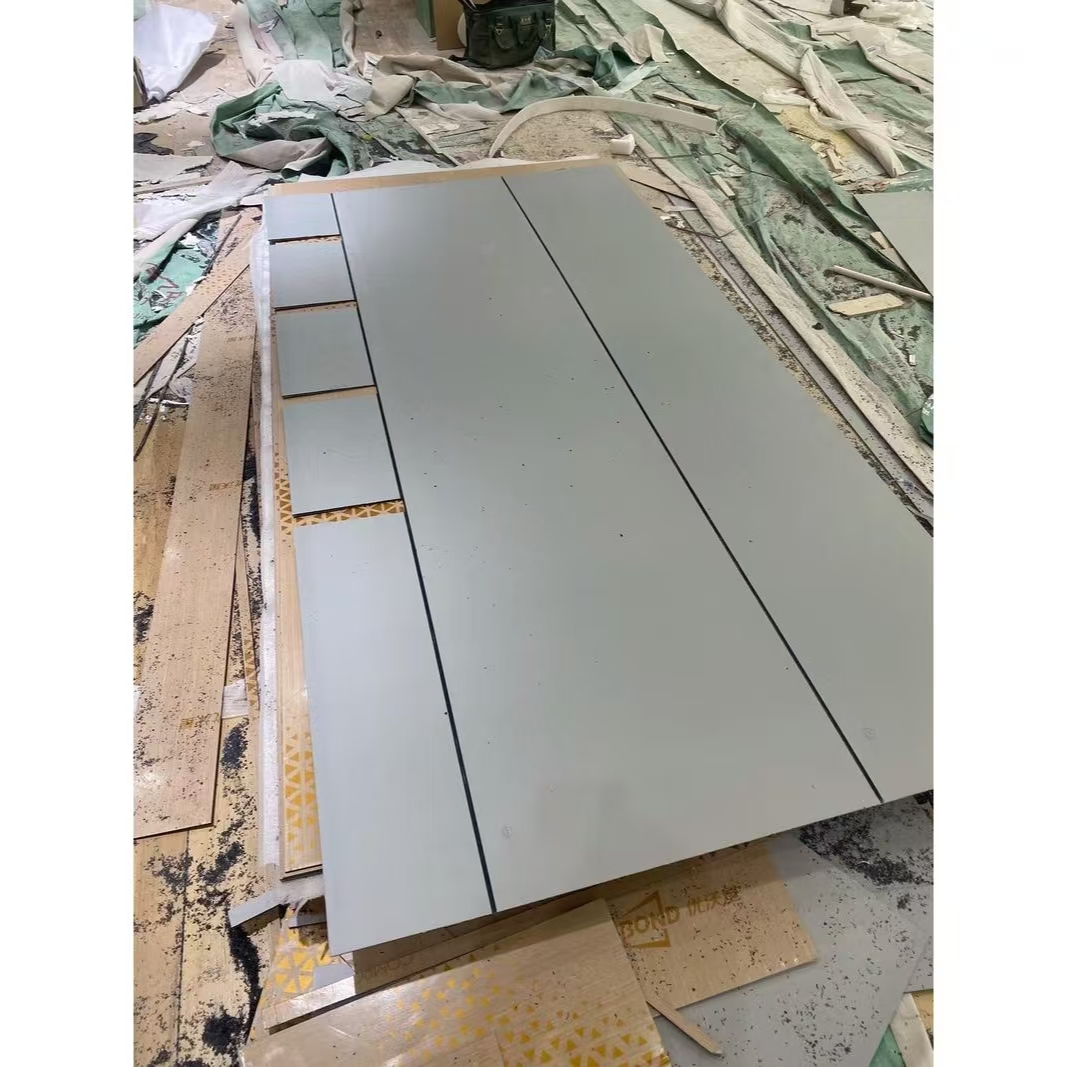
You receive a warranty claim from a contractor. The aluminum composite panel cracked during bending. The installer insists the material was defective. The manufacturer's warranty department denies the claim.
Who is right?
After analyzing hundreds of bending failure claims across the ACP industry, the data tells a clear story: the majority of bending failures are installer error, not factory defects.
Manufacturers have strict bending guidelines. When installers ignore them, the warranty becomes void. The contractor pays for replacement panels. The installer pays for reinstallation labor. And everyone loses time and money
This article explains the most common warranty-voiding mistakes, the specific clauses manufacturers use to deny claims, and how to train your team to bend ACP correctly—every time.
Understanding the ACP Warranty: What Is Actually Covered
Before examining mistakes, understand what a standard ACP warranty covers and—more importantly—what it excludes.
Warranty Coverage | Typically Included | Typically Included |
Coating color fading | Yes (10–20 years) | No |
Coating, chalking, or peeling | Yes | No |
Core delamination (spontaneous) | Yes (5–10 years) | No |
Skin-to-core bond failure | Yes (under normal conditions) | No |
Bending cracks or whitening | No | Yes (installer responsibility) |
Cutting-edge delamination | No | Yes (tooling-related) |
Installation-related damage | No | Yes |
Damage from improper storage | No | Yes |
The critical clause appears in almost every ACP warranty document:
"This warranty does not cover damage resulting from improper fabrication, bending beyond specified radii, use of incorrect tooling, or failure to follow published installation guidelines."
If you bend a panel incorrectly, the manufacturer will not pay. The warranty is void for that panel—and potentially for the entire project if the installer is deemed unqualified.
The 5 Most Common Warranty-Voiding Bending Mistakes
Mistake #1: Bending Against the Grain Direction
Aluminum composite panels are not isotropic. The aluminum skins have a grain direction from the rolling mill.
What Happens:
- Bending parallel to the grain = clean, crack-free bend
- Bending perpendicular to the grain = increased risk of cracking, especially on tight radii
The Warranty Clause:
Most warranties state: "Bending shall be performed parallel to the coil grain direction unless a larger bend radius is used."
How to Avoid:
Check the grain direction marking on each panel (usually an arrow on the protective film or a notation on the pallet label). Always bend parallel to the grain when possible. If you must bend perpendicular, increase the bend radius by 50%.
Mistake #2: Using a Bend Radius Smaller Than Specification
This is the #1 cause of bending-related warranty denials. Every ACP manufacturer publishes a minimum bend radius chart. Installers routinely ignore it.
Typical Minimum Bend Radius (Cold Bending):
Panel Thickness | Polyethylene Core (PE) | Fire-Retardant Core (FR) |
3mm | 15mm (5x thickness) | 30mm (10x thickness) |
4mm | 20mm (5x thickness) | 40mm (10x thickness) |
6mm | 30mm (5x thickness) | 60mm (10x thickness) |
What Installers Actually Do:
- Use a 5mm radius V-die on 4mm FR panel → Cracking guaranteed
- Perform a 0T bend (bending flat against itself) → Whitening and delamination
The Warranty Clause:
"Minimum bend radius shall not be less than 5 times panel thickness for PE core and 10 times panel thickness for FR core. Any bend tighter than these specifications voids this warranty."
How to Avoid:
Post the minimum bend radius chart on every fabrication table. Measure your V-die opening before each bending job. When in doubt, use a larger radius.
Mistake #3: Bending at Low Temperatures
Aluminum composite panels become brittle below 10°C (50°F). The polyethylene core hardens. The aluminum skins lose ductility.
What Happens:
A panel that bends perfectly at 20°C (68°F) will crack at 5°C (41°F) using the same tooling and radius.
The Warranty Clause:
"Bending shall be performed at ambient temperatures above 10°C (50°F). Panels bent at lower temperatures are not covered."
How to Avoid:
- Do not bend panels delivered on a frozen truck immediately after arrival. Let them acclimate for 24 hours.
- Use a space heater in the fabrication shop during the winter months.
- Do not bend panels outdoors in cold weather, even with a portable brake.
Mistake #4: Using Dull or Incorrect Tooling
The press brake tooling directly affects bend quality. Dull tools concentrate stress. Sharp V-dies create tighter radii than intended.
What Happens:
Tooling Issue | Result |
Worn V-die (rounded edges) | Increased surface friction, potential for scratching |
V-die opening too narrow | Effectively reduces bend radius below specification |
No urethane pad on the punch | Direct metal-to-metal contact may mark the surface |
Chipped or nicked tooling | Stress concentration points leading to cracks |
The Warranty Clause:
"All fabrication tooling shall be maintained in good condition and appropriate for ACP bending. Damage from improper or worn tooling is excluded from coverage."
How to Avoid:
- Use V-die openings 8–10 times panel thickness (e.g., 32–40mm opening for 4mm panel)
- Replace worn tools immediately
- Use urethane or rubber pads on the punch to distribute bending stress
- Inspect tooling daily for chips, nicks, or wear
Istake #5: Improper Panel Preparation Before Bending
Even with correct tooling and radius, poor preparation leads to failure.
Common Preparation Errors:
Mistake | Why It Causes Failure |
Not scoring the bend line | Creates an inconsistent stress distribution |
Scoring too deep | Weakens the aluminum skin, promotes cracking |
Scoring on the wrong side | Inside vs. outside scoring changes bend behavior |
Failing to remove protective film | Film can fold into the bend, creating stress points |
Bending panels with edge damage | Pre-existing micro-cracks propagate during bending |
The Warranty Clause:
"Panels shall be properly prepared for bending per the manufacturer's published guidelines. Damage from inadequate preparation is not covered."
How to Avoid:
- Score the bend line on the inside of the bend (compression side), not the outside (tension side)
- Score depth should be 0.2–0.3mm (just through the skin, not into the core)
- Remove protective film 50mm on either side of the bend line
- Inspect all edges for damage before bending
The Installer's Checklist for Warranty-Protected Bending
Print this checklist and post it in your fabrication area. Require a sign-off on every bending job.
Checkpoint | Requirement | Sign-off |
Panel temperature | Above 10°C (50°F) | ☐ |
Grain direction | Bending parallel to the grain (or larger radius if perpendicular) | ☐ |
Bend radius | PE core: 5x thickness minimum; FR core: 10x thickness minimum | ☐ |
V-die opening | 8–10x panel thickness | ☐ |
Tooling condition | Sharp, clean, no chips or wear | ☐ |
Score line | On the inside of the bend, depth 0.2–0.3mm | ☐ |
Protective film | Removed from the bend area | ☐ |
Edge inspection | No pre-existing cracks or damage | ☐ |
Test bend performed | On a scrap piece from the same panel | ☐ |
What to Do When a Bend Fails
Even with correct procedures, failures occasionally happen. Here is the protocol:
Step 1: Stop and Document
- Photograph the failed bend from multiple angles
- Save the failed panel (do not discard it)
- Note the panel temperature, tooling used, and bend radius
Step 2: Perform a Test Bend on a Scrap Piece
- Use a leftover piece from the same panel
- Use a larger radius (add 50%)
- If the test bend succeeds, the original failure was radius-related (installer error)
Step 3: Check the Manufacturer's Published Guidelines
- Download the current bending specification sheet
- Compare your procedure to the published requirements
- If you deviated, the warranty is void
Step 4: Contact the Manufacturer Only After Verification
- Provide documentation of your procedure
- Ask for technical support, not a warranty claim initially
- Manufacturers are more helpful when you approach them as a partner, not an accuser
Real-World Case Study: Who Paid?
The Project: 500 square meters of 4mm FR-core ACP on a medical building facade. The contractor specified a 30mm bend radius (correct for FR core).
The Installation: The shop foreman set up a 20mm V-die (5x thickness) instead of a 40mm V-die (10x thickness). The crew bent 150 panels before noticing hairline cracks on the outside radius.
The Warranty Claim: The installer submitted a claim for 150 replacement panels ($18,000 material cost). The manufacturer sent a field inspector.
The Findings:
- The bend radius measured 22mm (not 30mm as specified)
- The V-die opening was 20mm (should have been 40mm)
- Panel temperature at bending was 8°C (below 10°C minimum)
The Outcome: Warranty claim denied in full. The installer paid for 150 replacement panels plus reinstallation labor. Total cost: $31,000. The cause: installer error, not factory defect.
Conclusion: Protect Your Warranty by Following the Rules
Manufacturers design ACP to bend. But they also publish clear specifications for how to bend it correctly. When installers ignore these specifications, cracks, whitening, and delamination are not defects—they are predictable outcomes.
The warranty exists to protect you from manufacturing defects. It does not protect you from your own mistakes.
Train your team on the five common errors. Post the checklist in your shop. Measure your bend radius before every job. And when a failure occurs, investigate honestly before blaming the material.
Your warranty—and your profit margin—will thank you.