Welcome to Vbond
What factors determine the price of aluminum composite panels (ACM)?
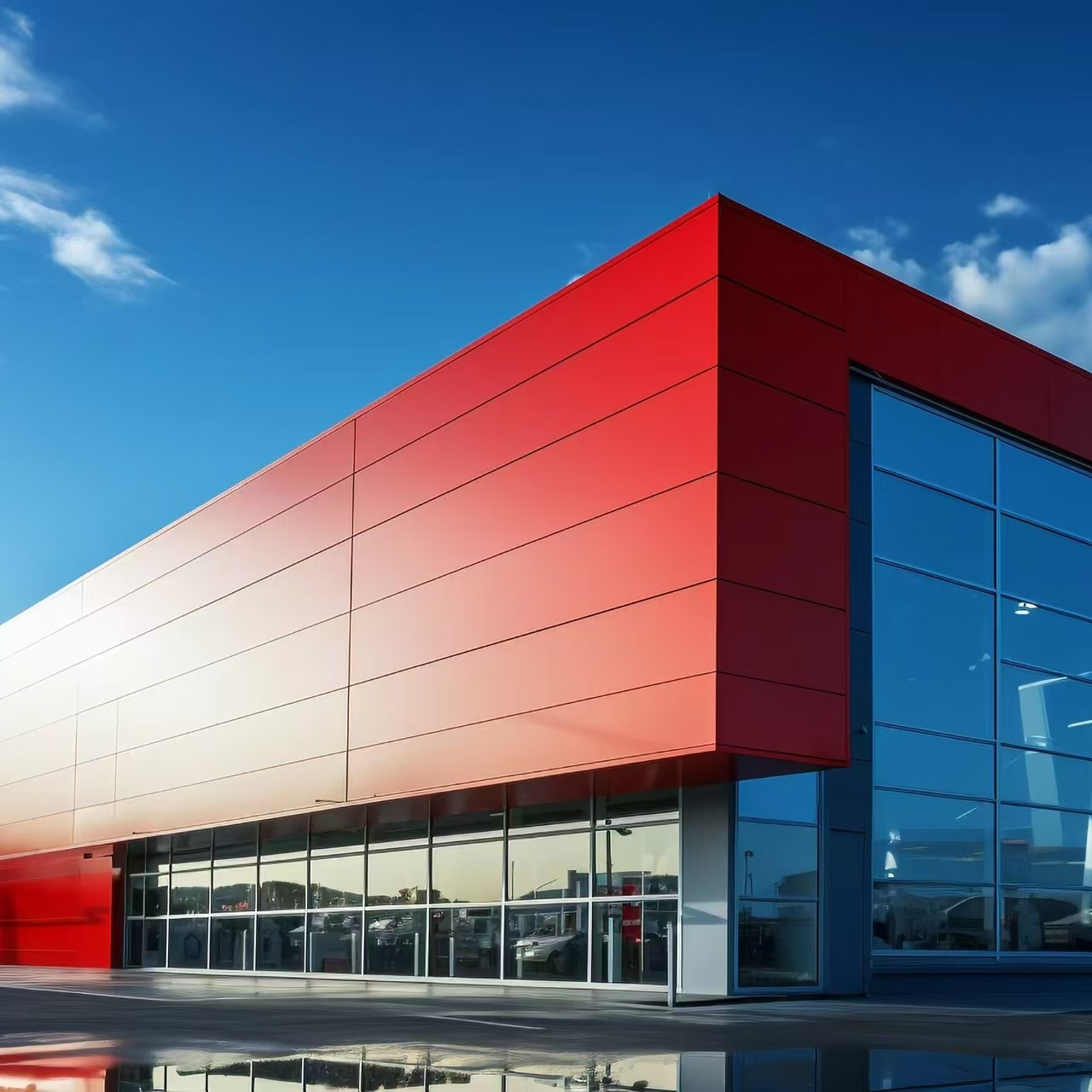
When purchasing aluminum composite panels, the price of products with the same "appearance" can vary by 3-5 times, ranging from $4 to $30. Many people mistakenly believe this is due to a "brand premium," but in reality, core factors such as material and craftsmanship determine the cost. This article analyzes the six key factors that influence the price of aluminum composite panels (ACM), along with purchasing tips to avoid pitfalls, to help you choose the right one and avoid overpaying.
I. The six core factors that determine the price of aluminum composite panels, each of which affects the cost.
1. Aluminum sheet thickness: The most intuitive "cost anchor." A 0.1mm difference in thickness can result in a 15% price difference.
The aluminum sheet of aluminum composite panels (ACM) is divided into "face aluminum" (surface) and "back aluminum" (back). Thickness is a key factor influencing price, commonly measured in millimeters (mm) or wires (1 wire = 0.01mm).
Low-Price Products: Face aluminum thickness ≤ 0.15mm (15-wire), back aluminum ≤ 0.1mm (10-wire). Mostly recycled aluminum, prone to oxidation and deformation, suitable for temporary structures (such as exhibition booths). Price: approximately $4-$7/㎡.
Medium-Price Products: Face aluminum thickness 0.2-0.3mm (20-30-wire), back aluminum thickness 0.15-0.2mm (15-20-wire). Made of virgin aluminum, highly resistant to oxidation, suitable for interior decoration (such as suspended ceilings and cabinets). Price: $8-15 RMB/㎡.
High-Price Products: Face aluminum thickness ≥ 0.4mm (40-wire), back aluminum thickness ≥ 0.3mm (30-wire). High-purity virgin aluminum (aluminum content ≥ 99.5%), excellent weather resistance, suitable for long-term use in exterior walls, outdoor advertising, etc. Price: $15-$30/㎡. Note: Vendors often overstate thickness. Use a caliper to measure the thickness to avoid the low-price trap of "marking 0.3mm but actually measuring 0.2mm."
2. Core Material Type: The cost difference between "PE core" and "fire-resistant core" is 2 times.
The core material is the "middle layer" of the aluminum composite panel (ACP), accounting for over 70%. Prices vary significantly depending on the material, and are mainly divided into three categories:
- PE core (polyethylene): The most common, low-cost core material, with a low density (0.92g/cm³), offers average sound and heat insulation, is not heat-resistant (softens at ≥80°C), and is suitable for dry indoor environments. It accounts for approximately 20% of the cost.
- Flame-retardant PE core: Flame retardants are added to the PE core to achieve a B1 flame retardancy standard (self-extinguishing when away from flame), improving safety. The cost is 30% higher than that of ordinary PE core, with a unit price increase of $3-$5 yuan/㎡. - Fireproof Core (Aluminum Hydroxide/Mineral Wool): A high-cost core material that meets Class A non-combustibility standards, is heat-resistant, and age-resistant. It's used in places with strict fire safety requirements, such as shopping malls and hospitals. It costs twice as much as ordinary PE core, and is $7-$12/㎡ more expensive.
Tricks to Avoid: Beware of "fake fireproof core"—when burned with a lighter, PE core will melt and drip, while fireproof core will only carbonize without burning.
3. Coating Process: From "roller coating" to "fluorocarbon spray coating," the lifespan differs by 10 years.
The surface coating determines the aesthetics and weather resistance of the aluminum composite panel (ACM). The more complex the process, the higher the price. Common processes are categorized into three levels:
- Roller coating: A low-cost, basic option with a coating thickness of 5-8μm, a single color (mostly solid), and poor sunlight resistance (fading within 2-3 years outdoors). It's suitable for concealed indoor locations and accounts for approximately 15% of the cost. - Lamination: A mid-priced, mainstream option, this method laminates a PVC film onto the aluminum surface. Available in a variety of colors (e.g., wood grain and stone textures), it's scrub-resistant but not heat-resistant, and easily peels off for outdoor use. The unit price is $2-$4/㎡ , higher than roller coating.
Fluorocarbon spray coating (PVDF): A high-end, premium option with a coating thickness of 20-30 μm and a fluorine content of 70% or higher. It's UV-resistant, acid-resistant, and alkali-resistant (suitable for coastal environments), and has an outdoor lifespan of 15-20 years. The cost is three times that of roller coating, and the unit price is $12-$18/㎡ higher.
Identification: Roller coating easily leaves marks when scratched with a fingernail, while fluorocarbon spray coating leaves no marks. Fluorocarbon coating is preferred for outdoor applications to avoid frequent replacement.
4. Dimensions: Custom sizes are 20%-50% more expensive than standard sizes.
The standard size of aluminum composite panel (ACM) is 1220 mm x 2440 mm (4 x 8 feet), a factory-produced, "economical" option with the lowest cost. Custom sizes (e.g., 1.5m wide, 6m long) will incur a price increase due to mold adjustments and increased scrap.
- Small customizations (deviation ≤ 10%): The unit price is 20%-30% higher. For example, a custom 1220mm x 3000mm panel is $4 /㎡ more expensive than a standard panel.
- Large customizations (deviation > 10%): The unit price is 40%-50% higher, and the minimum order quantity is 50 sheets or more. This option is suitable for large-scale projects (e.g., stadium exterior walls).
Recommendation: For non-special applications, prioritize standard sizes to minimize cutting waste and lower procurement costs.
5. Brand and Service: Products from large manufacturers are 10%-30% more expensive, but they offer guaranteed after-sales service.
Price differences also reflect brand and service, which can be categorized into three main categories:
- Small/Unbranded Manufacturers: Low prices for high volume, aluminum and core materials are mostly recycled, no quality inspection reports, and no after-sales service guarantee. Unit prices range from $4-$9RMB/㎡, making them suitable for temporary use.
- Regional Brands: Mid-priced, cost-effective products with basic quality inspections (such as thickness and flame retardancy) and a 1-2 year warranty. Unit prices range from $9- $18/㎡, making them suitable for local renovation projects.
- First-tier Brands: High-priced, high-quality products that meet the national GB/T 17748 standard and offer a 5-10 year warranty (15-year warranty for exterior fluorocarbon panels). Delivery and cutting guidance are included. Unit prices are 30% higher than small manufacturers, but they reduce future maintenance costs.
Reminder: Request a "quality inspection report" for project procurement to avoid unlicensed products that could lead to acceptance failures.
6. Purchase Volume and Channel: Bulk Purchases are 15%-25% Cheaper Than Retail Purchases
Purchase volume and channel directly impact the final price:
- Retail Purchases (≤10 sheets): Distributors mark up the price, resulting in the highest unit price, 25% more expensive than bulk purchases. Suitable for small home renovations.
- Bulk Purchases (≥50 sheets): Directly connect with the factory, eliminating middleman markups. Unit prices are 15%-25% lower, and shipping subsidies can be negotiated (e.g., shipping is included for orders over 100 sheets).
- Project Purchases (≥1000 sheets): Custom factory production reduces prices by an additional 5%-10%, and even offers free cutting and layout design services. Suitable for large projects.
Tip: For small-volume purchases, you can pool orders with nearby renovation companies to enjoy bulk purchase pricing.
2. Three Tips to Avoid Purchasing Pitfalls: Avoid Wasting Money by Choosing the Right Product
1. Choose materials based on your needs, and avoid blindly pursuing "high-end" options: For interior ceilings, choose "0.2mm aluminum face + standard PE core + roller coating," which is priced between $7-$12/㎡. For exterior walls, choose "0.4mm aluminum face + fireproof core + fluorocarbon spray coating." While expensive, it's durable and helps prevent renovations every 3-5 years.
2. Measure core specifications, avoid verbal promises: Use calipers to measure the thickness of the aluminum sheet (both the face and back), and use a lighter to test the core material for flame retardancy to ensure specifications match the quoted price. Request samples to compare the color and texture of the actual product with the pictures.
3. Clarify the warranty scope to avoid after-sales disputes: Before signing the contract, specify the aluminum sheet thickness, core material type, and warranty period. Especially for exterior wall projects, clearly state the responsibility for repairs for issues like fading and debonding to avoid future disputes.
Aluminum composite panels (ACM) aren't about "the more expensive the better," but rather "the best fit for your needs." For temporary installations, choose a low-cost PE core with a thin aluminum skin; for long-term use, choose virgin aluminum with a fluorocarbon coating. For project procurement, focus on brand and quality assurance. By understanding these six factors, you can accurately determine price rationality and avoid pitfalls and unnecessary expenses.






