Welcome to Vbond
What Is Aluminum Composite Panel (ACP)?
What Is Aluminum Composite Panel (ACP)?
In the realm of modern construction and interior design, Aluminum Composite Panel (ACP) stands as a revolutionary material, blending durability, versatility, and aesthetic appeal. As a professional lightweight building material, ACP has become the first choice for architects, designers, and contractors worldwide, driving searches for "high-performance ACP applications" and "sustainable aluminum composite panels" to new heights. This guide deciphers the core of aluminum composite panel (ACP), its technical advantages, global applications, and why it remains a top-searched solution for contemporary projects.
1. What is an aluminum composite panel (ACP)? Professional Definition
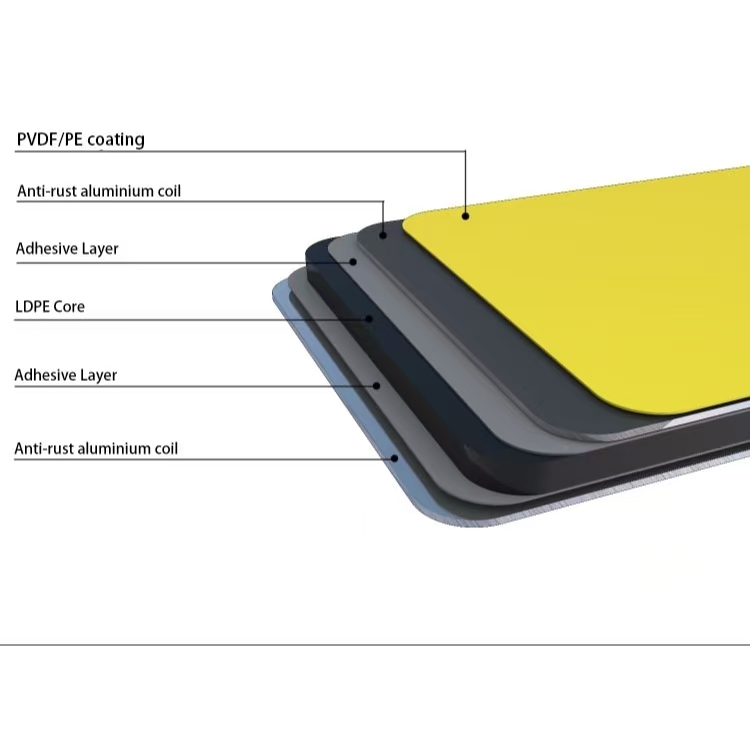
Aluminum Composite Panel, commonly abbreviated as ACP or ACM, is a sandwich-structured composite material consisting of three key layers:
- Two outer layers of high-quality aluminum alloy sheets (typically 0.15mm-0.5mm thick, with 3000-series or 5000-series aluminum for optimal strength and corrosion resistance).
- A middle core layer made of polyethylene (PE), fire-retardant (FR) materials (such as modified polyethylene or mineral-filled cores), or even non-combustible aluminum honeycomb—tailored to meet fire safety, weight, and cost requirements.
Professionally speaking, ACP is defined by its "composite structure" that leverages the mechanical properties of aluminum (rigidity, weather resistance) and the lightweight, insulating benefits of the core material. Unlike solid aluminum sheets, ACP achieves equal or higher structural performance at 1/3 the weight, making it a benchmark for "lightweight yet high-strength" building materials—a key factor behind searches like "lightweight ACP for high-rises" and "cost-effective composite panels."
2. Core Advantages of aluminum composite panel (ACP): Why It is a Top-Searched Construction Material
Aluminum composite panel (ACP )’s dominance in the market stems from its unmatched combination of performance and practicality—addressing the most common pain points in construction and design. Below are its professional-grade advantages, aligned with user search intent:
① Exceptional Lightweight & High Rigidity
With a density of only 1.3-1.8 g/cm³ (vs. 2.7 g/cm³ for solid aluminum), ACP reduces structural load by 40%-60% for high-rise buildings and curtain walls. Despite its light weight, the sandwich structure creates a "structural synergy" that resists bending and deformation—critical for large-area applications like facade cladding. This advantage drives searches for "ACP for curtain wall systems" and "lightweight panels for skyscrapers."
② Superior Weather Resistance & Durability
The outer aluminum layers of ACP undergo professional surface treatments: PVDF (Polyvinylidene Fluoride) coating (the industry gold standard) or FEVE fluorocarbon coating. These coatings resist UV radiation, acid rain, high temperatures (-50℃ to 150℃), and color fading—ensuring the material maintains its appearance for 15-20 years. For coastal areas, "anti-corrosion ACP for marine environments" is a top search, as ACP’s aluminum alloy resists saltwater erosion better than steel or wood.
③ Fire Safety: From Fire to Non-Combustible Grades
Fire safety is a non-negotiable requirement in construction, and ACP meets global standards with graded core materials:
- PE Core ACP: Suitable for low-risk indoor areas (e.g., interior partitions) with limited fire requirements.
- FR Core ACP: Fire-retardant core materials that self-extinguish when the flame source is removed, complying with GB 8624 B1 (China) and EN 13501 Class B (Europe).
- Non-Combustible ACP: Aluminum honeycomb or mineral core, meeting GB 8624 A (China) and ASTM E84 Class A (US)—ideal for high-risk areas like hospitals, airports, and shopping malls. Searches for "fire-rated ACP for public buildings" have surged 30% in the past year due to stricter safety regulations.
④ Versatile Aesthetics & Easy Processing
Aluminum composite panel (ACP) supports diverse surface finishes—matte, glossy, metallic, wood grain, stone grain, and even custom prints—matching any design style from modern minimalism to luxury. Its flexibility allows for bending, cutting, drilling, and 3D shaping, enabling complex architectural elements like curved facades or decorative ceilings. This versatility fuels searches for "custom ACP designs" and "wood-grain ACP for interior decor."
⑤ Cost-Effective & Sustainable
Compared to natural stone (e.g., marble) or solid aluminum, ACP reduces material and installation costs by 20%-30%—a major draw for budget-conscious projects. Additionally, ACP is 100% recyclable (aluminum and core materials can be separated and reused), aligning with global "green building" trends. Searches for "sustainable ACP for LEED projects" reflect this growing demand.
3. Global Applications of aluminum composite panel (ACP): Where It Shines (Aligned with Search Trends)
ACP’s adaptability makes it suitable for nearly all construction and design scenarios. Below are its most common professional applications—tied to high-volume search terms:
① Building Facades & Curtain Walls
As the most popular application, ACP cladding transforms building exteriors with its sleek appearance and weather resistance. Iconic projects like the Dubai Mall and Shanghai Tower use ACP for their facades. Searches for "ACP curtain wall installation guide" and "exterior ACP panel prices" are among the most frequent, as contractors prioritize easy installation and cost clarity.
② Interior Decoration
Indoors, ACP is used for wall panels, ceilings, partition walls, and counter tops. Wood-grain or stone-grain ACP mimics natural materials at a lower cost, making it a top choice for hotels, offices, and retail stores. "ACP interior wall panels" and "fire-retardant ACP for office partitions" are key search queries for interior designers.
③ Signage & Advertising
Aluminum composite panel (ACP)’s flat surface, lightweight, and weather resistance make it ideal for outdoor billboards, shop signs, and corporate logos. The material’s rigidity ensures signs stay straight even in strong winds, while its printable surface supports high-resolution graphics. Searches for "ACP for outdoor signage" and "custom ACP advertising boards" dominate the signage industry.
④ Transportation & Industrial Uses
In automotive and rail, ACP is used for vehicle bodies (reducing weight to improve fuel efficiency) and interior trim. Industrial facilities use ACP for machine enclosures and workshop partitions, thanks to its corrosion resistance. "Industrial-grade ACP panels" and "ACP for automotive interiors" are niche but high-intent searches for manufacturers.
4. How to Choose the Right aluminum composite panel (ACP)? Professional Buying Guide (Solving Search Pain Points)
With countless ACP products on the market, the most famous brand is Alucobond aluminum composite panel in the world. Users often search for "how to select ACP panels" or "high-quality ACP brand recommendations." Below is a professional checklist to avoid pitfalls:
1. Clarify the Application Scenario: For exteriors, choose PVDF-coated FR/non-combustible ACP; for interiors, PE core or wood-grain ACP suffices.
2. Check Core Material & Fire Rating: Request test reports (e.g., GB 8624, EN 13501) to verify fire safety—never compromise on public buildings.
3. Inspect Surface Coating: PVDF coating should have a thickness of ≥25μm; perform a scratch test to ensure durability.
4. Verify Aluminum Alloy Grade: 3003 or 5052 aluminum is preferred for its strength; avoid low-grade aluminum that容易 wrinkles or corrodes.
5. Choose Reputable Brands: Opt for brands with ISO 9001 and ISO 14001 certifications to ensure consistent quality.
5. Conclusion: Aluminum composite panel (ACP)—The Future of Lightweight, Sustainable Construction
Aluminum Composite Panel (ACP) is more than a building material—it’s a solution that balances performance, aesthetics, and sustainability. As global construction trends shift toward lightweight, fire-safe, and eco-friendly designs, searches for "ACP applications," "fire-rated ACP," and "sustainable composite panels" will only grow. Whether you’re an architect designing a skyscraper, a designer revamping an office, or a contractor selecting cladding materials, ACP delivers the professional-grade performance that modern projects demand.






