Welcome to Vbond
When Does PVDF Become Cheaper Than PE on ACM? Break-Even Analysis
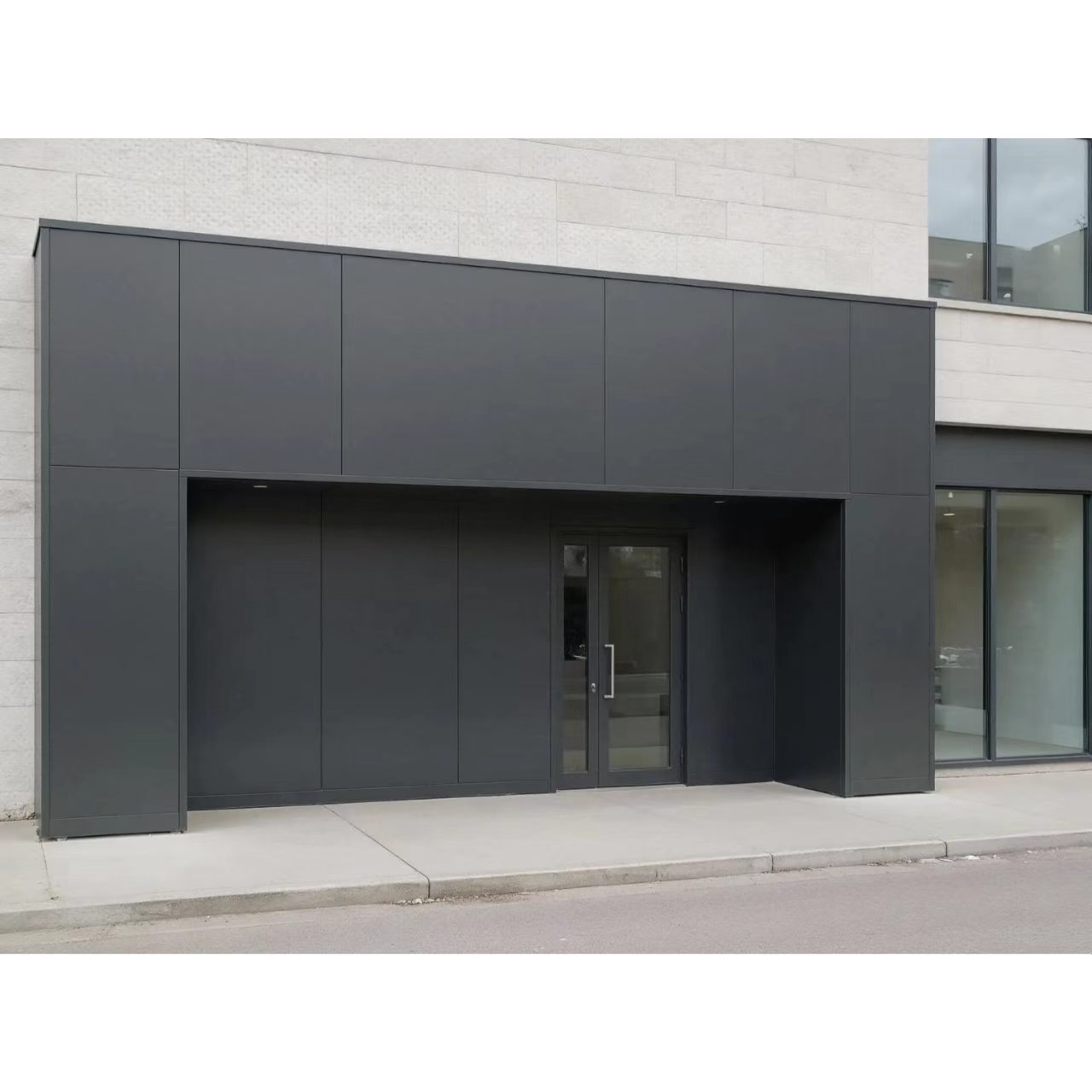
A PVDF Alucobond panel costs more on the purchase order than a PE-coated panel of the same thickness. That fact is not in dispute. The useful question is different: at what year does the total money spent on the PE facade overtake the money spent on the PVDF facade?
The answer is not “year twenty.” On most exterior projects, the crossover happens within the first decade, when the PE coating forces its first replacement. This analysis builds the break-even calculation line by line, shows the year the lines cross, and gives procurement teams a simple input list to run the numbers on their own project.
The Two Cost Lines That Matter
Break-even compares cumulative spending, not sticker price.
The PE line starts low and climbs in steps. The first step is purchase. Every later step is a maintenance or replacement event that the PVDF line does not trigger.
The PVDF line starts higher and stays nearly flat. It carries routine washing, and it avoids the replacement step entirely inside the analysis window.
Three inputs set the crossing point:
The premium. PVDF adds roughly $0.75 to $2.00 per square foot over polyester on 4mm panel material. As a percentage, PVDF-coated ACP runs 30% to 80% more per square foot than PE-coated panels of the same structure.
The PE life. PE coating on an exterior facade lasts 3 to 8 years before fading, chalking, and gloss loss make replacement necessary. Sunny, coastal, and industrial sites land at the early end.
The replacement cost. A replacement event repeats material, labor, access, and disposal. It is not a repaint.
Step One: Anchor the Premium
Start with a 10,000 square foot facade and a $1.50 per square foot premium—the midpoint of the published range.
Input | Value |
Facade area | 10,000 sq ft |
PVDF premium per sq ft | $1.50 |
Total premium paid at purchase | $15,000 |
Table 1. Premium input for the break-even model. Premium range from ACP cost data; midpoint used for illustration.
That $15,000 is the entire head start the PE facade receives. Every later calculation compares against this number.
Step Two: Price the PE Replacement Event
The replacement event is where the PE line climbs. It is also where most budget models go wrong, because they price the event at the panel material cost.
On a replacement, the owner pays for far more than panels.
Replacement cost line | Share of event |
New PE panel material | ~25% |
Removal and disposal of old panels | ~15% |
Installation labor | ~30% |
Scaffolding or access | ~20% |
Sealant, flashing, finishing | ~10% |
Table 2. Replacement event cost structure. Shares reflect the fact that access and removal costs run higher on a recladding programme than on new build, because the old facade must come off first. Panel material is the minority of the event.
A real recladding market shows the pattern. New-build ACP supply and install runs at a base rate, while recladding programmes run significantly higher because of strip-out, scaffolding or rope-access removal, and careful disposal. The second mobilization pays for everything the first one did, plus removal.
Apply a conservative replacement factor to the premium case. On a 10,000 square foot wall, a PE replacement event priced at three times the new-build panel material cost lands in the range of $70,000 to $100,000 depending on height and access. Use $85,000 as a midpoint.
PE cumulative spending | Amount |
Year 0 purchase premium avoided | $0 (baseline) |
Year 5–8 replacement event | $85,000 |
PE cumulative by year 8 | $85,000 |
Table 3. PE cumulative spending at the first replacement event.
Step Three: Find the Crossing Year
Now compare the two cumulative lines year by year.
Year 0 PE cumulative: $0
PVDF cumulative: $15,000 (premium)
Gap: PVDF is $15,000 ahead in spending
Year 1–4 PE cumulative: $0 + minor washing
PVDF cumulative: $15,000 + minor washing
Gap: narrows slowly on maintenance delta
Year 5–8 PE cumulative: $85,000 replacement event
PVDF cumulative: $15,000 + washing
Gap: PE is now $70,000 ahead in spending
Figure 1. Cumulative cost lines for a 10,000 sq ft facade. The lines cross at the PE replacement event, between year five and year eight.
The crossing year is the PE replacement year.*Before that year, PE has spent less. After that year, PVDF has spent less, and the gap widens every year the PE wall needs another cycle.
The break-even does not require a twenty-year horizon. It requires one avoided replacement.
Break-Even by Access Cost
Access cost moves the crossing year. A cheap wall to reach has a cheaper replacement event, so the premium takes longer to recover. A wall that is expensive to reach crosses sooner.
Access condition | Estimated PE replacement event | PVDF break-even year |
Ground-level, single story | $45,000 – $60,000 | Year 6–8 |
Mid-rise, scaffold required | $70,000 – $100,000 | Year 5–7 |
High-rise, mast climber or rope access | $120,000 – $180,000 | Year 3–6 |
Table 4. Break-even year by access condition on a 10,000 sq ft facade. Replacement ranges scale from recladding cost data showing access and strip-out as major cost drivers. PE failure timing from exterior service-life data.
The table carries one message for buyers. The break-even year tracks the PE failure year, and access cost amplifies the gap after the crossing. A high-rise PE facade does not just cross sooner; it crosses harder, because the replacement bill is larger and the PVDF wall avoided the whole thing.
What the PVDF Alucobond Panel Carries Into the Model
The break-even calculation assumes the PVDF facade does not generate a replacement event inside the window. That assumption rests on the coating and the warranty behind it.
A PVDF Alucobond panel built to AAMA 2605 carries a fluoropolymer finish with at least 70% PVDF resin. Exterior service life for that system runs 20 to 30 years, and premium brands back it with a **20-year written warranty** on color and chalking.
The PE comparison point is shorter. Alucobond PE carries a five-year warranty against manufacturing and workmanship defects. Exterior PE coating is rated for 3 to 8 years before visible failure, and some supplier data puts color retention at 5 to 7 years exterior.
Coating | Exterior service window | Written warranty |
PE (polyester) | 3–8 years | 5 years (panel defects) |
70% PVDF (AAMA 2605) | 20–30 years | 20 years (color, chalk) |
Table 5. Service window and warranty comparison. The PVDF line stays flat through the entire PE replacement cycle.
The break-even model needs only one assumption: the PVDF wall does not replace inside the analysis window. The service window and warranty support that assumption for a 15-year or 20-year comparison.
The Simple Break-Even Test for Procurement
Before running a full model, apply this three-step check.
1. Calculate the total premium. Multiply the premium per square foot by the facade area.
2. Estimate the PE replacement event. Price it at three to four times the new-build panel material cost for the same area, adjusted for access.
3. Compare. If the replacement event exceeds the premium, the break-even occurs at the PE replacement year.
For most exterior facades, step three returns a clear result. A $15,000 premium on a 10,000-square-foot wall sits against an $85,000 replacement event. The break-even arrives at the replacement year, inside the first decade.
The test does not require a spreadsheet. It requires two numbers and a comparison.
Where the Break-Even Does Not Apply
The PVDF case rests on an avoided replacement. Three project types do not generate that avoided cost.
Interior walls and signage. PE performs indoors, where UV and moisture loads are low. The replacement event that justifies PVDF falls outside the interior service condition.
Temporary structures under five years. A hoarding or short-term enclosure does not reach the PE failure year. The premium has nothing to avoid.
Fully sheltered exterior surfaces with no direct sun or rain. The PE load drops, the replacement year stretches, and the savings from PVDF shrink.
For every permanent exterior facade on a building the owner intends to keep, the avoided replacement exists. The break-even calculation applies.
Bottom Line for Buyers
The PVDF premium breaks even at the PE replacement event, and that event arrives inside the first decade on most exterior facades. The premium runs $0.75 to $2.00 per square foot. The avoided event runs many times that figure because it repeats labor, access, removal, and disposal on a finished building.
The crossing year tracks the PE failure year: years five to eight on typical sites, and years three to six on high-access or harsh-exposure walls. A PVDF Alucobond panel with 70% PVDF resin and AAMA 2605 certification carries a 20-year warranty that keeps its cost line flat through the entire PE replacement cycle.
Run the simple test: premium against replacement event. If the event is larger, the break-even arrives at the PE failure year, and the PVDF wall is cheaper from that year forward.