Welcome to Vbond
Why Adhesion Strength Testing Matters for Your Aluminum Composite Panel Purchase
Why Adhesion Strength Testing Matters for Your Aluminum Composite Panel Purchase
When you specify an aluminum composite panel (ACP), you are buying more than just aluminum skins and a core material. You are buying a bond —the invisible but essential connection that holds the panel together. Without a strong, durable bond, even the highest-grade aluminum and the most advanced fire-retardant core are worthless. The panel will delaminate, bubble, warp, and eventually fail.
For procurement professionals, adhesion strength testing** is one of the most critical—and most frequently overlooked—quality verification tools available. It provides objective, measurable evidence that the bond between the aluminum skins and the core will withstand real-world environmental stresses for decades.
This guide explains what adhesion strength testing is, why it matters for aluminum composite panels, what standards and methods apply, and how procurement professionals can use testing requirements to ensure they receive panels that will not delaminate.
What Is Adhesion Strength?
Adhesion strength is the measure of the force required to separate two bonded materials. In the context of aluminum composite panels, it quantifies how well the aluminum skins are bonded to the core material.
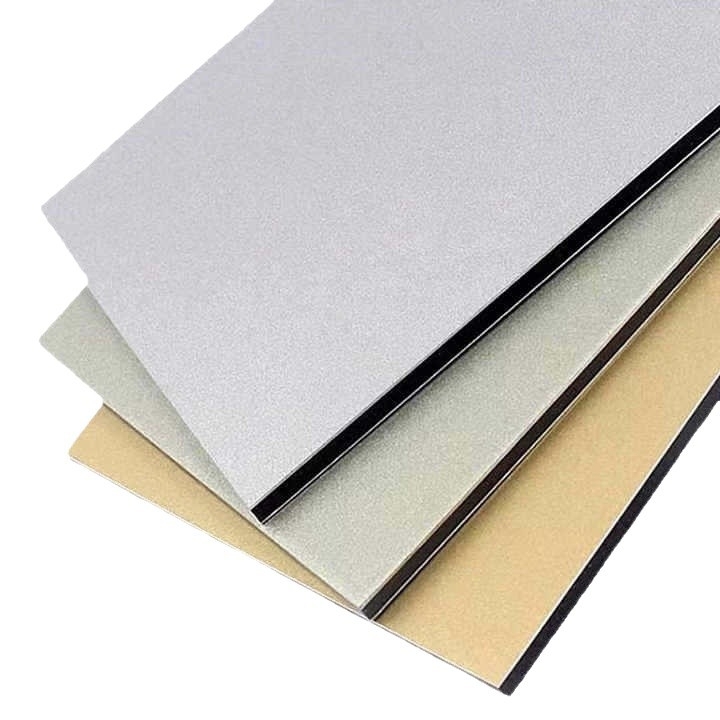
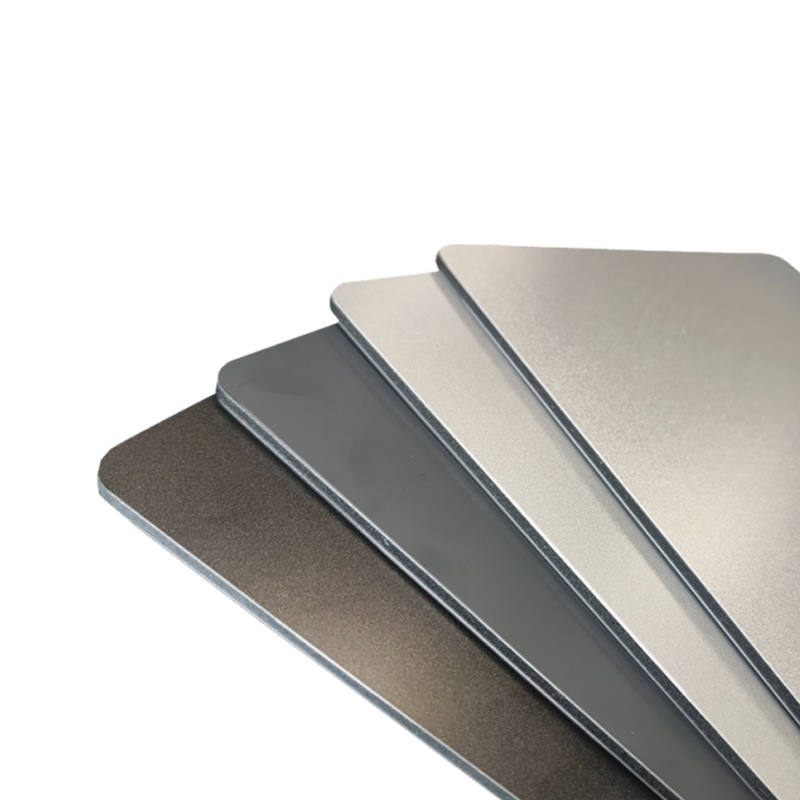
An aluminum composite panel is a sandwich structure with three layers:
- Top aluminum skin (typically 0.15mm–0.50mm thick)
- Adhesive layer (thin, invisible, but critical)
- Core material (polyethylene, fire-retardant mineral, or A2 non-combustible mineral)
- Adhesive layer (thin, invisible, but critical)
- Bottom aluminum skin (typically 0.15mm–0.50mm thick)
The adhesive layers are what hold the panel together. Adhesion strength testing measures the bond integrity of these layers.
Why adhesion strength matters for ACPs:
- Prevents delamination: Strong adhesion keeps the aluminum skins attached to the core, preventing the bubbling, peeling, and separation that ruin facades.
- Ensures structural integrity: Panels with poor adhesion have reduced wind load resistance and impact strength.
- Extends service life: Proper adhesion ensures the panel can achieve its expected working life—typically 20–25 years.
- Protects against environmental degradation: Heat, moisture, and UV exposure can degrade poor-quality bonds over time. Adhesion testing confirms that the bond can withstand these conditions.
The hidden risk: Adhesion problems are not always visible upon delivery. A panel can look perfect when it arrives, but begin to delaminate months or years after installation. By then, it is too late to reject the shipment, and replacement is costly.
Key Adhesion Strength Testing Standards for ACPs
Several internationally recognized test methods are used to evaluate adhesion in aluminum composite panels and their components. Procurement professionals should be familiar with these standards.
1. ASTM D3359 – Cross-Cut Tape Test (for Coatings)
What it measures: The adhesion of coating films (PVDF, polyester, etc.) to the aluminum substrate.
How it works:
- A cross-cut pattern (lattice or X-cut) is made through the coating to the aluminum substrate.
- Pressure-sensitive tape is applied over the cut and then removed rapidly at a 180° angle.
- The amount of coating removed is rated on a scale from 5B (perfect adhesion) to 0B (severe flaking).
Rating | Description | Interpretation |
5B | Edges completely smooth; no flaking or removal | Excellent adhesion |
4B | Slight flaking along cuts or at intersections | Good adhesion |
3B | Flaking along edges; up to 15% of area affected | Moderate adhesion |
2B | Flaking along edges; 15–35% of area affected | Poor adhesion |
1B | Flaking along edges; 35–65% of area affected | Very poor adhesion |
0B | Severe flaking; >65% of area removed | Complete bond failure |
Application for ACPs:
- Method B (cross-cut lattice) is used for coating thicknesses ≤125μm (5 mils)—which covers most ACP coatings.
- Method A (X-cut) is used for thicker coatings.
- Most architectural specifications require a minimum rating of 4B or 5B for exterior ACP coatings.
Important limitations: ASTM D3359 is designed to evaluate lower levels of adhesion. It does not distinguish between high levels of bond strength—only that a minimum threshold has been met. It also tests the coating-to-aluminum bond, not the aluminum-to-core bond.
2. Peel Testing (for Aluminum-to-Core Bond)
What it measures: The force required to peel the aluminum skin away from the core material. This is the most direct measure of delamination resistance for ACPs.
How it works:
- A strip of the aluminum skin is separated from the core at one edge.
- The skin is pulled back at a specified angle (typically 90° or 180°) using a tensile testing machine.
- The force required to continue peeling is measured and recorded.
Application for ACPs: Peel testing is referenced in industry standards for ACP quality. For example, quality specifications often require **lamination strength ≥5 N/mm and peel temperature ≥80°C.
Research note: Studies on ACP degradation use peel testing to measure the decay of delamination resistance before and after artificial aging (heat, moisture, salt spray). A common durability benchmark: the initial delamination resistance should not decay more than **25%** when exposed to laboratory heat or moisture aging.
3. Pull-Off Adhesion Test (for Coatings and Bonds)
What it measures: The tensile force required to pull a coating or bonded layer away from its substrate, using a portable adhesion tester (elcometer).
How it works:
- A metal dolly (test stub) is glued to the coating or panel surface.
- The adhesion tester pulls the dolly upward, applying tensile force perpendicular to the surface.
- The force at which the coating or bond fails is recorded in MPa (megapascals) or psi.
Application for ACPs: Pull-off testing can evaluate both coating-to-aluminum adhesion and, with appropriate sample preparation, the aluminum-to-core bond. It is particularly useful for field testing on installed panels.
4. Multi-Modal Bond Testing (ASTM D1995)
What it measures: Bond strength of autohesives (contact adhesives) in various stressing modes, including compression shear, cleavage, climbing drum peel, and T-peel.
Application for ACPs: While ASTM D1995 is more general, the principles apply to advanced ACP adhesive systems. It allows testing with rigid or flexible adherends, including aluminum and plastic laminates.
Why Low-Cost ACPs Fail Adhesion Tests
Adhesion failure is not random. It is the direct result of manufacturing shortcuts that are common in low-cost aluminum composite panels.
Manufacturing Shortcut | Effect on Adhesion | How to Detect |
Poor surface preparation | Aluminum skins not properly degreased or chemically treated before adhesive application; adhesive bonds to dust or oil rather than aluminum | Adhesion test fails; peel test shows bare aluminum with no adhesive residue |
Inferior adhesive | Hot-melt or low-grade adhesives are used instead of premium structural adhesives (polyurethane or epoxy-based) | Accelerated aging shows rapid bond decay |
Inconsistent adhesive application | Adhesive thickness varies; some areas have too little or no adhesive | The peel test shows "dry spots" with no bond |
Inadequate curing | Production line speed too fast; oven temperature too low; adhesive undercured | Bond strength below specification |
No process control | No monitoring of lamination pressure, temperature, or line speed | Batch-to-batch variation in adhesion test results |
The procurement lesson: A supplier offering significantly lower prices is almost certainly cutting corners on surface preparation, adhesive quality, or curing control—all of which directly impact adhesion strength and long-term durability.
How to Verify Adhesion Strength in Your ACP Order
Procurement professionals can take the following steps to ensure adhesion strength is verified before panels are shipped.
Step 1: Specify Adhesion Requirements in Your Purchase Order
Do not simply specify "ACP with good adhesion." Write:
"The aluminum composite panels shall demonstrate lamination bond strength of at least 5 N/mm when tested by peel test in accordance with [applicable standard]. Coating adhesion shall achieve a minimum 4B rating per ASTM D3359 Method B. The supplier shall provide batch-specific test reports confirming compliance."
Step 2: Request Third-Party Test Reports
Ask potential suppliers for:
- Peel test reports for aluminum-to-core bond strength (batch-specific, not generic).
- Cross-cut adhesion test reports (ASTM D3359) for coating adhesion.
- Accelerated aging test data demonstrating bond durability after heat, humidity, and UV exposure.
Red flags:
- Supplier cannot provide batch-specific test reports.
- Reports are self-issued (not from an accredited third-party laboratory).
- Reports are more than 2–3 years old.
- No accelerated aging data is available.
Step 3: Perform Pre-Production Sample Testing
Before full manufacturing begins:
1. Request pre-production samples (minimum 5–10 panels).
2. Perform peel tests on one sample panel (destructive).
3. Perform cross-cut adhesion tests on coating samples.
4. If possible, perform accelerated aging on a small sample (heat and humidity exposure followed by peel testing).
Step 4: Conduct Pre-Shipment Inspection
Engage a third-party inspector to:
- Witness peel testing on randomly selected panels from the production batch.
- Perform cross-cut adhesion testing on coating samples.
- Verify that test results meet specified requirements.
Step 5: Perform Incoming Inspection
Upon delivery, before unloading:
- Perform cross-cut adhesion tests on randomly selected panels.
- If adhesion is suspect, escalate to peel testing on a sacrificial sample.
- Document all test results with photographs.
What Adhesion Test Results Mean for Your Project
Test Result | Interpretation | Action |
Peel strength ≥5 N/mm, ASTM D3359 rating 5B | Excellent bond; panel will resist delamination for decades | Accept shipment |
Peel strength 3–5 N/mm, rating 4B | Adequate bond; acceptable for low-risk projects | Accept but monitor; consider additional testing on the next order |
Peel strength <3 N/mm, rating 3B or lower | Poor bond; high risk of premature delamination | Reject shipment**; require replacement |
The peel test shows bare aluminum with no adhesive residue | Complete bond failure; no effective adhesion | Reject immediately; supplier quality system failure |
The Cost of Ignoring Adhesion Testing
Procurement professionals who skip adhesion testing to save time or money often pay much higher costs later.
Consequence | Typical Cost Impact |
Premature delamination (5–7 years) | Facade replacement: 3–5x original panel cost |
Building owner lawsuit | Legal fees + settlement: $100,000–$1M+ |
Failed building inspection | Project delay: weeks to months |
Removal and reinstallation | Scaffolding + labor: $50–150 per square meter |
Reputational damage | Loss of future contracts: incalculable |
Compared to the cost of testing: Third-party adhesion testing for a container shipment typically costs $500–$2,000—a fraction of the cost of a single day of facade replacement labor.
Conclusion
Adhesion strength testing is not a "nice to have" for aluminum composite panel procurement. It is a fundamental quality requirement that directly determines whether a facade will last 5 years or 25 years.
For procurement professionals, the message is clear: specify adhesion requirements in every purchase order, request third-party test reports, verify through pre-shipment and incoming inspection, and reject any shipment that fails to meet minimum bond strength standards.
Low-cost panels that cut corners on surface preparation, adhesive quality, or curing control will always fail adhesion testing—and will inevitably delaminate. By making adhesion strength testing a non-negotiable part of your procurement process, you protect your project from the hidden risk of delamination and ensure that the panels you purchase perform as specified for decades to come.