Welcome to Vbond
Why Coastal Projects Demand a Specific Type of Aluminum Composite Panel
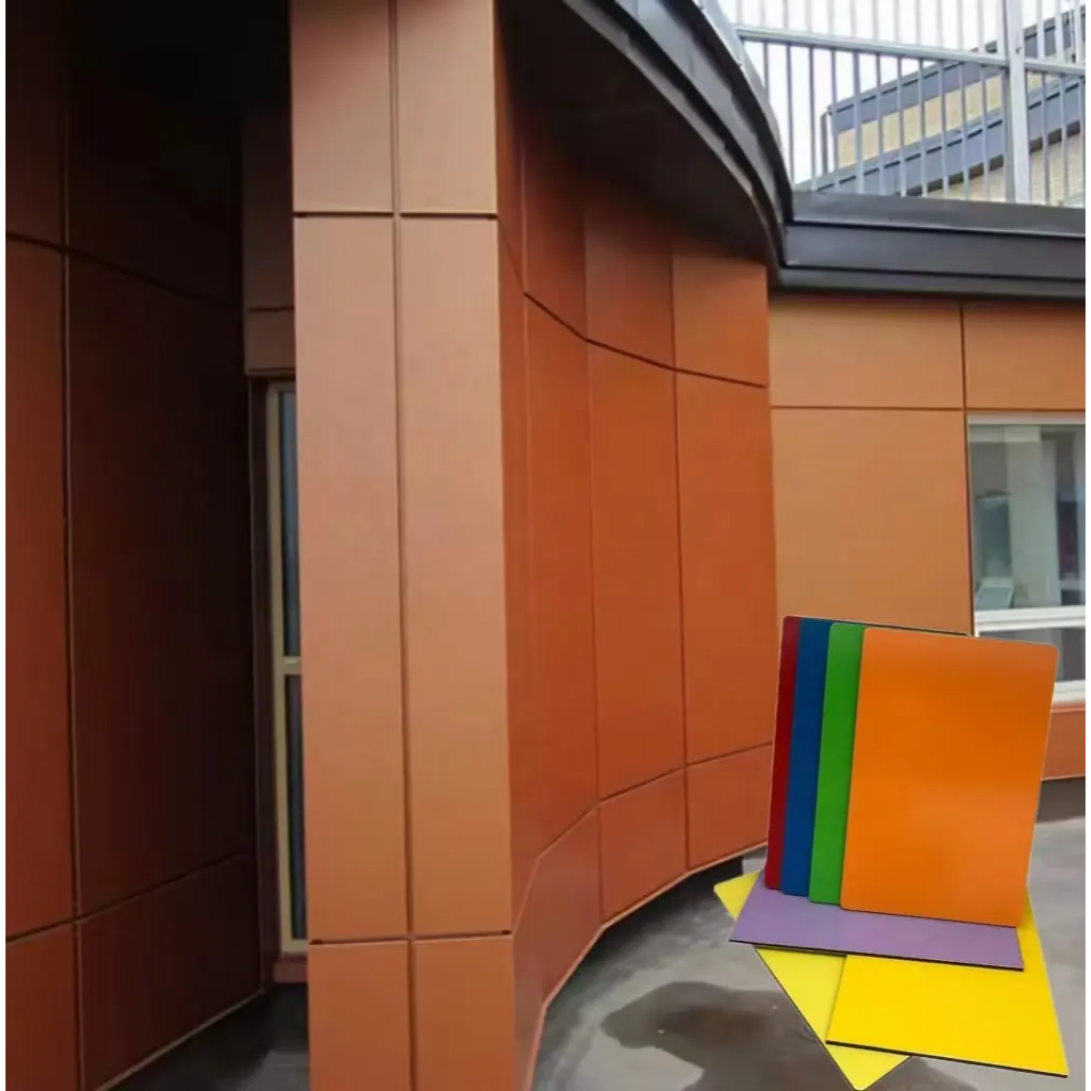
Coastal construction presents a unique set of challenges that inland projects simply do not face. The combination of salt-laden air, high humidity, relentless UV exposure, and the constant threat of high winds creates an environment that can rapidly degrade standard building materials.
For procurement professionals and specifiers selecting aluminum composite panels (ACPs) for coastal developments—whether luxury high-rises, seaside resorts, commercial marinas, or residential villas—the stakes are particularly high. Choosing the wrong panel can lead to premature corrosion, coating failure, delamination, and costly replacement within just a few years.
This guide explains why coastal projects demand a specific type of aluminum composite panel, what performance characteristics to look for, and how to ensure that your investment delivers decades of aesthetic and structural integrity in harsh marine environments.
The Unique Challenges of Coastal Environments
Before diving into material specifications, it is essential to understand the environmental stressors that define coastal construction:
1. Salt Spray Corrosion
Salt particles suspended in ocean air settle on building surfaces. When combined with moisture, they create an electrolyte that accelerates galvanic corrosion. This is particularly damaging to metal surfaces, causing pitting, oxidation, and eventual material failure.
2. High Humidity and Condensation
Coastal regions experience consistently high humidity levels. Moisture can infiltrate panel edges, joints, and cut edges, leading to corrosion of the aluminum substrate or degradation of the core material over time.
3. Intense UV Radiation
Coastal areas often have prolonged sun exposure with high UV intensity. Without proper protection, coatings can fade, chalk, and lose their protective properties, exposing the underlying metal to environmental attack.
4. High Wind Loads and Flying Debris
Hurricanes, typhoons, and strong coastal winds subject building facades to extreme pressure differentials and impact from windborne debris. Panels must resist both pressure and impact without detachment or failure.
5. Temperature Fluctuations and Thermal Movement
Coastal regions often experience significant temperature swings between day and night. Thermal expansion and contraction cycles can stress panel joints and attachment systems over time.
Key Performance Requirements for Coastal-Grade ACPs
To withstand these challenges, aluminum composite panels for coastal applications must meet specific performance criteria that go far beyond standard interior or low-rise exterior specifications.
1. Superior Corrosion Resistance
The aluminum alloy used in the panel skins plays a critical role in corrosion resistance.
- What to look for: Panels manufactured with 5000-series aluminum alloys (such as AA5005 or AA5052) offer significantly better corrosion resistance than standard 3000-series alloys. These marine-grade alloys are formulated to withstand salt spray exposure.
- What to avoid: Standard 1100 or 3000-series aluminum alloys, which are more susceptible to pitting corrosion in saline environments.
Verification: Request documentation confirming the aluminum alloy specification. Reputable coastal-grade ACP manufacturers will specify the alloy series in their technical data sheets.
2. Premium Coating Systems
The coating is the first line of defense against environmental attack. For coastal projects, standard polyester coatings are rarely sufficient.
Coating Type | Performance | Suitability for Coastal |
Polyester | Basic UV and weather resistance | Not recommended; prone to chalking and fading within 3–5 years |
PVDF (Polyvinylidene Fluoride) | Excellent UV resistance, color retention, and chemical resistance | Recommended; industry standard for coastal applications |
FEVE (Fluoroethylene Vinyl Ether) | Superior gloss retention, corrosion resistance, and longevity beyond PVDF | Preferred for premium coastal projects; offers 20+ year durability |
Anodized Finish | Hard, corrosion-resistant surface | Suitable but requires careful specification; can be susceptible to salt staining |
What to look for:
- PVDF coatings meeting AAMA 2605 specifications—the highest standard for architectural coatings, requiring 10-year South Florida exposure testing.
- FEVE-based coatings for projects demanding maximum durability and color stability.
- Class 1 or Class 2 anodized finishes with documented salt spray resistance.
3. Core Material Stability
The core material of an aluminum composite panel can be vulnerable to moisture ingress and thermal degradation. For coastal projects, core selection is critical.
- Polyethylene (PE) Core: While common for interior applications, PE core panels are generally not recommended for coastal environments. The thermal expansion differential between aluminum skins and PE core can exacerbate edge corrosion and delamination over time.
- Fire-Retardant (FR) Mineral Core: FR cores offer better dimensional stability than PE but may still absorb moisture if the panel edges are not properly sealed.
- Non-Combustible A2 Mineral Core: The preferred choice for coastal applications. Fully mineral-filled cores provide exceptional dimensional stability, zero moisture absorption, and eliminate the risk of core-related delamination.
4. Impact Resistance and Wind Load Performance
Coastal projects must account for extreme wind events. Panels should be tested to withstand design wind pressures specific to the project location.
What to look for:
- ASTM E330 test reports verifying structural performance under wind pressure.
- ASTM E1886 / E1996 (for hurricane-prone regions) testing for impact resistance and cyclic wind pressure performance.
- Panels with a thickness of 4mm or greater for enhanced structural rigidity.
5. Edge Protection and Sealing
One of the most common failure points for coastal ACP installations is the cut edge. When panels are fabricated, the aluminum skin is cut, exposing the core. In coastal environments, moisture can wick into these exposed edges, leading to corrosion and delamination.
What to look for:
- Factory-sealed edges or clear documentation that cut edges will be properly sealed with corrosion-inhibiting sealants during fabrication.
- Capillary breaks in the panel design to prevent moisture migration.
- Fabricators with documented quality control procedures for edge sealing in coastal projects.
Testing Standards for Coastal-Grade ACPs
When evaluating suppliers for coastal projects, request test reports demonstrating performance against the following standards:
Test Standard | Purpose | Target Result |
ASTM B117 | Salt spray (fog) resistance | Minimum 3,000–5,000 hours without corrosion |
AAMA 2605 | Coating performance for architectural aluminum | Mandatory for coastal PVDF coatings |
ASTM E330 | Structural wind load resistance | Must meet or exceed local design wind pressures |
ASTM E1886 / E1996 | Impact and cyclic wind pressure (hurricane zones) | Required for Florida, the Caribbean, and other hurricane-prone regions |
ASTM G155 | Accelerated UV weathering | 5,000+ hours with minimal color change |
ASTM D2247 | Humidity resistance | 2,000+ hours without blistering or adhesion loss |
Common Pitfalls in Coastal ACP Procurement
Procurement professionals should be aware of the following risks when sourcing aluminum composite panels for coastal applications:
1. Assuming "Architectural Grade" Means Coastal-Ready
Many panels marketed as "architectural grade" use standard 3000-series aluminum and polyester coatings that are unsuitable for marine environments. Always verify the specific alloy and coating specification.
2. Neglecting Fabrication Details
Even the highest-quality panel will fail if fabricated without proper edge sealing and corrosion protection. Ensure that the fabricator understands coastal requirements and follows best practices.
3. Overlooking Attachment Systems
The aluminum composite panel is only one part of the facade system. Stainless steel or aluminum attachment systems with appropriate isolation from dissimilar metals are essential to prevent galvanic corrosion.
4. Focusing Only on Initial Cost
Coastal projects require a lifecycle cost perspective. Lower-cost panels may fail within 5–7 years, requiring costly replacement. Premium coastal-grade panels typically deliver 20+ years of service life, offering superior total cost of ownership.
Recommended Specifications for Coastal ACP Projects
For procurement professionals drafting specifications for coastal projects, consider including the following requirements:
1. Aluminum Alloy: AA5005 or AA5052 series aluminum skins (minimum).
2. Coating: PVDF or FEVE coating meeting AAMA 2605 standards, with a minimum 70% Kynar 500® or Hylar 5000® resin content.
3. Core: A2 mineral core (non-combustible) for optimal stability and moisture resistance.
4. Panel Thickness: Minimum 4mm for exterior applications.
5. Salt Spray Testing: Verified test report showing minimum 3,000 hours ASTM B117 with no corrosion.
6. Impact Resistance: For hurricane-prone regions, documented compliance with ASTM E1886/E1996 for the required wind zone.
7. Edge Sealing: Factory-applied or field-applied corrosion-inhibiting edge sealant specified.
Conclusion
Coastal projects demand a specialized approach to material selection. Standard aluminum composite panels designed for interior use or mild inland climates simply cannot withstand the aggressive combination of salt spray, UV radiation, humidity, and wind loads that define marine environments.
For procurement professionals, the key to successful coastal ACP specification lies in selecting panels with 5000-series aluminum alloys, premium PVDF or FEVE coatings meeting AAMA 2605, A2 mineral cores, and verified salt spray resistance. Equally important is ensuring that fabrication, edge sealing, and attachment systems align with the demands of the environment.
By prioritizing these specifications, buyers can deliver facades that maintain their aesthetic appeal, structural integrity, and value for decades—even in the harshest coastal conditions.