Welcome to Vbond
Why Do Alucobond Edges Crack During Folding? 7 Root Causes Every Installer Must Know
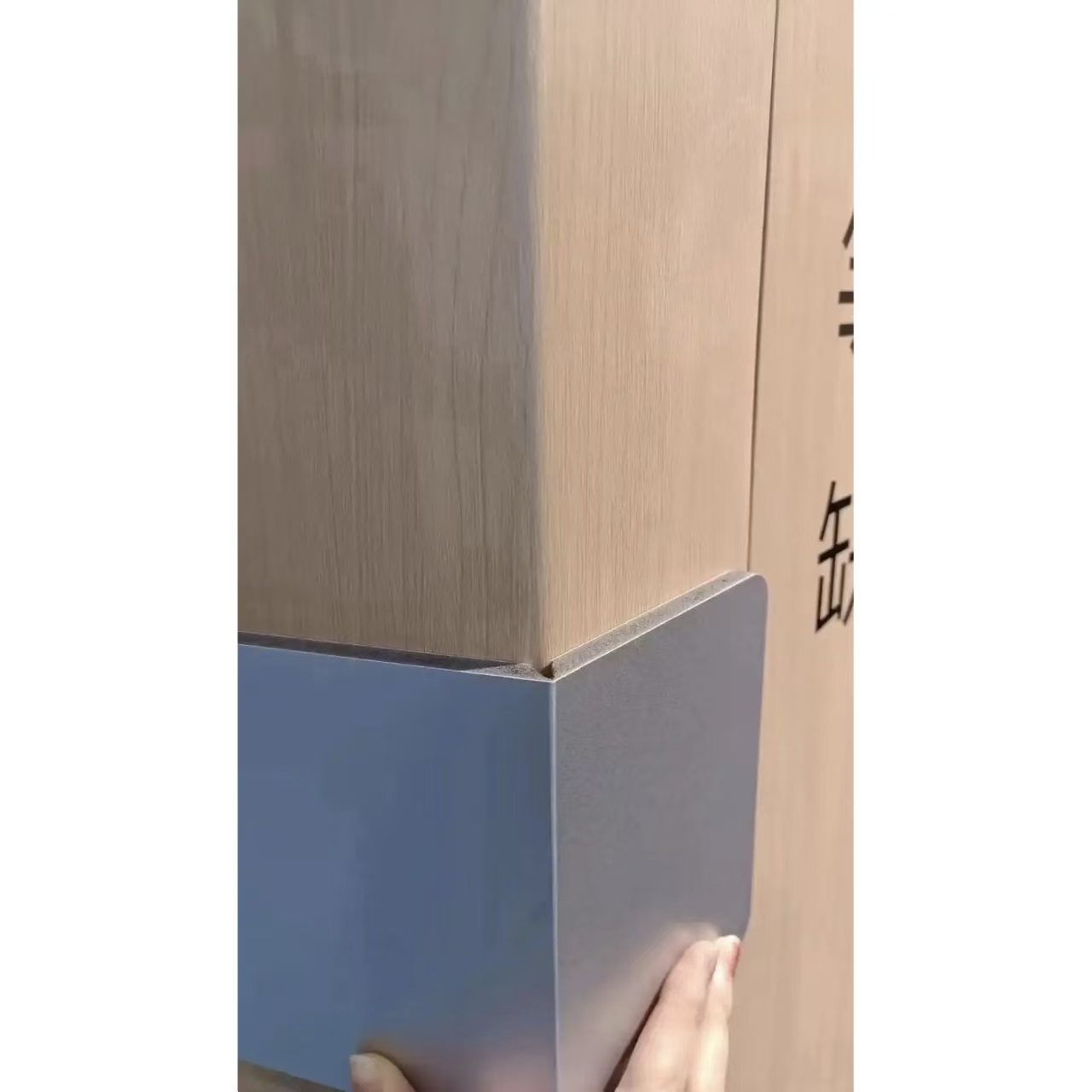
Why Do Alucobond Edges Crack During Folding? 7 Root Causes Every Installer Must Know
Alucobond panels define modern architecture. Their folded edges create clean, sharp lines. But cracks along those edges ruin the look. They also compromise structural integrity.
Cracked panels mean project delays. They increase material waste. They damage your reputation with clients.
The good news? Most cracks are preventable. This guide walks you through seven root causes. Use these insights to inspect incoming stock, train your shop team, and select better suppliers.
Root Cause 1: Bending Too Tight
Every aluminum composite panel has a minimum bend radius. That radius depends on the aluminum skin thickness and the core material.
Most manufacturers recommend an inside radius at least three times the panel thickness. For a 4mm panel, that is 12mm.
Installers often ignore this spec. They want sharp, crisp corners. They force the metal into a tighter radius than it can handle.
The outer skin stretches beyond its limit. It tears along the bend line. The crack appears immediately.
Fix: Always check the supplier’s technical data sheet. Use a radius gauge to verify your tooling. Test a scrap piece before bending production panels.
Root Cause 2: Bending Along the Grain
Aluminum sheets have a grain direction from the rolling mill. This grain affects how the metal elongates under stress.
Bending parallel to the grain reduces ductility. The metal cannot stretch as far. Cracks form more easily.
Many installers do not check grain orientation. They cut panels randomly without noting the rolling direction.
The protective film sometimes has arrows indicating grain. But many shops ignore these marks.
Fix: Always bend perpendicular to the rolling direction. If you cannot identify the grain, ask your supplier for orientation guidance. Rotate the panel 90 degrees before bending.
Root Cause 3: Inconsistent V-Groove Depth
Folded edges on Alucobond use a V-groove routed into the back side. The groove removes the core and part of the rear aluminum skin.
The remaining skin thickness—called residual thickness—determines bending strength. Too thin and the skin tears. Too thick and bending creates excess stress.
Standard residual thickness for a 4mm panel is 0.3 to 0.5mm. Variations as small as 0.1mm change the outcome dramatically.
CNC routers with worn bits or improper calibration produce uneven grooves. One panel folds cleanly. The next one cracks.
Fix: Measure residual thickness with a micrometer on every batch. Replace router bits regularly. Calibrate your machine daily.
Root Cause 4: Cold Workshop Temperatures
Aluminum becomes brittle in cold weather. The PVDF or polyester coating also hardens.
Below 50°F (10°C), the material’s elongation drops significantly. A panel that bends perfectly in summer may crack in winter.
The cracks from cold bending look different. They appear as clean, straight fractures. Not rough, jagged tears.
Many shops do not heat their storage areas. They bring panels directly from a cold truck to the folding machine.
Fix: Store panels at room temperature (65°F+) for at least 24 hours before bending. Use portable heaters near the folding station. Schedule bending for the warmest part of the day.
Root Cause 5: Dull or Wrong Tooling
The folding machine’s punch and die determine how stress distributes. Sharp edges or worn surfaces create pressure points.
Old dies lose their smooth radius. They pinch the metal instead of forming it smoothly. That pinching initiates cracks.
Using tooling designed for steel—not aluminum—is another common error. Steel dies have different clearances and radii.
Cracks from poor tooling appear at the same location on every panel. Usually where the die makes first contact.
Fix: Inspect dies daily for wear. Polish any rough spots. Use tooling specifically rated for aluminum composite panels. Replace dies every 50,000 bends or as recommended.
Root Cause 6: Thick or Brittle Coating
The coating protects the panel and provides color. But coatings have different flexibility than the aluminum substrate.
When you bend the panel, the coating must stretch with the aluminum. If the coating is too thick—above 30 microns—it cannot stretch far enough.
The coating cracks first. Then that crack propagates down into the aluminum skin. The result is a visible edge fracture.
Some coatings, especially certain polyesters, have low elongation at break. They perform poorly on tight radii.
Fix: Specify coatings with proven flexibility. Ask suppliers for a bend test report. For tight-radius projects, choose PVDF coatings with higher elongation. Request coating thickness certificates with every shipment.
Root Cause 7: No Lubrication During Bending
Friction increases when you bend dry metal. High friction generates heat and local stress concentrations.
That stress concentrates at the bend apex. It magnifies any tiny surface imperfection.
Lubricant reduces friction. It allows the panel to slide smoothly against the die. It also dissipates heat.
Many shops skip lubrication to keep the work area clean. They think it is an unnecessary step.
The evidence appears as galling marks or micro-cracks along the bend. These small defects grow over time.
Fix: Apply a thin layer of aluminum-forming lubricant along the bend line. Use a brush or roller for even coverage. Clean the panel afterward with a mild solvent.
Quick Reference Table: Causes and Corrective Actions
Root Cause | Telltale Sign | Immediate Corrective Action |
Tight bend radius | Sharp corners with tears | Increase radius to spec |
Wrong grain direction | Cracks parallel to grain | Rotate panel 90 degrees |
V-groove depth error | Inconsistent cracks across panels | Measure residual thickness; recalibrate CNC |
Cold shop | Clean, straight fractures | Warm panels to 65°F+ |
Worn tooling | Cracks at same spot on every panel | Replace or regrind dies |
Thick coating | Coating cracks before metal | Choose flexible coating; check thickness |
No lubrication | Galling marks and micro-cracks | Apply lubricant before bending |
How to Spot a Quality Supplier
Procurement professionals can prevent these issues at the sourcing stage. Here is what to ask your supplier:
- Bend test samples: Request folded samples produced with your specified radius. Fold them using your own equipment if possible.
- Residual thickness tolerance: Specify a tolerance of ±0.05mm in your purchase order.
- Coating flexibility data: Look for elongation at break greater than 5% for PVDF. Request the test report.
- Temperature control: Ask how they store panels during winter shipping. Require a temperature log.
A supplier who cannot provide these documents is a red flag. Move on to someone who can.
What to Do When You Find a Cracked Panel
Set a zero-tolerance policy. Reject any panel with visible edge cracks. Even hairline cracks will expand over time.
Thermal cycling—day and night temperature changes—will widen the crack. Wind loads will stress it further. What looks minor today becomes a failure tomorrow.
Do not attempt repairs. Filling cracks with putty or sealant does not restore structural integrity. The repair will also look different from the surrounding coated surface.
Return defective panels immediately. Demand replacement from the same production batch to avoid color mismatch.
Final Advice for Buyers
You control the quality chain. Specify clear bending requirements in your contracts. Verify supplier capabilities through audits and sample testing. Train your fabrication team on these seven causes.
A panel that folds without cracking today will last decades. The effort you invest in understanding these root causes saves money, time, and client trust.






