Welcome to Vbond
Why Sampling is Non-Negotiable in Aluminum Composite Panel Procurement
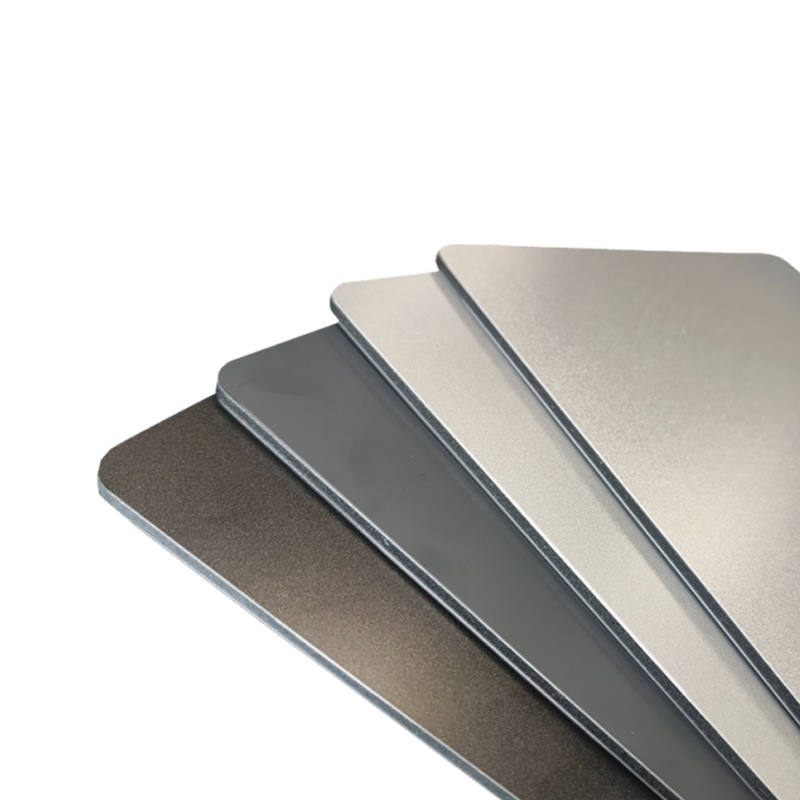
In the world of architectural cladding, the Aluminum Composite Panel (ACP) is more than just a building material—it is the visual identity of a structure. It defines first impressions, withstands decades of environmental exposure, and must perform flawlessly under increasingly stringent building codes.
For professional procurement teams, contractors, and specifiers, the process of selecting an ACP supplier often comes down to price, lead time, and certifications. Yet there is one step that experienced buyers know to treat as absolutely mandatory: sampling.
Skipping the sampling phase—or treating it as a mere formality—is one of the costliest mistakes a buyer can make. This article explains why sampling is non-negotiable, what to look for during the process, and how to use samples as a strategic tool to protect your project, your budget, and your reputation.
1. The Gap Between "Spec Sheet" and Reality
Every ACP supplier can provide a datasheet. The datasheet will list aluminum thickness, core type, coating weight, and fire rating. But what the datasheet cannot tell you is how that panel will perform under real-world conditions.
A spec sheet does not reveal:
- Whether the PVDF coating is genuine 70% resin or a diluted formulation
- Whether the aluminum skin is prime quality or recycled with impurities
- Whether the core bond will delaminate after three summers of UV exposure
- Whether the color from one production batch will match the next
The only way to verify these factors before committing to a bulk order is through a disciplined, professional sampling process.
2. What Professional ACP Sampling Verifies
For buyers who understand product quality, sampling is not about admiring a small swatch under office lighting. It is a technical evaluation that confirms the panel's fitness for purpose across multiple dimensions.
A. Coating Quality: PVDF vs. Polyester
One of the most common substitutions in the ACP industry is the coating system. A legitimate 70% PVDF (Polyvinylidene fluoride) coating offers:
- 20+ years of color retention
- Superior resistance to UV radiation and industrial pollution
- Excellent flexibility for forming and bending
Inferior polyester coatings may look identical on a small sample but will begin to chalk, fade, and erode within 3 to 5 years.
What to look for: A reputable supplier will provide coating mill certificates and, more importantly, a production sample that allows you to perform simple adhesion tests. A cross-hatch test followed by a tape pull will quickly reveal whether the coating is properly bonded.
B. Color Consistency and Delta E (ΔE)
For large-scale facades, color consistency is paramount. Even minor variations between panels create a visually unacceptable patchwork effect.
Professional sampling includes spectrophotometer measurement of the approved sample against production panels. The industry standard for acceptable color difference is ΔE < 0.5 for premium architectural finishes. Anything higher, and the naked eye will detect variation—especially on large, uninterrupted surfaces.
What to look for: Demand a signed color tolerance agreement with your sample approval. Specify the ΔE range and the measurement conditions (illuminant, observer angle).
C. Core Composition and Fire Performance
For projects requiring fire-retardant (FR) or A2 non-combustible cores, the sample is your only pre-shipment verification point. A legitimate FR core has a distinctive mineral-filled composition that is dense and non-combustible. Cheap substitutes often use low-grade polyethylene with minimal fire retardant additives—enough to pass a basic test but not sufficient for real-world fire safety.
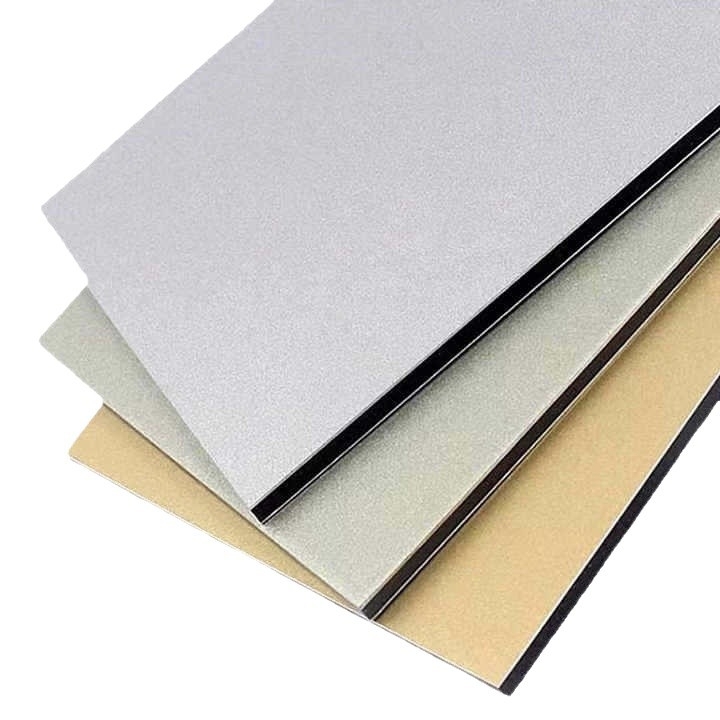
What to look for: Request a cutting-edge sample showing the core cross-section. For critical projects, send a sample to an independent laboratory for ASTM E84 or EN 13501-1 testing before approving the supplier.
D. Mechanical Properties: Adhesion and Formability
Aluminum Composite Panels are frequently bent, routed, and formed into complex shapes. The bond between the aluminum skins and the core must withstand these processes without delaminating.
Professional procurement teams conduct:
- Peel strength tests: Measuring the force required to separate the aluminum skin from the core
- T-bend tests: Verifying that the coating and aluminum can withstand tight radius bends without cracking
What to look for: Ask the supplier to provide a full-size sample panel (not just a small swatch) that you can subject to the same fabrication processes your installer will use on site.
3. The Three Phases of Professional Sampling
To protect your project, sampling should not be a single event but a structured, three-phase process.
Phase 1: Initial Aesthetic Sample
- Purpose: Confirm color, gloss level, and surface texture
- Format: Minimum A4 size (210mm x 297mm); larger for metallic or pearlescent finishes
- Caution: This sample is typically a “stock” sample from the supplier’s library. It establishes aesthetic intent but does not guarantee production quality.
Phase 2: Pre-Production Sample (The Gold Sample)
- Purpose: Establish the benchmark against which the entire bulk order will be measured
- Format: Full production-line sample, using the same aluminum coil, coating batch, and production line as the final order
- Critical Action: Sign off on this sample in writing. This becomes the legal and technical reference for quality acceptance.
Phase 3: Production Matching and Third-Party Inspection
- Purpose: Ensure bulk production matches the gold sample
- Method: Engage an independent inspection agency (SGS, Bureau Veritas, TÜV) to conduct random sampling during production
- Verification: Inspectors use colorimeters to compare production panels against the gold sample and perform physical tests on randomly selected panels
4. Red Flags Every Buyer Should Recognize
During the sampling process, certain supplier behaviors should immediately raise concerns:
Red Flag | Why It Matters |
Unable to provide larger than 10cm x 10cm samples | May be hiding surface defects, inconsistent coating, or poor flatness |
Samples are “handmade” in a lab | Does not reflect mass production quality; production line consistency is unverified |
Refuses to sign a sample approval form | Indicates a lack of confidence in production consistency or intent to substitute materials |
No spectrophotometer data provided | Color control is subjective; risk of batch-to-batch variation |
Reluctance to share coating mill certificates | May be using polyester instead of PVDF or substandard coating formulations |
A professional, reliable manufacturer welcomes the sampling process. They understand that a signed sample protects both parties and demonstrates their commitment to quality.
5. The Financial Case for Sampling
Some buyers view sampling as a delay or an unnecessary expense. In reality, sampling is one of the highest-ROI activities in the procurement cycle.
Consider the cost of skipping sampling:
- Recladding a high-rise facade: $50–$150 per square foot, often exceeding $1 million for a mid-sized building
- Project delays: Liquidated damages can reach tens of thousands of dollars per day
- Legal liability: In cases of fire safety failures, liability can extend to architects, contractors, and building owners
- Reputational damage: A failed facade project follows a company for years, impacting future bids
A thorough sampling process, including third-party testing, typically costs less than 0.5% of the total material value—a negligible price for the risk mitigation it provides.
6. Sampling as a Supplier Qualification Tool
Beyond verifying product quality, the sampling process serves as a powerful tool to evaluate the supplier itself. A manufacturer who:
- Responds promptly with detailed technical information
- Provides samples with accompanying test reports and mill certificates
- Engages in transparent communication about lead times and production processes
- Willingly signs off on approved samples
is likely to be a reliable long-term partner.
Conversely, a supplier who treats sampling as a nuisance or delivers inconsistent samples is signaling exactly how they will handle your bulk order—with shortcuts, ambiguity, and ultimately, risk to your project.
Conclusion: Trust, but Verify
In the procurement of Aluminum Composite Panels, trust is essential—but it must be earned through verification. The sampling process is the single most effective way to bridge the gap between a supplier’s promises and the reality of what arrives on your job site.
For architects, the sample ensures that the vision is realized exactly as intended. For contractors, it ensures that panels will install correctly without unexpected failures. For building owners, it provides confidence that the facade will perform safely and aesthetically for decades to come.
Before you place that bulk order, ask yourself: Have you seen a production-line sample? Have you tested it? Have you signed off on it with clear, measurable specifications?
If the answer to any of these questions is no, you are carrying unnecessary risk. In ACP procurement, sampling is not negotiable—it is the foundation of quality assurance.