Welcome to Vbond
Why Some Alucobond Panels Crack at the Fold Line and Others Don‘t.
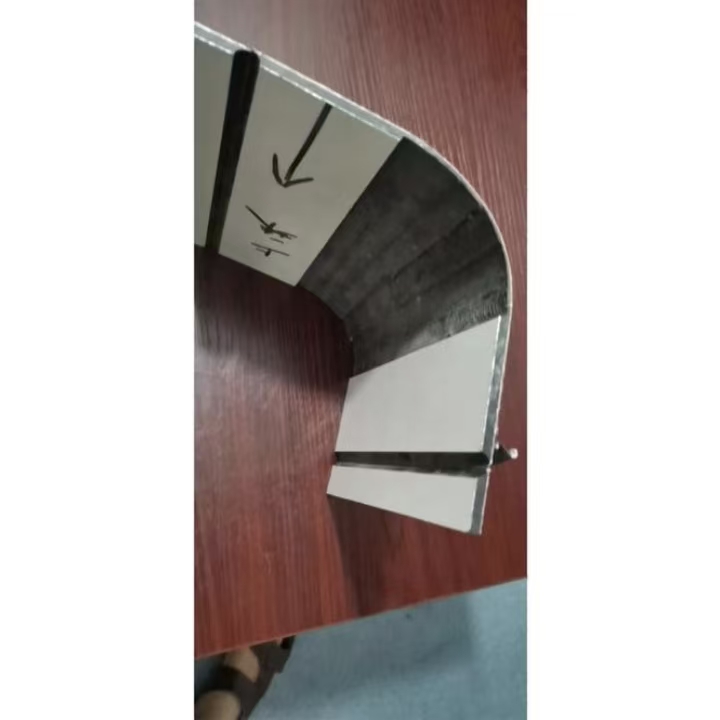
Why Some Alucobond Panels Crack at the Fold Line and Others Don‘t.
You see it on every project. One panel folds cleanly. The next panel cracks. Same material. Same machine. Different result.
Why?
The answer is not one thing. It is a combination of factors. Some are visible. Others are hidden.
This guide breaks down exactly why some Alucobond panels crack and others do not. You will learn the critical differences. You will know what separates success from failure. And you will know exactly what to control to ensure every panel folds cleanly.
The Short Answer
The difference comes down to six variables. Change any one of them and the result changes.
Variable | Success (No Crack) | Failure (Crack) |
Material temper | Correct (H22/H42) | Wrong (too hard) |
Residual thickness | 0.3mm or more | Below 0.3mm |
Bend radius | Meets minimum (60mm for 4mm) | Too tight |
Temperature | Warm (65°F+) | Cold (below 50°F) |
Routing depth | Precise, consistent | Inconsistent, too deep |
Bending count | Once | Twice or more |
The rule is simple: Control these six variables and your panels fold cleanly. Miss any one, and you risk cracking.
Variable 1: Material Temper
Alucobond uses specific aluminum alloy and temper. The standard is EN AW 5005A with H22 or H42 temper. This temper balances strength and bendability.
Some suppliers use harder tempers to save cost. Harder tempers offer higher strength. They also offer lower ductility. Lower ductility means higher crack risk.
Success: The panel uses the specified alloy and temper. The metal stretches without tearing.
Failure: The panel uses a harder temper. The metal cannot stretch far enough. It cracks at the bend apex.
What to control: Verify the temper on every shipment. Demand mill certificates. Test samples before production.
Variable 2: Residual Thickness
Residual thickness is the plastic material left at the bottom of the V-groove. It sits on top of the front aluminum skin.
The industry standard is 0.3mm minimum. This layer cushions the aluminum skin during bending. It distributes stress evenly.
Success: The fabricator maintains 0.3mm residual thickness. The aluminum bends without tearing.
Failure: The fabricator routes too deep. Residual thickness drops below 0.3mm. The aluminum skin lacks support. It cracks.
What to control: Measure residual thickness with a micrometer. Verify every batch. Reject panels below 0.3mm.
Variable 3: Bend Radius
Bend radius is the inside curve of the fold. A larger radius means a gentler bend. A smaller radius means a tighter, sharper corner.
The minimum bend radius for 4mm Alucobond PLUS is 60mm. Go below this value, and you risk cracking.
Success: The fabricator maintains a 60 mm radius or larger. The aluminum stretches within its elastic limit. No cracks.
Failure: The fabricator uses a tighter radius. The aluminum exceeds its elastic limit. The skin tears.
What to control: Specify the minimum bend radius in your purchase order. Verify with a radius gauge. Reject panels with tight corners.
Variable 4: Temperature
Aluminum becomes less ductile in cold weather. Below 50°F (10°C), the material loses significant flexibility. PVDF and polyester coatings also become brittle.
Success: The fabricator bends panels at room temperature (65°F+). The material remains ductile. The coating stretches without cracking.
Failure: The fabricator bends panels in a cold shop. The aluminum is brittle. The coating is rigid. The bend causes cracking.
What to control: Verify shop temperature before bending. Store panels at room temperature for 24 hours before folding. Heat the bend area if necessary.
Variable 5: Routing Depth Consistency
Routing depth determines residual thickness. Inconsistent depth means inconsistent residual thickness. Some spots have 0.3mm. Others have 0.1mm. Those thin spots crack.
Inconsistent depth comes from several sources: worn tools, uncalibrated machines, uneven sacrificial boards, operator error.
Success: The fabricator uses calibrated CNC equipment. They maintain consistent depth across every panel. Residual thickness stays within tolerance.
Failure: The fabricator uses worn tools or uncalibrated machines. Depth varies across the panel. Some spots are too deep. Those spots crack.
What to control: Verify machine calibration. Inspect tool condition. Check sacrificial board flatness. Demand depth consistency records.
Variable 6: Bending Count
Alucobond panels are designed for single bending operations. One bend is safe. Two bends create damage. Three bends almost guarantee failure.
Each bend work-hardens the aluminum. The metal becomes harder and less ductile. It cannot stretch as far the second time.
Success: The fabricator bends each panel once. The aluminum remains within its ductility limits. No cracks.
Failure: The installer re-bends a panel on-site to adjust the fit. The second bend exceeds the material's reduced ductility. The panel cracks.
What to control: Train installers. No re-bending. If a panel does not fit, scrap it and order a replacement.
Success vs. Failure: The Complete Picture
Factor | Success (No Crack) | Failure (Crack) |
Temper | H22/H42 (correct) | Harder (H14, H16, etc.) |
Residual thickness | 0.3mm minimum | Below 0.3mm |
Bend radius | 60mm or larger (4mm) | Below 60mm |
Shop temperature | 65°F or warmer | Below 50°F |
Routing depth | Precise, consistent | Inconsistent, too deep |
Bending count | Once | Twice or more |
Equipment | Calibrated, well-maintained | Worn, uncalibrated |
Operator | Trained, experienced | Untrained, rushing |
Real-World Example: Two Projects, Two Outcomes
Project A: The procurement team specified residual thickness and bend radius in the contract. They audited the fabricator's equipment and training. They verified shop temperature before production. The panels folded cleanly. No cracks. No rework.
Project B: The procurement team focused only on panel price. They did not audit the fabricator. They did not verify temper or residual thickness. They assumed everything would be fine. Forty percent of the panels cracked at the fold line. The project was delayed three weeks. Rework cost 30% of the original panel budget.
The difference: Control. Project A controlled the variables. Project B did not.
The Procurement Checklist
Variable | What to Check | Red Flag |
Temper | Mill certificates | Harder temper than specified |
Residual thickness | Micrometer measurement | Below 0.3mm |
Bend radius | Radius gauge | Below 60mm for 4mm |
Shop temperature | Thermometer | Below 50°F |
Routing depth | Calibration records | No records available |
Equipment condition | Tool inspection | Worn or dull tools |
Operator training | Worn or dull tools | No formal training |
What to Ask Your Fabricator
1. What is your target residual thickness?
Answer should be 0.3mm minimum.
2. How do you verify residual thickness?
They should use a micrometer. No "we check by feel."
3. What is your minimum bend radius for 4mm panels?
Answer should be 60mm or larger.
4. What temperature do you maintain in your shop?
Answer should be 65°F or warmer during bending.
5. Do you allow re-bending?
Answer should be "No. We scrap misaligned panels."
6. What is your equipment maintenance schedule?
They should have documented weekly calibration.
7. How do you train your operators?
They should have formal training documentation.
What to Do If You See Cracking
Stop the work immediately.
Document the failure. Take photos. Identify which panels cracked.
Investigate each variable. Check residual thickness. Verify bend radius. Measure shop temperature.
Identify the root cause. Correct it. Then proceed.
Reject cracked panels. Do not accept "we will touch it up." Demand replacement from the same production batch.
Final Word for Buyers
Some panels crack. Others do not. The difference is control.
Control the six variables: temper, residual thickness, bend radius, temperature, routing consistency, and bending count. Control your fabricator's equipment and training. Control your installation process.
A panel that folds cleanly today will perform for decades. A panel that cracks will fail—and you will pay for it twice.
You have the power to determine which outcome you get. Use it.






