Welcome to Vbond
Why Weight Can Be an Indicator of Quality in an Aluminum Composite Panel
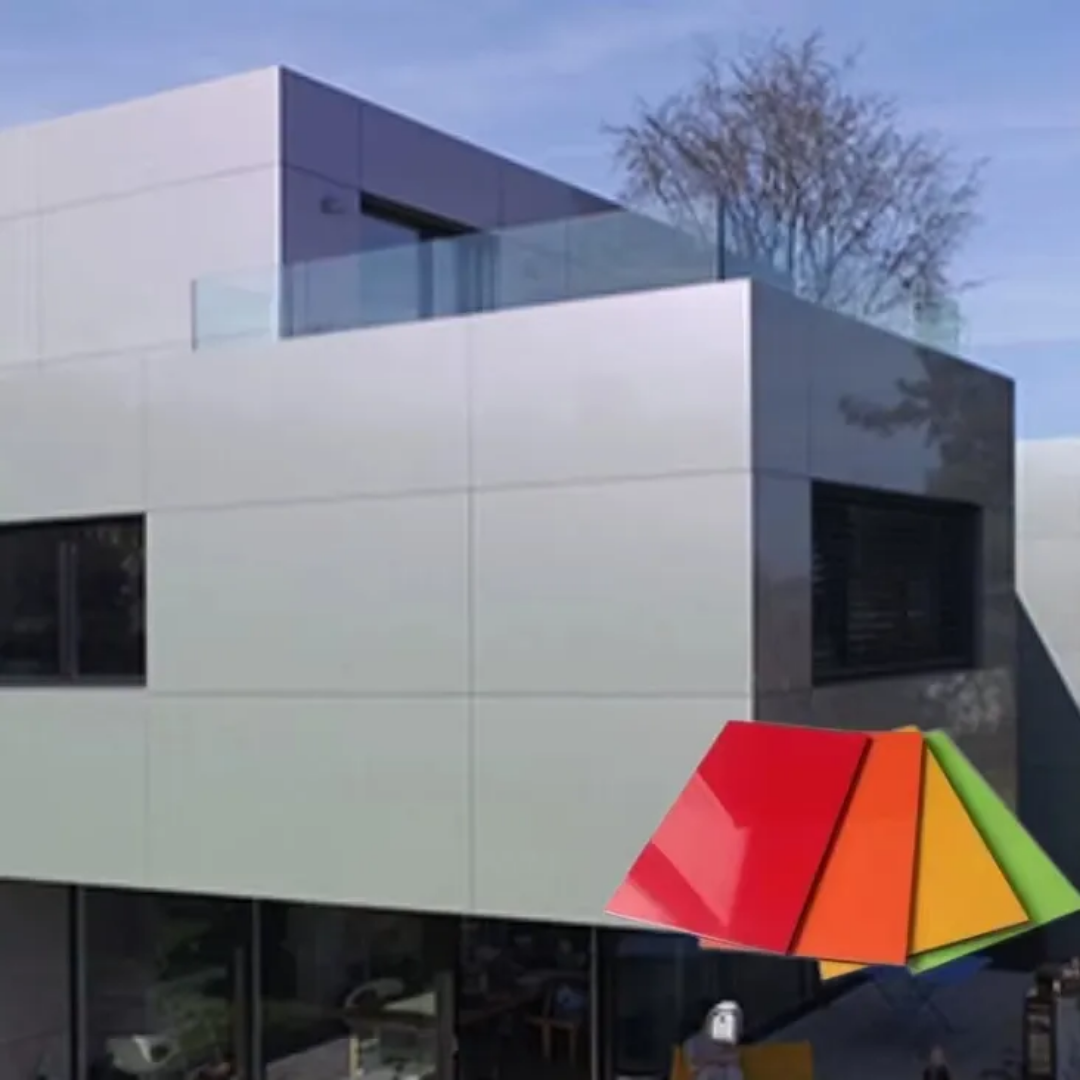
In the world of construction material procurement, quality is often invisible. For aluminum composite panels (ACPs), the final installed product conceals the material choices that determine its performance, durability, and safety. The coating looks the same. The color matches the swatch. But beneath the surface, significant differences exist that only become apparent years after installation—or, for the discerning buyer, at the moment of delivery.
One of the simplest yet most reliable indicators of ACP quality is weight. While it may seem rudimentary, the weight of a panel reveals critical information about the materials used in its construction: the thickness of the aluminum skins, the type and density of the core, and the overall structural integrity of the product.
For professional buyers, understanding how to interpret panel weight is a practical skill that enables rapid, on-site quality verification without specialized laboratory equipment. This guide explains the relationship between weight and quality in ACPs, providing the knowledge needed to distinguish premium products from under-engineered alternatives.
The Fundamental Equation: Weight = Material Substance
At its simplest level, the weight of an aluminum composite panel is the sum of its components:
- Top aluminum skin (thickness and alloy)
- Bottom aluminum skin (thickness and alloy)
- Core material (type and density)
- Coatings (front and back)
Premium ACPs use more material—thicker aluminum skins, denser mineral cores for fire resistance, and properly applied coatings. Lower-quality panels achieve cost savings by reducing material—thinner skins, lighter (often air-filled) cores, or substituted materials.
Because aluminum and core materials have predictable densities, a panel’s weight per unit area (typically expressed in kilograms per square meter, kg/m²) provides a reliable indication of whether the panel meets its specified material composition.
The Science of ACP Density
The key to understanding weight as a quality indicator lies in the densities of the constituent materials:
Material | Typical Density (g/cm³) |
Aluminum (3000/5000 series) | 2.70 |
Polyethylene (PE) core | 0.92–0.95 |
Fire-retardant (FR) core (filled) | 1.10–1.40 |
A2 mineral core | 1.60–1.90 |
PVDF coating | 1.70–1.80 |
A standard 4mm ACP with 0.5mm aluminum skins and a PE core has a theoretical weight of approximately 5.5–6.0 kg/m². The same panel with an A2 mineral core weighs 7.5–9.0 kg/m²—significantly heavier due to the dense mineral filler.
When a panel falls significantly below these expected weight ranges, it indicates that one or more components have been reduced or substituted, compromising performance.
What Weight Reveals About Each Component
1. Aluminum Skin Thickness
The aluminum skins constitute the largest portion of a panel’s weight. Even small reductions in skin thickness produce measurable weight differences.
- 0.5mm skins: Premium specification for high-rise, high-wind, or impact-resistant applications.
- 0.4mm skins: Standard for most exterior applications; acceptable but with reduced dent resistance.
- 0.3mm skins: Economy specification; suitable for interior or low-risk applications only.
Weight Impact: For a 4mm panel, reducing both skins from 0.5mm to 0.3mm reduces panel weight by approximately **1.0–1.2 kg/m²**—a 20% reduction in total weight.
What to Check: If you specify 0.5mm skins but the delivered panels feel unexpectedly light, suspect that the manufacturer has substituted thinner skins.
2. Core Type and Density
The core material dramatically affects both weight and fire performance.
Core Type | Typical Weight Range (4mm panel) | Fire Performance |
Polyethylene (PE) | 4.8–5.5 kg/m² (with 0.4mm skins) | Highly flammable |
Fire-Retardant (FR) | 5.5–6.5 kg/m² (with 0.4mm skins) | Self-extinguishing |
A2 Mineral Core | 7.5–9.0 kg/m² (with 0.5mm skins) | Limited contribution to fire |
What to Check: If an A2-rated panel weighs less than 7.5 kg/m², it likely contains insufficient mineral filler and may not achieve genuine A2 fire performance.
3. Core Consistency and Void Content
Weight also reveals core quality. A properly manufactured ACP has a uniform core with consistent density across the entire panel. Inconsistent weight across panels from the same batch—or within a single panel—indicates:
- Voids or air pockets in the core.
- Inconsistent lamination pressure.
- Variations in core material density.
What to Check: Weigh multiple panels from the same batch. Significant variation (more than ±3–5%) suggests inconsistent manufacturing quality.
4. Back Coating Presence
Premium ACPs include a fully applied back coating (typically epoxy-based) that adds measurable weight and provides critical corrosion protection. Economy panels may omit or under-apply the back coating, resulting in slightly lower weight and significantly reduced durability.
Standard Weight Ranges for Quality ACPs
Professional buyers should reference these typical weight ranges when evaluating panels. Actual weights will vary by manufacturer, but significant deviations warrant investigation.
Panel Type | Skin Thickness | Total Thickness | Typical Weight (kg/m²) |
PE Core (Economy) | 0.30 mm | 4 mm | 4.2–4.8 |
PE Core (Standard) | 0.40 mm | 4 mm | 4.8–5.5 |
PE Core (Premium) | 0.50 mm | 4 mm | 5.5–6.2 |
FR Core (Standard) | 0.40 mm | 4 mm | 5.5–6.5 |
FR Core (Premium) | 0.50 mm | 4 mm | 6.5–7.5 |
A2 Mineral Core | 0.50 mm | 4 mm | 7.5–9.0 |
A2 Mineral Core | 0.50 mm | 6 mm | 11.0–13.0 |
How to Measure and Verify Panel Weight
On-site weight verification requires only basic tools and a systematic approach.
Equipment Needed
- Digital scale or balance capable of measuring at least 20 kg with 0.1 kg accuracy.
- Measuring tape for calculating panel area.
- Notebook for recording measurements.
Step-by-Step Procedure
1. Select Representative Samples: Choose panels from different pallets or layers within the shipment. Minimum sample size: 5 panels per batch or 10% of shipment, whichever is greater.
2. Measure Panel Dimensions: Measure length and width accurately. Calculate the area in square meters:
Area (m²) = Length (m) × Width (m)
3. Weigh the Panel: Place the panel flat on the scale. Record weight in kilograms.
4. Calculate Weight per Square Meter:
Weight per m² = Panel Weight (kg) ÷ Area (m²)
5. Compare to Expected Range: Compare the calculated value to the expected range for the specified panel type, skin thickness, and core material.
6. Document Results: Record measurements with panel identification numbers. Include photographs if weights fall outside acceptable ranges.
Common Weight-Related Red Flags
Professional buyers should be alert to these indicators of potential quality issues:
Red Flag | What It May Indicate |
Panels feel noticeably lighter than expected | Substituted thinner skins; reduced core density; omitted back coating. |
Significant weight variation between panels | Inconsistent manufacturing; voids in core; poor quality control. |
A2-rated panels weighing under 7.5 kg/m² | Insufficient mineral filler; potential misrepresentation of fire rating. |
Panels from same batch but different pallets vary in weight | Mixed production runs; possible mixing of different grades. |
Weight consistent but panel feels "soft" or flexible | Core may be under-cured or insufficiently bonded to skins. |
The Cost Implications of Under-Weight Panels
When a supplier delivers panels that are lighter than specified, the savings they achieved in manufacturing come at the expense of performance. The hidden costs for the buyer include:
Compromised Component | Potential Consequence |
Thinner aluminum skins | Reduced wind load resistance; higher risk of denting and impact damage; shorter service life. |
Lower-density core | Reduced rigidity; increased risk of oil canning; potential fire safety compromise. |
Omitted back coating | Accelerated corrosion; reduced adhesion for sealants; shorter warranty coverage. |
Voids in core | Weak points susceptible to failure under load; inconsistent fabrication results. |
Weight in the Context of Fire Safety
For projects requiring fire-rated ACPs, weight is particularly critical. Genuine A2 mineral-core panels are dense and heavy due to the high loading of mineral fillers (typically 70–85% by weight). Counterfeit or non-compliant panels often substitute lighter fillers or reduce mineral content, resulting in:
- Lower weight (often under 7.0 kg/m² for 4mm panels).
- Reduced fire performance.
- Potential failure to meet building code requirements.
Professional buyers should treat weight as a first-line verification tool for fire-rated panels. If an A2 panel does not feel substantially heavier than a standard PE panel, it is almost certainly non-compliant.
Integrating Weight Verification into Quality Control
Weight measurement should be a standard component of incoming quality control (IQC) for ACPs. A practical protocol includes:
1. Establish Expected Weight Ranges: Before shipment, obtain from the supplier the theoretical weight per square meter for the specified panel configuration.
2. Pre-Shipment Verification: If possible, weigh representative panels at the factory before shipment to establish a baseline.
3. Receiving Inspection: Upon delivery, weigh panels from each batch and compare to the pre-shipment baseline and theoretical values.
4. Non-Conformance Threshold: Establish a threshold (e.g., ±5% deviation) beyond which panels are flagged for further investigation or rejection.
5. Documentation: Maintain records of weight measurements as part of the project quality documentation.
Limitations: What Weight Does NOT Reveal
While weight is a valuable indicator, it has limitations. Weight alone does not confirm:
- Alloy composition (whether the aluminum is virgin or recycled).
- Coating quality (UV resistance, gloss retention, adhesion).
- Fire classification (requires certified testing; weight is a supporting indicator).
- Long-term durability (requires evaluation of coating systems and manufacturing processes).
For these factors, weight verification should be combined with other quality checks: mill certificates, coating test reports, fire classification documentation, and visual inspection.
Conclusion
For professional buyers, weight is a powerful, practical quality indicator for aluminum composite panels. Because premium materials—thicker aluminum skins, dense mineral cores, properly applied coatings—have predictable densities, weight per square meter reveals whether a panel meets its specified composition.
By establishing expected weight ranges, implementing systematic measurement protocols, and treating significant deviations as red flags, buyers can rapidly identify under-engineered panels before they reach the installation stage. In an industry where quality is often invisible until failure occurs, weight provides a tangible, measurable assurance of material substance and performance.