Welcome to Vbond
Why Your Contractor Blacklisted Your Aluminum Panel Brand: Solving the Recurring "Fold Crack" Issue
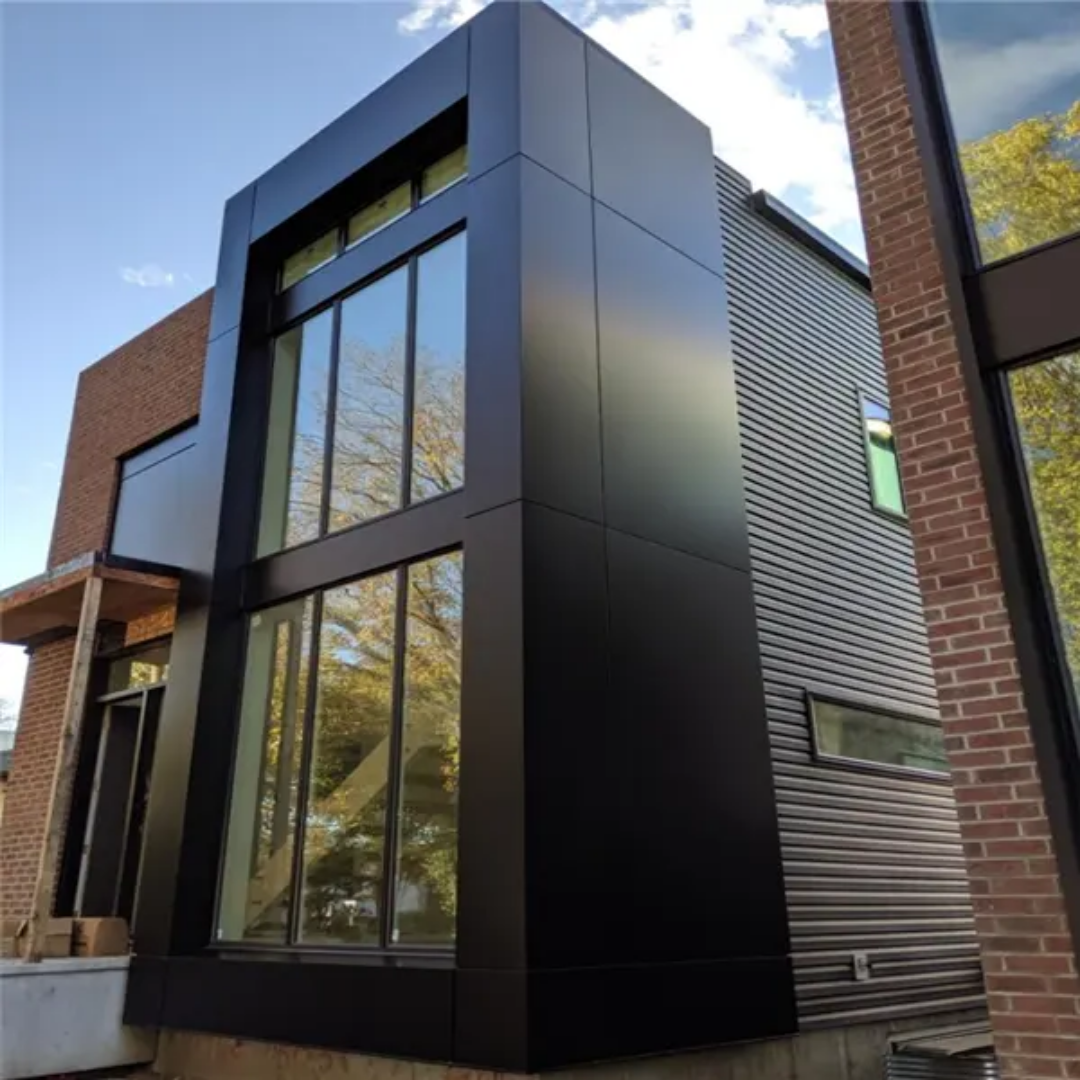
You've lost a contractor. Perhaps you've lost several. They won't say it to your face, but the reason is consistent: your panels crack when they fold them.
Contractors blacklist panel brands for one simple reason: unpredictable fabrication behavior costs them time, money, and credibility. When a fabricator has to scrap 10-20% of a batch because the corners crack during bending, they don't blame their tools—they blame your material. And they never buy it again.
This guide identifies the root causes of recurring fold cracks and provides the technical specifications needed to restore contractor confidence.
1. Why Contractors Blacklist: The Real Cost of a Cracked Corner
When a panel cracks during V-groove folding, the fabricator absorbs several immediate costs:
Cost Factor | Estimated Impact |
Scrap panel replacement | Full material cost of the failed panel |
Rework labor | Time to cut, groove, and fold a replacement |
Schedule delay | Push back delivery to the job site |
Reputation risk | Their client sees cracked corners as their failure |
Contractors track scrap rates by panel brand. If your brand consistently produces scrap rates above 2-3%, you are on the "do not use" list.
2. The Three Root Causes of Fold Cracks
Industry literature identifies three primary causes of cracking during ACP folding. Understanding these allows you to diagnose and correct the issue.
Root Cause #1: Aluminum Skin Temper Is Too Hard
The aluminum skins on ACP panels are supplied in different tempers—H14 (half-hard) or H16 (three-quarter hard). H16 has higher strength but lower ductility, making it significantly more prone to cracking during bending.
Temper | Ductility (Elongation) | Crack Risk During Folding | Best Use |
H14 (Half-Hard) | Higher (8.2% for 1100 alloy) | Low | Folding, forming, and architectural cladding |
H16 (Three-Quarter Hard) | Lower (6.0% for 1100 alloy) | High | Structural components, high-load applications |
The Contractor's Experience: Panels with H16 skins crack consistently during folding. Panels with H14 skins fold cleanly.
Your Fix: Specify AA3003 H14 or AA1100 H14 aluminum skins in your purchase orders. Require mill certificates confirming temper.
Root Cause #2: V-Groove Depth Is Inconsistent or Incorrect
The rout-and-return method requires a V-groove cut to a precise depth, leaving the outer aluminum skin intact—typically with approximately 1/64 inch (0.4mm) of core material remaining. If the groove is too shallow, the panel resists bending and cracks. If the groove is too deep, the outer skin is scored, creating a weak point that fails under load.
The Contractor's Experience: Panels that require constant router depth adjustment indicate inconsistent core thickness or poor manufacturing tolerances.
Your Fix: Provide documented core thickness tolerances. Panels should have consistent thickness across the entire sheet, allowing fabricators to set groove depth once per batch, not per panel.
Root Cause #3: Core Material Contamination or Inconsistent Density
Cheap ACP panels often use recycled polyethylene core material contaminated with unmelted particles or different plastic types with higher melting points. These contaminants act as stress concentrators during bending, initiating cracks at the groove base.
The Contractor's Experience: Panels that crack unpredictably—some fold cleanly, others crack in the same batch—indicate core inconsistency.
Your Fix: Specify virgin polyethylene core material. Require documented melt flow index (MFI) consistency. Avoid panels from manufacturers who cannot provide core material certification.
3. The Tooling Variable: V-Groove Bit Selection
Even with perfect panels, the wrong grooving tool causes cracks. Two cutter head types are available :
Cutter Type | Characteristics | Crack Risk |
U-type (rounded tip) | Less likely to scratch aluminum; produces a softer corner angle | Lower |
V-type (sharp tip) | Produces a very straight, sharp corner angle | Higher (can scratch aluminum skin) |
Industry Recommendation: For 4mm ACP, the 6# cutter head is generally the optimal choice. The cutter head should be sharp—dull bits create micro-damage that propagates into cracks.
Your Role: You cannot control your contractor's tooling choices. But you can specify that your panels are tested and certified to perform with standard V-grooving equipment. Provide grooving depth recommendations in your technical documentation.
4. The Minimum Bend Radius Constraint
Every ACP panel has a minimum bend radius. Exceeding this limit guarantees cracking :
Panel Thickness | Minimum Bend Radius (Cold Bending) |
3mm panel | R ≥ 60mm |
4mm panel | R ≥ 80mm |
For sharp bends with a radius less than 50mm, use 3mm thin plates with a backing aluminum plate reinforcement.
The Contractor's Experience: Contractors may attempt tighter radii than the panel can accommodate. However, if your panels crack at standard radii (90° corners on 4mm panels), the problem is your material.
Your Fix: Publish clear minimum bend radius specifications. If your panels cannot achieve a standard 90° corner on 4mm thickness, your material is substandard.
5. Restoring Contractor Confidence: The "Zero-Defect Bending" Specification
To get your brand off the blacklist and keep it off, implement the following specifications:
Specification 1: Publish Temper and Alloy Data
- Requirement: State clearly on your datasheet: "Aluminum skins: AA3003 H14 or AA1100 H14 temper."
- Why: Contractors need to know they are buying formable material, not structural-grade H16.
Specification 2: Provide Grooving Depth Charts
- Requirement: Include recommended groove depth for each panel thickness.
- Example: For 4mm panel: "Set V-groove depth to leave 0.3-0.5mm of core material. Do not cut through the outer aluminum skin."
Specification 3: Offer a Pre-Shipment Sampling Protocol
- Requirement: Before each batch ships, offer to groove and fold a sample panel in the contractor's presence—or provide a pre-tested sample with documentation.
- Why: This proves the batch's formability before the contractor commits to full fabrication.
Specification 4: Back Your Claims with a Bending Guarantee
- Requirement: Offer a guarantee that your panels will fold cleanly when proper grooving techniques are used.
- Why: This shifts the conversation from "your panels crack" to "let's verify your technique."
6. The Procurement Takeaway
Contractors do not blacklist panel brands arbitrarily. They blacklist brands that cost them money. Every cracked corner represents lost labor, scrapped material, and delayed delivery.
The solution is not to find cheaper panels. It is to find consistent, formable panels with documented H14 temper skins, virgin core material, and reliable thickness tolerances.
When you supply panels that fold cleanly every time, contractors will seek you out. When you supply panels that crack unpredictably, they will blacklist you and tell their colleagues to do the same.
The choice is yours.