Welcome to Vbond
ACP Facade Coating Selection: PE vs PVDF by Climate Zone
Introduction
Climate plays a major role in the performance of an aluminum composite panel (ACP) facade. A coating that works well on an indoor wall may not provide the same results on a building exposed to strong sunlight, heavy rain, or salty coastal air.
For architects, contractors, and material buyers, choosing between PE and PVDF coating requires more than a price comparison. The project location, local weather, building height, facade direction, and expected maintenance plan all affect the right choice.
This guide explains how different climate zones affect ACP facade coatings. It compares PE and PVDF systems and shows buyers how to select the right finish for each environment. It also explains why the correct Alucobond PVDF color specification should match the project's climate and design needs.
1. Why Climate Should Guide ACP Coating Selection
An exterior facade faces several environmental forces at the same time. Sunlight heats the panel surface, rain carries dirt across the coating, and humidity keeps moisture near joints and edges.
These conditions can change how a coating performs over time. The same panel specification may produce different results in a dry inland city and a humid coastal region.
The main climate factors include:
· UV exposure: Strong ultraviolet radiation can cause color change, gloss loss, and surface chalking.
· Air temperature: High surface temperatures can increase thermal stress on the coating and aluminum skin.
· Humidity: Long periods of moisture can increase the risk of corrosion when the coating or facade details have defects.
· Rainfall: Frequent rain can leave dirt deposits and expose weak drainage details.
· Salt exposure: Sea spray can increase corrosion risks around cut edges, joints, and damaged areas.
· Pollution: Industrial dust and urban deposits can affect facade appearance and cleaning needs.
· Freeze-thaw cycles: Repeated freezing and thawing can place stress on joints, sealants, and water-management details.
A good coating selection starts with the local exposure profile. Buyers should not choose a product based only on the country's average temperature or a general climate label.
2. PE vs PVDF: What Changes Across Climate Zones?
PE and PVDF are two common coating options for aluminum composite panels. They use different resin systems and suit different project conditions.
PE stands for polyester. It often offers a cost-effective finish for interior applications, sheltered areas, and exterior projects with moderate exposure and suitable performance requirements.
PVDF stands for polyvinylidene fluoride. Architectural PVDF coating systems offer strong resistance to weathering and color change when the coating formulation, application, and curing meet the required specifications.
Comparison | PE Coating | PVDF Coating |
Initial material cost | Usually lower | Usually higher |
UV resistance | Suitable for selected exposure levels | Generally stronger for demanding outdoor exposure |
Color stability | Depends on formulation and exposure | Generally offers better long-term color stability |
Gloss retention | More sensitive in demanding conditions | Generally stronger under prolonged weather exposure |
Typical use | Interior, sheltered, and selected exterior projects | Exposed architectural facades |
Coastal application | Requires careful product and detail selection | Often preferred, but still needs corrosion protection |
Best selection basis | Actual exposure and project requirements | Actual coating performance and project requirements |
Important: PE does not automatically mean poor outdoor performance, and PVDF does not automatically guarantee compliance with a particular coating standard. Buyers should review the exact coating system, technical data, test reports, and project specification.
3. Climate Zone 1: Hot and Dry Regions
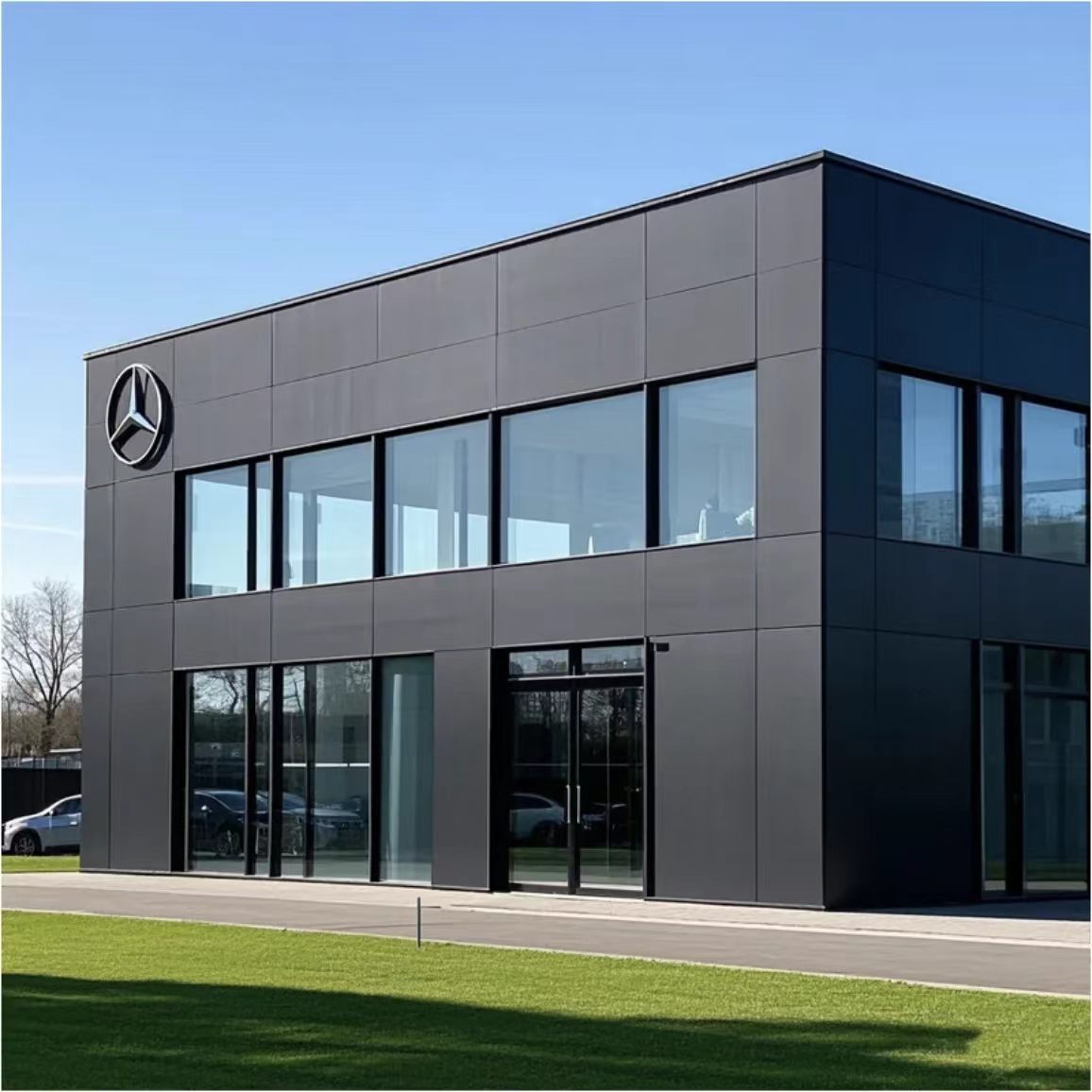
4. Caption: ACP facade panels on a commercial building in a hot, dry climate with strong direct sunlight.
PVDF-coated aluminum composite panel facade for hot and dry climate conditions
Hot and dry regions often experience intense sunlight, high daytime temperatures, and large temperature changes between day and night. Desert cities and inland areas with long periods of clear skies are common examples.
UV exposure is a major concern in these locations. A facade may receive direct sunlight for many hours each day, especially on south- and west-facing elevations in the Northern Hemisphere.
Recommended coating approach
For large, permanently exposed facades, PVDF is generally the stronger starting point. It offers better resistance to long-term color change and surface degradation under demanding sunlight exposure.
PE may suit shaded areas, low-exposure elevations, or projects with limited service requirements. However, buyers should confirm that the selected PE product meets the project's outdoor performance targets.
What buyers should check
· UV and weathering test results for the exact coating system
· Color retention and gloss retention requirements
· Performance of dark colors under direct sunlight
· Maximum service temperature stated by the coating supplier
· Panel flatness and installation details that allow for thermal movement
Dark colors deserve extra attention. Black, dark gray, and deep brown surfaces can absorb more solar heat than light colors.
For a project that specifies an Alucobond PVDF color, the buyer should approve a physical color sample and confirm its suitability for the intended exposure. A color sample confirms appearance, but it does not replace coating performance evidence.
4. Climate Zone 2: Tropical and Hot-Humid Regions
Caption: Modern ACP facade exposed to heavy rainfall and high humidity in a tropical city.
PVDF aluminum composite panel facade for tropical high humidity and heavy rainfall
Tropical climates combine high temperatures, strong sunlight, frequent rainfall, and high humidity. Some areas also face seasonal storms and long periods of wet weather.
Moisture control becomes just as important as UV resistance. Water can enter poorly designed joints, remain around panel edges, or collect behind the facade if drainage details fail.
Recommended coating approach
PVDF is usually a suitable choice for exposed commercial and residential facades in hot-humid regions. Its weathering performance makes it a strong option for buildings that face frequent sunlight and rain.
However, coating selection alone cannot solve water-related problems. The facade system also needs proper joint design, drainage paths, edge protection, and compatible sealants.
What buyers should check
· Coating adhesion and corrosion-related test evidence
· Aluminum skin quality and surface pretreatment
· Protection of cut edges and fabricated areas
· Joint design and water drainage
· Compatibility between sealants and coating surfaces
· Cleaning access for areas exposed to rainwater deposits
A tropical project should not rely on a PVDF label as proof of complete corrosion protection. Buyers must review the full panel construction and facade details.
5. Climate Zone 3: Coastal and Marine Regions
Caption: Aluminum composite panel cladding on a coastal building exposed to sea spray and salty air.
PVDF-coated ACP facade panels for coastal buildings exposed to salt air
Coastal buildings face a different challenge. Salt particles carried by wind can settle on the facade and increase corrosion risks, especially near panel joints, cut edges, and damaged surfaces.
Wind-driven rain can also push moisture into weak connections. Buildings close to the sea may experience more severe exposure than buildings located several miles inland.
Recommended coating approach
For permanently exposed coastal facades, a properly specified PVDF coating system is often the preferred option over standard PE. It provides a stronger weathering profile for demanding exterior applications.
Still, PVDF cannot prevent every form of corrosion. Aluminum alloy, pretreatment, coating coverage, panel fabrication, fasteners, and drainage details all matter.
What buyers should check
Inspection Item | Why It Matters |
Aluminum alloy and surface condition | Affect corrosion resistance and coating adhesion |
Pretreatment process | Supports bonding between the coating and aluminum |
Coating coverage | Reduces exposed areas that may allow early deterioration |
Cut-edge protection | Limits corrosion risks around fabricated panel edges |
Fastener material | Helps reduce galvanic corrosion from dissimilar metals |
Drainage design | Prevents long-term water accumulation |
Cleaning instructions | Helps remove salt deposits from the facade |
For coastal projects, buyers should also request clear maintenance instructions. Regular washing with approved methods can remove salt and surface deposits before they build up.
The correct Alucobond PVDF color should also be checked against the approved project sample. Coastal exposure does not remove the need for accurate color and gloss control.
6. Climate Zone 4: Temperate Regions
Caption: Commercial building with ACP facade panels in a temperate city with seasonal weather changes.
Architectural ACP facade coating selection for temperate climate buildings
Temperate regions usually have moderate summers and winters, but weather conditions can still change from season to season. Rain, sunlight, pollution, and temperature changes may affect the facade over time.
These regions often allow more flexibility in coating selection. The correct choice depends on the building's location, height, facade orientation, and expected service requirements.
Recommended coating approach
PVDF is a strong choice for high-visibility buildings, long-term commercial projects, and exposed facades where color consistency matters.
PE may work for sheltered elevations, smaller projects, and buildings with less demanding appearance requirements. It can also be a practical option when the project budget is limited, and the specified coating performance supports the expected exposure.
What buyers should check
· Whether the facade receives direct sunlight for long periods
· Whether the building stands near an industrial or polluted area
· Whether the project requires long-term color consistency
· Whether different elevations need different exposure ratings
· Whether the coating specification matches the expected maintenance plan
A temperate climate does not always mean low exposure. A high-rise building in an open urban area may face stronger wind, rain, and sunlight than a low-rise building surrounded by other structures.
7. Climate Zone 5: Cold and Freeze-Thaw Regions
Caption: ACP facade panels installed on a building in a cold region with seasonal snow and ice.
Aluminum composite panel facade coating for cold climate and freeze-thaw conditions
Cold regions place different demands on facade systems. Snow, ice, freezing rain, and repeated temperature changes can affect panel joints, sealants, fasteners, and water-management details.
The coating must remain suitable for the expected temperature range. However, the facade design must also manage thermal movement and prevent water from collecting in vulnerable areas.
Recommended coating approach
PVDF can be a good option for exposed architectural facades in cold regions, especially when the project also faces strong sunlight or pollution during other seasons.
PE may suit sheltered or lower-exposure applications when the selected product meets the project's technical requirements. Buyers should not assume that a coating type alone determines low-temperature performance.
What buyers should check
· Coating flexibility at the expected fabrication temperature
· Manufacturer guidance for cold-weather handling and installation
· Sealant compatibility and joint movement capacity
· Panel expansion and contraction allowance
· Water drainage around joints and connections
· Resistance of the complete facade assembly to the expected exposure
For cold-region projects, the design team should review the complete facade system. Coating performance is only one part of the solution.
8. Climate-Based PE vs PVDF Selection Matrix
The following matrix provides a starting point for procurement teams. It does not replace project-specific testing or the coating manufacturer's technical guidance.
Climate Zone | Main Exposure | Suggested Starting Point | Key Procurement Focus |
Hot and dry | Strong UV, high surface temperature | PVDF for exposed facades | Color stability and weathering data |
Tropical and humid | UV, humidity, heavy rain | PVDF for exposed facades | Adhesion, corrosion protection, drainage |
Coastal and marine | Salt air, wind-driven rain | Specified PVDF system | Pretreatment, edge protection, fasteners |
Temperate | Seasonal weather, pollution | PE or PVDF by exposure | Elevation-specific requirements |
Cold and freeze-thaw | Ice, snow, thermal movement | PE or PVDF by product performance | Flexibility, joints, drainage, installation |
Quick Selection Flowchart
Start
|
v
Is the ACP panel used on an exposed exterior facade?
|
+-- No --> Consider PE or another suitable interior finish
|
+-- Yes
|
v
Does the project face strong UV, salt, high humidity,
heavy rain, or other demanding exposure?
|
+-- Yes --> Start with a qualified PVDF system
| |
| v
| Check coating data, substrate,
| fabrication, and facade details
|
+-- No --> Compare PE and PVDF against
project performance requirements
|
v
Confirm samples, test reports,
warranty terms, and maintenance needs
This process gives buyers a clear starting point. The final specification should still reflect the actual site conditions and the building's design life.
9. Color Selection: Why the Same Shade Can Behave Differently by Climate
Color affects more than the visual style of a building. It can also influence surface temperature, visible dirt, and the way a facade looks after years of exposure.
Dark colors usually absorb more solar energy than light colors. On a sun-exposed facade, this can increase surface temperature and thermal movement.
Light colors may show certain stains more clearly, while dark finishes may reveal dust, scratches, or uneven gloss. The best choice depends on the local environment and the building's cleaning plan.
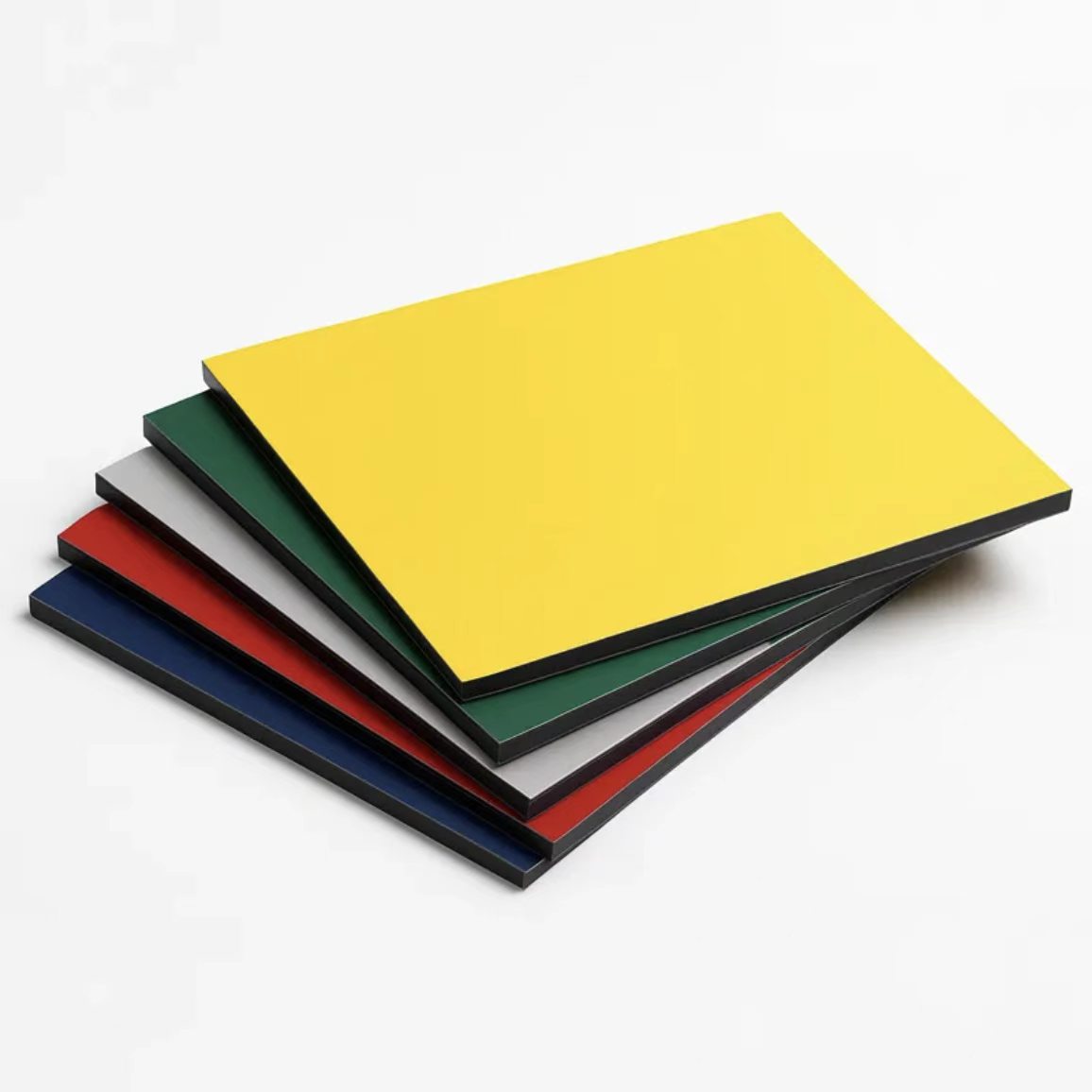
When buyers specify an Alucobond PVDF color, they should confirm the following points:
1. Color reference: Identify the approved RAL, Pantone, or project-specific color reference where applicable.
2. Physical sample: Approve a sample produced with the actual coating system.
3. Gloss level: Confirm the required gloss range and measurement method.
4. Batch consistency: Define how the supplier will control color differences between production batches.
5. Facade orientation: Review how sunlight may change the appearance of different elevations.
6. Replacement planning: Keep an approved sample or color record for future repairs and extensions.
A digital color image is not enough for final approval. Screen settings, lighting, and display technology can change how a color looks.
For large projects, buyers should also confirm whether the supplier can maintain color consistency across different production runs. This matters when the facade uses several panel batches or when future expansion is likely.
10. Why Climate-Based Procurement Needs More Than a Coating Name
A quotation that lists only "PE coating" or "PVDF coating" does not give buyers enough information to compare suppliers.
A reliable purchase specification should connect the coating system to the project environment. It should also identify the actual product, test requirements, and quality-control process.
Recommended procurement checklist
Item | Information to Request |
Coating type | PE, PVDF, or another specified system |
Coating manufacturer | Company name and product series |
Coating structure | Primer, color coat, and clear coat if applicable |
Performance specification | Required standard and edition, where applicable |
Weathering evidence | Relevant test reports for the specified coating |
Color and gloss | Approved sample and measurable acceptance limits |
Aluminum substrate | Alloy, temper, and skin thickness |
Surface preparation | Pretreatment process and quality controls |
Production inspection | Coating thickness, appearance, adhesion, and traceability |
Warranty | Coverage, exclusions, maintenance duties, and claim procedure |
Buyers should request reports that match the actual coating product and production source. A report for a different coating series or a different substrate may not prove the performance of the supplied panels.
Also, a coating report does not certify the complete ACP panel. Core composition, bonding strength, dimensions, mechanical performance, and fire performance need separate evidence when the project specification requires them.
11. Project Examples: How Climate Changes the Buying Decision
Example A: Shopping Center in a Desert City
A shopping center in a desert region has large exterior elevations with strong afternoon sunlight. The design uses dark gray panels to create a modern appearance.
For this project, a qualified PVDF system is a strong starting point. The buyer should review weathering evidence, color-stability requirements, and surface-temperature considerations for dark finishes.
Example B: Hotel Near the Coast
A hotel stands close to the sea and receives regular salt spray. The facade includes many joints, corners, and decorative panel returns.
The project should prioritize a suitable PVDF coating system and strong corrosion-control measures. The buyer must also review cut-edge protection, fastener compatibility, drainage, and access for cleaning.
Example C: Office Building in a Temperate City
An office building uses ACP panels on both exposed and sheltered elevations. The main entrance receives direct sunlight, while several upper areas remain shaded by nearby structures.
The buyer may compare PVDF for the most exposed and visible areas with a suitable PE product for less demanding locations, if the project specification allows different coating systems. The design team must approve the appearance and performance of each finish before ordering.
These examples show why climate-based selection should consider the building itself, not only the general weather conditions of the city.
12. Common Mistakes in Climate-Based ACP Coating Selection
Mistake 1: Choosing a Coating by Country Name
A country can contain several climate zones. Coastal, inland, mountain, and desert locations may face very different conditions.
Better approach: Evaluate the actual project site and facade exposure.
Mistake 2: Treating Every PVDF Product as the Same
Different coating systems can use different formulations, layer structures, and application processes.
Better approach: Request the coating manufacturer's product data and relevant test evidence.
Mistake 3: Ignoring Building Orientation
A west-facing wall may receive much stronger afternoon sunlight than a shaded north-facing wall in the same building.
Better approach: Review each facade elevation before finalizing the coating specification.
Mistake 4: Focusing Only on the Coating
A strong coating cannot fix poor aluminum quality, weak bonding, bad edge treatment, or poor drainage.
Better approach: Inspect the complete ACP construction and facade design.
Mistake 5: Approving Color Only from a Screen Image
A digital image cannot fully represent the actual coating color, gloss, or surface texture.
Better approach: Approve a physical production sample under suitable lighting.
Conclusion: Match the ACP Coating to the Project Climate
PE and PVDF both have a place in ACP facade projects. The right choice depends on exposure, appearance requirements, budget, and the expected maintenance plan.
For exposed facades in hot, humid, coastal, and high-UV environments, a properly specified PVDF system is often the stronger starting point. PE can remain a practical choice for interior, sheltered, and selected exterior applications when it meets the project's performance requirements.
For professional buyers, the key is to connect the coating specification to the real climate conditions. Review the coating product, test evidence, aluminum substrate, fabrication details, and facade design before placing an order.
When selecting an Alucobond PVDF color, confirm both appearance and technical performance. A well-matched coating system gives the project a stronger basis for long-term facade quality.