Welcome to Vbond
Curtain Wall Alucobond Finishes: Why PVDF Is the Default for Visible ACM Facades
Introduction
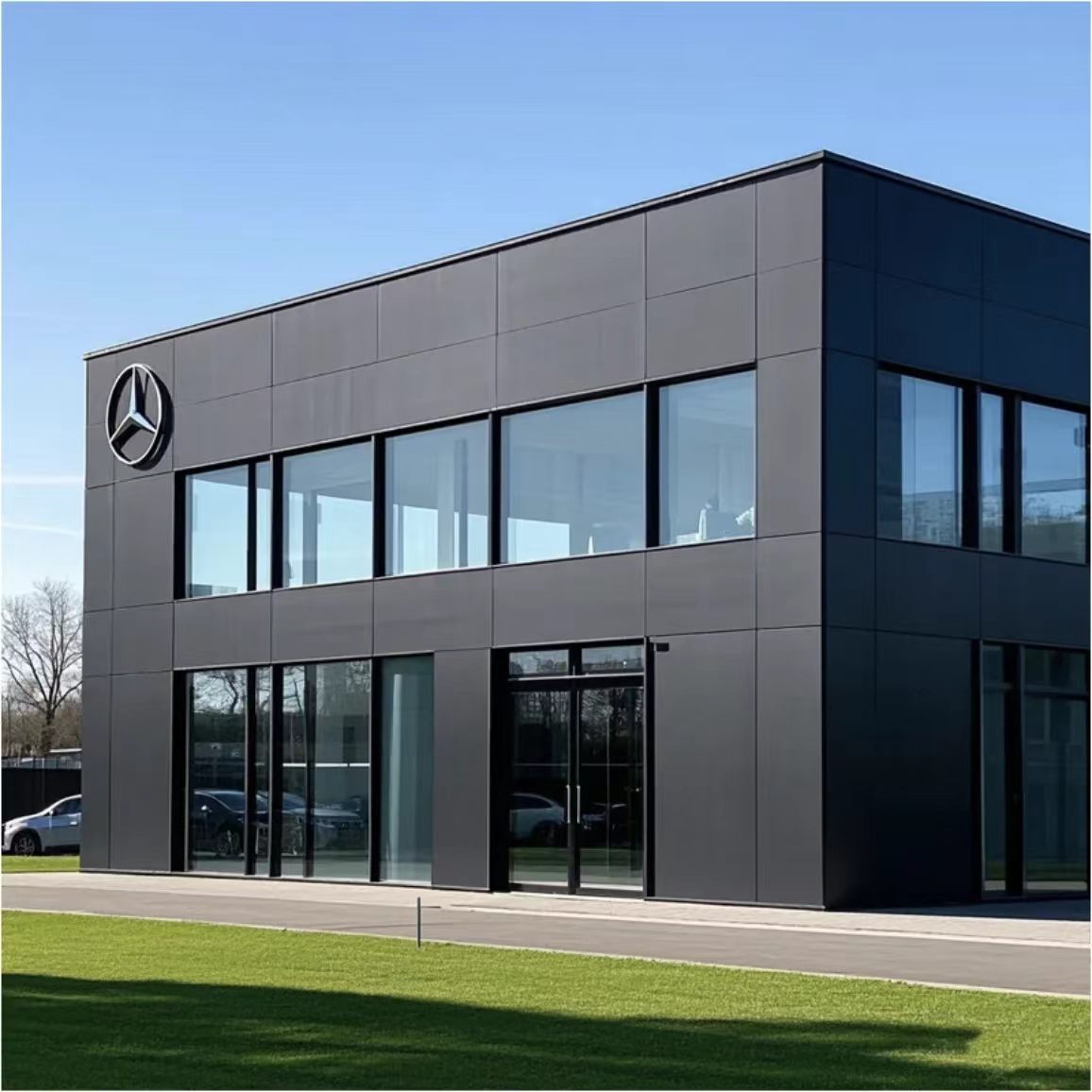
A curtain wall does more than protect a building from the weather. It also defines the building's appearance. Every panel, joint, corner, and surface finish contributes to the final design.
For visible aluminum composite material (ACM) facades, coating selection plays a major role in quality. A panel may meet its size and thickness requirements but still fail the visual standard if its color, gloss, or surface texture does not match nearby panels.
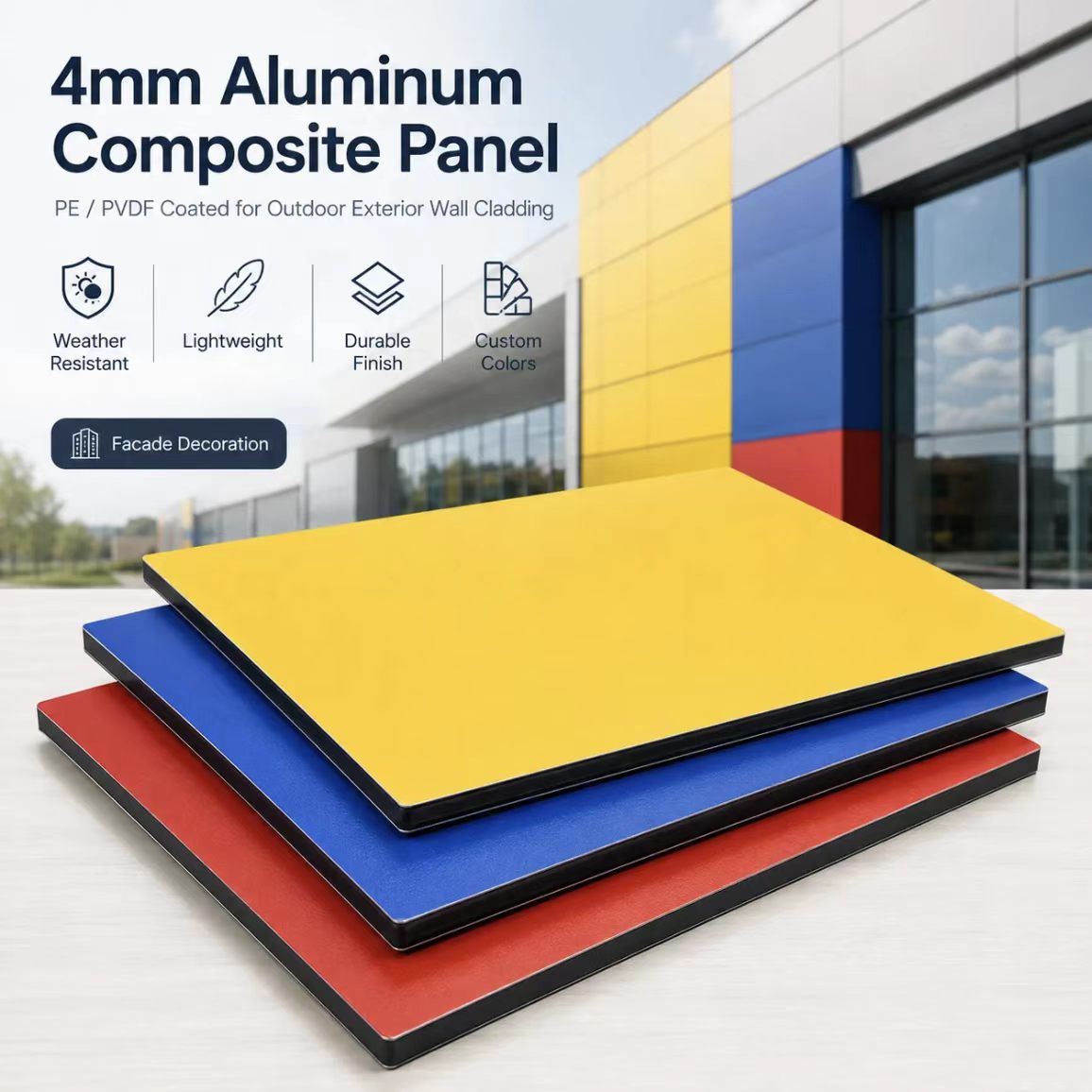
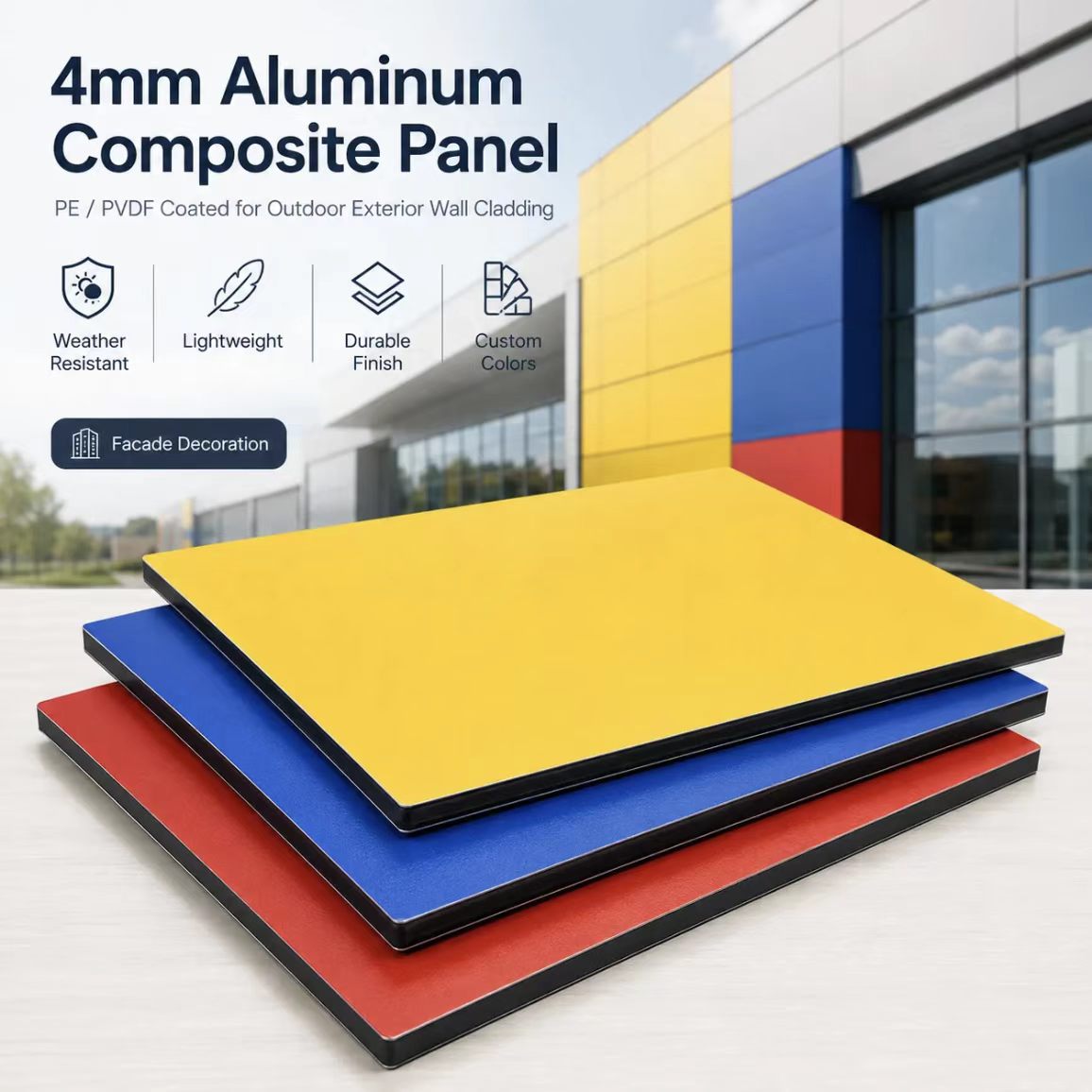
This is one reason architects, facade contractors, and material buyers often specify PVDF finishes for exposed ACM curtain walls. PVDF offers strong weathering performance and supports long-term appearance control when the coating system meets the project specification.
When buyers select an Alucobond PVDF color, they should look beyond the color name. They also need to consider gloss level, batch consistency, surface quality, fabrication, and final installation.
1. Why Visible ACM Facades Need a Higher Finish Standard
A hidden building component and a visible facade panel do not face the same visual demands. A concealed panel may perform its structural or protective role without attracting attention. A visible curtain wall panel must also meet the architect's appearance requirements.
Large facade areas make small differences easier to see. A slight color shift between panels may create visible bands, patches, or irregular patterns across the building.
Several factors affect the final appearance:
· Color consistency between production batches
· Gloss level and light reflection
· Surface texture and coating uniformity
· Scratches, dents, and handling marks
· Panel flatness and installation alignment
· Color changes caused by outdoor exposure
These factors matter most on large, continuous elevations. A small mismatch that looks minor on one sample may become obvious when hundreds of panels cover a building.
For professional buyers, finish quality should be part of the technical specification, not just a design preference.
2. Why PVDF Is the Preferred Finish for Visible Exterior ACM
PVDF stands for polyvinylidene fluoride. It is a fluoropolymer coating technology used in many architectural aluminum applications.
Architectural PVDF systems often combine PVDF resin with other coating components, such as acrylic resin, pigments, and additives. The complete formulation and production process determine the final coating performance.
PVDF is often preferred for visible exterior ACM because it offers several useful properties.
2.1 Better Long-Term Color Stability
Sunlight can change the appearance of exterior coatings. Over time, some finishes may lose color strength or develop an uneven appearance.
A properly formulated architectural PVDF system generally provides stronger resistance to color change than standard polyester coatings. This makes it a common choice for commercial buildings where the facade must maintain a consistent appearance.
Color stability matters when a project uses large areas of one color. It also matters when the building owner plans future extensions or panel replacement.
2.2 Stronger Gloss Retention
Gloss affects how a facade reflects light. A change in gloss can make panels look different even when their color values remain close.
PVDF systems generally offer strong gloss retention under outdoor exposure. This helps maintain a more consistent visual effect across large elevations.
However, the result depends on the coating formulation, application, curing, and exposure conditions. Buyers should request test data for the exact coating product rather than rely on the PVDF name alone.
2.3 Better Resistance to Surface Chalking
Chalking occurs when a coating surface breaks down and leaves a powder-like residue. It can reduce visual quality and make a facade look older.
Architectural PVDF systems generally resist chalking better than standard polyester systems under demanding outdoor conditions. This is useful for high-visibility facades where owners want to limit changes in surface appearance.
2.4 Easier Planning for Long-Term Facade Appearance
A curtain wall often remains part of a building's identity for many years. A coating with strong weathering performance gives designers and owners a better basis for long-term appearance planning.
PVDF does not remove the need for cleaning or inspection. It provides a coating option with a stronger outdoor performance profile when the manufacturer applies and controls it correctly.
3. PE vs PVDF: What Matters for Curtain Wall Finishes?
PE and PVDF serve different project needs. PE is a polyester coating system that often suits interior panels, sheltered locations, and selected exterior applications. PVDF is generally the stronger choice for exposed architectural facades with demanding appearance requirements.
Finish Factor | PE Coating | PVDF Coating |
Initial cost | Usually lower | Usually higher |
Outdoor color stability | Depends on product and exposure | Generally stronger |
Gloss retention | More limited in demanding exposure | Generally stronger |
Chalking resistance | Product-dependent | Generally stronger |
Visible exterior curtain walls | Suitable for selected projects | Commonly preferred |
Interior decorative panels | Often suitable | Also suitable |
Long-term appearance control | Depends on specification | Strong option for demanding projects |
The table shows general differences, not guaranteed results for every product. A high-quality PE system may outperform a poorly applied PVDF system.
Buyers should compare the coating manufacturer's product data, test reports, and production controls. The resin label alone does not prove that the supplied panels meet the project's finish requirements.
4. Color Consistency: The Key to a Clean Curtain Wall Appearance
Color consistency is one of the most important quality points for large ACM facades. Even small differences can become visible when panels sit side by side.
A supplier should control color from sample approval through mass production. This process needs clear references and inspection rules.
4.1 Approve the Correct Physical Sample
Digital images and monitor displays cannot provide reliable final color approval. Lighting, screen settings, and image processing can change the way a color appears.
Buyers should approve a physical sample made with the actual coating system and production method. For large projects, a larger sample or mock-up gives the design team a better view of the finished surface.
4.2 Define Color Tolerance
A color reference alone may not be enough. The purchase specification should state how the supplier will measure and control color differences.
Color measurement often uses the CIELAB color space. It describes color through three values:
· L: Lightness, from dark to light
· a: Position between green and red
· b: Position between blue and yellow
A color difference value, often written as ΔE, can help compare production panels with the approved reference. The project team should define the measurement method, instrument settings, lighting conditions, and acceptance limit.
Do not assume that one ΔE limit works for every color and finish. Metallic, textured, and high-gloss surfaces may need different visual review methods.
4.3 Control Production Batches
Large projects may require several production runs. If the supplier changes coating batches or production settings, the final panels may show visible differences.
A reliable supplier should keep production records and identify each batch. Buyers should also define whether panels from different batches can be mixed on one elevation.
Recommended practice: Ask the supplier to produce a project color sample, confirm the production batch, and review the first production panels before full-scale manufacturing.
5. Gloss and Surface Texture: Small Details with a Large Visual Impact
Color is only one part of the facade finish. Gloss and texture also affect how people see the building.
A matte finish creates a softer appearance and reduces strong reflections. A high-gloss finish produces more reflection and may highlight surface defects or panel waviness.
Finish Type | Visual Effect | Common Design Use |
Matte | Soft, low-reflection appearance | Modern commercial facades |
Satin | Balanced reflection | Office and retail buildings |
Semi-gloss | Clearer surface reflection | Feature walls and decorative areas |
High gloss | Strong reflection | Selected architectural accents |
Metallic | Changes appearance with viewing angle | Landmark and feature facades |
The design team should approve gloss and texture together with color. A color sample with the wrong gloss level may look different from the finished facade even if the color values match.
For metallic finishes, panel direction and installation order deserve extra attention. The coating may reflect light differently when panels face different directions.
6. Metallic and Special Colors: Why Sample Control Matters
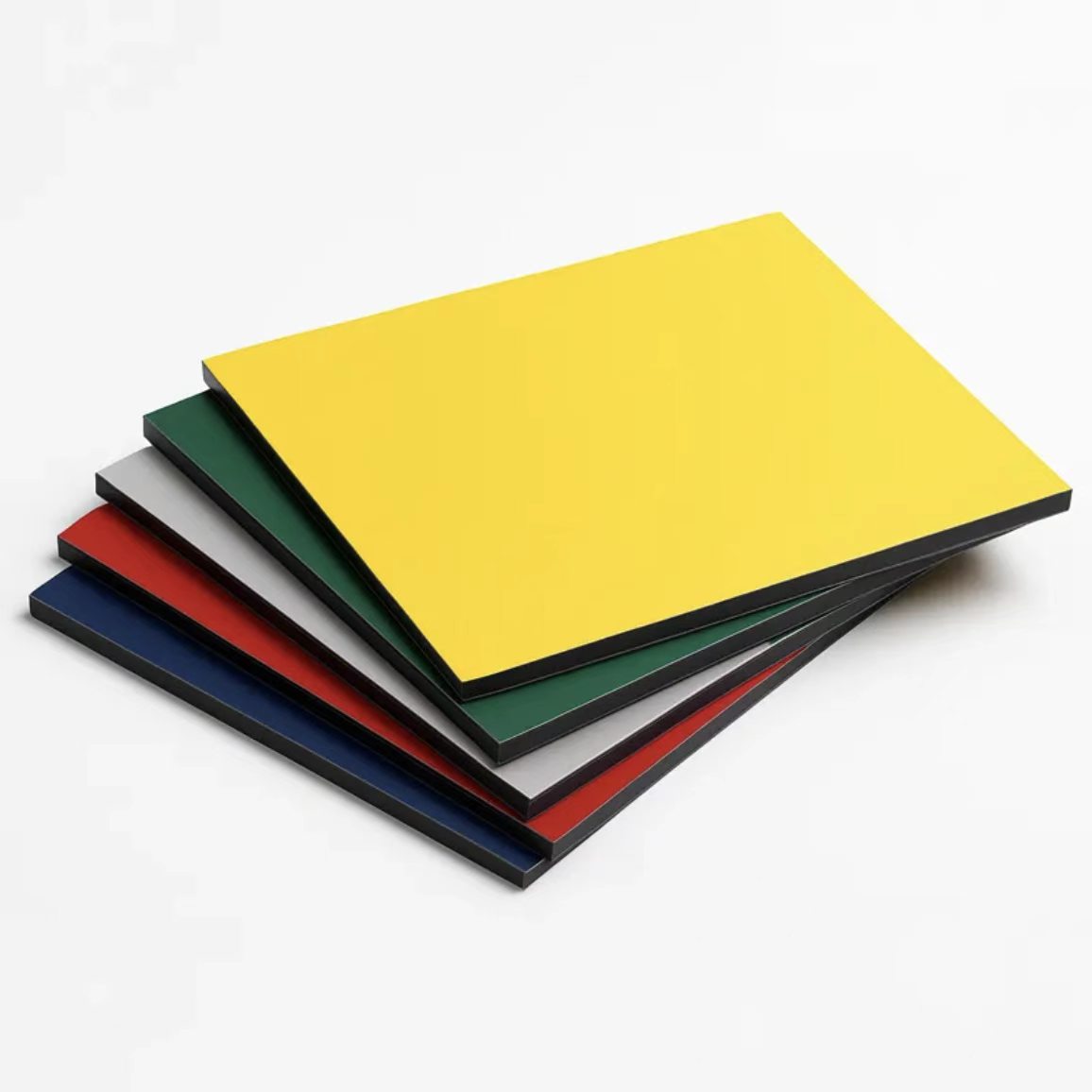
Many curtain wall projects use metallic silver, champagne, bronze, brushed-look, or custom colors. These finishes can create a distinctive building appearance, but they also require tighter visual control.
Metallic coatings contain reflective pigments. Their appearance can change with light direction, viewing angle, and panel orientation.
For this reason, buyers should not approve metallic finishes from a small flat color chip alone. A larger sample panel or facade mock-up can show how the finish behaves under different lighting conditions.
When specifying an Alucobond PVDF color for a metallic facade, confirm:
1. The exact coating product and color reference
2. The required gloss and surface texture
3. The permitted panel direction during installation
4. The sample size needed for approval
5. The acceptable visual variation between panels
6. The process for replacing damaged or mismatched panels
A mock-up is especially useful for projects with large metallic surfaces or several connected elevations.
7. Fabrication Quality: Protect the Finish After Coating
A high-performance coating can still suffer damage during fabrication. Cutting, routing, folding, drilling, and handling all affect the finished panel.
ACM fabrication often uses routing and folding to create corners, returns, and cassette panels. The process removes part of the rear aluminum skin and core to form a controlled fold.
Poor fabrication can cause coating cracks, scratches, uneven edges, or visible damage near corners. The risk depends on the coating system, aluminum skin, tool condition, groove design, bend radius, and workshop process.
Fabrication points buyers should review
Process | Possible Finish Risk | Recommended Control |
Cutting | Scratches and rough edges | Use suitable blades and clean handling |
Routing | Surface damage near grooves | Control groove depth and tool condition |
Folding | Coating cracks or edge damage | Test the actual profile before mass production |
Drilling | Burrs and surface marks | Use suitable tools and remove debris |
Cleaning | Surface staining or damage | Follow coating supplier instructions |
Packing | Friction marks and scratches | Use suitable protective film and separators |
Before mass production, ask the fabricator to make a sample using the actual panel thickness, coating, and corner design. Review the finished part under suitable lighting.
Do not assume that all PVDF products have the same forming behavior. The exact coating formulation and fabrication conditions matter.
8. Panel Flatness and Visual Alignment
A good coating cannot hide every panel surface problem. Flatness and alignment also affect how the curtain wall looks.
Large ACM panels may show oil-canning or visible waviness under certain lighting conditions. This effect can become more obvious on flat, glossy, or metallic surfaces.
Panel flatness depends on several factors:
· Aluminum skin thickness
· Panel dimensions and shape
· Core structure and bonding quality
· Fabrication accuracy
· Support spacing and fixing method
· Installation conditions
The facade contractor should review panel size, support layout, and fixing details before production. A sample installation can reveal problems that a small material sample cannot show.
For visible facades, approve the complete panel assembly rather than judging the coating alone.
9. PVDF Coating Standards: What Buyers Should Confirm
Professional buyers often use AAMA specifications when defining architectural coating performance. Two commonly referenced standards are AAMA 2604 and AAMA 2605.
AAMA 2605 sets more demanding performance requirements than AAMA 2604. The standards address coating performance areas such as weathering, color change, chalking, adhesion, and corrosion-related properties.
However, buyers should understand one important point: AAMA 2605 does not simply mean "PVDF," and AAMA 2604 does not simply mean "PE." The coating must meet the actual requirements of the specified standard.
Standard | General Performance Level | Buyer Consideration |
AAMA 2604 | High-performance architectural coating | May suit selected architectural applications |
AAMA 2605 | Superior-performance architectural coating | Often specified for demanding exterior applications |
When reviewing a supplier's report, check:
· The standard number and edition
· The coating manufacturer and product name
· The tested coating system and layer structure
· The test laboratory and report date
· The tested color or coating family
· Whether the report applies to the supplied product
A coating report does not certify the complete ACM panel. Buyers must review core type, bonding, aluminum thickness, fire performance, and mechanical properties separately when the project requires them.
10. Curtain Wall Mock-Ups: The Best Way to Review the Final Finish
A small color chip cannot show every detail of a curtain wall. A project mock-up gives architects, contractors, and owners a better view of the complete facade system.
A useful mock-up should include the actual panel finish, joint width, corner details, fixing system, sealants, and selected accessories. It should also use the same fabrication process planned for mass production.
What should the mock-up review cover?
Review Area | What to Inspect |
Color | Match with the approved reference |
Gloss | Consistency under different lighting |
Surface texture | Uniformity and visible defects |
Panel joints | Width, straightness, and alignment |
Corners | Fold quality and edge appearance |
Flatness | Waviness and oil-canning |
Fixings | Visible fasteners and connection details |
Sealants | Color, width, and finish quality |
Overall appearance | Visual balance across the facade |
The project team should record approval results before mass production. Any changes to coating product, color, panel size, or fabrication method should trigger a new review when they may affect appearance.
11. Project Example: Choosing a Finish for a Premium Office Curtain Wall
Consider a commercial office tower with a large visible ACM facade. The architect selects a metallic gray finish with a satin gloss level.
The building uses wide panels across several elevations. The owner expects a consistent appearance and wants to avoid visible color differences between production batches.
A standard PE finish may reduce the initial material cost, but the project requires strong outdoor appearance control. A qualified PVDF coating system is a more suitable starting point.
The procurement team should follow a clear process:
Step 1: Confirm the finish design.
Select the color, gloss level, and metallic effect with the architect.
Step 2: Approve a production sample.
Use the actual coating product and aluminum substrate.
Step 3: Review technical evidence.
Check the coating data and the required AAMA performance report.
Step 4: Test the fabrication method.
Produce corners and cassette panels with the planned tools and bend details.
Step 5: Approve the facade mock-up.
Review color, gloss, joints, flatness, and overall appearance.
Step 6: Control mass production.
Keep batch records and inspect the first production panels before continuing.
This process connects the visual design with measurable manufacturing controls. It also gives the buyer a clear reference for later inspections and replacement orders.
12. Procurement Checklist for Visible ACM Curtain Wall Finishes
A professional purchase order should describe the finish in measurable terms. Avoid relying on general wording such as "premium PVDF" or "high-quality exterior coating."
Use the following checklist before placing an order.
Confirm the coating type and coating manufacturer.
Identify the exact coating product or series.
State the required performance specification and edition.
Approve the color using a physical sample.
Define the gloss level and measurement method.
Set color difference limits and inspection conditions.
Confirm the panel surface texture.
Review fabrication samples and folded corners.
Confirm panel dimensions and flatness requirements.
Review packaging and protective film requirements.
Define batch identification and production traceability.
Approve a project mock-up before mass production.
Confirm inspection records and acceptance procedures.
Review warranty coverage and maintenance instructions.
A clear specification reduces disputes between the panel manufacturer, fabricator, facade contractor, and project owner. It also makes supplier quotations easier to compare.
Conclusion: PVDF Supports the Appearance Demands of Visible ACM Facades
Visible curtain wall panels need more than a good color name. They need stable color, controlled gloss, consistent surface quality, reliable fabrication, and accurate installation.
PVDF is the default choice for many exposed architectural ACM facades because it offers strong weathering performance and supports long-term appearance control. It is especially useful for large commercial buildings, office towers, retail projects, and other facades where visual quality matters.
However, the PVDF label alone does not guarantee a perfect result. Buyers should confirm the exact coating product, approve physical samples, review test reports, and inspect the complete fabricated panel system.
When selecting an Alucobond PVDF color, treat color, gloss, texture, and batch control as part of one finish specification. This approach gives architects and procurement teams a stronger basis for achieving a consistent and professional curtain wall appearance.