Welcome to Vbond
Chemical Plant ACP Cladding: Why Standard PE Is the Wrong Specification
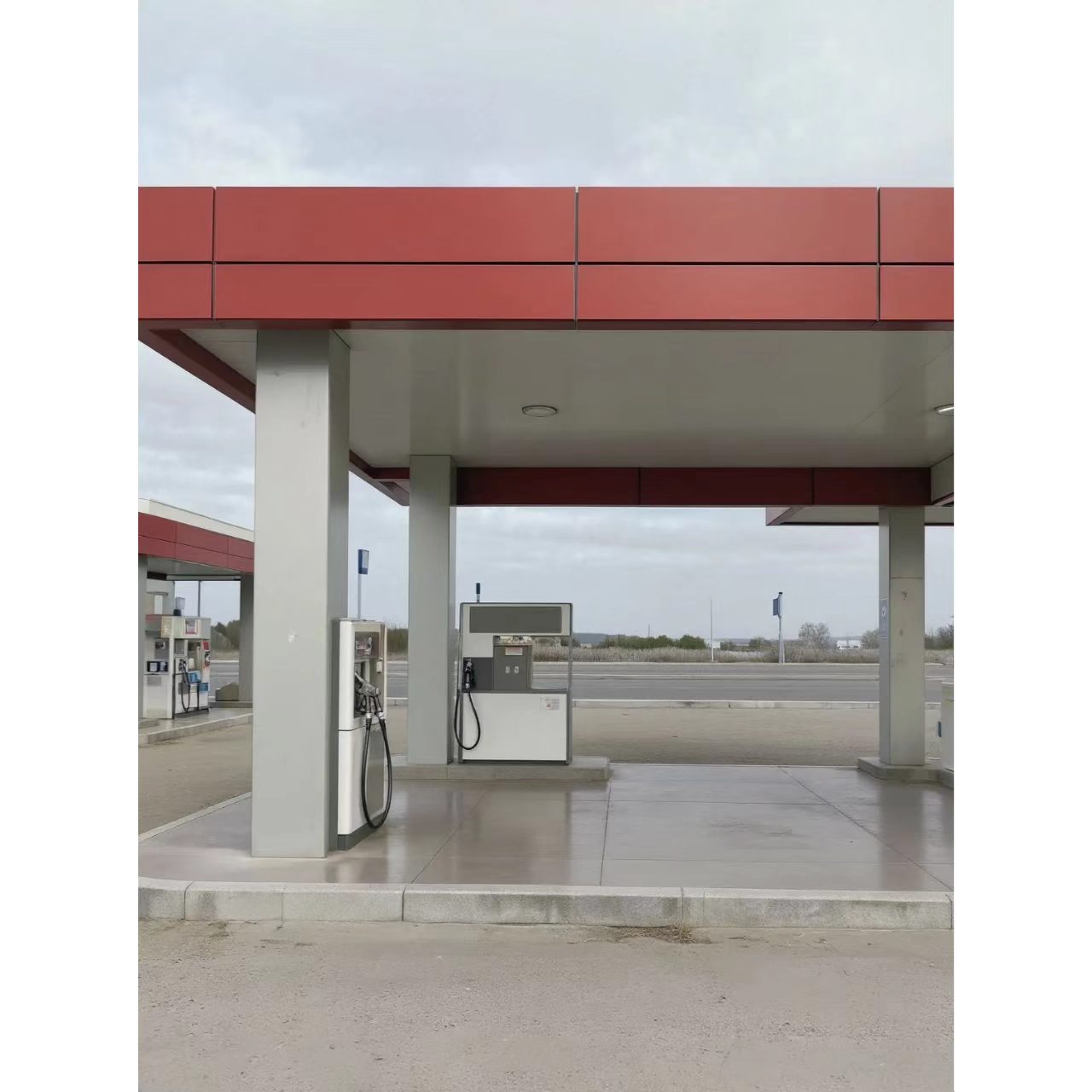
A chemical plant facade faces more than weather. It faces the plant itself.
Acid mist drifts from scrubber stacks. Solvent vapors vent from tank farms. Alkaline dust settles from loading operations. Wash-down water carries dilute chemicals across the wall. A coating on that building must survive the process chemistry, not just the climate.
Standard PE coating cannot. Polyester resin hydrolyzes under acid and alkali attack. The film breaks down at the molecular level, and the aluminum skin underneath loses its protection. A PVDF-coated Alucobond panel built to AAMA 2605 carries the chemical resistance a plant environment demands.
This guide explains why PE fails in chemical service, what tests separate a plant-grade coating from a weather-grade one, and how to write a specification that holds up under process exposure.
What Chemical Plant Air Actually Contains
A chemical plant atmosphere differs from a coastal or industrial one in kind, not just degree.
Acid species. Sulfur dioxide, hydrogen chloride, and nitrogen oxides leave stacks and vents. These gases dissolve into moisture on the facade and form dilute acids—sulfuric, hydrochloric, nitric. The film faces a low-pH environment every time humidity rises.
Alkaline dust. Lime, soda ash, and caustic powders settle on surfaces near loading and storage areas. When rain or wash water hits that dust, the runoff turns alkaline. A film that resists acid can still fail under alkali.
Solvent vapors. Hydrocarbon and organic solvent emissions from tank farms and process units contact the facade as vapor. Some solvents swell or soften organic coatings.
Wash-down runoff. Plants wash equipment and paved areas with water that carries process residues. That runoff splashes onto lower facade zones and dries, leaving concentrated chemical deposits.
The table below maps the stressor to the coating property it tests.
Plant Stressor | Chemical Form | Coating Property Tested | Test Method |
Stack acid mist | Dilute H₂SO₄, HCl, HNO₃ | Acid resistance | ASTM D1308 spot test |
Alkaline dust + rain | NaOH, KOH, Ca(OH)₂ runoff | Alkali resistance | Mortar pat test |
Solvent vapor | Hydrocarbons, organic solvents | Solvent resistance | Immersion/wipe test |
Wash-down splash | Mixed dilute process water | Water and chemical barrier | ASTM D2247 humidity |
Table 1. Chemical plant stressors and the coating tests that simulate them. Test methods from AAMA 2605 and coating manufacturer qualification protocols.
Why PE Fails Under Chemical Attack
PE coating is a polyester resin. Its polymer chain contains ester bonds. Those bonds are the weak point—not just for UV, but for chemicals.
Acid and alkali hydrolyze ester bonds. Water splits the ester linkage in the presence of acid or base. The resin chain breaks. The film loses cohesion, chalks, and eventually lifts from the aluminum. A dilute acid that would barely touch a fluoropolymer film degrades polyester over repeated wetting cycles.
Alkali attack runs faster than acid attack. Hydroxide ions attack ester bonds aggressively. A PE film that survives mild acid exposure can fail quickly under alkaline runoff from caustic dust. Plant environments deliver both.
Solvents soften and swell the film. Polyester has limited solvent resistance. Hydrocarbon vapors absorb into the film, swell it, and weaken the coating–metal bond. Once the bond weakens, blistering starts.
PE carries no architectural chemical rating. The corrosion comparison from coating suppliers rates polyester at the bottom tier for acid and alkali resistance, while Kynar 500 PVDF resin sits at the top. PE is not tested to AAMA 2605 chemical exposures because it cannot pass them. A PE-coated panel in a plant environment has no test data behind it.
The failure sequence mirrors the UV chalking path, with chemistry replacing sunlight as the driver.
Chemical exposure (acid mist, alkaline dust, solvent vapor)
↓
Ester bonds hydrolyze → resin chain breaks
↓
Film chalks, softens, or swells
↓
Adhesion at bond line weakens → blistering starts
↓
Film lifts; aluminum contacts process chemicals directly
↓
Corrosion under the film → panel failure
Figure 1. Chemical degradation path for polyester coating on ACP in plant exposure.
Why PVDF Holds Under the Same Chemistry
PVDF is a fluoropolymer. Its backbone uses carbon–fluorine bonds, one of the strongest bonds in organic chemistry. Those bonds do not hydrolyze under acid or alkali the way ester bonds do.
Independent laboratory comparisons rate Kynar 500 PVDF resin at the highest performance level (5 out of 5) for acid and alkali resistance, while polyester sits at level 3. The same data set rates PVDF at 5 for water immersion, against 3 for polyester.
That chemistry translates into plant performance:
- Acid mist resistance. PVDF films show no visual change under 10% muriatic acid spot testing, the standard chemical resistance screen for architectural coatings.
- Alkali resistance. Mortar pat testing—a 100% relative humidity, 100°F alkali exposure—produces no attack on a 70% PVDF film after 24 hours.
- Solvent and hydrocarbon resistance. PVDF resists oils, hydrocarbons, and general air pollutants. Petrochemical and refinery cladding specifications call for chemical-resistant PVDF specifically because it withstands hydrocarbon fumes.
- Dense barrier. The film cures into a low-porosity surface that slows chemical ingress. PE films are more open to vapor transmission.
A PVDF-coated Alucobond panel brings that chemistry onto an AlMg1-skinned aluminum substrate, so the metal underneath has corrosion resistance if a localized breach occurs.
AAMA 2605 Is the Floor, Not the Ceiling
AAMA 2605 is the standard that separates architectural PVDF from lower-tier coatings. It requires 70% PVDF resin, 10-year South Florida outdoor exposure, 4,000-hour humidity, and 4,000-hour salt spray.
For a chemical plant, AAMA 2605 is the minimum. It is a weather standard, not a chemical-process standard. Buyers should add three plant-specific requirements on top.
1. Written chemical resistance data. Ask for ASTM D1308 acid spot test results and mortar pat alkali results on the specific color and formulation being supplied. A generic “chemical resistant” claim is not enough.
2. Resin content at 70% or higher. Kynar 500 or Hylar 5000 at ≥70% by weight in the color coat. A 50% PVDF blend carries less fluorine and less chemical resistance. The coating data sheet must state the percentage.
3. Film thickness at the high end. A 70% PVDF system at 25–30 microns gives more barrier than a thin film. In chemical service, thickness buys time before a breach reaches metal.
Requirement | Weather-Grade PVDF | Plant-Grade Specification |
Resin content | ≥70% PVDF | ≥70% PVDF, stated in writing |
AAMA 2605 | Required | Required |
Acid spot test (ASTM D1308) | Not always reported | Reported on supplied color |
Alkali mortar pat | Not always reported | Reported on supplied color |
Film thickness | 25 microns minimum | 25–30 microns |
Table 2. Elevating a PVDF specification from weather-grade to plant-grade. Base requirements from AAMA 2605; plant additions from chemical resistance test protocols.
Substrate and Fasteners Matter More in a Plant
The coating protects the face. In a chemical plant, the rest of the assembly must match that protection level.
Skins. Alucobond uses AlMg1 (EN AW 5005A) skins. The specification explicitly excludes 3000-series and 1100-series alloys for reduced corrosion resistance. In a plant, that exclusion matters. AlMg1 carries magnesium for better resistance to chemical and atmospheric attack.
Fasteners. Stainless steel is not optional. Standard carbon steel or zinc-plated fasteners corrode quickly in acid and alkaline atmospheres, and the corrosion products stain the panel. 316 stainless holds. Petrochemical cladding guidance specifies stainless steel substructure as the only permitted option in corrosive environments.
Isolation. Where aluminum touches stainless or steel, isolate the joint. A chemical plant atmosphere is an electrolyte. Galvanic corrosion between dissimilar metals runs faster there than in ordinary coastal air.
Edge sealing. A cut edge exposes the core. In a plant, wash-down water and chemical runoff find that edge. Seal every cut face with a chemical-resistant sealant during fabrication. An unsealed edge is a chemical injection port into the panel core.
A Plant-Specific Procurement Checklist
Use this list at submittal review for any ACP facade inside a chemical plant boundary.
Coating
- ≥70% Kynar 500 or Hylar 5000** resin, stated as a percentage on the coating maker’s data sheet.
- AAMA 2605 certification with 4,000-hour humidity and salt-spray reports.
- ASTM D1308 acid spot and alkali mortar pat results on the supplied color.
- Dry film thickness 25–30 microns on the color coat.
- Warranty of 20 years covering chalk, color, and adhesion.
Panel
-AlMg1 (EN AW 5005A) skins. Reject 3000-series or 1100-series alloys.
-0.5 mm skin thickness verified on delivered panels.
- Mineral-filled core for flatness and fire performance.
Installation
- 316 stainless fasteners at every connection.
- Isolation washers between aluminum and any steel or stainless component.
- Chemical-resistant edge sealant on every cut face, applied during fabrication.
- Drained and ventilated cavity so wash-down water exits the wall.
Bottom Line for Chemical Plant Buyers
Standard PE is the wrong specification for a chemical plant facade. Polyester hydrolyzes under the acid and alkali species that plant air carries. The film chalks, lifts, and leaves the aluminum exposed to process chemistry. No warranty covers that failure because PE was never tested to resist it.
A PVDF-coated Alucobond panel with 70% Kynar or Hylar resin, AAMA 2605 certification, and plant-specific acid and alkali test data carries the chemical resistance the application requires. Pair it with AlMg1 skins, 316 stainless fasteners, isolation details, and sealed edges. The coating blocks the chemistry. The assembly blocks the corrosion.
Send the checklist with the RFQ. Require test reports on the supplied color, not a generic brochure. A supplier who can produce acid and alkali data for the exact product is selling a plant-grade panel. A supplier who offers “PVDF” without numbers is selling a weather coating into a chemical environment.