Welcome to Vbond
Honeycomb Core vs. Solid Core: Which Alucobond Type Resists Deformation Better?
You are specifying a large-format facade. The design demands flatness. The wind loads are significant. The client expects perfection.
The core of the panel determines whether that facade stays flat or starts to wave, ripple, or deform under load. Two core technologies dominate the premium end of the market: the traditional solid (mineral or PE) core and the aluminium honeycomb core.
This guide compares honeycomb core versus solid core Alucobond aluminium composite panel types. You will learn how each resists deformation. You will understand the physics behind their performance. And you will know exactly which one to specify for your project.
Part 1: What Are We Actually Comparing?
Solid Core (Traditional Alucobond)
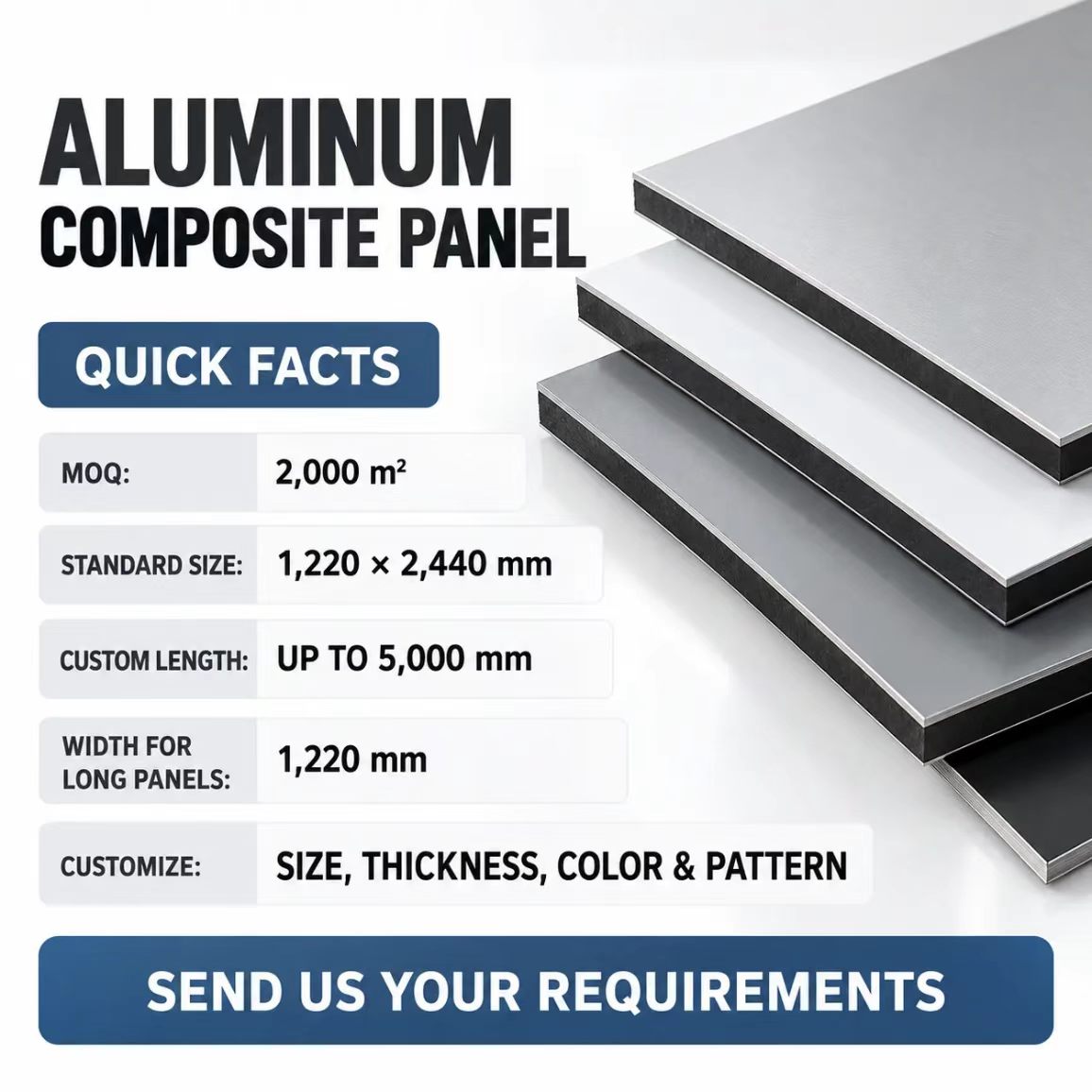
The classic Alucobond aluminium composite panel uses a solid core—either polyethylene (PE) or mineral-filled (FR/A2). Two thin aluminium skins (typically 0.3–0.5mm) bond to a solid plastic or mineral layer. The core provides thickness, rigidity, and structural support.
The ALUCOBOND core, for instance, utilizes a specialized mineral-filled formulation that maintains structural integrity even at the edges. Premium fire-rated panels from manufacturers like ALUCOBOND use mineral-filled cores with substantially higher density and stiffness than PE.
Honeycomb Core (ALUCORE)
ALUCORE is an advanced aluminium composite panel that sandwiches a rigid aluminium honeycomb core between two aluminium cover sheets. The honeycomb core consists of hexagonal cells (typically 10–19mm cell size) made from aluminium foil. The skins are thicker—typically 1.0mm on the front and 0.5–1.0mm on the rear.
This sandwich structure provides an outstanding strength-to-weight ratio and makes the panels highly rigid yet light. The aluminium honeycomb core gives the composite panel high rigidity and an extremely low weight.
Part 2: The Physics of Deformation Resistance
How Solid Core Resists Deformation
A solid core panel resists bending through the stiffness of its core material. The core keeps the two skins separated, creating a moment of inertia that resists bending. The higher the core's elastic modulus, the greater the resistance to bending.
The numbers for solid Alucobond:
Property | 4mm Alucobond (Mineral Core) |
Flexural rigidity (EI) | 2,400 kNcm²/m |
Modulus of elasticity | 70,000 N/mm² |
Thermal expansion | 2.4 mm/m per 100°C |
How Honeycomb Core Resists Deformation
A honeycomb core panel achieves its stiffness through geometry, not material mass. The hexagonal cells create a rigid internal framework that distributes stress efficiently. The core keeps the two skins at a fixed distance, greatly improving bending stiffness.
The numbers for honeycomb ALUCORE:
The difference is staggering. A 15mm honeycomb panel (75,500) has over 31 times the flexural rigidity of a 4mm solid core panel (2,400). The honeycomb structure behaves more like a thin, lightweight slab with depth than a mere sheet of metal—and that depth makes all the difference when wind pressure tries to bend or distort the surface.
Part 3: Deformation Resistance Comparison
Factor | Solid Core (4mm) | Honeycomb Core (15mm) | Winner | - |
Flexural rigidity (EI) | 2,400 kNcm²/m | 75,500 kNcm³/m | Honeycomb |
Resistance to bending | Good | Exceptional | Honeycomb |
Wind load performance | Moderate | Outstanding | Honeycomb |
Oil canning resistance | Moderate—can show ripples under load | Excellent—maintains flatness | Honeycomb |
Large-format stability | Requires mid-ribs> 900 mm width | Maintains flatness in large formats | Honeycomb |
Weight | ~5.5 kg/m² | ~6.7 kg/m² (15mm) | Solid |
For an Alucobond aluminium composite panel facade exposed to high wind loads, honeycomb is the clear winner. Honeycomb panels are recommended for facades or roofing exposed to extremely high wind loads, as well as for large, self-supporting roofs.
Part 4: Weight vs. Performance Trade-off
Honeycomb panels are heavier than solid core panels of similar thickness—but they achieve dramatically higher rigidity.
Weight comparison:
Panel Type | Thickness | Weight | Rigidity (EI) |
Solid core | 4mm | ~5.5 kg/m² | 2,400 |
Honeycomb | 15mm | ~6.7 kg/m² | 75,500 |
The honeycomb panel weighs only 22% more but delivers 31 times the rigidity. This is the strength-to-weight ratio advantage of honeycomb geometry.
Aluminium honeycomb composite panels are approximately 60% lighter than solid aluminium panels of equivalent thickness yet offer superior impact resistance and durability. The honeycomb structure concentrates material on the upper and lower surfaces and the hexagonal edges, while the internal space is filled with air, greatly reducing material usage.
Part 5: Application Guide — Which Core for Which Project?
Choose Solid Core (Traditional Alucobond) When:
- The project is low-rise or has moderate wind loads
- Panel sizes are moderate (under 900mm width)
- Weight is the primary constraint
- Budget is a significant factor
- The application is interior or low-exposure exterior
Choose Honeycomb Core (ALUCORE) When:
- The project is high-rise or in a coastal/windy location
- Wind loads are extreme or cyclic
- Panel sizes are large-format
- Flatness and oil canning resistance are critical
- The facade must remain flawless under load
- Self-supporting roofs or walkable surfaces are required
Part 6: What the Numbers Mean for Your Project
A high-rise facade faces significant wind pressure. The panel must resist bending, shear, and pressure forces. The unique geometry of a honeycomb core with hexagonal cells distributes stress across many small load paths rather than concentrating it, which helps prevent buckling or deformation.
Real-world implication:
A 15mm ALUCORE panel (EI: 75,500) can span significantly greater distances between supports than a 4mm solid core panel (EI: 2,400) without deflection or oil canning. This means fewer substructure members, faster installation, and a flatter facade.
For large-format panels, the honeycomb core maintains flatness under load, which is critically important for facades subject to cyclic wind pressure and suction.
What to Ask Your Supplier
When you purchase an Alucobond aluminium composite panel, ask these questions:
1. What core type do you recommend for my project's wind load? A knowledgeable supplier will assess your specific conditions.
2. What is the flexural rigidity of your panel? The answer should be backed by technical data.
3. What panel thickness do you recommend for large-format applications? Honeycomb panels come in 10mm, 15mm, 20mm, and 25mm thicknesses.
4. What is your panel's oil canning resistance? Premium honeycomb panels resist oil canning far better than conventional panels.
5. Can you provide technical data sheets? A professional manufacturer will have documented performance data.
Common Mistakes to Avoid
Mistake 1: Specifying solid core for large-format, high-wind applications
A 4mm solid core panel will deflect under high wind loads. The deflection causes stress on the adhesive bond. Blisters form.
Fix: For large-format facades exposed to high wind loads, specify honeycomb core.
Mistake 2: Assuming honeycomb is always heavier
Honeycomb panels achieve dramatically higher rigidity at a modest weight increase. The strength-to-weight ratio is superior.
Fix: Compare rigidity per kilogram, not just weight.
Mistake 3: Ignoring oil canning risk
Many conventional cladding materials show visible ripples or waves under load. Solid core panels are more susceptible than honeycomb.
Fix: For facades where flatness is critical, choose honeycomb.
The Bottom Line
If your question is "which Alucobond aluminium composite panel resists deformation better?" the answer is clear: honeycomb core.
The numbers are not subtle. A 15mm honeycomb panel delivers 75,500 kNcm³/m of flexural rigidity. A 4mm solid core panel delivers 2,400 kNcm²/m. The honeycomb panel has over 31 times the rigidity at only 22% more weight.
The honeycomb structure distributes stress across many small load paths, preventing buckling and deformation. It maintains flatness under load, resisting the oil canning that plagues conventional panels. It is the choice for high-rise facades, coastal developments, and large-format architectural statements.
Solid core Alucobond aluminium composite panels have their place—moderate wind loads, smaller panels, weight-sensitive applications, and budget-conscious projects. But when deformation resistance is the priority, honeycomb is the answer.
You are standing 20 stories up. The wind is gusting. The facade is flawless. Not a ripple. Not a wave. Not a single sign of deformation. That is the difference between specifying a panel that meets the minimum standard and specifying a panel that exceeds it. That is the difference between a facade that survives and one that thrives.
Choose the right Alucobond aluminium composite panel core for your project. Your facade's flatness depends on it.
Great facades are not defined by what you see. They are defined by what you do not see. No ripples. No waves. No deformation. No excuses.
The engineering that keeps an Alucobond aluminium composite panel flat under wind load is invisible to the untrained eye. The decision to specify honeycomb over solid core disappears into the building envelope—just as the decision to use the wrong core would eventually appear as distortion, oil canning, or failure.
One decision ensures the facade remains flawless for decades. The other ensures you get a phone call in 18 months.
The physics is settled. The numbers are clear. The choice is yours. Choose the core that protects your reputation as fiercely as it protects the building.