Welcome to Vbond
Industrial Atmosphere ACP Coating Selection: PE, HDP, or PVDF?
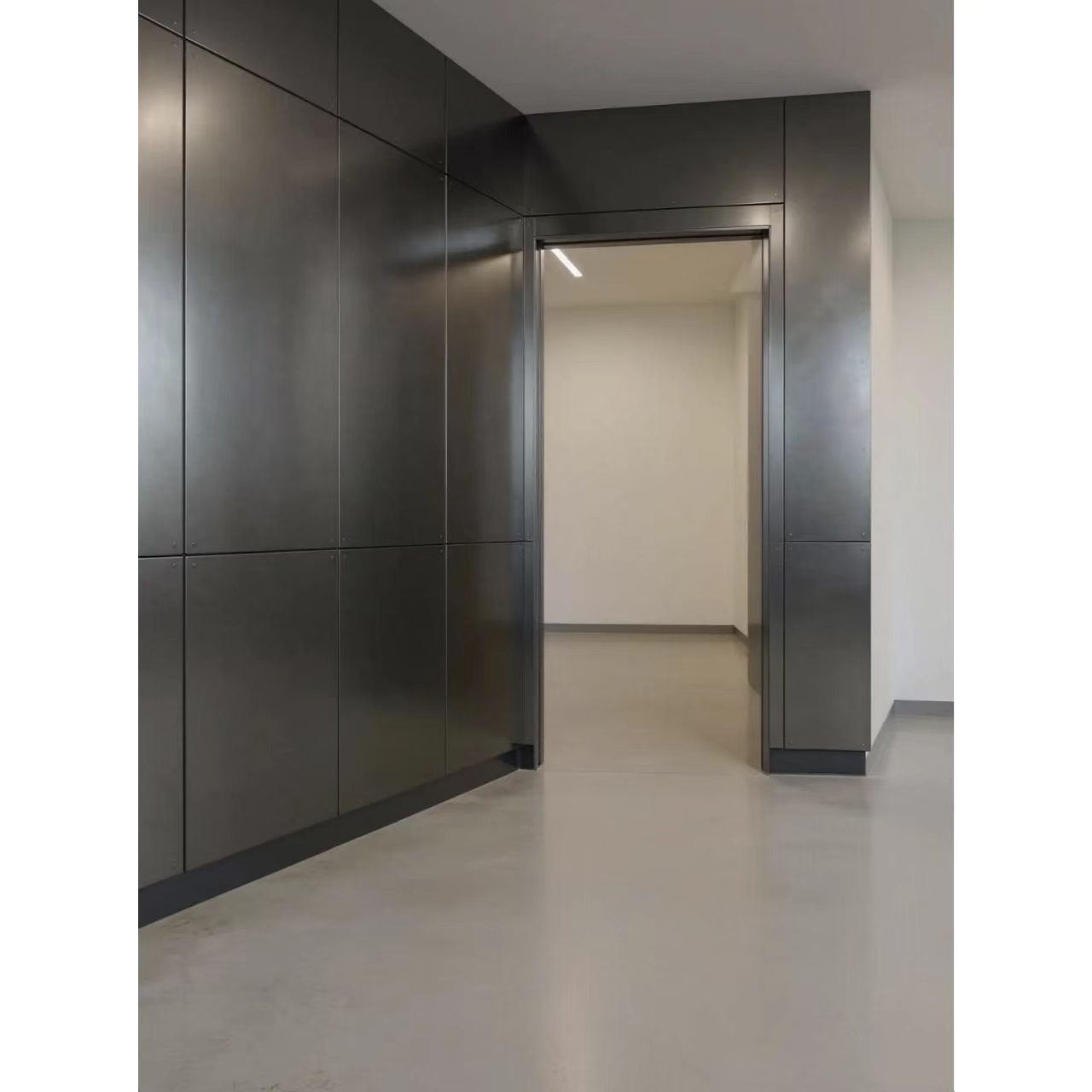
Industrial air does not attack a coating with one force. It attacks with three at once.
Acid rain runs down the facade after every storm. UV hits the film between storms. Abrasive dust from loading zones and unpaved yards settles on the surface and grinds against it in the wind. A coating on an industrial building must survive all three loads at the same time—not one after another.
Three coating classes compete for that job: PE, HDP, and PVDF. PE is the baseline. HDP sits in the middle. PVDF costs the most and carries the highest test standard. This guide explains where each coating belongs, where HDP stops being enough, and why a PVDF coated Alucobond panel is the specification that matches the harshest industrial sites.
What Makes “Industrial Atmosphere” Different
Industrial air adds chemical attack to ordinary weather.
Acid rain. Sulfur dioxide and nitrogen oxides from combustion and process stacks dissolve into rain and form dilute sulfuric and nitric acid. The film faces a low-pH wash every time it rains.
Abrasive particulate. Cement dust, fly ash, and metal particles settle on the facade. Wind drives them across the surface. A film that has begun to chalk abrades faster because the degraded layer has no strength left.
UV plus pollution together. UV breaks down organic resin. Pollutants and heat accelerate that breakdown. A film that resists one load can still fail when both hit the same surface.
Chemical fallout near specific processes. Fertilizer plants release ammonia. Smelters release fluoride. Pulp mills release sulfur compounds. Each adds a chemistry that a generic “weather-resistant” coating was not tested against.
The table below maps the stressor to the coating property it tests.
Industrial Stressor | Primary Attack | Coating Property Tested |
Acid rain | Hydrolysis of resin bonds | Acid resistance |
UV radiation | Resin breakdown, chalking | UV stability |
Abrasive dust | Film wear after chalking | Film toughness |
Humidity and pollution | Moisture ingress at edges | Barrier performance |
Chemical fallout | Specific chemical attack | Chemical resistance |
Table 1. Industrial atmosphere stressors and the coating properties they test. Stressor categories from ISO 9223 corrosivity classification and AAMA exposure criteria.
PE: The Baseline That Fails Under Combined Load
PE (polyester) coating is the most common ACP finish. It offers good flexibility, wide color choice, and the lowest price. It also carries the shortest service life of the three coatings.
PE resin contains ester bonds. UV breaks those bonds. Acid rain hydrolyzes them. Both paths lead to the same result: the resin disintegrates and releases pigment as chalk. PE coatings chalk visibly within five to eight years in industrial zones.
Once chalking starts, the film stops protecting the aluminum. Abrasive dust wears through the powdery layer faster than it wears a sound film. Moisture reaches the skin. Corrosion starts under the paint.
PE carries no architectural rating for industrial exposure. It is a coating for interiors, signage, and sheltered exteriors. It is the wrong specification for a permanent industrial facade.
HDP: The Middle Option and Its Ceiling
HDP (high-durability polyester) is an upgraded polyester resin. It uses UV absorbers and a more stable resin system to resist chalking better than standard PE.
HDP delivers 10 to 15 years of exterior service in moderate climates. That performance sits between PE and PVDF. HDP is the cost-effective default for general architectural panels, warehouses, and industrial buildings where the facade is functional rather than monumental.
HDP also anchors to a defined standard. AAMA 2604 is the specification for high-performance organic coatings that sit below the 2605 tier. AAMA 2604 covers 50% PVDF resin systems or equivalent high-durability polyester systems with five years of South Florida exposure and controlled chalking and color fade.
That five-year exposure window defines HDP’s ceiling. AAMA 2605 requires ten years of South Florida exposure and applies tighter limits to color shift and gloss loss. The weathering test requirement in 2605 is double the 2604 requirement. HDP meets the lower bar. On a harsh industrial site, the lower bar is not enough.
PVDF: The Standard That Matches Industrial Load
PVDF (polyvinylidene fluoride) is a fluoropolymer. Its backbone uses carbon–fluorine bonds. UV energy does not break that bond. Acid and alkali do not hydrolyze it the way they hydrolyze polyester.
A true architectural PVDF coating contains at least 70% Kynar 500 or Hylar 5000 resin. At that level, the coating meets AAMA 2605—the highest performance tier for architectural aluminum coatings.
AAMA 2605 tests what industrial air delivers:
Requirement | AAMA 2604 (HDP tier) | AAMA 2605 (70% PVDF) |
South Florida exposure | 5 years | 10 years |
Salt spray (accelerated) | Lower threshold | 4,000+ hours |
Humidity resistance | ASTM D659 max 8 | Rating ≥ 8 at 10 years |
Chalk limit after exposure | ΔE max 5 | ΔE ≤ 5 at 10 years |
Color shift limit | ΔE max 5 | ΔE ≤ 5 at 10 years |
Gloss retention | Lower | ≥ 50% |
Table 2. AAMA 2604 versus AAMA 2605 performance thresholds. The 2605 tier doubles the outdoor exposure window and adds stricter chemical and humidity testing. Data from AAMA 2604/2605 specification summaries.
PVDF also carries chemical resistance that HDP cannot match. Fluoropolymer films resist acid rain, alkaline runoff, and industrial pollutants. A PVDF film retains more than 92% of its gloss and color after 10 years of outdoor service in polluted atmospheres. Its service life reaches **20 to 25 years in industrial and coastal conditions.
That is the property industrial buyers need. The film stays intact while the acid rain, UV, and dust do their work.
The Selection Decision, Visualized
Industrial site assessment
│
├─ Facade is interior, temporary, or fully sheltered?
│ └─ PE acceptable
│
├─ Exterior, moderate pollution, functional building, 10-year horizon?
│ └─ HDP (AAMA 2604) may fit
│
└─ Exterior, acid rain / heavy pollution / abrasive dust / 20-year horizon?
└─ 70% PVDF (AAMA 2605) required
Figure 1. Coating selection decision path for industrial ACP facades.
Most industrial sites fall into the third branch. A factory, a processing plant, or a logistics hub in a polluted zone operates on a multi-decade horizon. The facade must survive the plant’s own emissions and the regional air quality. HDP’s ten-to-fifteen-year window forces a repaint or replacement cycle inside that horizon. PVDF does not.
Why PVDF Coated Alucobond Fits the Industrial Spec
Coating chemistry handles the surface. Panel construction handles the structure.
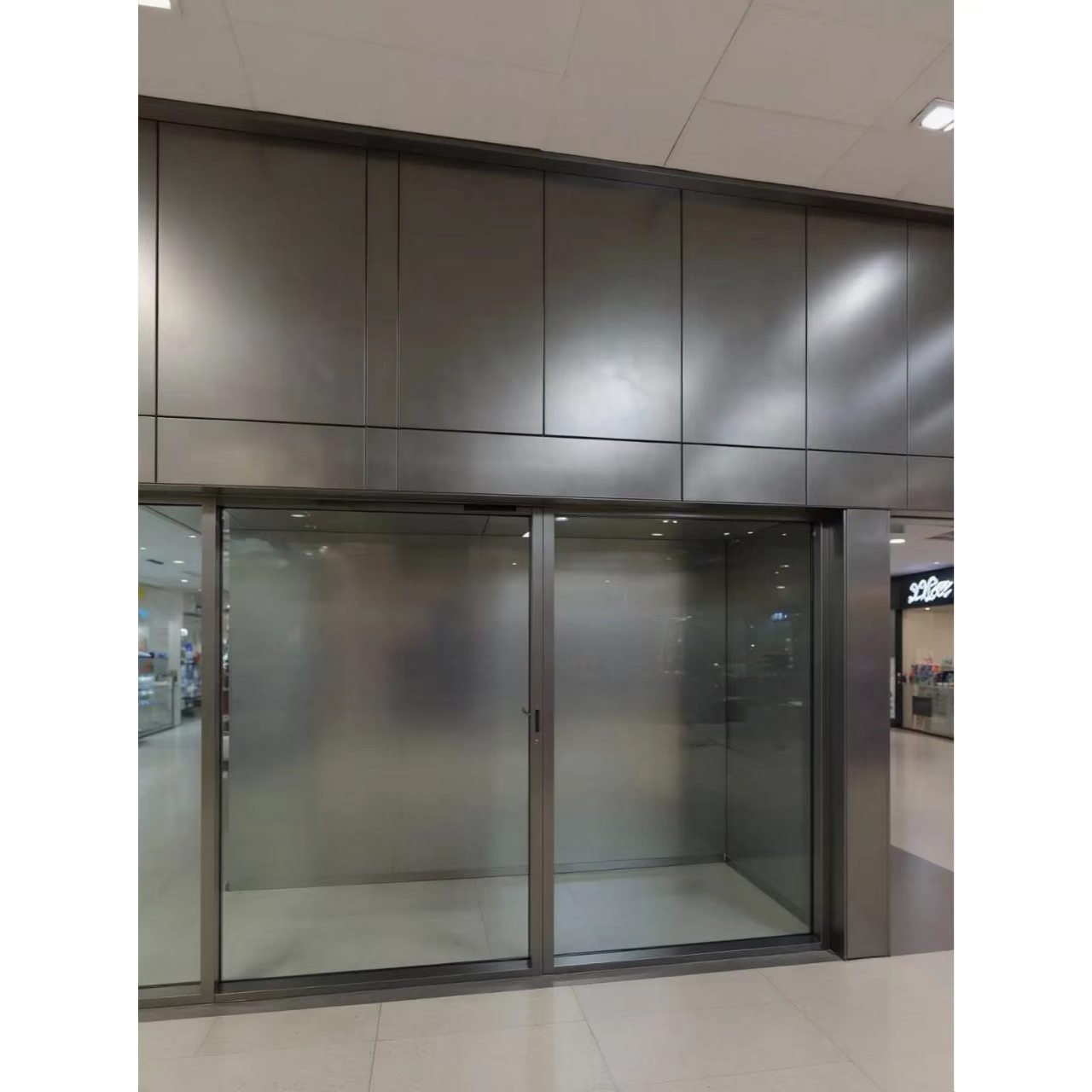
A PVDF coated Alucobond panel brings two layers of protection to an industrial facade.
The coating. Alucobond PLUS specifies a factory-applied fluoropolymer (PVDF or FEVE) coil coating in accordance with AAMA 2605. The film carries the UV, acid, and chemical resistance that industrial air demands.
The skins. Alucobond uses 0.5 mm aluminum skins in AlMg1 (EN AW 5005A) alloy. The specification explicitly rejects 3000-series and 1100-series alloys because they offer reduced corrosion resistance. In an industrial atmosphere, that rejection matters. AlMg1 carries magnesium for better resistance to polluted and acidic conditions.
The temperature range. The panel is rated from -50°C to +80°C. Industrial roofs and walls see high surface temperatures in summer. The panel holds its flatness and the coating holds its film across that range.
The specification also requires Alucobond PLUS to carry a single 10-year warranty covering panel and paint performance, supplied by the panel manufacturer rather than a distributor. A buyer who specifies this product gets a documented performance commitment, not a marketing claim.
A Three-Tier Procurement Checklist
Use this list to place a project in the right coating class before the RFQ goes out.
PE — interior and temporary only
- Confirm the facade is sheltered from rain and direct sun.
- Confirm the service horizon is under five years.
- Reject PE for any permanent exterior industrial wall.
HDP — moderate exterior, functional buildings
- Confirm AAMA 2604 compliance and 5-year South Florida data.
- Confirm the site is not in a heavy acid-rain or high-dust zone.
- Confirm the owner accepts a 10–15 year recoat or replacement horizon.
PVDF — industrial exterior, harsh load
- ≥ 70% Kynar 500 or Hylar 5000 resin, stated on the coating data sheet.
- AAMA 2605 certification with 4,000-hour salt spray and humidity reports.
- AlMg1 (EN AW 5005A) skins at 0.5 mm thickness on a 4mm panel.
- Written edge-sealing procedure for every cut face. Acid rain and wash-down water find open edges.
- 316 stainless fasteners where the facade meets steel framing.
Bottom Line for Industrial Buyers
PE belongs indoors. HDP belongs on moderate exterior walls. PVDF belongs on industrial facades that face acid rain, pollution, and a 20-year horizon. The AAMA standard draws the line: AAMA 2604 covers HDP-tier performance with a five-year exposure test. AAMA 2605 covers 70% PVDF with a ten-year test and double the weathering requirement.
A PVDF coated Alucobond panel built to AAMA 2605, with AlMg1 skins and sealed edges, carries the film integrity that industrial air demands. The coating blocks the chemistry. The alloy blocks the corrosion. The warranty runs for a decade and the service life runs for two.
Send the three-tier checklist with the RFQ. A supplier who offers HDP for a heavy industrial wall is selling a coating that will chalk inside the building’s first maintenance cycle. A supplier who documents 70% PVDF and AAMA 2605 is selling the specification that matches the site.