Welcome to Vbond
How to Choose the Right Adhesive to Prevent Alucobond Delamination
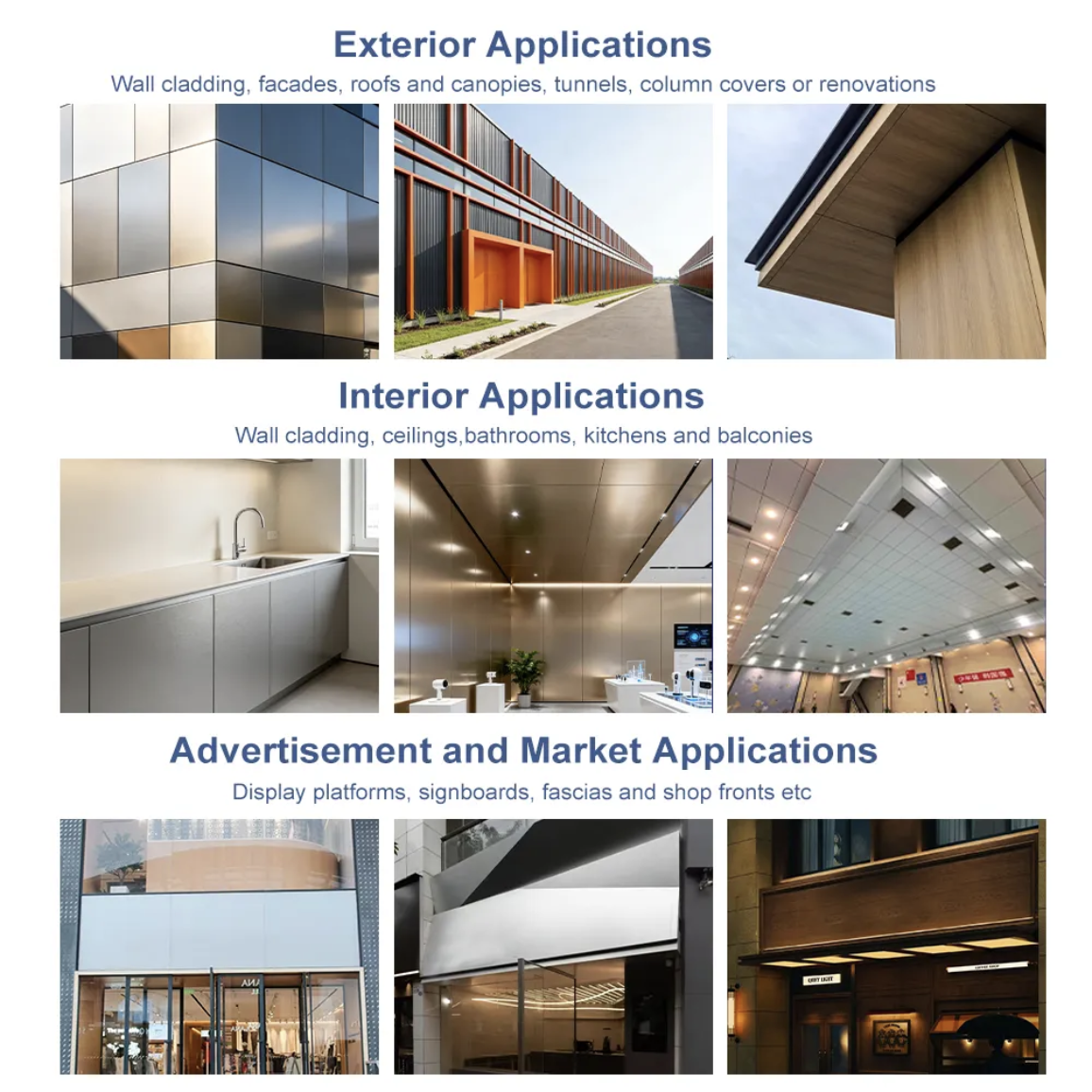
You spec an Alucobond facade. The panels arrive. The installation looks flawless.
Months later, you see them. Bubbles under the surface. The aluminum skin pulling away from the core. The panel is delaminating.
The adhesive is the problem. You chose the wrong one.
This guide explains how to choose the right adhesive to prevent Alucobond delamination. You will learn why most adhesives fail on Alucobond. You will understand the critical selection criteria. And you will know exactly what to specify for your project.
What Is Delamination and Why Does It Happen?
Alucobond is a sandwich panel. Two thin aluminum skins (typically 0.3- 0.5 mm) bond to a polyethylene or mineral-filled core. The bond between these layers determines the panel's performance.
Delamination occurs when that bond fails. The aluminum skin separates from the core. A void forms. That void becomes a visible blister or bubble.
Why delamination happens:
The most common cause is poor adhesive bonding between the aluminum skins and the core. This can happen during manufacturing or during installation.
When you use adhesives or sealing compounds that do not bond to the plastic core, the layers separate. As ALUCOBOND processing guidelines clearly state: "Glues or sealing compounds do not adhere to the plastic core of ALUCOBOND". Using non-compatible adhesives can reduce adhesion and compromise the fastening.
In high-temperature regions, counterfeit or low-quality panels may blister due to poor adhesive bonding between the aluminum skins and the core.
The Critical Rule: Most Adhesives Don't Work on Alucobond
Here is the most important thing to understand: standard adhesives and sealants do not adhere to the polyethylene core of Alucobond panels.
Most adhesives bond only to the aluminum skin. They do not grip the plastic core. The bond looks strong at first. Over time, thermal expansion and contraction stress the adhesive. It fails. The layers separate. Delamination follows.
What this means for your project:
You cannot use general-purpose construction adhesive. You cannot use standard caulk. You must use adhesives specifically formulated for aluminum composite panels (ACP) or ALUCOBOND.
Solvent-based or hybrid adhesives are often suitable because they penetrate well without degrading the core, ensuring a secure installation for facades or interior walls.
How to Choose the Right Adhesive: 5 Critical Factors
Factor 1: Core Compatibility
The adhesive must bond to both the aluminum skin AND the core material.
What to look for: Adhesives specifically formulated for aluminum composite panels (ACP). Products that mention ALUCOBOND, Dibond, or Reynobond compatibility.
What to avoid: General-purpose construction adhesives. Standard silicone sealants. Any product not rated for ACP bonding.
Factor 2: Flexibility and Elasticity
Alucobond expands and contracts with temperature changes. The linear thermal expansion coefficient is 2.4 mm per meter for every 100°C temperature difference.
The adhesive must move with the panel. A rigid adhesive cracks under thermal stress. The crack allows moisture ingress. Delamination follows.
What to look for: Permanently elastic adhesives that remain flexible after curing. MS polymer adhesives and polyurethane adhesives offer excellent elasticity.
Bostik Paneltack HM is an example of a durable elastic adhesive that can accommodate deformations of Alucobond panels.
Factor 3: Moisture and Weather Resistance
Exterior Alucobond facades face rain, humidity, and UV exposure. The adhesive must resist all three.
What to look for: Moisture-curing adhesives. UV-resistant formulations. Products rated for exterior use.
What to avoid: Adhesives that degrade under UV exposure. Products not rated for weather resistance.
Factor 4: High Initial Tack and Bond Strength
The adhesive must hold the panel in place during curing. It must develop structural strength quickly.
What to look for: High initial tack (green strength). Structural adhesive ratings. Products with proven bond strength for aluminum composite panels.
Bostik Xtreme High Tack, based on MSP (Modified-Silyl Polymer) technology, offers extremely high initial tack and cures under humidity to form a durable elastic rubber. It is recommended for bonding aluminum, including ALUCOBOND.
Factor 5: Application Method
The adhesive must work with your installation method. Some products require special primers. Some need specific curing conditions.
What to look for: Clear application instructions. Compatibility with your substrate. Primer requirements if needed.
Adhesive Types That Work on Alucobond
Adhesive Type | Best For | Key Characteristics |
MS Polymer | Exterior facades, invisible fixing | Permanently elastic, UV resistant, solvent-free, bonds to aluminum and composites |
Structural Acrylic | High-strength structural bonding | Fast curing, high shear and peel strength, primerless on most metals |
Polyurethane (PUR) | Ventilated facades, invisible fixing | Moisture-curing, elastic, paste-like consistency |
Structural Silicone | Flush, seamless surfaces | Excellent weather resistance, UV stable, bonds to aluminum |
Acrylic Foam Tape | Panel-to-frame bonding, stiffener attachment | High strength, permanent, replaces mechanical fasteners |
Caption: Adhesive types that work on Alucobond panels. Source: Industry technical data.
Alt text: Table showing MS polymer, structural acrylic, polyurethane, structural silicone, and acrylic foam tape with best applications and key characteristics.
Recommended Adhesive Products for Alucobond
MS Polymer Adhesives:
- Bostik Xtreme High Tack – High-performance MSP adhesive with extremely high initial tack, moisture- and UV-resistant, bonds aluminum, including ALUCOBOND
- Bostik Paneltack HM – Durable elastic adhesive for aluminum composite, can accommodate panel deformations
- Permabond TA4522 – Ideal for bonding composite materials like Alucobond, especially for applications with no visible fasteners
Structural Acrylic Adhesives:
- ACRALOCK SA10-15AW – Acrylic adhesive for aluminum and composites, elevated temperature cohesive strength
- LOCTITE AA V5004 – Structural acrylic compatible with aluminum, cures fast at room temperature
Polyurethane Adhesives:
- SikaTack Panel System – One-component polyurethane adhesive with paste-like consistency that cures under atmospheric moisture, for invisible fastening of ventilated facades
Acrylic Foam Tapes:
- 3M™ VHB™ Tape – Extraordinarily strong double-sided foam tape that adheres to aluminum, composites, and plastics. Specifically recommended for mounting composite materials like Alucobond
- Tesa ACXplus 70200 – Acrylic foam tape, 2mm thick, approved for Alucobond panel bonding
Surface Preparation: The Make-or-Break Step
Even the best adhesive will fail without proper surface preparation. The bonding surfaces must be clean, dry, and grease-free.
Step 1: Clean the surface
Remove all dirt, grease, oil, and dust. Use a suitable cleaner such as isopropyl alcohol or a dedicated panel cleaner.
Step 2: Apply primer (if required)
Some adhesive systems require a primer. For Alucobond panels, use primers specifically recommended for aluminum composite panels.
Primer options:
- Pro Part Primer Metall PM 509 – For Alucobond panels and aluminum profiles
- SikaTack-Panel Primer – For Sika adhesive systems
- tesa 60150 Adhesion Promoter – For tesa tape systems
- 3M Primer 94 – For 3M tape systems
The back side of ALUCOBOND panels must be either mill-finished (uncoated) or factory-coated with epoxy primer or polyester paint for use with approved adhesive systems.
Step 3: Allow proper drying time
Follow the primer manufacturer's drying time recommendations. Do not rush this step.
Step 4: Apply adhesive
Apply the adhesive according to the manufacturer's instructions. For spot gluing, ensure the diameter of the glue dots is at least 30 mm, and the spacing is no more than 200mm.
The Adhesive Selection Flowchart
Start
│
▼
Determine application (exterior/interior, facade/stiffener)
│
▼
Check core compatibility
│
├─── Adhesive bonds to PE/mineral core? ─── No ───► Reject
│
Yes
│
▼
Check flexibility/elasticity
│
├─── Accommodates 2.4 mm/m/100°C expansion? ─── No ───► Reject
│
Yes
│
▼
Check weather resistance
│
├─── UV and moisture resistant? ─── No ───► Reject
│
Yes
│
▼
Select adhesive type (MS Polymer, PUR, Acrylic, or Tape)
│
▼
Verify with supplier: "Is this approved for Alucobond?"
│
▼
Prepare surfaces (clean, dry, primer if required)
│
▼
Apply adhesive per manufacturer's instructions
│
▼
Allow proper cure time
│
▼
Done ───► Delamination-free installation
Common Mistakes to Avoid
Mistake 1: Using general-purpose construction adhesive
Standard adhesives do not bond to the polyethylene core. They fail within months.
Fix: Use adhesives specifically formulated for ACP/ALUCOBOND. Look for products that mention ALUCOBOND compatibility.
Mistake 2: Skipping surface preparation
Dirt, oil, or dust on the bonding surface prevents adhesion. The bond fails.
Fix: Clean every surface thoroughly. Use isopropyl alcohol or a dedicated panel cleaner. Apply primer if required.
Mistake 3: Ignoring primer requirements
Some adhesive systems require a primer. Skipping it reduces bond strength significantly.
Fix: Follow the manufacturer's instructions. Use the recommended primer for your adhesive system.
Mistake 4: Using rigid adhesives
Rigid adhesives crack under thermal expansion. Moisture enters. Delamination follows.
Fix: Use permanently elastic adhesives (MS polymer, polyurethane) that move with the panel.
Mistake 5: Not allowing proper cure time
Adhesives need time to reach full strength. Rushing the cure compromises the bond.
Fix: Follow the manufacturer's cure time recommendations. Do not stress the bond during curing.
What to Ask Your Supplier
When you purchase an Alucobond panel for your project, ask these questions:
1. What adhesive do you recommend for your panels? A knowledgeable supplier will specify approved products.
2. What primer do you recommend? The answer should include specific primer products.
3. What is the maximum panel temperature during adhesive curing? The maximum allowed material temperature is 70°C during accelerated drying.
4. Do you provide adhesive application guidelines? A reliable manufacturer will have technical documentation.
5. What is your warranty coverage for adhesive-related delamination? The answer should include specific terms.
The Bottom Line
Choosing the right adhesive prevents Alucobond delamination. The wrong adhesive causes it.
The rule is simple: standard adhesives do not bond to the plastic core of Alucobond. You must use adhesives specifically formulated for aluminum composite panels.
Look for:
- MS polymer adhesives (Bostik Xtreme High Tack, Paneltack HM)
- Structural acrylic adhesives (ACRALOCK, LOCTITE AA V5004)
- Polyurethane adhesives (SikaTack Panel System)
- Acrylic foam tapes (3M VHB, Tesa ACXplus)
Prepare surfaces properly. Use the right primer. Allow full cure time.
A reliable Alucobond panel supplier provides the technical data. Your adhesive selection determines the quality. Get the adhesive right, and your facade stays flat for decades. Get it wrong, and delamination appears within months.
Most blistering problems trace back to one cause: ignoring the movement. The panels expand. They contract. They do this every day for decades. If you design for that movement, your facade will outlast the building itself. If you ignore it, you will be back to replace the panels within two years.