Welcome to Vbond
Why Material Sourcing Matters: How Low-Quality Core Causes Alucobond Blisters
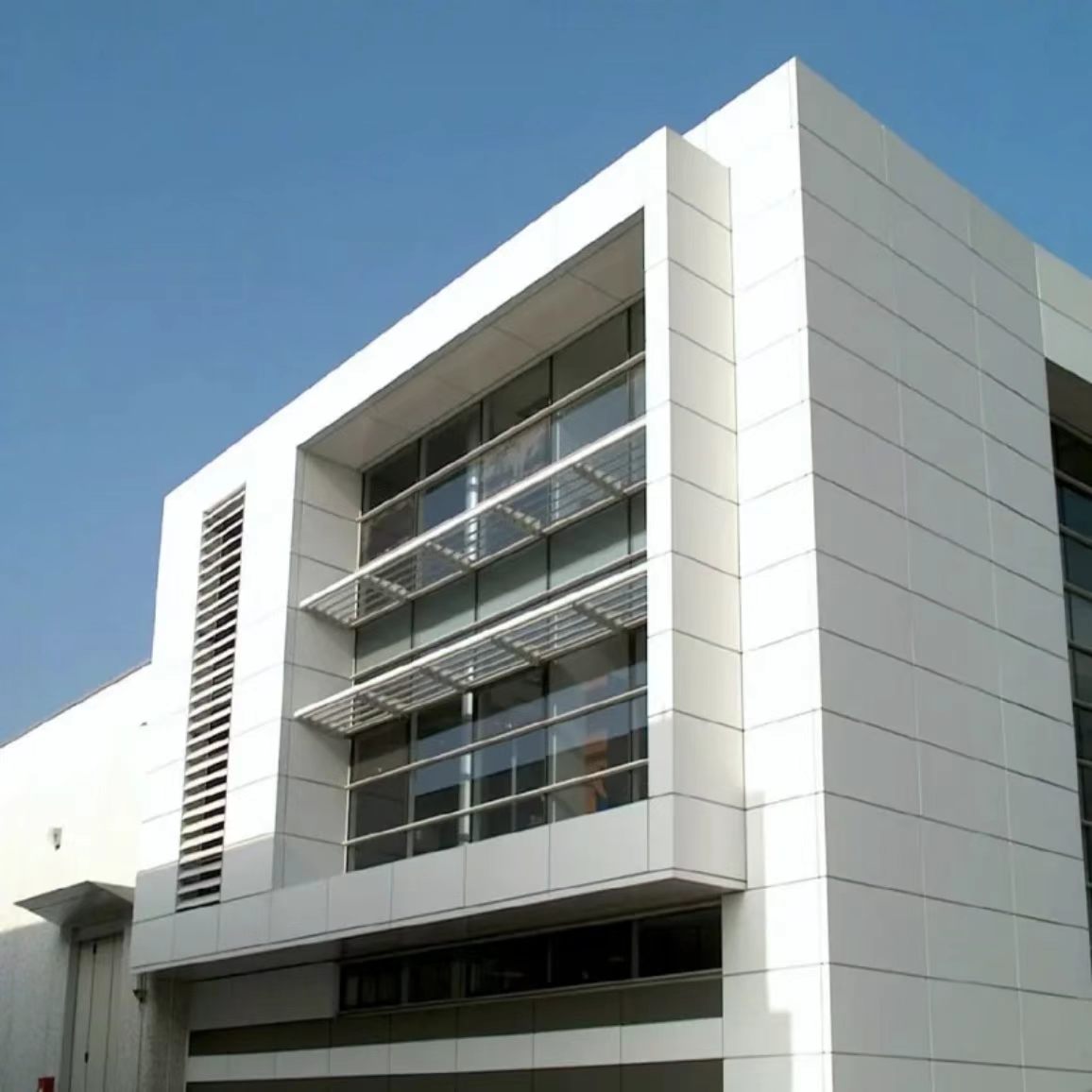
You stand under the finished ceiling, looking up. The panels are flawless. The client approves. Everyone moves on.
Six months later, the phone rings. "There are bubbles on the ceiling. They're spreading."
You go back. You look up. And there they are—raised blisters dotting the once-pristine surface. The sleek interior is ruined. The client is furious. The supplier has vanished.
This is not bad luck. This is chemistry. Specifically, it is the predictable failure of a low-quality core.
This guide explains why material sourcing determines whether your Alucobond panels stay flat or blister within months. You will learn the hidden chemistry of core failure. You will understand how to distinguish quality from counterfeit. And you will know exactly what to demand from your supplier.
Part 1: The Core of the Problem — What's Actually Inside Your Panel
The core of an Alucobond panel is not just filler. It is the structural heart of the panel. It determines the panel's rigidity, fire performance, and long-term durability.
A high-quality Alucobond panel uses a precisely engineered core—whether polyethylene (PE), fire-retardant (FR), or A2 mineral-filled—with uniform density, controlled filler content, and strong adhesive bonding. The core maintains its thickness and shape under load, distributing stress evenly to the aluminum skins.
A low-quality panel uses recycled materials, excessive filler, or inconsistent polymer content. The core contains voids, unmelted particles, or hygroscopic fillers that absorb moisture like a sponge. It crumbles at the edges. It fails from the inside out.
The core types at a glance:
Core Type | Composition | Characteristics | Risk Level |
Virgin PE | High-density polyethylene | Flexible, stable, predictable | Low |
Recycled/Cheap PE | Industrial waste, unknown additives | Volatile, moisture-absorbing, chemically unstable | High |
FR Mineral (B1) | 70% mineral, 30% polymer | Semi-rigid, self-extinguishing | Moderate |
A2 Mineral | 90%+ mineral content | Non-combustible, dimensionally stable | Very Low |
Part 2: The Chemistry of Failure — Why Low-Quality Cores Blister
Low-quality LDPE cores fail through four distinct chemical mechanisms. Each one destroys the panel from the inside.
Mechanism 1: Thermal Mismatch
LDPE reacts violently to temperature changes. It has a coefficient of linear expansion of 200–400 ×10⁻⁶/K. The aluminum skins expand at a different rate. When the core pushes against the skins at a different speed, the adhesive bond is stressed beyond its limit. The bond fails. Voids form. Blisters appear.
Mechanism 2: Low Melting Point
LDPE begins to soften at just 50°C (122°F). On a dark-colored ceiling in a building with poor climate control—or worse, on an exterior facade—surface temperatures can easily exceed 80°C. The core essentially melts, losing its structural bond to the aluminum. The panel delaminates.
Mechanism 3: Chemical Additives and Moisture Trapping
This is where cheap cores fail catastrophically. To save money, low-quality manufacturers use recycled or impure LDPE granules laden with chemical additives—antioxidants, slip agents, and plasticizers.
When these additives segregate to the surface (a process called "blooming"), they react with moisture and the aluminum primer. Materials science research confirms that segregated antioxidant components can trap moisture, leading to "ultra-giant blistering" with bubble diameters exceeding one millimeter within minutes of exposure to humidity.
The reaction mechanism:
1. Cheap LDPE contains unregulated additives like phosphite antioxidants
2. Humidity penetrates the panel edges or micro-cracks in the coating
3. Trapped moisture reacts with chemical agents and the adhesive interface
4. Gaseous by-products create pressure, forcing the aluminum skin away from the core
In high-quality panels, manufacturers use virgin LDPE with stabilized additives and rigorous cleaning protocols. In low-quality panels, they skip the cleaning and use industrial waste. The result is a ticking chemical time bomb.
Mechanism 4: UV Degradation
Standard LDPE degrades under UV exposure. As the core breaks down, it loses volume, creating voids that allow the aluminum skins to separate and blister. Mineral-filled cores resist this degradation.
Part 3: The Timeline of Failure — Why It Happens Within Months
Why do low-quality panels blister so quickly? Because of the accelerated aging cycle.
The 3-month failure sequence:
Phase | Timeframe | What Happens |
Moisture ingress | Day 1-30 | Water vapor penetrates through unsealed edges or micro-cracks. Inferior cores with high porosity accelerate this process. |
Core absorption | Week 2-8 | The core absorbs moisture. Recycled polyethylene with calcium carbonate fillers is particularly vulnerable. The core swells and loses dimensional stability. |
Vaporization | Week 4-12 | Solar heating turns trapped moisture into steam. Water expands approximately 1,600 times in volume when converting to vapor. |
Blister formation | Week 8-12 | Expanding vapor pressure forces the aluminum skin away from the core. Bond strength degrades from ≥4 N/mm to near zero. |
For an Alucobond ceiling panel, the stakes are even higher. A ceiling is viewed from below. Every imperfection is visible. Every blister catches the light. Every failure is magnified.
Part 4: Delamination vs. Moisture Expansion — Two Different Failures
Blisters on Alucobond panels fall into two distinct categories:
Delamination blisters are manufacturing defects caused by production line failures. They arise from contamination, unmelted plastic particles, inadequate bonding pressure, or incompatible adhesives. They appear smooth and rounded, feel hollow when pressed, and are distributed randomly across the panel surface. The manufacturer is liable.
Moisture expansion blisters are field failures caused by improper installation or environmental exposure. They appear when moisture enters the core through unsealed edges or failed sealant joints. They feel spongy when pressed and often appear first at panel edges.
The critical difference: Delamination blisters are a manufacturing defect. Moisture expansion blisters are an installation or environmental failure. But both are accelerated by a low-quality core that absorbs moisture, contains chemical additives, or lacks structural integrity.
Part 5: The Counterfeit Trap — How to Spot Low-Quality Cores
Counterfeit and low-quality Alucobond panels are widespread. In high-temperature regions, counterfeit panels may blister due to poor adhesive bonding between the aluminum skins and the core.
Five red flags to watch for:
Red Flag | What It Means |
No mill certificates | Supplier cannot prove core composition or fire rating |
Vague technical data | "High-grade aluminum" with no alloy specification |
Unusually low price | Someone cut corners—usually on the core |
Inconsistent edge texture | Crumbling, powdery, or waxy core edges |
No batch traceability | Cannot link panels to production records |
What genuine Alucobond looks like:
Genuine ALUCOBOND panels from a reputable factory use 0.5mm marine-grade alloy skins and dense, precisely formulated cores. The ALUCOBOND A2 core contains over 90% inorganic mineral content. The panel is non-combustible and meets fire class A2 (s1, d0 according to EN 13501-1). The ALUCOBOND PLUS core is mineral-filled and flame-retardant.
What counterfeit looks like:
A cheap panel from an unknown supplier uses recycled LDPE with unregulated additives. The core crumbles at the edges. The fire rating is falsified. The panel blisters within months.
Part 6: What to Demand from Your Supplier
Do not leave core quality to chance. Put the requirements in writing.
Your procurement specification should include:
1. Core material specification — Virgin LDPE, FR mineral-filled (70%+ mineral), or A2 mineral-filled (90%+ mineral). No recycled or unspecified materials.
2. Mill certificates — Batch numbers, production dates, core composition, and fire test results.
3. Peel strength test results — ≥4 N/mm minimum for exterior-grade panels.
4. Fire test certification — EN 13501-1, ASTM E84, or NFPA 285 as required by your project.
5. Batch traceability — Every panel must be traceable to a production batch.
6. Sample testing — The right to test samples before installation, including flame tests and peel strength tests.
What to ask your supplier:
- "What is your core material? Virgin PE, FR mineral, or A2 mineral?"
- "Can you provide mill certificates with batch numbers?"
- "What is your peel strength in N/mm?"
- "What fire test standards do you meet?"
- "Can you provide a sample for pre-installation testing?"
A reputable Alucobond panel supplier will answer these questions without hesitation. A supplier that cannot or will not provide documentation is hiding something.
Part 7: The Inspection Protocol — Test Before You Install
Before any Alucobond ceiling panel goes up, run through this inspection checklist.
Step 1: Visual edge inspection
Examine the exposed core edge. A quality core shows uniform color, dense texture, and no visible voids. A low-quality core shows inconsistent coloration, glossy patches, or crumbling edges.
Step 2: The finger rub test
Rub the edge vigorously with your fingertip. A quality core remains intact. A crumbling core sheds particles or powder.
Step 3: The flame test (sample only)
Apply a direct flame to a small sample for 10-15 seconds. A genuine mineral core self-extinguishes within 1-2 seconds. A PE core ignites rapidly and continues burning.
Step 4: The tap test
Tap the panel surface with the handle of a screwdriver. A solid panel produces a sharp, consistent sound. A panel with core defects produces a dull, hollow sound.
Step 5: Documentation verification
Review mill certificates, fire test reports, and batch numbers. Reject any shipment with missing or incomplete documentation.
The Bottom Line
Material sourcing is not a procurement formality. It is the single most important decision you will make for your Alucobond installation.
A low-quality core is a ticking chemical time bomb. It absorbs moisture. It reacts with chemical additives. It expands at a different rate than the aluminum skins. It degrades under UV exposure. It crumbles at the edges. It blisters within months.
A high-quality Alucobond panel—whether for a facade or an Alucobond ceiling panel—uses a precisely engineered core that maintains structural integrity, resists moisture, and stays flat for decades.
The difference is not visible from the outside. You cannot see core quality by looking at the surface. You cannot feel it by touching the panel. You have to demand the documentation. You have to inspect the edges. You have to test the samples. You have to know what is inside.
Because when you are standing under that Alucobond ceiling panel six months from now, looking up at a flawless surface, you will know—not hope, not guess, but know—that the core is sound. Because you checked. Because you specified the right material. Because you refused to accept anything less.
That is the difference between a project that lasts and one that fails. That is the difference between a supplier you trust and one you will never call again.