Welcome to Vbond
Site Storage Best Practices: Keeping Alucobond Dry and Blister-Free
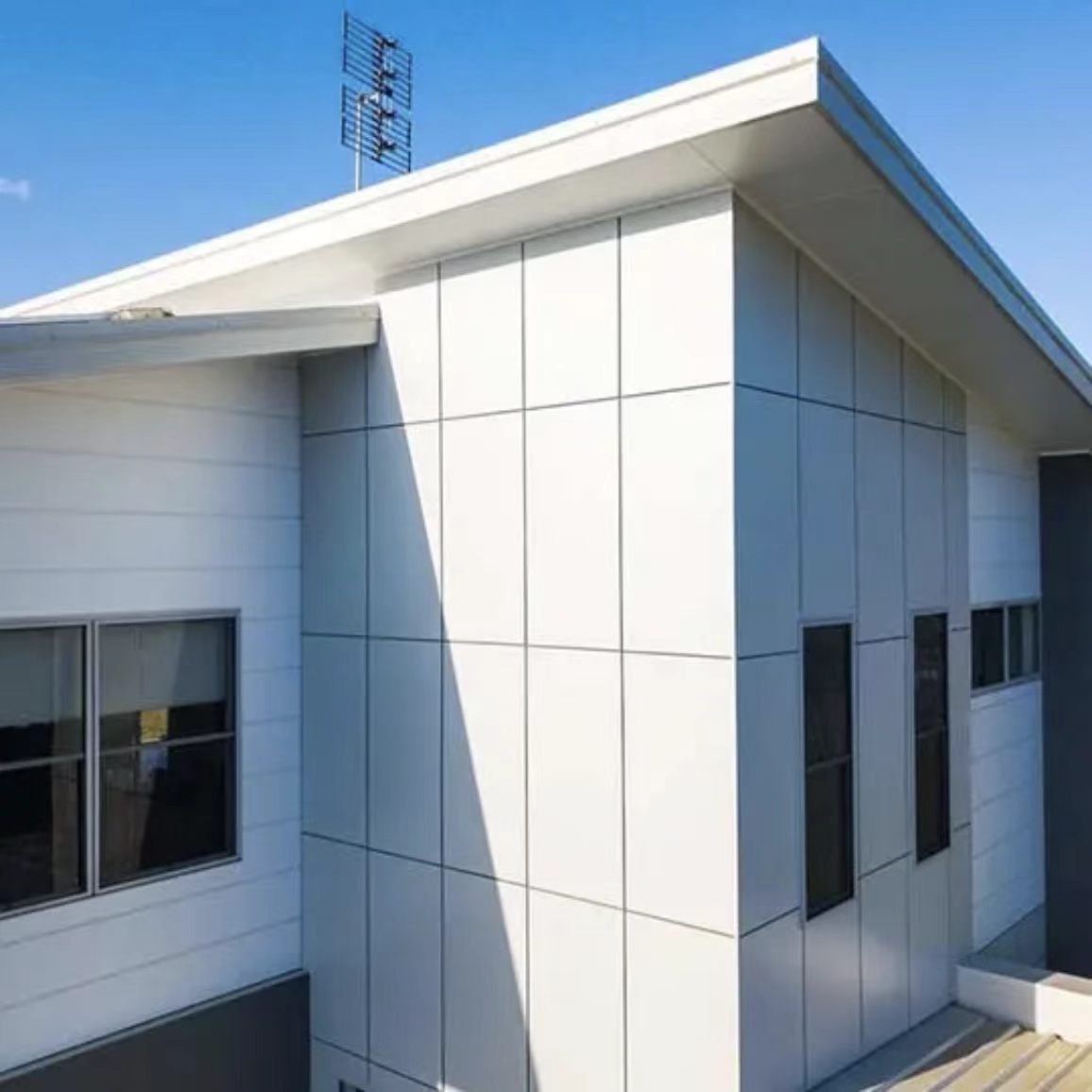
The panels arrive on site. They look flawless. The protective film is intact. The finish is perfect.
You store them improperly. Weeks later, you install them. Months later, blisters appear. The client demands answers.
The problem started before installation. It started in your storage yard.
This guide covers site storage best practices for Alucobond composite panels. You will learn how moisture destroys panels from the inside out. You will understand the stacking rules. You will know exactly how to keep your panels dry and blister-free.
Part 1: Why Proper Storage Matters
An Alucobond composite panel is a sandwich structure. Two aluminum skins bond to a core. The core is the vulnerable part. Moisture attacks it. Once moisture enters the core, it cannot escape. The core swells. The adhesive degrades. The aluminum skin separates. Blisters form.
The official ALUCOBOND storage warning:
"ALUCOBOND should be protected against rain, dampness penetrating the panels and the build-up of condensation". "Protect ALUCOBOND PLUS pallets during storage against rain, penetration of moisture, and condensation".
This is not a recommendation. It is a requirement. Ignore it, and you void your warranty.
Part 2: Receiving and Inspection — The First Line of Defense
The moment a delivery arrives, your site team's actions determine whether the Alucobond composite panel remains in factory condition or suffers its first damage.
Pre-receiving preparation:
Before the truck arrives, prepare the receiving area. The storage area should be clean, dry, level, and free of debris. The floor should be covered with a wooden skid or a polythene sheet to prevent direct contact with the ground.
Unloading checklist:
Step | Action | Critical Check |
1 | Inspect packaging | Crushed corners, torn shrink wrap, water stains |
2 | Document condition | Photograph any damage with the container number visible |
3 | Use proper equipment | Forklifts with padded forks or panel lifting clamps |
4 | Lift, don't slide | Never drag or push—prevents edge damage and core crushing |
What to check on arrival:
Examine the pallets thoroughly for any damage due to transportation or moisture. Any panels that are exposed to moisture must be dried to avoid spots or corrosion. In case of damage, report it to the forwarding agent immediately.
Part 3: Choosing the Right Storage Location
Indoor storage is always preferred. Store the pallets away from moisture, rain, or any other form of contact with water or liquids.
If outdoor storage is unavoidable:
- Wrap the sheets twice with a minimum of 50 microns polyethylene packing film
- Use tarps or covers—but ensure ventilation to prevent condensation
- Keep panels away from direct sunlight and moisture
- Avoid condensation when moving the panels from colder to warmer rooms
The ventilation gap: For exterior applications, maintain a ventilation gap of at least 20 to 30 mm behind the panels to prevent moisture build-up.
Part 4: Stacking Rules — Do Not Guess
Improper stacking crushes the core. Crushed core means structural weakness. Structural weakness means blistering.
The official ALUCOBOND stacking rules:
"Only pallets of identical size should be stacked, with a maximum of 6 pallets stacked on top of each other".
Additional stacking requirements:
- Stack only pallets of similar dimensions horizontally above one another, with the heaviest at the bottom
- Do not let the panels stand vertically—vertical storage risks deformation and edge damage
- Do not put anything between two pallets while stacking, as this could produce marks on the pallets
- Do not slide panels over each other to avoid scratches
For extra protection:
Some manufacturers recommend not stacking more than 5 pallets to avoid impressions on the sheets and skidding of pallets. The floor area should be properly covered with a wooden skid or a polythene sheet.
Part 5: The Protective Film — Your Panel's Guardian
The protective film is the silent guardian of an Alucobond composite panel. It shields the decorative coating from scratches, dust, and minor impacts during fabrication, transport, and installation. But this guardian can turn into a nuisance if you store the panels too long.
The time limit:
"Storage exceeding 6 months should be avoided, as it may become difficult to remove the protective foil".
Some guidelines are even stricter: storing the panels for more than three months may render the protective film tough to remove.
UV is the enemy:
"To avoid adhesive residues on the surface, caused by UV radiation, the protective film should be removed as soon as possible after the panels have been installed". UV radiation breaks down the chemical structure of the adhesive. What starts as a removable glue transforms into a baked-on layer that bonds aggressively to the coating.
What NOT to do with the film:
- Do not mark the protective film with inks (markers), tapes, or labels—the solvent or plasticizer may penetrate the film and affect the lacquered surface
- Do not remove the protective film at temperatures below 0°C
- Do not partially peel the protective film—this may cause dirtying of the edges that could affect its bonding property
- Remove the protective film no later than 45 days after assembly
FIFO inventory management:
Follow the FIFO (First-In-First-Out) principle, ensuring older stock is used before new supplies. This prevents panels from sitting in storage too long.
Part 6: Temperature and Moisture Control
Alucobond composite panels are designed to withstand extreme temperatures from -50°C to +80°C. But moisture is the real threat.
Key moisture control rules:
- Store the pallets away from moisture, rain, or any other form of contact with water or liquids
- Protect against the build-up of condensation
- Any panels that become wet must be dried to avoid spots or corrosion
- If any contamination is found on panels, they should be thoroughly dried using hot air or wiped clean with a dry cloth before being stored
Do not:
- Store panels in wet or moist conditions, indoors or outdoors
- Expose panels to severe temperature fluctuations—this reduces the long-term durability
Part 7: Common Storage Mistakes
Mistake 1: Storing panels vertically
Vertical storage leads to deformation and edge damage. The panel warps under its own weight.
Fix: Store panels horizontally only.
Mistake 2: Stacking different-sized pallets
Different-sized pallets create uneven pressure. The panels bend. The core crushes.
Fix: Stack only pallets of identical size.
Mistake 3: Stacking more than 6 pallets
Excessive weight crushes the core of the bottom panels. The deformation is permanent.
Fix: Maximum 6 pallets. Some manufacturers recommend 5 for extra safety.
Mistake 4: Leaving panels in storage too long
The protective film becomes impossible to remove. Adhesive residue ruins the surface.
Fix: Avoid storage exceeding 6 months. For ALUCOLUX panels, remove the film within 45 days of assembly.
Mistake 5: Storing panels outdoors without protection
Rain, moisture, and UV degrade the panel. The core absorbs moisture. Blisters form.
Fix: Store indoors. If outdoor storage is unavoidable, wrap with polyethylene film and use tarps.
Mistake 6: Placing objects between panels
Anything between panels creates imprints and marks. The marks are permanent.
Fix: Nothing between panels. Stack directly on top of each other.
Mistake 7: Writing on the protective film
Markers and tape damage the lacquered surface. The solvent penetrates the film.
Fix: Never mark protective films or panel surfaces with any ink or tape.
The Complete Storage Checklist
Step | Action | Pass/Fail |
Receiving | Inspect packaging for damage or moisture | ☐ |
Receiving | Document damage with photographs | ☐ |
Storage location | Clean, dry, level surface | ☐ |
Storage location | Wooden skid or polythene sheet on floor | ☐ |
Storage location | Protected from rain, moisture, and condensation | ☐ |
Stacking | Only identical-size pallets | ☐ |
Stacking | Maximum 6 pallets (5 recommended) | ☐ |
Stacking | Horizontal only—never vertical | ☐ |
Stacking | Nothing between panels | ☐ |
Protective film | Storage not exceeding 6 months | ☐ |
Protective film | No marks, tape, or stickers on film | ☐ |
Inventory | FIFO system in place | ☐ |
What to Ask Your Supplier
When you purchase an Alucobond composite panel for your project, ask these questions:
1. What are your storage recommendations? A knowledgeable supplier will specify protection from rain, moisture, and condensation.
2. What is the maximum storage duration before film removal becomes difficult? The answer should be 6 months maximum—some products require 3 months or 45 days.
3. Do you provide storage guidelines? A reliable manufacturer will have technical documentation on storage and handling.
4. What is your recommended stacking height? The answer should be a maximum of 6 pallets—some recommend 5.
5. Do you offer pre-wrapped pallets for outdoor storage? Some suppliers offer double-wrapped pallets with a minimum of 50 microns polyethylene film.
The Bottom Line
You have specified the right Alucobond composite panel. You have chosen a quality supplier. You have inspected every panel on arrival.
None of that matters if you store them wrong.
Moisture is the enemy. It enters the exposed core through unsealed edges or damaged packaging. Once inside, it cannot escape. The core swells. The adhesive degrades. The aluminum skin separates. Blisters form.
The rules are simple:
- Inspect every shipment on arrival—document damage immediately
- Store panels horizontally, never vertically
- Stack only identical pallets—maximum 6 high
- Keep panels away from rain, moisture, and condensation
- Avoid storage exceeding 6 months
- Never mark the protective film
- Follow FIFO inventory management
A single day of improper storage can destroy months of careful planning. A few minutes of inspection and a few hours of proper organization save years of rework.
When you walk that site six months from now, looking at a flawless facade with no blisters in sight, you will know—not hope, not guess, but know—that your storage practices worked. Because you followed the guidelines. Because you trained your team. Because you refused to cut corners on something as simple as keeping the panels dry.
That is the difference between a project that lasts and one that fails. That is the difference between a supplier you trust and one you will never call again.
Choose the right Alucobond composite panel. Store it right. Install it right. Your reputation depends on it.